Tomatoes are the most popular crop in American home gardens, and also one of the most troublesome. Few gardeners get through a season without at least one problem: a dark patch on the bottom of the fruit, yellowing leaves creeping up the plant, cracked tomatoes after a storm, or a giant green caterpillar where yesterday there were leaves.
The good news is that most tomato problems are common, well understood and either preventable or manageable. Many are not diseases at all, but reactions to weather and watering. This guide covers the problems home gardeners see most often, how to tell them apart, and what to do about each.
Start with a quick diagnosis
Before treating anything, look carefully at three things: which part of the plant is affected, what the symptom looks like, and how it is changing. Problems on the fruit are usually caused by weather or watering. Spots that start on lower leaves and climb the plant usually point to fungal diseases. Sudden wilting of a whole plant suggests root problems or wilt diseases. Large holes in leaves almost always mean something is eating them.
If you are not sure where to start, the plant problem identifier ranks the likely causes from what you see.
Problems with the fruit
Blossom end rot
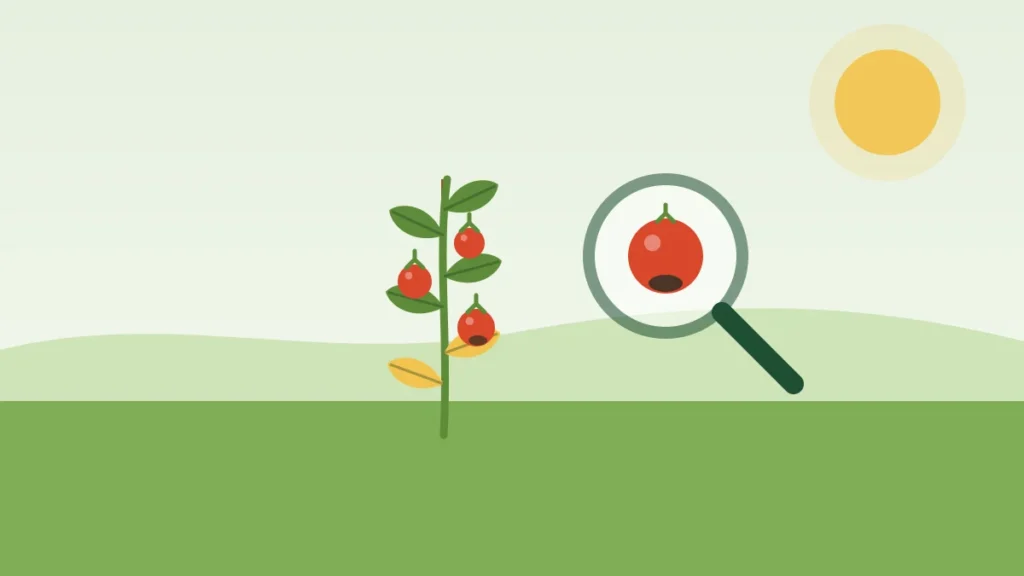
A dark, sunken, leathery patch on the bottom of the fruit, the end opposite the stem, is blossom end rot. It is one of the most common tomato problems, and it also affects peppers, eggplant and squash.
Blossom end rot is not a disease. It is a disorder caused by a shortage of calcium in the developing fruit. Garden soil usually contains plenty of calcium; the problem is that the plant cannot move enough of it into fast-growing fruit, most often because of uneven watering. Swings between soggy and dry soil, root damage, very high nitrogen fertilizing and hot, windy weather all make it worse. The first fruits of the season are often the worst affected, and the problem usually eases as the season goes on.
What to do: keep soil evenly moist with deep, regular watering, and mulch to hold moisture steady. Avoid digging close to roots, and do not overdo nitrogen fertilizer. Remove affected fruit so the plant puts its energy into healthy ones. Adding calcium usually does not help unless a soil test shows a real shortage, and Epsom salts, which supply magnesium, do not fix it. For more detail, see the University of Wisconsin’s guide to blossom end rot and University of Maryland Extension’s fact sheet on blossom end rot in tomatoes.
Cracking and splitting
Fruit that splits in rings around the stem or in lines down the sides usually cracked after heavy rain or watering followed a dry spell. The inside of the fruit swells faster than the skin can stretch.
What to do: water evenly, mulch, and pick fruit as soon as it starts to color during wet weather; it ripens fine indoors. Some varieties are much more crack-resistant than others, and seed catalogs often note this.
Catfacing
Catfaced tomatoes are misshapen and puckered, with scars and folds, usually at the blossom end. It happens when flowers develop during cool weather early in the season. Large heirloom and beefsteak varieties are especially prone. The fruit is still perfectly edible; cut away the scarred parts.
Sunscald
Pale, papery or white patches on the side of the fruit facing the sun are sunscald. It happens when fruit is suddenly exposed to strong sun, often after leaves are lost to disease or heavy pruning. Keep enough foliage to shade the fruit, avoid over-pruning in hot climates, and consider shade cloth during heat waves.
Flowers dropping without setting fruit
If flowers fall off before fruit forms, temperature is the usual culprit. Tomatoes set fruit best when nights are roughly 55 to 75°F and days are not extremely hot. Cool nights early in the season, or long stretches of very hot days and warm nights in midsummer, can cause blossoms to drop. Heavy nitrogen feeding, drought stress and too little sun can also contribute. Fruit set usually resumes when the weather moderates.
Problems with the leaves
Yellow lower leaves
A few of the oldest, lowest leaves turning yellow and dropping as a plant matures is normal. Yellowing that climbs the plant, or yellow leaves with spots, points to a problem. Even yellowing without spots often means the plant is short of nitrogen. Yellowing with soggy soil suggests overwatering. Yellowing around brown spots or rings usually means a leaf disease. The yellow leaf identifier sorts through the possibilities.
Early blight
Early blight causes brown spots with concentric rings, like a target, usually surrounded by yellow. It starts on the lowest leaves and works its way up the plant, often from midsummer. It is caused by a fungus that survives in soil and plant debris and splashes up onto leaves during rain or watering.
What to do: remove affected lower leaves, mulch to stop soil splashing up, water at the base of plants rather than over the leaves, give plants room for air to circulate, and rotate tomatoes to a different bed each year.
Septoria leaf spot
Septoria produces many small, round spots with dark borders and lighter centers, often with tiny black specks in the middle. Like early blight, it starts low and climbs, and severe infections can strip the lower half of a plant. The same prevention steps apply: remove infected leaves, mulch, water at the soil, space plants well and rotate crops.
Late blight
Late blight is less common in home gardens but far more serious. It causes large, greasy-looking gray-green to brown patches on leaves, sometimes with white fuzzy growth underneath in humid weather, and firm brown patches on fruit. It spreads very quickly in cool, wet conditions and also affects potatoes.
What to do: remove and bag infected plants promptly, rather than composting them, to slow the spread. Keep tomatoes and potatoes apart in the garden, and do not keep potatoes from an infected crop for planting. Contact your local Cooperative Extension office if you suspect late blight; many track outbreaks.
Leaf roll
Older leaves that roll upward and inward, sometimes becoming thick and leathery, while the plant otherwise looks healthy, are usually showing a harmless physiological response to heat, heavy pruning or uneven watering. It does not reduce yields much and needs no treatment. Twisted, distorted new growth is different, and can point to herbicide drift or sap-feeding insects.
Wilting plants
Tomatoes often droop in hot afternoon sun and recover by evening, which is normal. Wilting that lasts into the cool morning is a warning sign.
- Dry soil: the plant needs a deep watering.
- Wet soil: roots may be waterlogged or rotting. Let the soil dry and improve drainage. Our guide to overwatering versus underwatering and the overwatering checker help tell the two apart.
- Moist soil, one side or branch wilting first: fusarium or verticillium wilt, soil-borne fungal diseases, are possible. Affected plants often yellow on one side and decline over weeks. There is no cure once a plant is infected; remove it and choose resistant varieties next year. Seed catalogs mark resistance with codes such as V and F.
Pests
Tomato hornworms
These large green caterpillars, up to several inches long with a horn at the rear, can strip a plant of leaves in days. They are well camouflaged, but their large dark droppings on the leaves below give them away. Hand-pick them. If you find one covered in small white cocoons, leave it alone: those are parasitic wasps, which will hatch and attack more hornworms.
Aphids, whiteflies and spider mites
Sap-feeding pests cause curled, sticky or speckled leaves. Aphids cluster on new growth; whiteflies fly up in a cloud when leaves are disturbed; spider mites cause fine pale stippling and webbing in hot, dry weather. Spraying leaf undersides with water and encouraging beneficial insects controls most infestations, with insecticidal soap for heavy ones. The pest identifier helps name the culprit.
Animals
Half-eaten fruit with large bites, or fruit missing entirely, points to animals such as squirrels, birds or deer. Netting, fencing and picking fruit as soon as it starts to color all help.
Preventing tomato problems
Most tomato troubles can be prevented, or at least greatly reduced, with a few habits:
- Water deeply and evenly, about an inch a week from rain and irrigation combined, more in hot weather. The garden watering calculator converts that into gallons for your beds.
- Mulch 2 to 3 inches deep to hold moisture steady and stop soil splashing onto leaves. The mulch calculator works out how much you need.
- Water at the base, not over the leaves, and preferably in the morning.
- Give plants room. Crowded tomatoes stay damp and spread disease. The plant spacing calculator shows how many fit.
- Stake or cage plants to keep leaves and fruit off the ground.
- Rotate crops. Avoid planting tomatoes, peppers, eggplant or potatoes in the same spot more than once every three or four years if you can.
- Choose resistant varieties where diseases are a recurring problem.
- Clean up in fall. Remove diseased plant debris so problems do not overwinter in the garden.
- Keep tomatoes and potatoes apart because they share diseases. Our companion plant finder suggests better neighbors.
Quick reference: tomato symptoms and causes
| Symptom | Most likely cause |
|---|---|
| Dark sunken patch on bottom of fruit | Blossom end rot |
| Fruit split around stem or down sides | Cracking from uneven water |
| Puckered, scarred fruit | Catfacing from cool weather at flowering |
| White papery patch on sunny side | Sunscald |
| Flowers drop, no fruit | Temperatures too hot or too cold |
| Target-like spots on lower leaves | Early blight |
| Many small spots with pale centers | Septoria leaf spot |
| Large greasy patches, fast spread | Late blight |
| Upward-rolled older leaves, plant healthy | Physiological leaf roll |
| Wilting in moist soil, one side first | Fusarium or verticillium wilt |
| Large holes, dark droppings | Tomato hornworm |
When to get expert help
Diseases can look alike, and some, such as late blight, matter beyond your own garden. If you are unsure, many state Cooperative Extension services run plant diagnostic clinics or Master Gardener help lines that will look at photos or samples, often for free or a small fee. Take photos of the whole plant, the affected leaves and fruit, and leaf undersides, and note when the problem started.
Growing tomatoes that resist problems
Choose the right varieties
Variety choice prevents more problems than any spray. Seed catalogs and plant tags often list disease resistance with letter codes after the variety name. The most common include V for verticillium wilt, F for fusarium wilt and N for root-knot nematodes, and many catalogs list resistance to early blight, late blight or tomato mosaic virus as well. If a particular disease shows up in your garden year after year, choosing resistant varieties is the most reliable fix.
Consider growth habit too. Determinate varieties grow to a set size, ripen most of their fruit over a few weeks, and suit containers and small gardens. Indeterminate varieties keep growing and producing until frost, but need tall stakes or cages and more room. Cherry tomatoes are usually the most forgiving of difficult weather, and are a good choice if you have struggled with larger types.
Support and prune for air flow
Many leaf diseases thrive when foliage stays wet and crowded. Staking or caging plants keeps leaves and fruit off the soil, and removing the lowest leaves once plants are established reduces the chance of soil splashing onto them. On indeterminate tomatoes, some gardeners also pinch out a few of the side shoots, called suckers, that grow between the main stem and leaf branches, which opens up the plant to air and light. Do not overdo it in hot climates, though: leaves shade the fruit and protect it from sunscald.
Plant at the right time
Tomatoes planted into cold soil sit and struggle, and cold nights early in the season contribute to catfacing and poor fruit set. Wait until about a week or two after your last spring frost, once nights stay reliably above about 50°F. The planting calendar gives dates for your area.
Watch: Tomato Problems: Blossom End Rot
University of California Cooperative Extension explains blossom end rot in this video:
Sources and further reading
These university Extension and government resources informed this guide and are useful for going deeper. Recommendations can vary by region, so your local Cooperative Extension office is always a good next step.
- Fertilizing Vegetables, Clemson Cooperative Extension
- Watering Wisely: How Much Your Summer Vegetable Garden Really Needs, NC State Extension
- How Often Should I Water My Vegetable Garden?, University of Maine Cooperative Extension
Frequently asked questions
Why are the bottoms of my tomatoes turning black?
That is blossom end rot, caused by a shortage of calcium in the developing fruit, usually because of uneven watering. Water deeply and evenly, mulch, and remove affected fruit.
Do Epsom salts help tomatoes?
Not for blossom end rot, which is a calcium problem. Epsom salts supply magnesium, which only helps if a soil test shows a magnesium shortage.
Why are my tomato leaves turning yellow from the bottom?
Common causes are early blight or Septoria leaf spot, which show spots, nitrogen shortage, which yellows leaves evenly, overwatering, and normal aging of the oldest leaves.
Why are my tomato flowers falling off?
Usually temperature. Tomatoes set fruit best when nights are roughly 55 to 75°F. Very hot or cool weather, drought stress and heavy nitrogen feeding can all cause blossom drop.
Can I eat tomatoes with blossom end rot?
Yes. Cut away the affected part and use the rest, as long as no mold or secondary rot has set in.
How do I stop my tomatoes from cracking?
Water evenly, mulch to keep moisture steady, and pick fruit as it starts to color before heavy rain. Choosing crack-resistant varieties also helps.