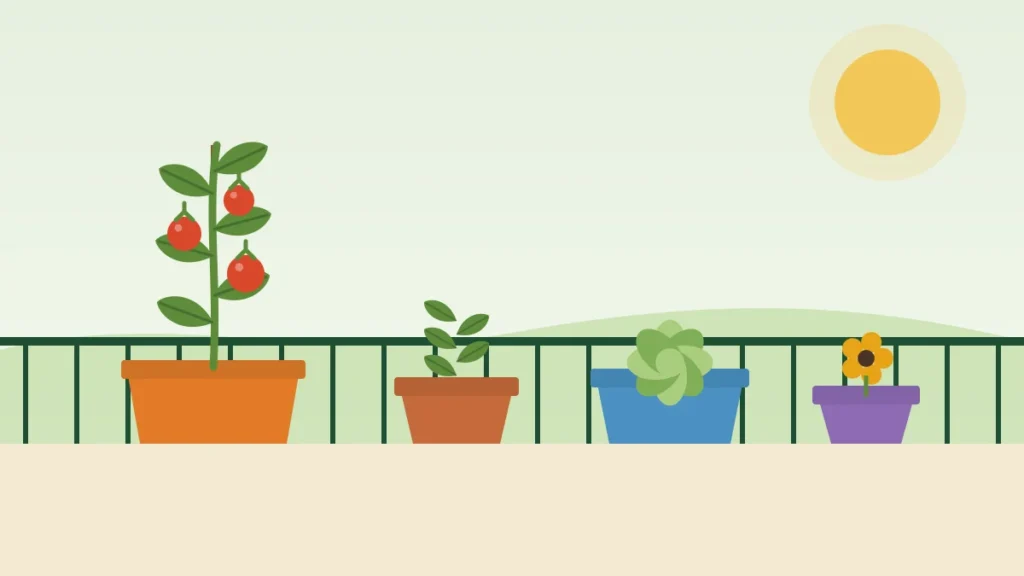
You do not need a yard to grow your own food. A sunny balcony, patio, deck, driveway or even a front step can produce tomatoes, peppers, salad greens, herbs, beans and strawberries all summer. Containers also solve problems that stop many people from gardening at all: poor or contaminated soil, no ground to dig, limited mobility, or a rental you might leave next year.
Container gardening is not harder than gardening in the ground, but it is different. Pots dry out faster, run out of nutrients sooner and depend entirely on you for both. Get a few basics right, though, and containers can be remarkably productive. This guide covers what to grow, which pots to choose, the right soil, and how to water and feed for a good harvest.
Why container gardens succeed or fail
Almost every container failure comes down to one of four things: a pot that is too small, the wrong soil, too little sun, or inconsistent watering. Penn State Extension sums up the same principles in its guide to four keys to container vegetable success: the right container, the right growing mix, enough sun, and regular water and fertilizer. Each is covered below.
Choose crops that suit containers
Most vegetables can be grown in a pot of the right size, but some are far better suited than others.
Excellent choices
- Herbs: basil, parsley, chives, thyme, oregano and mint. Keep mint in its own pot, because it spreads aggressively.
- Salad greens: leaf lettuce, spinach, arugula and Swiss chard, picked a few leaves at a time for weeks.
- Peppers and eggplant: naturally compact, and they enjoy the warmth of a container in the sun.
- Tomatoes: especially cherry, patio and determinate varieties, which stay compact.
- Bush beans: productive without a trellis.
- Radishes, beets and short carrots: loose potting mix lets roots grow easily.
- Strawberries: ideal for pots, window boxes and hanging baskets.
Possible, with a big container
- Cucumbers: choose bush or compact varieties, or add a small trellis.
- Potatoes: fun in large grow bags, adding more mix as the plants grow.
- Peas and pole beans: with a trellis in the pot.
Usually better in the ground
Sweet corn, winter squash, pumpkins, watermelon and full-size zucchini take a great deal of space for the harvest they give, and rarely do well in pots. Penn State Extension’s guide lists the same crops as better suited to in-ground gardens.
When you browse seed catalogs, look for words like patio, compact, dwarf, bush or container in the variety description. The plant finder has a filter for crops that suit small spaces and containers.
Choose the right container size
Pot size is the single biggest factor in container success. A small pot holds little water and dries out fast, restricts the roots, and limits the harvest. When in doubt, go bigger.
| Crop | Minimum pot | Plants per pot |
|---|---|---|
| Basil, parsley, chives | 1 gallon | 1 |
| Radishes | 1 gallon | About 6 |
| Lettuce, spinach | 2 gallons | 2 to 3 |
| Beets, onions, garlic | 2 gallons | About 4 |
| Bush beans, kale, chard | 3 gallons | 1 to 3 |
| Carrots | 3 gallons, at least 10 in deep | About 6 |
| Peppers, eggplant, cucumbers | 5 gallons | 1 |
| Tomatoes | 10 gallons (5 for compact patio types) | 1 |
| Potatoes | 10 gallons or a large grow bag | About 3 seed pieces |
University of Maryland Extension’s guide to containers for growing vegetables recommends at least 8 to 10 gallons of growing mix, 12 to 16 inches deep, for large vegetables such as tomatoes, peppers, eggplant and cucumbers, one plant per container.
Our container garden planner checks each pot size against the crop you choose, warns you if a pot is too small, suggests how many plants it holds, and totals the potting mix you need.
Choose the right kind of container
- Drainage holes are essential. Without them, water collects in the bottom and roots rot. A decorative pot without holes can hold a plastic pot that drains.
- Plastic and glazed pots hold moisture well and are light enough to move.
- Unglazed terracotta looks lovely and breathes, but dries out quickly, which means more watering for vegetables.
- Fabric grow bags drain and breathe well, prevent roots from circling, fold away for winter and are inexpensive in large sizes.
- Self-watering containers have a reservoir in the base, which helps a lot in hot weather and for busy gardeners.
- Color matters. Dark pots in full sun can heat the roots. Lighter colors stay cooler.
Skip the gravel. A layer of rocks or broken pot pieces in the bottom of a container does not improve drainage. It actually raises the level where water collects and leaves less room for roots. Fill the whole pot with potting mix instead.
Use potting mix, not garden soil
Garden soil is the wrong material for containers. In a pot it packs down, drains poorly, and can bring in weeds, pests and diseases. Use a bagged potting mix, which is a soilless blend of peat or coconut coir, bark and perlite or vermiculite designed to stay light and airy.
Many gardeners blend in some compost, roughly one part compost to two or three parts mix, to add nutrients and help it hold moisture. If you are filling several large containers, the soil bag calculator converts the volume you need into bags. Potting mix is often sold in quarts or liters; about 25.7 dry quarts, or 7.5 gallons, make one cubic foot.
Find enough sun
Most fruiting vegetables need at least six hours of direct sun, and eight is better. Leafy greens and many herbs manage with four to six hours. In the Northern Hemisphere, south- and west-facing balconies and patios usually get the most sun; north-facing ones get very little direct sun.
Containers have one big advantage over beds: you can move them to follow the light. If your space is partly shaded, put fruiting crops in the sunniest spot and leafy crops elsewhere. The sunlight requirement finder shows which crops suit the hours of sun you have.
Water consistently
Watering is where container gardens most often go wrong, in both directions. Pots dry out far faster than garden beds, especially small pots in full sun and wind. In midsummer, many containers need watering every day, and small pots may need it twice.
- Check before you water. Push a finger an inch or two into the mix. If it is dry, water.
- Water thoroughly, until water runs from the drainage holes, so the whole root ball is wet.
- Empty saucers 15 to 30 minutes after watering so roots do not sit in water.
- Mulch the surface with a thin layer of straw, shredded leaves or compost to slow evaporation.
- Group pots together. They shade each other’s sides and lose less water.
- Automate if you can. A simple container drip kit on a timer, with an emitter in each pot, is one of the best investments for a container garden. The drip irrigation calculator helps size it.
Uneven watering causes more than wilting. It is a major factor in blossom end rot on tomatoes and peppers, and in bitter, bolting lettuce. If a plant looks unhappy in wet mix, see our guide to overwatering versus underwatering, or try the overwatering checker.
Feed regularly
Plants in pots have only the nutrients in the mix, and frequent watering washes them out. Container vegetables usually need more feeding than the same plants in the ground. A practical approach is to mix a slow-release fertilizer into the potting mix at planting, then add a liquid or water-soluble fertilizer every two to four weeks once plants are growing strongly, following the label. Heavy feeders such as tomatoes, peppers and cucumbers benefit most once they start to flower.
Watch for pale leaves on older growth, which often means a plant needs feeding. Do not overdo it, though: too much nitrogen gives lush leaves and few fruits.
Support tall and climbing crops
Put stakes, cages and trellises in place when you plant, not after the plants sprawl, so you do not damage roots later. Tomatoes need a sturdy cage or a stake 4 to 6 feet tall. Cucumbers, peas and pole beans need a small trellis, which can be fixed in the pot or against a railing. A container tipping over in the wind is a common problem with tall plants, so use wide, heavy pots for tall crops, or place them in a sheltered corner.
Planting and timing
Containers warm up faster than garden soil in spring, which gives you a small head start. Otherwise, plant at the same times you would in the ground: cool-season crops such as lettuce, peas and radishes a few weeks before your last frost, and warm-season crops such as tomatoes, peppers and basil after it. The planting calendar gives dates for your area, and our guide on when to start seeds indoors covers growing your own transplants.
Containers also make it easy to keep growing longer. When frost threatens in fall, move pots of herbs and greens to a sheltered spot or cover them overnight.
A sample balcony garden
Here is a simple, productive plan for a sunny balcony:
- One 10-gallon pot with a cherry tomato and a tall stake.
- Two 5-gallon pots, each with a pepper.
- One 3-gallon pot of bush beans.
- Two 2-gallon pots of leaf lettuce, resown every few weeks.
- Four 1-gallon pots of basil, parsley, chives and thyme.
That is ten pots holding 31 gallons of mix, a little over 4 cubic feet, and it supplies salads, herbs, tomatoes, peppers and beans all summer. You can build and adjust a plan like this in the container garden planner.
A note on weight
Containers full of wet potting mix are heavy. A large pot can weigh well over 100 pounds after watering. On balconies and roof decks, check your building’s guidance on load limits, spread heavy pots out rather than clustering them, and keep the largest containers near walls or supports. Lightweight potting mix, plastic or fabric pots, and pot feet all help.
Pests and problems in containers
Container plants get many of the same pests as garden plants, especially aphids, spider mites and whiteflies, which thrive in warm, sheltered spots such as balconies. Check leaf undersides every few days and spray off small infestations with water. The pest identifier helps name the culprit, and the plant problem identifier covers watering, nutrient and disease problems.
Common container mistakes
- Pots that are too small, which dry out constantly and stunt plants.
- No drainage holes, which leads to waterlogged roots.
- Garden soil instead of potting mix.
- Too many plants per pot. One tomato per container is best.
- Forgetting to feed through the season.
- Too little sun for fruiting crops.
- Inconsistent watering, especially during heat waves.
Container gardening on a budget
A container garden does not have to be expensive. A few ways to keep costs down:
- Reuse containers. Food-grade buckets, storage bins and old pots work well, as long as you drill drainage holes in the bottom. Avoid containers that held chemicals or fuel.
- Buy fabric grow bags for large crops. They are often much cheaper than rigid pots of the same size.
- Grow from seed where you can. A packet of lettuce or bean seed costs about the same as one or two transplants.
- Refresh old potting mix instead of replacing it every year: remove old roots and mix in compost and some fresh mix. Use fresh mix for plants that had disease.
- Focus on high-value crops such as herbs, salad greens and cherry tomatoes, which are expensive to buy and productive in a small pot.
Sources and further reading
These university Extension and government resources informed this guide and are useful for going deeper. Recommendations can vary by region, so your local Cooperative Extension office is always a good next step.
- Growing Herbs Indoors, NC State Extension
- Watering Wisely: How Much Your Summer Vegetable Garden Really Needs, NC State Extension
- Vegetable Garden Planning, University of Maryland Extension
Frequently asked questions
What vegetables are easiest to grow in containers?
Leaf lettuce, radishes, herbs such as basil and parsley, bush beans, peppers and cherry or patio tomatoes are among the easiest and most productive container crops.
What size pot do I need for tomatoes?
At least 10 gallons for most varieties, with compact patio types managing in about 5 gallons. Larger indeterminate tomatoes do best in 15 to 20 gallons with a tall stake or cage.
Can I use garden soil in containers?
It is not recommended. Garden soil compacts in pots and drains poorly. Use a bagged potting mix, optionally blended with some compost.
How often should I water container vegetables?
Check daily in summer and water whenever the top inch or two feels dry, until water drains from the bottom. In hot weather, many pots need water every day.
Should I put rocks in the bottom of a pot for drainage?
No. Rocks or gravel do not improve drainage and take up root space. Use a pot with drainage holes and fill it entirely with potting mix.
How much sun do container vegetables need?
Fruiting crops such as tomatoes and peppers need at least six hours of direct sun. Leafy greens and many herbs grow with four to six hours.