Paths are the bones of a garden. They decide how you move through the space, where you look, and which parts of the garden you actually visit. A well-made path keeps your feet dry and off the growing beds, leads the eye to a focal point, connects the house to the vegetable garden, and makes even a simple yard look designed. A badly planned one turns muddy, sprouts weeds or forces you to tiptoe through the beds.
This guide covers how to plan garden paths, the right widths, every common material from gravel and wood chips to brick, flagstone and stepping stones, how to build a path that lasts, plants for growing between stones, and path ideas for vegetable gardens, cottage gardens and small yards.
Why paths matter
- They protect soil: keeping foot traffic off beds prevents compaction. Oregon State University Extension’s raised bed gardening fact sheet explains that one of the main benefits of beds with paths is that the growing soil is never walked on, so it stays loose.
- They make the garden usable in wet weather and give access for wheelbarrows, hoses and harvest baskets.
- They shape the design, dividing the garden into areas and leading to destinations.
- They manage water: permeable paths let rain soak in rather than run off.
Planning your paths
Follow the way people actually walk
Watch where worn tracks form across the lawn: they show the routes people naturally take, such as from the back door to the shed, compost bin or vegetable beds. Paths that ignore these routes get ignored themselves.
Main and secondary paths
Most gardens benefit from a hierarchy: one or two wide main paths connecting the house to key areas, and narrower secondary paths between beds.
Recommended path widths
| Path type | Typical width | Why |
|---|---|---|
| Main path for two people side by side | 4 to 5 ft | Comfortable for walking together |
| Single-person path | About 3 ft | Room to walk and carry tools |
| Wheelbarrow or garden cart route | At least 3 ft, ideally wider | Clearance for the load and turning |
| Wheelchair-accessible path | At least 3 ft clear, wider where people pass or turn | Space to move and turn safely |
| Path between vegetable beds | 18 to 24 in | Room to kneel and work without wasting growing space |
| Stepping-stone path | Stones about 18 to 24 in across | A comfortable footprint |
Plants spill over edges as they grow, so make paths a little wider than you think you need. The University of Maryland Extension’s garden planning resources and our guide to planning a vegetable garden layout cover spacing beds and paths.
Straight or curved?
Straight paths suit formal gardens, potagers and vegetable plots, and are the most efficient. Gently curving paths feel relaxed and natural and make a garden seem larger by hiding part of the view. Avoid curves so tight that people cut the corners.
Garden path materials compared
| Material | Cost | Look | Maintenance | Best for |
|---|---|---|---|---|
| Wood chips or bark | Very low | Natural, woodland | Top up every year or two | Vegetable gardens, woodland paths |
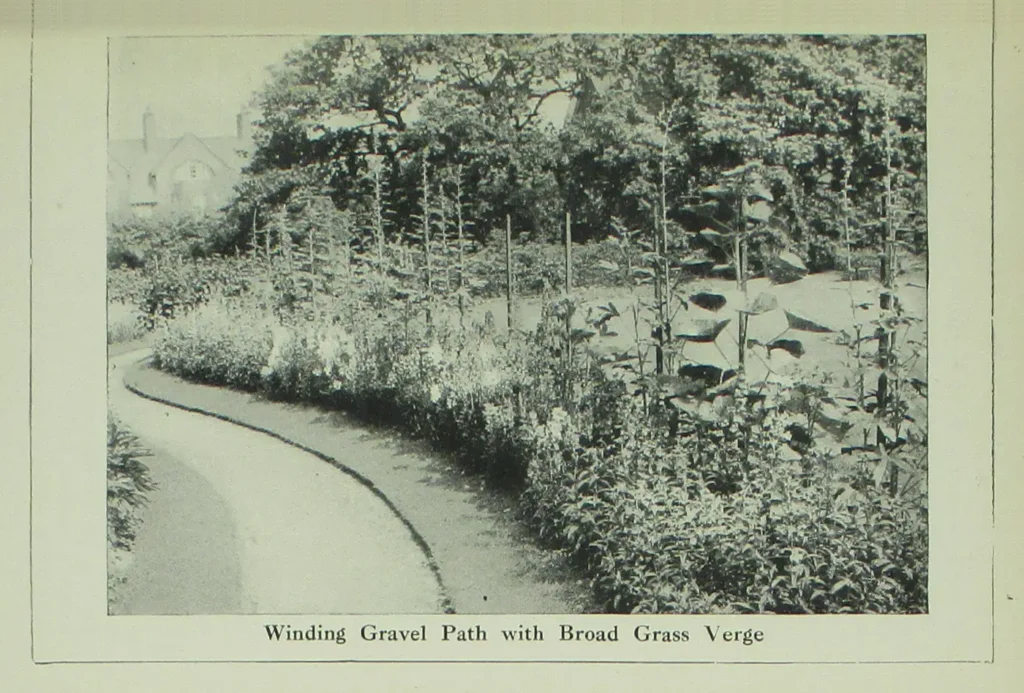
| Pea gravel | Low | Soft, informal | Rake occasionally; needs edging | Cottage gardens, patios |
| Crushed stone or decomposed granite | Low to medium | Neat, natural | Compacts firm; top up occasionally | Main paths, accessible routes |
| Grass | Low | Soft, green | Regular mowing; wears in heavy traffic | Wide paths in larger gardens |
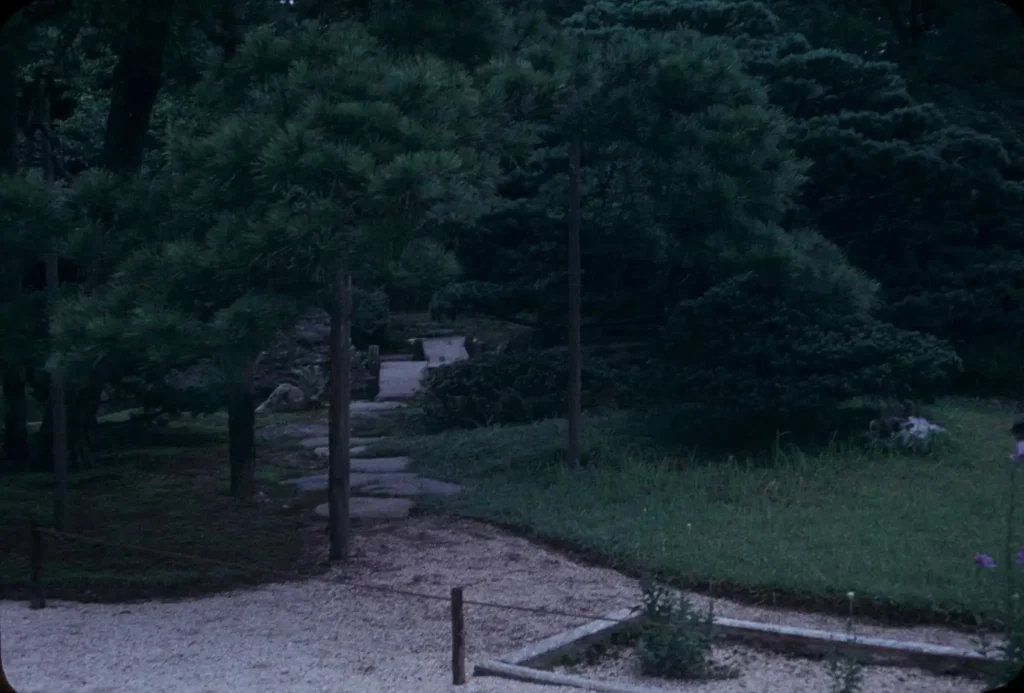
| Stepping stones | Low to medium | Informal, natural | Trim grass or plants around stones | Lightly used routes, across lawns |
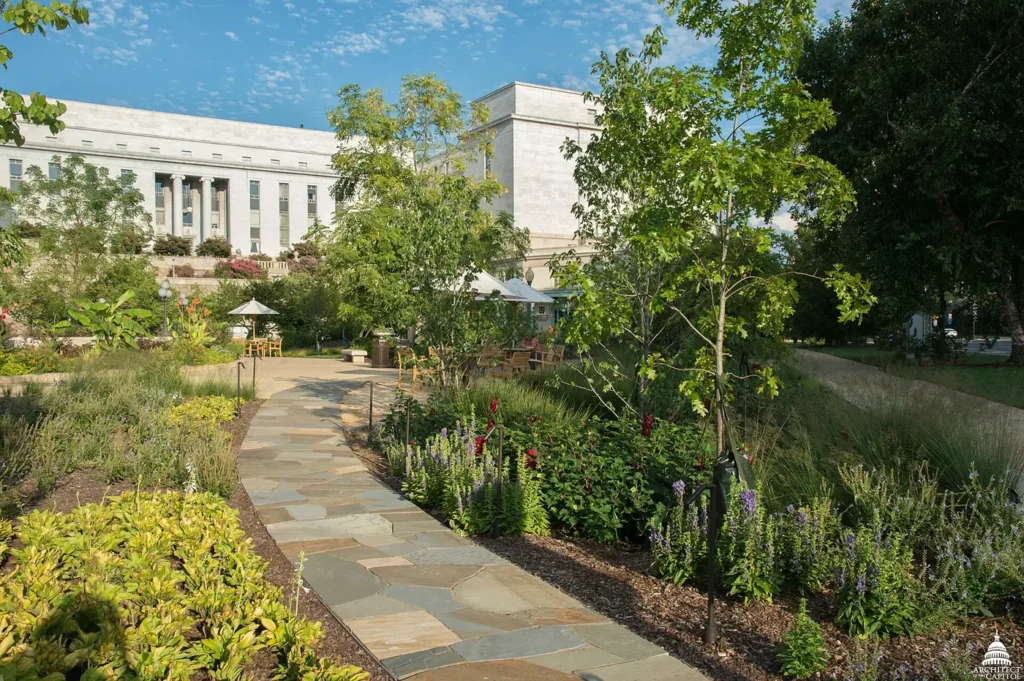
| Flagstone | Medium to high | Natural, elegant | Low | Main paths, cottage and natural gardens |
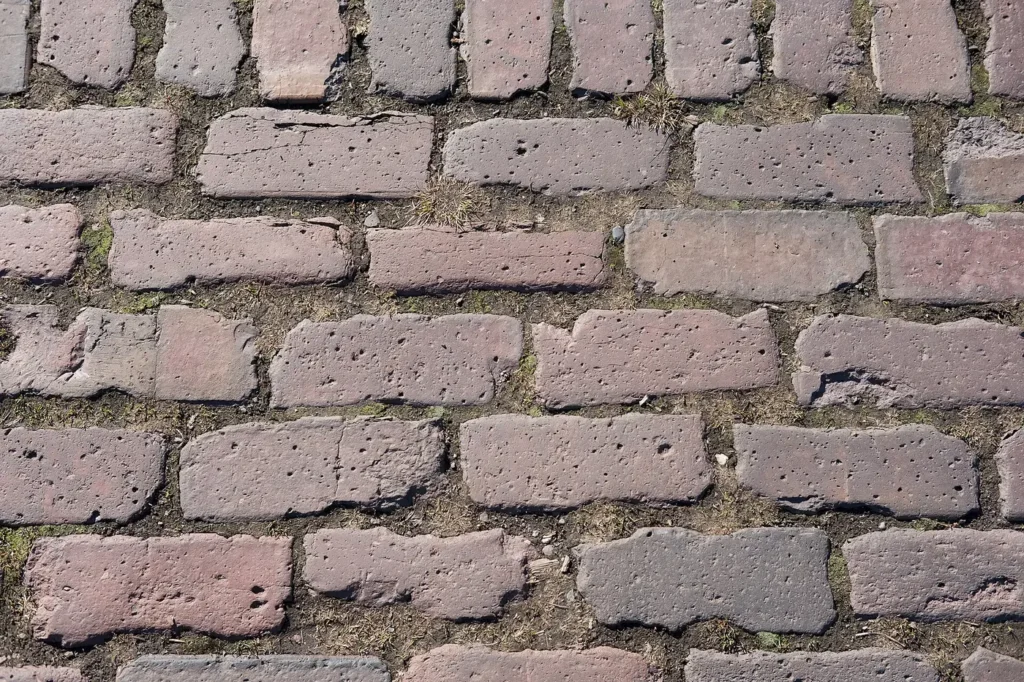
| Brick | Medium to high | Classic, warm | Low; occasional weeding of joints | Formal gardens, potagers |
| Concrete pavers | Medium | Clean, modern | Low | Main paths, modern gardens |
| Poured concrete | Medium to high | Formal, modern | Very low | High-traffic routes; least permeable |
Permeable paths and rainwater
Solid surfaces such as poured concrete send rainwater running off into drains, carrying pollutants with it. Gravel, wood chips, stepping stones set in soil, and pavers with gravel-filled joints let water soak into the ground. The EPA’s Soak Up the Rain program encourages homeowners to reduce runoff with permeable surfaces, rain gardens and rain barrels. If your path collects runoff, you could direct it into a rain garden; see our guide to making a rain garden.
How to build a gravel path
- Mark the route with string, stakes or a garden hose for curves.
- Remove turf and soil to a depth of about 4 to 6 inches.
- Install edging along both sides to hold the gravel in place: steel, brick, stone or timber. Our guide to garden edging ideas compares edging materials.
- Lay landscape fabric if you wish, to reduce weeds and stop gravel mixing into the soil.
- Add a base of crushed stone about 3 to 4 inches deep, and compact it well with a tamper.
- Top with 1 to 2 inches of gravel, spread evenly and raked smooth.
- Slope the surface slightly to one side, or crown it in the center, so water drains off.
Pea gravel is round and shifts underfoot, so it is less suitable for wheelbarrows and accessible routes; angular crushed stone locks together into a firmer surface.
How to lay stepping stones
- Lay the stones on the ground along the route, then walk the path at a normal pace and adjust spacing so each stone falls naturally underfoot. A spacing of roughly 18 to 24 inches from the center of one stone to the next suits most adults.
- Cut around each stone with a spade and lift the turf or soil.
- Dig each hole slightly deeper than the stone’s thickness.
- Add a layer of sand or fine gravel as a bed, so the stone can be leveled.
- Set the stone so its top is level with or just above the surrounding ground, so a mower can pass over it.
- Check that it does not rock, and adjust the bedding until it sits firmly.
How to lay a brick or paver path
- Excavate to allow for a compacted gravel base of about 4 inches, a 1-inch layer of sand, and the thickness of the bricks or pavers.
- Install rigid edging to stop the bricks from spreading.
- Compact the gravel base thoroughly in layers.
- Screed the sand level with a straight board.
- Lay the bricks in your chosen pattern, such as running bond, basketweave or herringbone.
- Sweep fine sand into the joints and compact the surface, then sweep in more sand.
Herringbone patterns lock together well and resist shifting, which makes them a good choice for paths that carry wheelbarrows.
Plants for between stepping stones
Low plants growing between stones soften a path and release fragrance when stepped on. Choose plants that tolerate occasional foot traffic and suit your light:
| Plant | Light | Notes |
|---|---|---|
| Creeping thyme | Sun | Fragrant when stepped on; flowers attract bees |
| Low sedums | Sun | Drought-tolerant succulents |
| Irish or Scotch moss | Sun to part shade | Soft, mossy look; needs moisture |
| Creeping mint (Corsican mint) | Part shade | Tiny leaves with a strong mint scent |
| Blue star creeper | Sun to part shade | Tiny blue flowers |
| Dwarf mondo grass | Part shade to shade | Neat, grassy clumps |
Avoid planting between stones on paths that carry heavy daily traffic or wheelbarrows; there, gravel or tight joints work better.
Path ideas for different gardens
Vegetable gardens
Wood chips or straw between beds are cheap, suppress weeds and break down into organic matter. A main path of compacted crushed stone allows wheelbarrow access year-round. See our raised garden bed ideas for bed and path layouts.
Cottage gardens
Old brick, flagstone or gravel, with plants spilling over the edges, suits the relaxed cottage style. See our cottage garden guide.
Potagers and formal gardens
Straight brick or gravel paths with crisp edges form a geometric pattern. See our guide to potager gardens.
Small yards
A single curving path of stepping stones makes a small yard feel larger. Use light-colored materials and keep the path in proportion to the space. See our small garden ideas.
Woodland and shade gardens
Bark or leaf mulch paths look natural under trees and protect roots. See our guide to shade garden plants.
Paths on slopes
On gentle slopes, a gravel or wood chip path can simply follow the ground, though loose materials wash downhill in heavy rain. Edge the path firmly and add occasional cross-boards or stone risers to hold material in place. On steeper ground, build shallow steps: treads deep enough for a comfortable stride, low, even risers, and a slight forward slope on each tread so water runs off. Switchback paths that zigzag across a slope are easier to walk and reduce erosion. Plant the banks beside the path with ground covers or deep-rooted perennials to hold the soil, or build a rock garden into the slope.
How path materials compare in cost and effort
| Material | Relative cost | DIY difficulty | Time to install |
|---|---|---|---|
| Wood chips | Lowest | Very easy | Hours |
| Gravel | Low | Easy | A weekend |
| Stepping stones | Low to medium | Easy | A day or two |
| Brick or pavers | Medium to high | Moderate | Several days |
| Flagstone | Medium to high | Moderate | Several days |
| Poured concrete | Medium to high | Hard; often professional | Days plus curing |
Costs vary widely by region, delivery and materials. The garden cost estimator helps you budget a path project, and our backyard garden ideas show how paths connect the different areas of a yard.
Lighting, safety and accessibility
- Choose non-slip surfaces for paths used in wet weather; polished stone and moss-covered surfaces can be slippery.
- Keep paths level and repair heaved stones or bricks promptly to prevent tripping.
- Add low path lights for evening use; warm, low lighting is gentler on night-flying insects.
- For accessible routes, use firm, stable, even surfaces such as compacted crushed stone, pavers or concrete, avoid steps where possible, and keep slopes gentle.
- Trim overhanging plants so they do not block the path or hide hazards.
Path maintenance
| Material | Routine care |
|---|---|
| Wood chips | Top up as they break down; use old chips as mulch on beds |
| Gravel | Rake level; pull weeds while small; top up every few years |
| Stepping stones | Trim grass around edges; re-level any that rock |
| Brick and pavers | Re-sand joints; remove weeds and moss from joints |
| Grass | Mow and edge regularly; reseed worn spots |
The mulch calculator works out how many cubic yards of wood chips or gravel you need for a path of any length and width.
Budget path ideas
- Free wood chips from local tree services or municipal programs.
- Salvaged bricks and stone from building projects or community marketplaces.
- Mown grass paths through longer grass or meadow areas.
- Stepping stones instead of a fully paved path.
- Start with gravel and upgrade to stone later on the most-used routes.
Common path mistakes
- Too narrow, so plants quickly crowd the path.
- No edging, so gravel and mulch spread into beds and lawn.
- Skipping the compacted base, leading to sinking and uneven stones.
- Poor drainage, leaving puddles and ice.
- Stepping stones spaced awkwardly for a normal stride.
- Paths that ignore natural walking routes.
Frequently asked questions
What is the cheapest garden path?
Wood chips are usually the cheapest, especially if you can get them free from tree services. Mown grass and gravel are also inexpensive.
How wide should a garden path be?
About 4 to 5 feet for a main path two people can walk side by side, about 3 feet for a single-person or wheelbarrow path, and 18 to 24 inches between vegetable beds.
How far apart should stepping stones be?
Roughly 18 to 24 inches from the center of one stone to the next suits most adults. Lay them out and walk the route to adjust before setting them.
Do I need landscape fabric under a gravel path?
It is optional. It helps reduce weeds and keeps gravel from mixing into the soil, but a well-compacted base and edging matter more.
What is the best material for a path between vegetable beds?
Wood chips or straw are cheap, soft to kneel on and suppress weeds. Compacted crushed stone suits main paths that carry wheelbarrows.
What can I plant between stepping stones?
Low, tough plants such as creeping thyme, low sedums, Irish moss, Corsican mint, blue star creeper and dwarf mondo grass.
How deep should a gravel path be?
Typically about 4 to 6 inches in total: a compacted crushed stone base of 3 to 4 inches with 1 to 2 inches of gravel on top.
How do I stop weeds growing in a gravel path?
Use a compacted base, optional landscape fabric and firm edging, keep the gravel deep enough, and pull weeds while they are small. Raking the surface regularly also disturbs seedlings.
What path is best for a wheelbarrow?
A firm surface at least 3 feet wide, such as compacted crushed stone, pavers or concrete. Loose pea gravel and deep wood chips make wheelbarrows hard to push.