Few things make a gardener jump like a snake sliding out from under the zucchini leaves. But the snake you are most likely to meet in a vegetable bed is a harmless, striped garter snake, often called a “garden snake”, and it is one of the best pest controllers you could ask for. It eats slugs, insects and small rodents, and it wants nothing to do with you.
This guide explains how to identify garden snakes, which other harmless snakes commonly turn up in yards, how to tell them from the few venomous species you should give a wide berth, what to do if you find a snake, how to make your garden less attractive to snakes if you need to, and basic snakebite safety.
What is a garden snake?
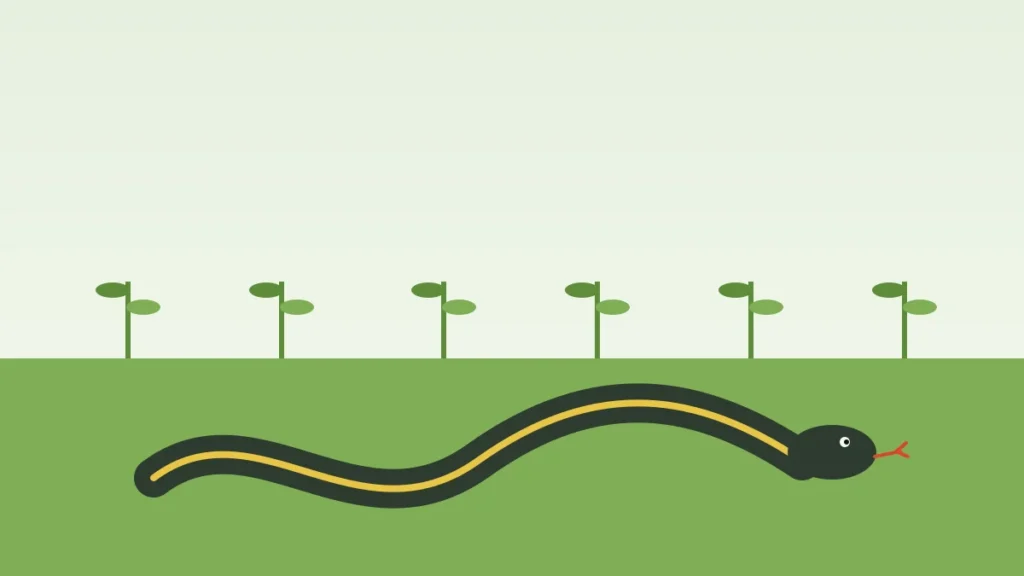
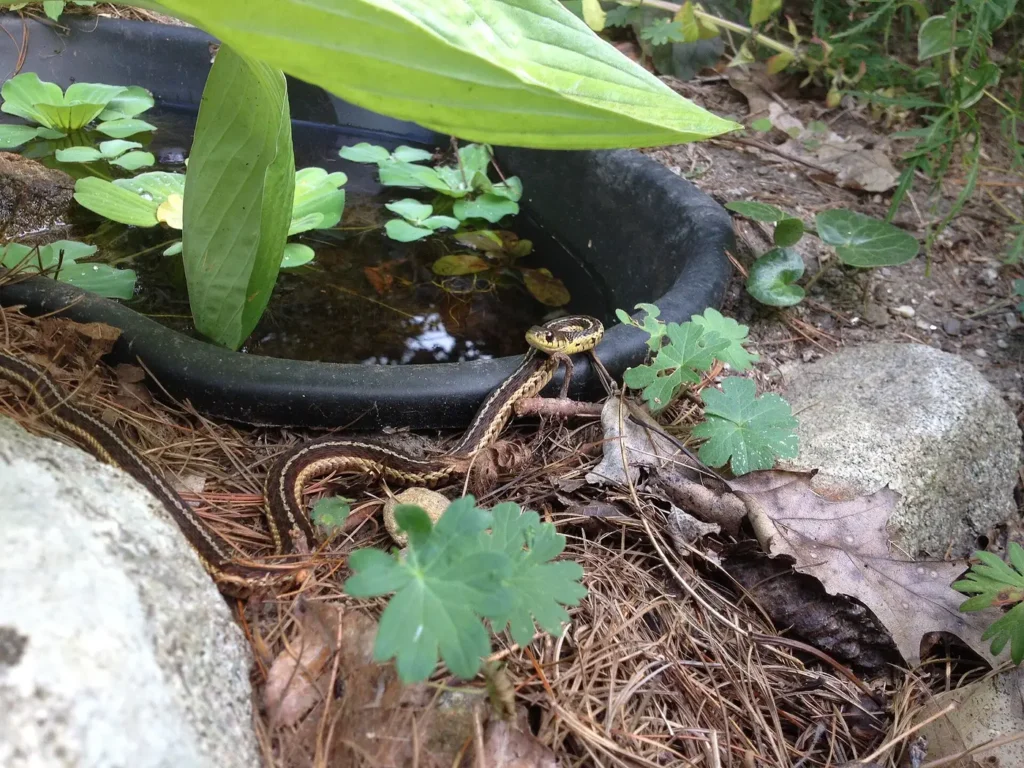
“Garden snake” is a nickname for garter snakes, a group of small, common, non-venomous snakes found across most of North America. Ohio State University Extension’s article on snakes in the garden explains that the garter snake is named for the three light stripes running along its black, brown, gray or olive body, and is nicknamed the garden snake because that is where gardeners usually find it.
How to identify a garter snake
- Stripes: usually three light stripes, yellow, green, white or bluish, one down the back and one along each side.
- Background color: black, brown, gray, olive or greenish, often with a checkered pattern between the stripes. Colors vary a lot by region; some western garter snakes have red markings.
- Size: typically about 1.5 to 3 feet long, and slender.
- Behavior: active during the day, often basking on rocks, paths, decks or patios on sunny days.
Are garden snakes dangerous?
Garter snakes are harmless to people. If grabbed, one may bite in self-defense or release a strong-smelling musk, but the bite of a garter snake is not dangerous to people. The simple answer is: leave it alone and it will leave you alone.
Why garden snakes are good for your garden
According to Ohio State Extension, garter snakes feed on worms, slugs, insects and small mammals that might otherwise feast on garden plants. A garter snake living under your mulch or in a stone wall is quietly working as free pest control.
| Garden pest | Eaten by |
|---|---|
| Slugs | Garter snakes, brown snakes |
| Insects such as grasshoppers | Garter snakes, smaller snakes |
| Mice and voles | Rat snakes, milk snakes, larger garter snakes |
| Rats | Rat snakes |
If slugs are chewing your hostas and lettuce, a resident garter snake is an ally. Our pest identifier helps you work out what is eating your plants, and our guide to keeping animals out of your garden covers rodents and other mammals.
Other harmless snakes you may find in the garden
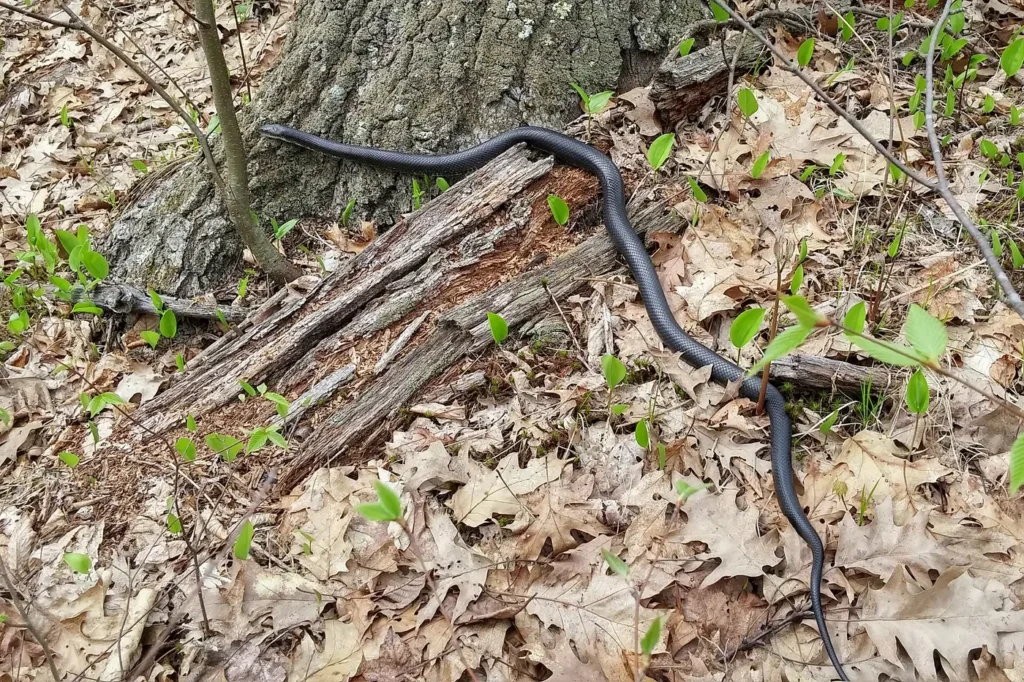
Garter snakes are the most common, but several other non-venomous snakes regularly turn up in yards and gardens. Ohio State Extension lists brown snakes, milk snakes and black rat snakes among the snakes found around homes.
| Snake | How to recognize it | Why it is useful |
|---|---|---|
| Garter snake | Slender, with light lengthwise stripes | Eats slugs, insects and small rodents |
| Rat snake | Large, often glossy black (color varies by region), white or pale chin | Excellent rodent control; climbs well |
| Brown snake | Small, brown, with two rows of dark spots | Eats slugs and worms; often under mulch |
| Ring-necked snake | Small, dark gray or black with a yellow or orange neck ring | Secretive; eats small invertebrates |
| Milk snake | Blotched or banded pattern | Eats rodents |
| Water snake | Heavy-bodied, banded, near ponds and streams | Eats fish and amphibians |
How to tell a harmless snake from a venomous one
Most snakes you meet in a garden are harmless, but venomous species do live in many parts of the United States. In the US they fall into two groups:
- Pit vipers: rattlesnakes, copperheads and cottonmouths (water moccasins).
- Coral snakes, found in parts of the South and Southwest.
Know your local venomous species
Rather than relying on general rules, learn what the venomous snakes in your own area look like. Your state wildlife agency or Cooperative Extension office can tell you which species live near you; in many northern areas there are only one or two, and some regions have none.
| Venomous snake | Key features | Often confused with |
|---|---|---|
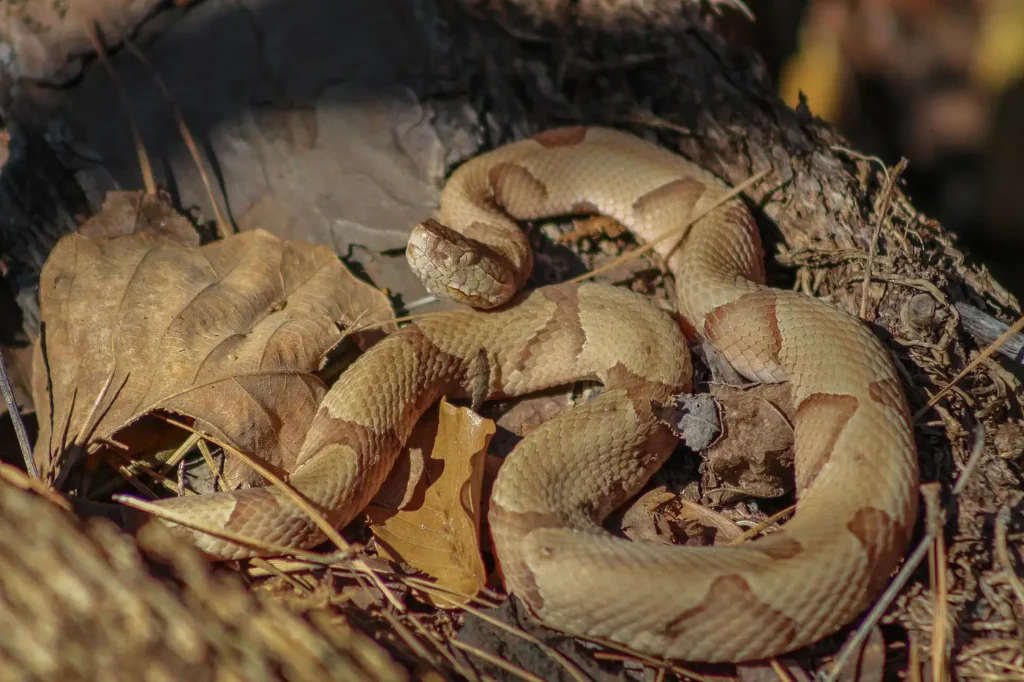
| Copperhead | Tan to coppery body with darker hourglass-shaped bands, narrow on top and wide on the sides | Water snakes, milk snakes, young rat snakes |
| Rattlesnakes | Rattle on the tail (may be missing on young or injured snakes); blotched or banded pattern | Gopher and bull snakes, which may hiss and vibrate their tails |
| Cottonmouth | Heavy-bodied, dark, near water; may open its white-lined mouth when threatened | Harmless water snakes |
| Coral snake | Bands of red, yellow and black, with red touching yellow | Scarlet king snakes and milk snakes |
Ohio State Extension notes that the common water snake is often mistaken for the venomous copperhead. That is exactly why the safest rule is to treat any snake you cannot confidently identify as potentially venomous: keep your distance and let it move on.
Do not rely on rules of thumb. Popular shortcuts such as head shape or pupil shape are unreliable and require getting far too close. Distance, not identification, is what keeps you safe.
What to do if you find a snake in your garden
- Stop and step back. Give the snake several feet of space.
- Do not try to catch, handle or kill it. Most bites happen when people try to handle or kill snakes.
- Let it leave. Snakes usually move away on their own within minutes.
- Keep children and pets back until it has gone.
- If a venomous snake is near the house and will not leave, contact a local wildlife professional or animal control.
Many states protect some or all native snakes by law, and killing them may be illegal; check with your state wildlife agency before removing any snake.
How to make your garden less attractive to snakes
Snakes come to gardens for shelter, food and warmth. If you would prefer fewer snakes near the house, reduce those three things. Ohio State Extension is clear that there are no repellents that effectively keep snakes away, so habitat changes are the way to go.
- Remove hiding places near the house: boards, sheets of metal, rock piles, brush piles and dense ground cover.
- Keep grass short around the house and play areas.
- Control rodents by storing birdseed, pet food and garden produce securely, and cleaning up spilled seed under feeders.
- Move woodpiles and compost away from the house and raise woodpiles off the ground.
- Seal gaps around foundations, doors and utility lines so snakes cannot get inside.
- Use snake-proof fencing for small areas such as play yards: fine mesh, buried a few inches and angled outward.
Keeping the area right around the house tidy while leaving some cover in the back of the garden lets you enjoy the pest control benefits without unexpected encounters at the back door.
What does not work
| Method | The reality |
|---|---|
| Commercial snake repellents | No repellents have been shown to keep snakes away reliably |
| Mothballs | Do not use. They are pesticides registered only for use in sealed containers; using them outdoors is against the label and can harm people, pets and wildlife |
| Sulfur, lime, gasoline | Ineffective and can damage soil or plants |
| Rope borders | A myth; snakes cross them readily |
| Plants said to repel snakes | No reliable evidence |
Gardening safely where venomous snakes live
- Wear gloves and closed shoes when gardening, and boots in tall vegetation.
- Look before you reach into dense plants, under boards, into woodpiles or behind pots.
- Use a tool to move debris or lift boards, rather than your hands.
- Use a flashlight outdoors at night in warm weather, when some venomous species are active.
- Keep paths clear of overhanging plants so you can see where you step.
Snakebite safety
Bites from venomous snakes are uncommon, but it is worth knowing what to do. If you are bitten by a snake that may be venomous, or you are not sure what it was, get medical care as quickly as possible.
- Call 911 or your local emergency number right away.
- Stay as calm and still as possible, and keep the bitten area at about the level of the heart.
- Remove rings, watches and tight clothing near the bite before swelling starts.
- Note what the snake looked like, or take a photo from a safe distance, but do not try to catch it.
- Do not cut the wound, try to suck out venom, apply ice, or use a tourniquet.
For a pet bitten by a snake, contact a veterinarian or emergency animal hospital immediately.
Garden snakes and your pets
Dogs and cats are curious and may chase or paw at snakes. Harmless snakes may bite in defense, causing minor wounds; venomous bites are an emergency. Keep pets supervised in areas where venomous snakes are known, and ask your veterinarian about local risks.
Snakes through the seasons
| Season | What snakes are doing |
|---|---|
| Spring | Emerging from winter shelter; basking on warm surfaces; mating |
| Summer | Feeding; garter snakes give birth to live young in mid to late summer |
| Fall | Young snakes dispersing; adults seeking winter shelter |
| Winter | Inactive in sheltered spots below the frost line |
That late-summer and fall spike in sightings is mostly young snakes on the move, and it passes.
Snakes around compost piles, mulch and raised beds
Gardens offer snakes exactly what they look for: shelter, warmth and food. Mississippi State University Extension’s guide to reducing snake problems around homes explains that snakes living near a home are there because they find food, shelter or other habitat, and that in most cases the snakes seen around houses are harmless species such as garter, ribbon, ringneck, king or rat snakes.
- Compost piles are warm and attract insects and rodents. Turn piles regularly, use a closed bin near the house, and keep it away from doorways.
- Thick mulch shelters slugs and the small snakes that eat them. Keep mulch about 2 to 3 inches deep, which is enough for the garden but less inviting as a hiding place.
- Raised beds and stone edging create cool crevices. Fill gaps and keep weeds trimmed along the edges.
- Bird feeders scatter seed that draws rodents, and rodents draw snakes. Use seed trays and clean up spills.
The same Mississippi State guide advises keeping the lawn mowed around the home, checking walkways, porches and foundations for cracks and holes, and repairing openings with sheet metal or fine hardware cloth. It also cautions that unless you are skilled at snake identification, you should treat all snakes as if they are venomous.
Living alongside snakes
University of Florida IFAS Extension’s guide to coexisting with venomous snakes emphasizes that even venomous snakes play valuable roles in the ecosystem, and that learning to recognize local species makes encounters far less stressful. Practical habits help the whole household:
- Teach children to stop, step back and tell an adult when they see a snake, and never to touch one.
- Learn your local species using a regional field guide or your state wildlife agency’s identification pages.
- Photograph from a distance if you want help identifying a snake; many Extension offices will identify a photo.
- Accept the occasional visitor: a garter snake in the lettuce is a sign of a healthy garden with plenty of natural pest control.
Sources and further reading
These university Extension and government resources informed this guide and are useful for going deeper. Recommendations can vary by region, so your local Cooperative Extension office is always a good next step.
- Reducing Snake Problems Around Homes, Mississippi State University Extension
- Coexisting with Venomous Snakes, UF/IFAS Extension
- Snakes in Residential Areas, UF/IFAS Extension
Frequently asked questions
Are garden snakes poisonous?
No. Garden snakes, or garter snakes, are not dangerous to people. They may bite or release a musky smell if handled, but they are harmless and beneficial.
What does a garden snake look like?
Usually a slender snake about 1.5 to 3 feet long with three light stripes running along a black, brown, gray or olive body.
Are snakes good for the garden?
Yes. Garter snakes eat slugs, insects and small rodents, and rat snakes are excellent rodent controllers.
How do I get rid of snakes in my garden?
Remove cover such as boards, brush and rock piles near the house, keep grass short, control rodents, and seal gaps around foundations. Repellents and mothballs do not work.
How can I tell if a snake is venomous?
Learn the venomous species in your area from your state wildlife agency. If you cannot identify a snake with confidence, keep your distance and treat it as potentially venomous.
What should I do if a snake bites me?
If the snake may be venomous, call 911 immediately, stay calm and still, and remove tight items near the bite. Do not cut, suck, ice or tourniquet the wound.
What is the difference between a garden snake and a garter snake?
They are the same. “Garden snake” is a nickname for garter snakes because they are so often found in gardens.
Do snakes eat garden vegetables?
No. Snakes are carnivores. They eat insects, slugs, worms, rodents and other small animals, never plants, so a snake will not damage your crops.
Why are there snakes in my garden?
Gardens offer shelter, warmth and food such as slugs, insects and rodents. Reducing cover near the house and controlling rodents makes the area less attractive.