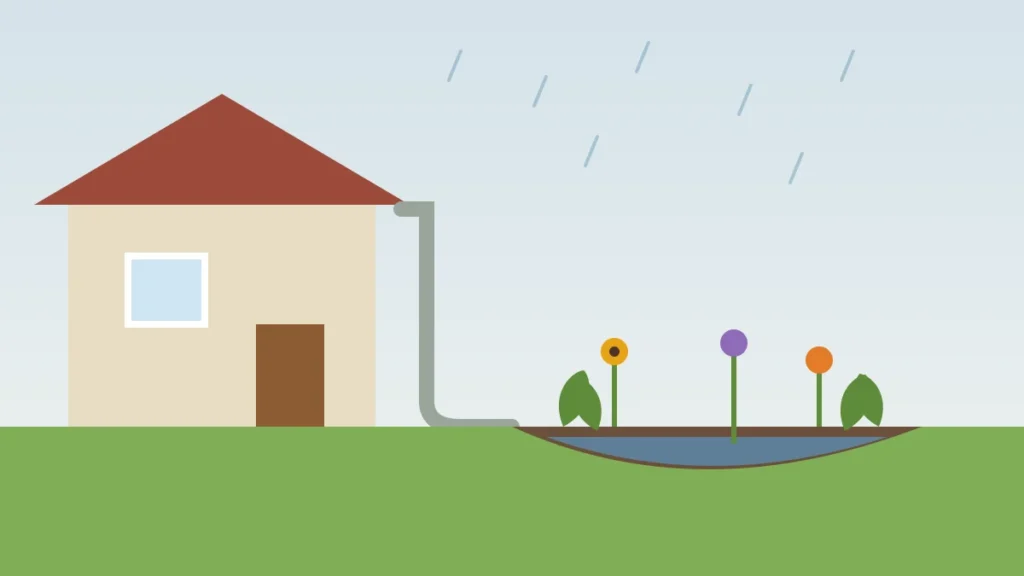
Every time it rains, water rushes off roofs, driveways and compacted lawns, carrying soil, fertilizer and pollutants into storm drains and, from there, into streams and lakes. A rain garden catches some of that water where it falls. It is a shallow, planted basin that collects runoff from a downspout or slope and lets it soak slowly into the ground, usually within a day or so.
Rain gardens are beautiful, low-maintenance, good for pollinators, and one of the most useful things a homeowner can do for local water quality. This guide explains what a rain garden is, where to put one, how big and deep to make it, how to dig and plant it, and how to look after it.
What is a rain garden?
A rain garden is a shallow depression, typically a few inches to about 8 inches deep, planted with deep-rooted plants that tolerate both wet and dry conditions. It sits downhill from a source of runoff, such as a roof downspout or a sloping lawn. During a storm it fills with water, then drains as the water soaks into the soil.
A rain garden is not a pond
This is the most common misunderstanding. A properly built rain garden drains within roughly a day or two after a storm, so it does not hold standing water for long. That also means it should not become a mosquito breeding site, since mosquitoes need standing water for several days to develop.
| Rain garden | Pond or water garden | Rain barrel | |
|---|---|---|---|
| Purpose | Soak runoff into the ground | Hold water permanently | Store water for later use |
| Water present | Briefly, after storms | Always | Inside a closed container |
| Plants | Wet- and drought-tolerant perennials, grasses, shrubs | Aquatic plants | None |
| Main benefit | Reduces runoff and filters pollutants | Wildlife and beauty | Free water for the garden |
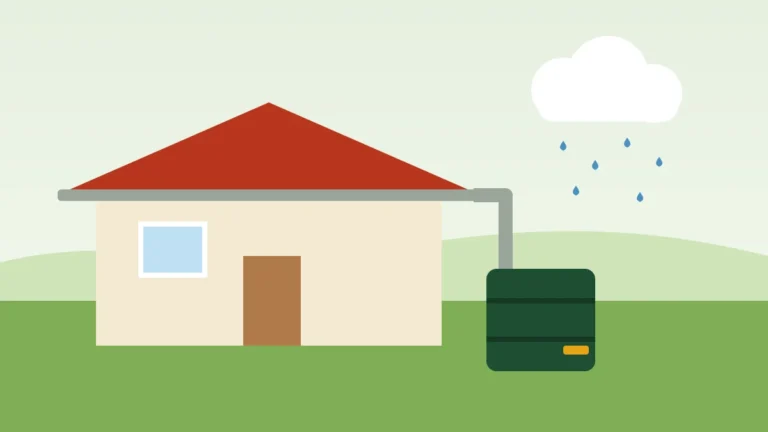
Rain gardens and rain barrels work well together: a barrel captures the first water from the roof, and its overflow can be directed into the rain garden. See our guide to rainwater harvesting for gardens and the rain barrel calculator.
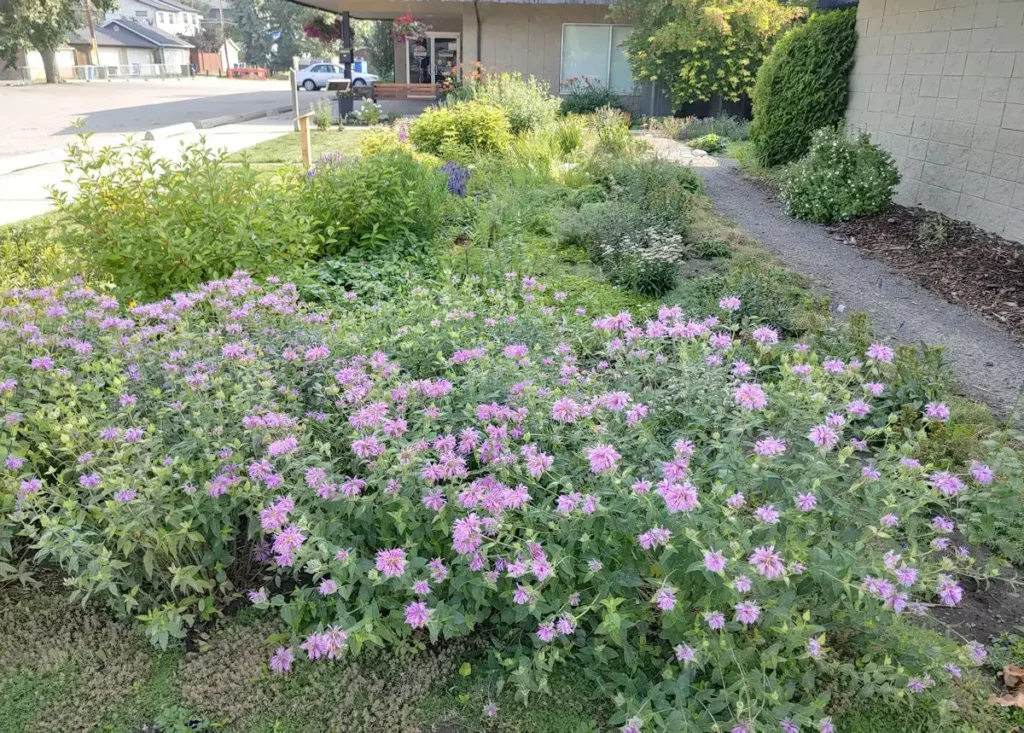
Why build a rain garden?
- Cleaner water. Soil and plant roots filter sediment, nutrients and other pollutants before water reaches streams.
- Less flooding and erosion. Runoff is held back and released slowly into the ground.
- Drier basements and yards, when downspout water is directed away from the house into a well-placed garden.
- Habitat. Native flowering plants feed bees, butterflies and birds.
- Low maintenance. Once established, native plants need little watering, no fertilizer and only occasional weeding.
The EPA’s Soak Up the Rain program explains how rain gardens and other green infrastructure reduce stormwater pollution, with ideas homeowners can use.
Step 1: Choose the location
Good places for a rain garden
- Downhill from a downspout, where you can direct roof water to it with a pipe or a shallow grassy or rocky channel called a swale.
- Downhill from a sloping lawn or driveway that sheds water during storms.
- In full or partial sun, which suits the widest range of plants and helps the garden dry out.
- On a fairly gentle slope. Steep slopes need more digging and a stronger berm.
Places to avoid
| Avoid | Why |
|---|---|
| Within about 10 feet of the house foundation | Water soaking in next to the house can reach the basement |
| Over or near a septic system or drain field | Extra water can overload it |
| Spots where water already stands for days | The soil drains too slowly; this is a wetland, not a rain garden site |
| Directly under large trees | Digging damages roots, and shade limits plants |
| Over buried utility lines | Call 811 before you dig, as required in the US |
Step 2: Test how well the soil drains
A rain garden only works if water can soak in. A simple test tells you whether your soil is suitable:
- Dig a hole about 6 to 8 inches deep where the garden will go.
- Fill it with water and let it drain completely, to saturate the soil.
- Fill it again and measure the depth.
- Check the depth every hour or so and note how fast it drops.
If the water drains away within about a day, the site should work. If water is still standing after more than a day, the soil drains too slowly: choose another spot, amend the soil, or ask your local Cooperative Extension office for advice. Also note your soil type, because it determines how big the garden needs to be:
| Soil type | How it feels | Drainage |
|---|---|---|
| Sandy | Gritty, falls apart when squeezed | Fast |
| Silty (loam) | Smooth, slightly floury, holds shape loosely | Moderate |
| Clayey | Sticky when wet, forms a ribbon when squeezed | Slow |
Step 3: Work out the size
The size of a rain garden depends on how much area drains into it, your soil type and how deep you make it. The University of Wisconsin–Extension and Wisconsin Department of Natural Resources guide How to Build a Rain Garden (PDF) uses a simple method: multiply the drainage area by a size factor.
Rain garden area (sq ft) = drainage area (sq ft) × size factor
1. Measure the drainage area
For a downspout, estimate the part of the roof that drains into it. Measure the length and width of the house footprint, multiply them, and divide by the number of downspouts that share it. For example, a 40-by-25-foot house is 1,000 square feet of roof; if one of four downspouts feeds the garden, the drainage area is about 250 square feet.
2. Find the size factor
Typical size factors for a rain garden within about 30 feet of a downspout, following the Wisconsin method:
| Soil | 3 to 5 in deep | 6 to 7 in deep | 8 in deep |
|---|---|---|---|
| Sandy | 0.19 | 0.15 | 0.08 |
| Silty | 0.34 | 0.25 | 0.16 |
| Clayey | 0.43 | 0.32 | 0.20 |
3. Multiply
| Drainage area | Soil and depth | Size factor | Rain garden area |
|---|---|---|---|
| 250 sq ft | Silty, 6 in | 0.25 | About 63 sq ft |
| 500 sq ft | Silty, 6 in | 0.25 | 125 sq ft |
| 500 sq ft | Clayey, 4 in | 0.43 | 215 sq ft |
| 500 sq ft | Sandy, 6 in | 0.15 | 75 sq ft |
Gardens over about 300 square feet become a big digging job; if your number is larger, split the runoff between two smaller gardens. Many homeowners also build a smaller garden than the full calculation suggests: it still captures most ordinary storms, and the extra water simply overflows. To see how much water your roof actually sheds in a storm, try the rainwater collection calculator: one inch of rain on 1,000 square feet of roof yields about 623 gallons.
Step 4: Choose the depth and shape
- Depth: most residential rain gardens are 4 to 8 inches deep. Deeper gardens hold more water in less area, but drain more slowly, so keep clay-soil gardens toward the shallow end.
- Slope affects depth: on flat ground, a shallow garden is easy; on a slope you dig into the uphill side and build up a berm on the downhill side to make a level basin.
- Shape: long and narrow gardens laid across the slope catch water best. Crescent and kidney shapes look natural. Make the garden about twice as long as it is wide.
- Level bottom: the base of the garden should be level, so water spreads out and soaks in evenly.
Step 5: Dig and build the garden
- Call 811 a few days before digging to have underground utilities marked.
- Outline the garden with a hose or rope, then spray paint or flags.
- Remove the turf inside the outline.
- Dig the basin to your chosen depth, keeping the bottom level. Check with a long board and a level.
- Build a berm on the downhill side with the soil you remove, and compact it so it holds water. Plant or mulch it to stop erosion.
- Loosen the bottom and, if the soil is heavy, mix in compost to help plants establish and water soak in.
- Connect the downspout with a buried pipe, a downspout extension or a shallow swale lined with grass or stones.
- Make an inlet and an overflow. Line the inlet with stones so water does not wash out soil, and leave a low, stone-lined spot on the berm where excess water can exit safely in big storms.
Step 6: Choose the plants
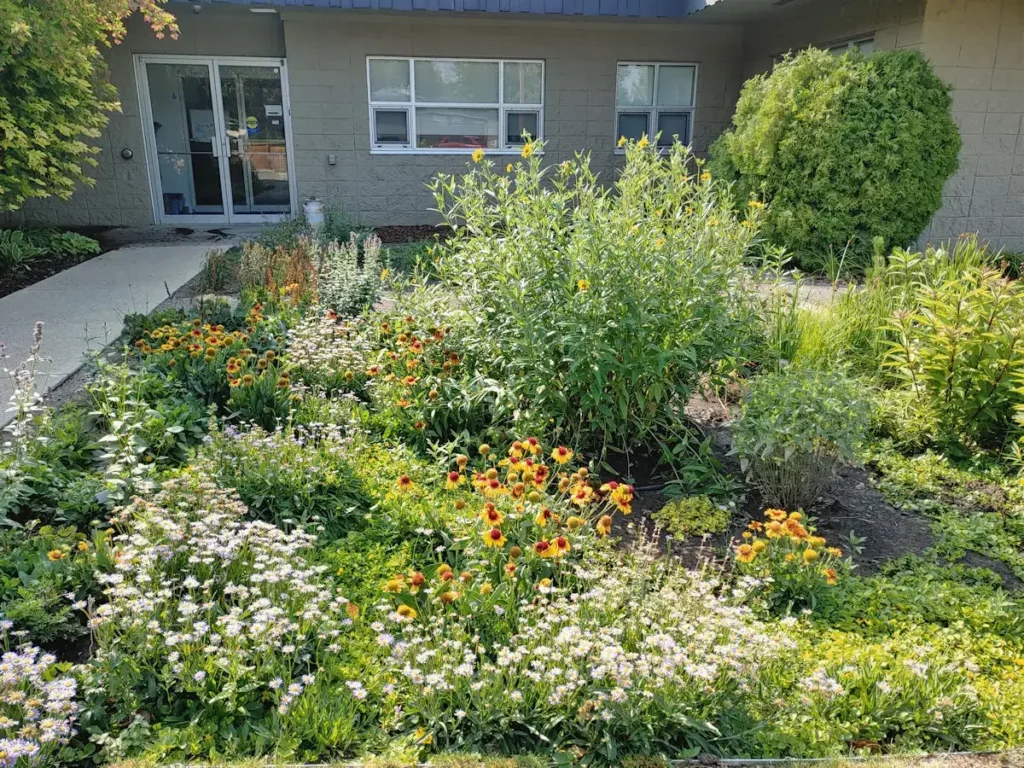
Rain garden plants must cope with brief flooding after storms and dry spells in between. Native plants are the best choice: they are adapted to your climate, need little care once established, have deep roots that help water soak in, and support local wildlife. A rain garden has three planting zones:
| Zone | Conditions | Plant types |
|---|---|---|
| Bottom (center) | Wettest; floods briefly after storms | Plants that tolerate wet feet, such as sedges, rushes and wet-meadow perennials |
| Sides (slopes) | Moist after storms, drier between | Adaptable perennials and grasses |
| Edge and berm | Driest | Drought-tolerant perennials, grasses and small shrubs |
Plants often used in rain gardens
The right plants vary by region, so check a local native plant list. Plants commonly recommended across much of the US include:
- Wet-tolerant perennials: swamp milkweed, blue flag iris, cardinal flower, Joe-Pye weed, and sedges and rushes.
- Adaptable perennials: purple coneflower, black-eyed Susan, bee balm, New England aster, blazing star.
- Grasses: switchgrass and little bluestem.
- Shrubs for larger gardens: red twig dogwood, winterberry and buttonbush.
Your local Cooperative Extension office or native plant society can recommend species for your area, and the USDA Plant Hardiness Zone Map helps confirm which perennials will survive your winters. Our growing zone finder explains what your zone means.
Planting tips
- Use plugs or small potted plants rather than seed, which can wash away.
- Plant densely, about 12 inches apart for perennials, so they fill in quickly and crowd out weeds.
- Plant in groups of three to seven of each species for a natural, attractive look.
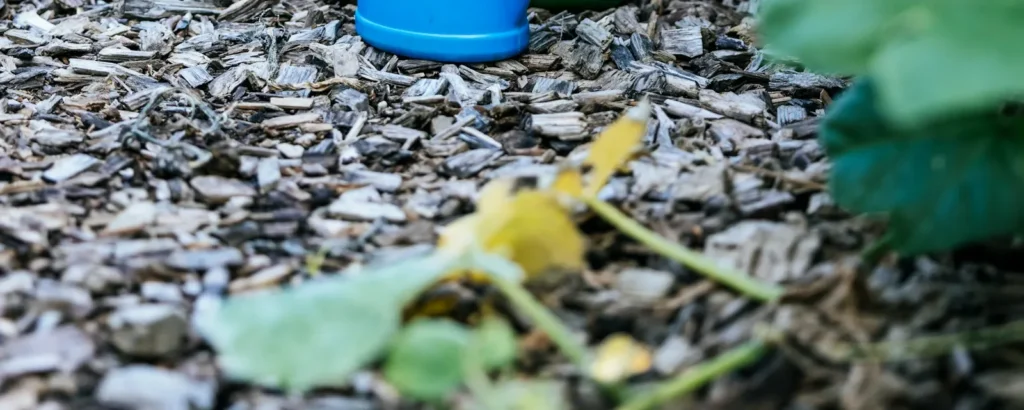
- Mulch 2 to 3 inches deep with shredded hardwood mulch, which stays in place better than bark nuggets that can float.
Step 7: Look after the rain garden
| When | Task |
|---|---|
| First growing season | Water during dry spells, about weekly, until plants are established; weed regularly |
| Second season | Weed as needed; replace any plants that failed |
| Every spring | Cut back last year’s stems; refresh mulch; clear the inlet and overflow |
| After big storms | Check for erosion at the inlet and repair the berm if needed |
| Fall | Leave seed heads standing for birds and overwintering insects |
Never use fertilizer or pesticides in a rain garden: the water passing through it carries them straight into the ground and, eventually, local waterways. If water stands for more than a couple of days after storms, loosen the soil surface, add compost, or reduce the amount of water directed to it.
For more ideas on using water wisely around the yard, see the EPA’s WaterSense outdoor tips.
How much does a rain garden cost?
A do-it-yourself rain garden mostly costs plants, mulch and your time. Using small plugs instead of large potted plants keeps costs down, and some towns, counties and watershed groups offer rebates, free plants or design help for rain gardens, so check with your local government or conservation district. A professionally designed and installed garden costs considerably more.
Watch: Rain Garden Installation, Part 1
Watch Purdue Extension walk through installing a residential rain garden:
Common rain garden mistakes
- Building it in an existing wet spot that never drains.
- Placing it too close to the house.
- Making it too deep, so it holds water too long.
- An uneven bottom, so water collects at one end.
- No stone at the inlet, so incoming water erodes the soil.
- Floating mulch such as bark nuggets that washes out.
- Skipping first-year watering and weeding.
Frequently asked questions
What is a rain garden?
A rain garden is a shallow, planted basin that collects runoff from a roof, driveway or lawn and lets it soak into the ground, typically within a day or so, filtering pollutants and reducing runoff.
How deep should a rain garden be?
Most residential rain gardens are 4 to 8 inches deep. Shallower gardens suit clay soils that drain slowly; deeper ones hold more water in less space.
How big should a rain garden be?
Multiply the area draining into it by a size factor based on soil and depth. For example, 500 square feet of roof with silty soil and a 6-inch-deep garden needs about 125 square feet.
Do rain gardens attract mosquitoes?
A properly built rain garden should not, because it drains within about a day or two, while mosquitoes need standing water for several days to develop.
How far should a rain garden be from the house?
At least about 10 feet from the foundation, so water does not soak in next to the house, and away from septic systems.
What plants are best for a rain garden?
Native plants that tolerate both wet and dry conditions, such as swamp milkweed, blue flag iris, sedges, black-eyed Susan, coneflowers, switchgrass and red twig dogwood. Check a local native plant list for your region.
Do rain gardens need maintenance?
Water and weed during the first season. After that, cut back old stems each spring, refresh mulch, and keep the inlet and overflow clear.