Watering is the garden job you will do most often, and the one that causes the most confusion. Water too little and plants wilt, fruit cracks and lettuce turns bitter. Water too much and roots rot, leaves yellow and diseases spread. Most gardeners worry about underwatering, yet overwatering is just as common, especially with daily sprinkling on a timer.
The good news is that watering well follows a few simple principles. This guide explains how much water vegetables need, how often to water in different situations, the best time of day, and how to tell when your plants actually need it. For exact gallons and run times for your own beds, use the garden watering calculator.
The short answer
Most vegetable gardens need about 1 inch of water per week from rain and watering combined, applied in one to three deep waterings rather than a little every day. Sandy soil, raised beds, containers and hot, windy weather need more frequent watering. Clay soil and mulched beds need less.
How much water do vegetables need?
The traditional rule of thumb is about an inch of water a week, more in hot, dry weather. NC State Extension’s guide to how much water a summer vegetable garden needs explains that an inch adds up to roughly two-thirds of a gallon per square foot of garden. University of Maine Cooperative Extension suggests that about 1.25 to 1.5 inches a week is enough for most gardens in dry spells, aiming to wet the soil 5 to 6 inches deep.
In gallons, one inch of water over one square foot is about 0.62 gallons:
| Garden size | Area | 1 inch of water |
|---|---|---|
| One 4 × 8 ft raised bed | 32 sq ft | About 20 gallons |
| Two 4 × 8 ft beds | 64 sq ft | About 40 gallons |
| 10 × 10 ft garden | 100 sq ft | About 62 gallons |
| 20 × 30 ft garden | 600 sq ft | About 374 gallons |
Subtract whatever rain fell that week. A simple rain gauge in the garden tells you exactly how much you need to make up.
How often to water
Water deeply, not daily
The single most important principle is to water deeply and less often. A long, slow soak that moistens the soil several inches down encourages roots to grow deep, where the soil stays moist longer. Frequent light sprinkling wets only the surface, keeps roots shallow, and leaves plants more vulnerable in hot spells. For most in-ground gardens with average soil, one or two deep waterings a week, topped up by rain, is a good starting point.
Adjust for your soil
- Sandy soil drains fast and holds little water. Water more often, for example twice a week with half the weekly amount each time.
- Loam holds water well. One or two deep waterings a week usually work.
- Clay soil holds water for a long time but absorbs it slowly. Water less often, and apply it slowly so it soaks in rather than running off.
Adjust for how you grow
- Raised beds drain and warm faster than the ground, so they often need water more frequently, especially in summer.
- Containers dry out fastest of all. In summer heat, many need water every day, and small pots may need it twice.
- Seedlings and newly sown seeds need the surface kept consistently moist with light, frequent watering until they establish.
- New transplants need extra water for the first week or two while their roots grow into the surrounding soil.
- Mulched beds lose much less water to evaporation, so they need watering less often.
Adjust for the weather
Heat, sun, wind and low humidity all increase water use. A week of hot, windy weather can call for half again as much water as a mild week. Cool, cloudy weather needs less. Rather than following a fixed schedule, check the soil and adjust.
How to tell when to water
The most reliable test costs nothing. Push a finger, or a trowel, 2 to 3 inches into the soil near the plants.
- Dry at that depth: time to water.
- Still moist: wait a day and check again.
- Wet and sticky: do not water. The soil may already be too wet.
Do not judge by the surface, which can look dry within hours on a sunny day while the root zone stays moist. And do not judge by wilting alone: many plants droop in strong afternoon sun and recover by evening. Wilting that is still there in the cool of the morning is the real warning sign. If you are unsure, the overwatering checker helps tell the difference, and our guide to overwatering versus underwatering explains the symptoms.
The best time of day to water
Early morning is best. Less water is lost to evaporation, plants have water available through the heat of the day, and any water on the leaves dries quickly in the sun, which reduces leaf diseases. Evening watering is fine if you water at the base of plants, but avoid wetting foliage late in the day, because leaves that stay wet overnight are more prone to disease. Watering in the heat of midday works if plants are wilting badly, but more of the water evaporates.
Water at the roots, not the leaves
Sprinklers wet everything, including leaves and paths, and lose a good share of water to wind and evaporation. Watering at the base of plants puts water where roots can use it and keeps leaves dry. Options include:
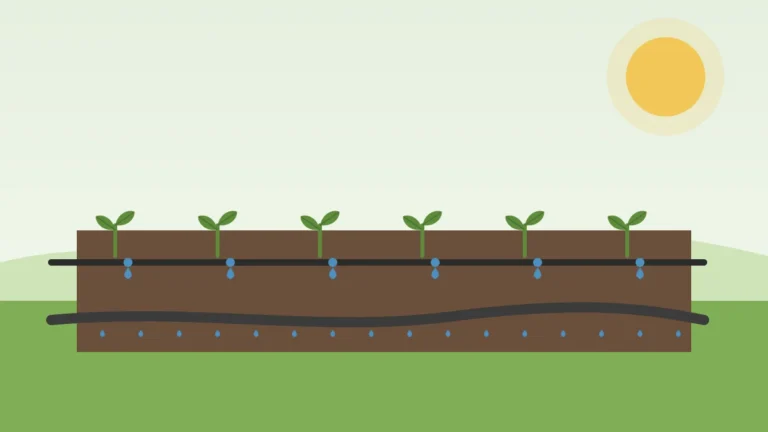
- Drip irrigation, which delivers water slowly to each plant and is the most efficient method for vegetable beds.
- Soaker hoses, a simple, low-cost option for straight beds and rows.
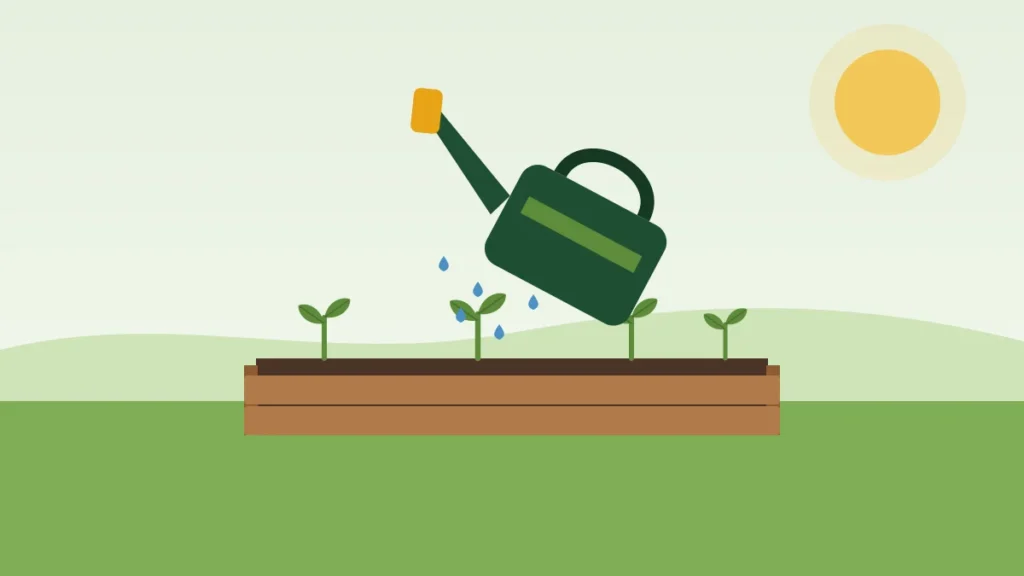
- A watering can or hose with a gentle wand, aimed at the soil.
Our comparison of drip irrigation and soaker hoses helps you choose, and the drip irrigation calculator sizes a system and works out how long to run it.
Critical times for different crops
Steady moisture matters all season, but some crops are especially sensitive at particular stages:
| Crop | When water matters most |
|---|---|
| Tomatoes, peppers | Flowering and fruit development. Uneven watering causes blossom end rot and cracking. |
| Cucumbers, squash | Flowering and fruiting. Drought causes bitter or misshapen fruit. |
| Sweet corn | Tasseling, silking and ear fill. |
| Beans, peas | Flowering and pod fill. |
| Lettuce, spinach | Throughout. Dry spells cause bitterness and early bolting. |
| Potatoes | Tuber formation, from flowering onward. |
| Onions | Bulb swelling. Reduce water as tops start to fall over. |
| Carrots, beets | Germination and root development. Swings cause cracking. |
Tomatoes are the classic example: our guide to common tomato problems explains how uneven watering leads to blossom end rot.
Measuring how much you apply
Most people have no idea how much water they actually put down. A few easy ways to find out:
- The can test for sprinklers: set a few straight-sided cans around the area, run the sprinkler for 30 minutes, and measure the depth. That tells you how long it takes to apply an inch.
- A hose flow test: time how long your hose takes to fill a 5-gallon bucket. Divide the gallons you need by the gallons per minute to get the watering time.
- Drip math: multiply the number of emitters by their flow rate in gallons per hour to see how many gallons an hour your system delivers.
- A hose water meter: an inexpensive meter shows exactly how many gallons you applied.
Ways to water less
- Mulch 2 to 3 inches deep with straw, shredded leaves or compost. It is the single biggest water saver. The mulch calculator works out how much you need.
- Add compost each year. Organic matter helps sandy soil hold water and clay soil absorb it.
- Use drip or soaker hoses instead of sprinklers.
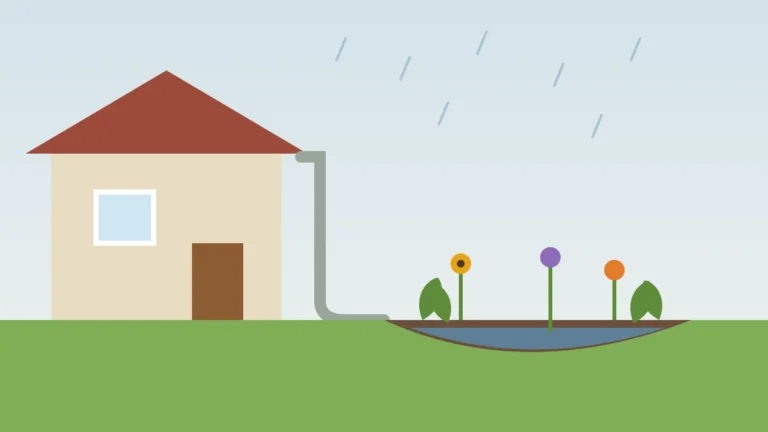
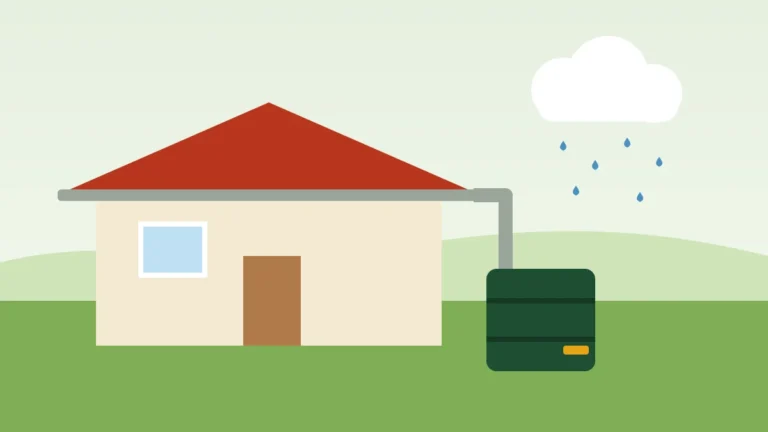
- Collect rainwater. The rain barrel calculator shows how quickly a barrel fills, and our guide to rainwater harvesting for gardens covers setup.
- Group plants by water need, so thirsty crops share a drip line and drought-tolerant herbs sit elsewhere.
The EPA’s WaterSense program has more ideas for using water efficiently outdoors.
Watering during a heat wave
In very hot weather, plants lose water fast, and the soil dries out faster too. During a heat wave:
- Check the soil daily, especially in raised beds and containers.
- Water deeply in the early morning so plants start the day with full roots.
- Increase the amount, often to 1.5 inches or more a week, rather than switching to frequent shallow sprinkling.
- Top up the mulch to keep roots cooler and slow evaporation.
- Shade sensitive crops such as lettuce and spinach with shade cloth or an old sheet in the hottest part of the day.
- Do not panic at afternoon wilting. If plants recover by evening and the soil is moist, they are coping.
Watering while you are away
A few days away in summer can undo weeks of work. Some simple solutions:
- A drip system or soaker hose on a battery timer is the most reliable option and inexpensive to set up.
- Self-watering containers hold several days of water in a reservoir.
- Group containers together in partial shade while you are gone.
- Water deeply and mulch well just before you leave.
- Ask a neighbor and leave clear instructions: which beds, how long, and to check the soil first.
Watering in spring and fall
Cool-season crops in spring and fall need less water than summer crops, because cooler temperatures and shorter days mean less evaporation. Rain often covers most of their needs. Keep newly sown seeds and transplants moist, check the soil before watering, and cut back when the weather is cool and cloudy. As fall frost approaches, water well before a cold night: moist soil holds more heat than dry soil and gives plants a little extra protection.
A simple weekly watering routine
- Check the rain gauge at the start of the week and note how much rain fell.
- Do the finger test in two or three spots in each bed, 2 to 3 inches down.
- Water deeply where the soil is dry, early in the morning, aiming for about an inch a week in total including rain.
- Check containers and raised beds daily in hot weather.
- Top up mulch wherever bare soil shows.
- Adjust for the forecast: skip watering before heavy rain, and plan extra before a heat wave.
Watering by soil type at a glance
| Soil | How often | How to apply | Long-term fix |
|---|---|---|---|
| Sandy | Twice a week or more | Smaller amounts, more often | Add compost every year |
| Loam | Once or twice a week | Deep soak | Maintain with compost and mulch |
| Clay | Once a week or less | Slowly, so water soaks in rather than running off | Add compost; consider raised beds |
Whatever your soil, the finger test overrides any schedule. Soil type only tells you roughly how quickly it will dry out.
Frequently asked questions
How often should I water my vegetable garden?
For most in-ground gardens, one to two deep waterings a week, adding up to about an inch of water including rain. Sandy soil, raised beds and hot weather need more frequent watering; containers may need daily watering in summer.
How many gallons of water does a garden need per week?
About 0.62 gallons per square foot for each inch of water. A 10-by-10-foot garden needs about 62 gallons a week, minus any rain.
Is it better to water in the morning or evening?
Early morning is best: less water evaporates and leaves dry quickly. Evening is fine if you water at the base of plants and keep leaves dry.
Should I water my garden every day?
Usually not. Daily light watering keeps roots shallow. Water deeply and less often, except for seedlings, new transplants and containers in hot weather.
How do I know if my garden needs water?
Push a finger 2 to 3 inches into the soil. If it is dry at that depth, water. If it is still moist, wait. Wilting that lasts into the cool morning is also a sign of thirst.
Do raised beds need more water?
Often, yes. Raised beds drain and warm faster than the ground, so they tend to dry out sooner, especially in summer. Mulch and drip irrigation help.
How long should I run my drip irrigation?
It depends on emitter flow and spacing. Multiply the number of emitters by their gallons per hour to get your system’s output, then divide the gallons your beds need by that figure. The drip irrigation calculator does this for you.
Can you overwater a vegetable garden?
Yes. Soil that stays soggy starves roots of oxygen, leading to yellow leaves, root rot and disease. Check the soil before watering and improve drainage if water stands for long.