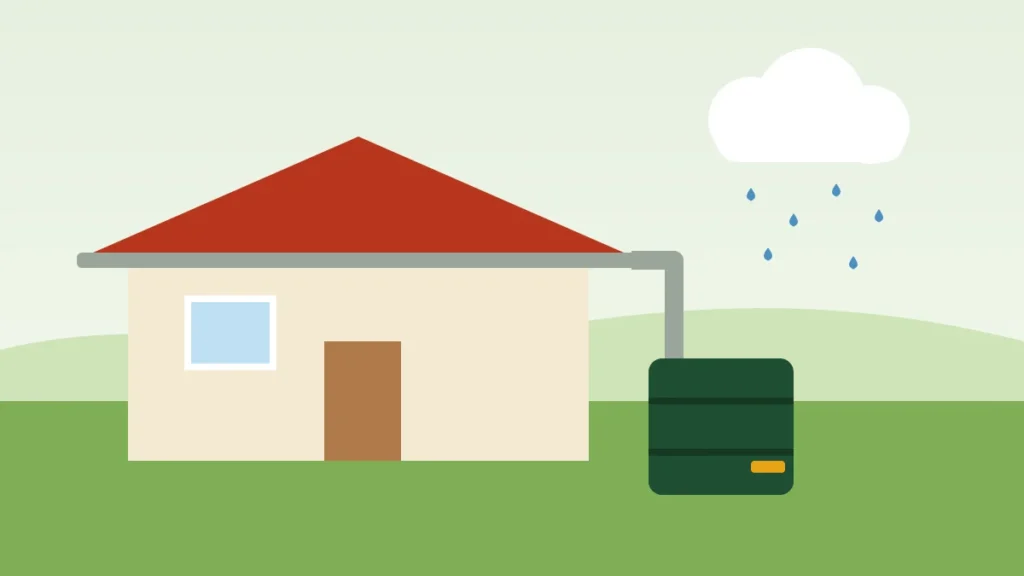
Every time it rains, water pours off your roof, down the downspouts and away into the street. Most gardeners then turn on the hose a few days later and pay for treated drinking water to keep their vegetables alive. Collecting rainwater closes that loop. It gives your garden free, soft, chlorine-free water, keeps plants going during dry spells and watering restrictions, and reduces the stormwater running off your property.
Rainwater harvesting can be as simple as one barrel under a downspout or as ambitious as a large tank feeding a drip system. This guide explains how much water a roof can collect, how to choose and set up storage, how to use rainwater safely in a food garden, and the common mistakes to avoid.
Why collect rainwater?
- It is free. Once your system is set up, the water costs nothing.
- Plants like it. Rainwater is naturally soft and free of the chlorine found in many municipal supplies.
- It helps in dry spells. Stored water keeps the garden going during droughts and watering restrictions.
- It reduces runoff. Capturing roof water reduces the volume of stormwater that carries soil and pollutants into storm drains and streams. The EPA’s Soak Up the Rain program explains how rain barrels and rain gardens help manage stormwater at home.
- It saves treated water. The EPA’s WaterSense program notes that outdoor watering accounts for a large share of household water use, and that much of it is lost to evaporation, wind and runoff.
How much water can your roof collect?
More than most people expect. One inch of rain falling on one square foot of roof equals about 0.62 gallons. That adds up quickly:
| Roof area draining to the downspout | Gallons from 1 inch of rain | 55-gallon barrels filled |
|---|---|---|
| 250 sq ft | About 156 | About 2.8 |
| 500 sq ft | About 312 | About 5.7 |
| 1,000 sq ft | About 623 | About 11 |
| 1,500 sq ft | About 935 | About 17 |
These are figures before losses. In practice, some water splashes off, evaporates or overshoots the gutters in heavy downpours, so real collection is usually around 75 to 90 percent of the theoretical amount. Measure the roof as seen from above, its footprint, rather than the sloped surface; pitch does not change how much rain falls on it.
Our rainwater collection calculator works this out for any roof and rainfall, and the rain barrel calculator shows how quickly a single barrel fills from one downspout.
Storage is the real limit
The table above shows the key lesson of rainwater harvesting: a roof can collect far more water than most people can store. A single 55-gallon barrel under a downspout draining 500 square feet of roof fills from less than a quarter inch of rain. Everything after that overflows.
So the useful question is not how much your roof can collect, but how much storage you need to get through a dry spell. A simple way to estimate it:
- Work out your garden’s weekly water use. A vegetable garden typically needs about an inch of water a week, roughly 62 gallons per 100 square feet. The garden watering calculator works this out for your beds.
- Decide how many dry weeks you want to cover.
- Multiply the two to get your target storage.
For example, a 200-square-foot vegetable garden uses about 125 gallons a week. Covering two dry weeks takes about 250 gallons of storage, roughly four or five barrels, or one larger tank.
Choosing storage
Rain barrels
Barrels of about 50 to 60 gallons are the easiest place to start. They are affordable, fit under a downspout, and can be linked together so overflow from one fills the next. Look for barrels that are opaque, food-grade, and have a screened inlet, an overflow outlet and a spigot near the base.
Larger tanks
For bigger gardens, a single tank of a few hundred to a few thousand gallons usually costs less per gallon of storage than many linked barrels, and takes up less space overall. Choose opaque tanks to block light and limit algae, and set them on a level, solid base. Water weighs about 8.3 pounds per gallon, so a full 500-gallon tank weighs more than two tons.
Underground cisterns
Large buried cisterns keep water cool and dark and free up yard space, but they cost much more to install and need a pump. They are usually part of a larger property water plan.
Setting up a rain barrel
- Choose the downspout that drains the largest roof area and is closest to the garden.
- Build a stable, level base, such as concrete blocks or pavers, raised high enough to fit a watering can under the spigot. Raising the barrel also increases water pressure.
- Cut the downspout to feed the barrel, or fit a diverter kit that sends water into the barrel and back down the downspout once it is full.
- Screen every opening with fine mesh to keep out mosquitoes, leaves and animals.
- Route the overflow away from the foundation, to a second barrel, a rain garden or a lawn area.
- Clean the gutters so leaves and grit do not end up in the barrel.
A first-flush diverter is a worthwhile upgrade. It sends the first, dirtiest water from each storm, which carries most of the dust, pollen and droppings from the roof, away from storage, so the water you keep is cleaner.
Getting water to your plants
Gravity-fed barrels deliver only low pressure: roughly 0.43 psi for every foot the water sits above the outlet. That is fine for filling watering cans and running soaker hoses, but many standard drip irrigation systems are designed for much higher household pressure.
- Watering cans work with any setup and give precise control.
- Soaker hoses work well at low pressure for short runs.
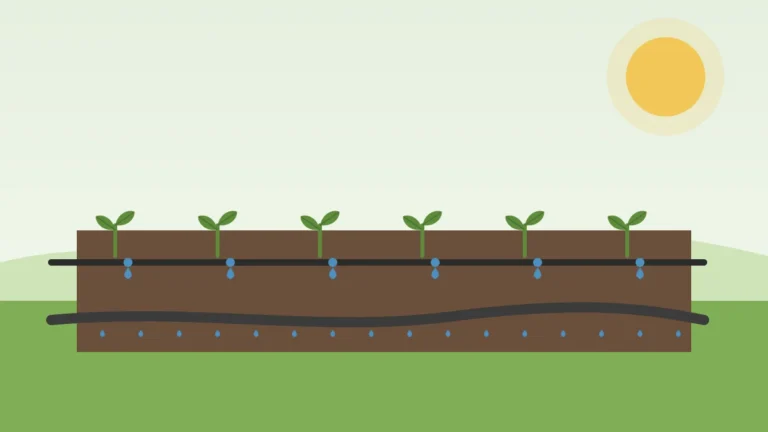
- Low-pressure drip kits are designed for rain barrels and tanks.
- A small pump provides normal pressure for longer drip runs or larger gardens.
Our comparison of drip irrigation and soaker hoses explains which works best with stored rainwater, and the drip irrigation calculator helps size a system.
Using rainwater safely on food crops
Roof runoff picks up whatever is on the roof: dust, leaves, bird droppings and, depending on the roofing material, small amounts of other substances. Rainwater is widely used for vegetable gardens, but a few sensible precautions are worth following:
- Apply it to the soil at the base of plants rather than spraying leaves, especially for leafy greens and crops eaten raw.
- Avoid watering edible parts shortly before harvest.
- Wash produce well before eating.
- Use a first-flush diverter and keep gutters clean.
- Never drink untreated roof runoff or use it for cooking unless the system is designed and treated for drinking water.
Is it legal to collect rainwater?
In most of the United States, collecting rain from your roof for garden use is legal, and many cities and water utilities actively encourage it with rebates or discounted barrels. A few states set limits. Colorado, for example, allows households to collect rooftop rain in up to two rain barrels with a combined capacity of 110 gallons, for outdoor use. Rules can change, and some states regulate larger systems, so check your state and local rules before installing a large tank, and ask your water utility whether rebates are available.
Maintaining your system
- Clean gutters in spring and fall.
- Empty first-flush diverters after storms, as the manufacturer recommends.
- Check screens regularly for gaps where mosquitoes could get in.
- Use the water. Regular use keeps it fresh and makes room for the next storm.
- Clean barrels and tanks once a year to remove sediment.
- Winterize in cold climates. Drain barrels and hoses before hard freezes, disconnect them, and redirect downspouts away from the house so ice does not crack the barrel.
Make every drop count
Stored rainwater goes further when the garden uses water efficiently. Mulch beds 2 to 3 inches deep to slow evaporation; the mulch calculator works out how much you need. Water deeply and less often, in the morning, at the base of plants. And check the soil before watering: many gardens are overwatered rather than underwatered. Our guide to overwatering versus underwatering explains how to tell.
Common rainwater harvesting mistakes
- No overflow plan. Heavy storms fill barrels in minutes. Direct the excess away from the foundation.
- Open or unscreened barrels, which breed mosquitoes.
- Clear or translucent containers, which grow algae.
- An unstable base. A full barrel weighs over 450 pounds, and a tipping barrel is dangerous.
- Expecting high pressure from gravity. Choose soaker hoses or low-pressure drip, or add a pump.
- Forgetting winter. Freezing water can crack barrels and fittings.
A simple rainwater plan for a vegetable garden
Here is how the numbers work for a typical backyard. Say you have two 4-by-8-foot raised beds, 64 square feet of growing space, and a downspout that drains about 400 square feet of roof.
- Weekly water need: about an inch a week, or roughly 40 gallons for 64 square feet.
- Collection: 400 square feet of roof yields about 250 gallons per inch of rain, or roughly 200 gallons after losses.
- Storage target: to cover two dry weeks, you need about 80 gallons of storage. Two linked 55-gallon barrels give 110 gallons, with a comfortable margin.
- Refill: a half-inch of rain refills both barrels.
For this garden, two barrels and a soaker hose would cover most summer watering in a typical year, with the hose as a backup during long droughts.
Choosing the best downspout
Not every downspout is worth a barrel. The best one drains a large section of roof, is close to the garden or a convenient place to fill watering cans, and has level ground or room for a stable base nearby. If one downspout serves most of the roof, put your largest storage there. Where downspouts are far from the garden, a barrel can still supply water for containers, flower beds and shrubs near the house, while a second barrel or tank closer to the vegetable garden does the main job.
Turning overflow into a rain garden
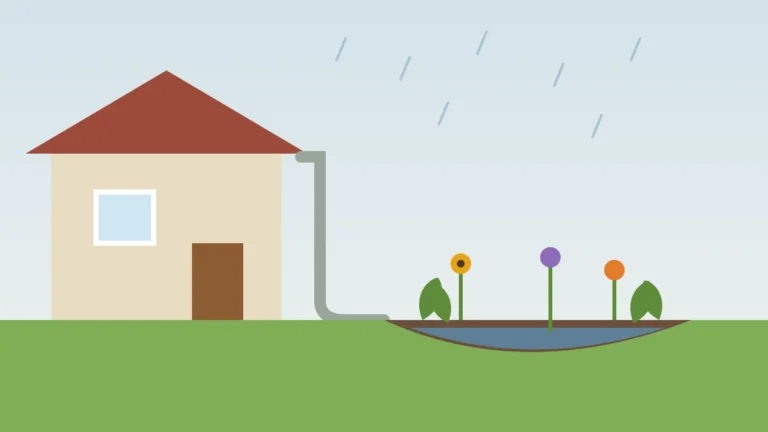
Because barrels fill so quickly, most rain that falls on your roof will overflow. Instead of sending it to the street, direct it into a rain garden: a shallow, planted depression that captures runoff and lets it soak slowly into the ground. Rain gardens reduce flooding and erosion, filter pollutants and provide habitat for pollinators.
- Place it at least 10 feet from the house, in a spot where water naturally flows.
- Check drainage first. Dig a test hole, fill it with water and make sure it drains within a day or two.
- Keep it shallow, usually a few inches to about 8 inches deep with a level bottom.
- Plant native perennials, grasses and shrubs that tolerate both brief flooding and dry spells.
The EPA’s Soak Up the Rain program has more guidance on rain gardens and other ways to manage stormwater at home.
Rainwater in dry climates
Rainwater harvesting can seem pointless where rain is scarce, but the numbers often surprise people. Even 12 inches of rain a year on a 1,500-square-foot roof produces roughly 9,000 gallons at typical efficiency. Because rain in dry regions often falls in a few heavy storms, larger storage pays off more than in wet climates. Many gardeners in arid areas also use passive harvesting, shaping the ground with shallow basins and swales so rain soaks in around trees and shrubs, with no tanks at all.
Sources and further reading
These university Extension and government resources informed this guide and are useful for going deeper. Recommendations can vary by region, so your local Cooperative Extension office is always a good next step.
- How to Build a Rain Garden (PDF), University of Wisconsin–Extension
- Watering Wisely: How Much Your Summer Vegetable Garden Really Needs, NC State Extension
- How Often Should I Water My Vegetable Garden?, University of Maine Cooperative Extension
Frequently asked questions
How much water can I collect from my roof?
About 0.62 gallons per square foot of roof footprint for every inch of rain, before losses. A 1,000-square-foot roof yields about 623 gallons per inch of rain.
How quickly does a rain barrel fill?
Very quickly. A 55-gallon barrel under a downspout draining 500 square feet of roof fills from less than a quarter inch of rain.
Is rainwater safe for vegetable gardens?
It is widely used for vegetables. Apply it to the soil rather than the leaves, avoid watering edible parts just before harvest, and wash produce well. Do not drink untreated roof runoff.
How do I keep mosquitoes out of a rain barrel?
Cover every opening with fine mesh screen, keep the lid sealed, and use the water regularly so it does not sit for long periods.
Can I connect a drip system to a rain barrel?
Yes, but gravity provides low pressure. Use a low-pressure drip kit or soaker hose, raise the barrel higher, or add a small pump for longer runs.
Is it legal to collect rainwater in my state?
In most US states, yes, and many utilities offer rebates. A few states, such as Colorado, set limits on how much residents can collect. Check your state and local rules before installing a large system.