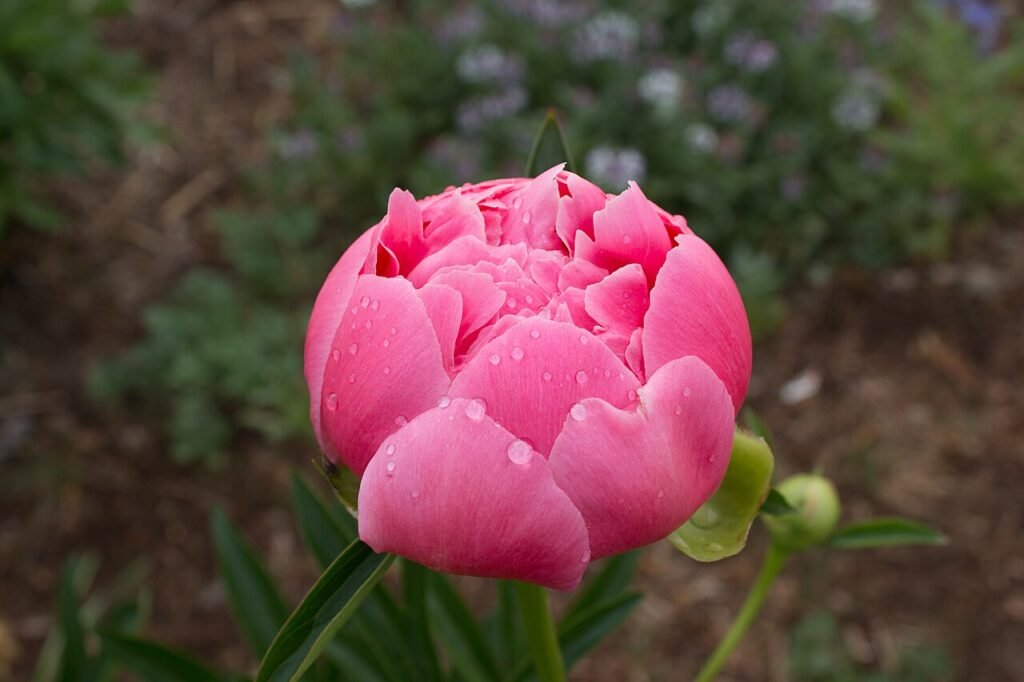
Peonies are long-lived perennials with large, fragrant flowers in late spring. A single plant can bloom for many years in the same spot, which makes planting them well the most important job. They want full sun, soil that drains, and a planting depth that is not too deep. This page covers when to plant, the depth that matters, spacing, care, why peonies sometimes refuse to bloom, and the common problems.
Peony at a glance
| Type | Flower |
|---|---|
| Season | Perennial |
| Sun | Full sun |
| Plant spacing | 36 in |
| Row spacing | 36 in |
| Per square foot | 1 |
| Seed depth | 1.5 in |
| Days to maturity | Blooms well 2–3 years after planting |
| How to start | Plant or divide peonies in fall, as North Dakota State University Extension advises. |
| Water | 1 in per week |
These are the same numbers our plant spacing, square foot and harvest date calculators use. See every crop in the plant database.
When to plant peony
Plant or divide peonies in fall, as North Dakota State University Extension advises. Bare-root divisions and potted plants both do well when planted in fall so roots can settle before winter. Peonies need a cold winter, so they suit cooler and moderate climates. Check your growing zone and use the frost dates by ZIP code tool to plan around your first fall frost.
How to plant peony
- Pick full sun. Peonies do not do well in shade.
- Set the depth carefully. Place the top of the roots, where the buds (eyes) are, 1 to 2 inches deep. Planting deeper is a common reason plants leaf out but never flower.
- Give them room. Mature plants reach 3 to 4 feet tall and wide, so space them about 3 feet apart. Use the plant spacing calculator.
- Prepare the bed. Mix compost into well-drained soil, because peonies resent standing water.
- Leave them alone. Peonies resent being moved and may take 2 to 3 years to recover after division.
Caring for peony
Water newly planted peonies regularly until established, then water deeply in dry spells. Mulch lightly, but keep mulch off the buds. The garden watering calculator helps you plan.
Go easy on nitrogen. Too much can reduce blooms, so wait until after flowering to fertilize. If you are not bringing blooms indoors, remove spent flowers where a leaf joins the stem so the plant does not break. Large double flowers can flop in rain, so a ring support put on in spring helps.
Companion plants
| Grow nearby | Roses, catmint, salvia, lavender and ornamental alliums |
|---|---|
| Keep apart | Deep shade, trees and shrubs with greedy roots that compete for water |
Peonies pair well with later-blooming perennials that hide the foliage as it fades, since the leaves stay attractive after the flowers finish. Check other pairings with the companion plant finder.
Common problems
| Problem | What you see | What to do |
|---|---|---|
| No flowers | Healthy leaves but few or no blooms | Common causes are too much shade, buds planted too deep, too much nitrogen, or a plant that is old or crowded. Check the depth, move to sun and consider dividing in fall. |
| Botrytis blight | Blackened buds, brown spots and collapsing stems in wet weather | Practice good garden sanitation and improve air movement to reduce leaf wetness. Remove affected parts and clean up debris in fall. |
| Ants on buds | Ants crawling over flower buds | Harmless. Ants feed on the sweet secretion that buds produce, and blooms do not need ants to open. |
| Leaf spots and mildew | Brown blotches or a white film on leaves late in summer | Space plants, avoid wetting the foliage and cut back and discard leaves in fall. See the pest identifier. |
| Yellow leaves | Leaves yellowing early | Often a watering or drainage problem. Use the yellow leaf identifier. |
Not sure what you are looking at? The plant problem identifier ranks likely causes from the symptoms you see.
When and how to harvest
Peonies are grown for their flowers. To cut them for a vase, harvest in the morning when buds are just barely open and feel soft like a marshmallow when squeezed. Cut long stems but leave enough foliage on the plant to feed next year’s buds.
To divide an old clump, do it in fall, keeping at least three to five buds on each division, and replant at the same 1 to 2 inch depth.
Plan your peony
- Plant spacing calculator: how many plants fit your bed
- Planting calendar: sowing and transplant dates for your frost dates
- Frost dates by ZIP code: your last spring and first fall frost
- Harvest date calculator: when your crop will be ready
Frequently asked questions
How far apart should I plant peonies?
Space peonies 36 inches apart in rows 36 inches apart. In a square foot garden, plant 1 per square foot.
How deep do I plant peony roots?
Set peony roots so the buds (eyes) sit 1 to 2 inches below the soil surface; planting deeper often prevents blooming.
How long do peonies take to grow?
Peonies usually take 2 to 3 years after planting to bloom well, then flower each late spring for many years.
How much water do peonies need?
About 1 inch of water a week, from rain and watering combined. Water new plants regularly until established, then deeply in dry spells; avoid soggy soil.
Why is my peony not blooming?
The most common reasons are too much shade, planting too deep, too much nitrogen, or a plant that is too young or crowded. Make sure the buds are only 1 to 2 inches deep and the plant gets full sun.
Do ants help peonies bloom?
No. Blooms do not need ants to open. Ants are attracted to the sweet secretion that the buds produce and are harmless.
When is the best time to move or divide peonies?
Fall. Wait until fall to move or divide plants, and expect them to take 2 to 3 years to recover.