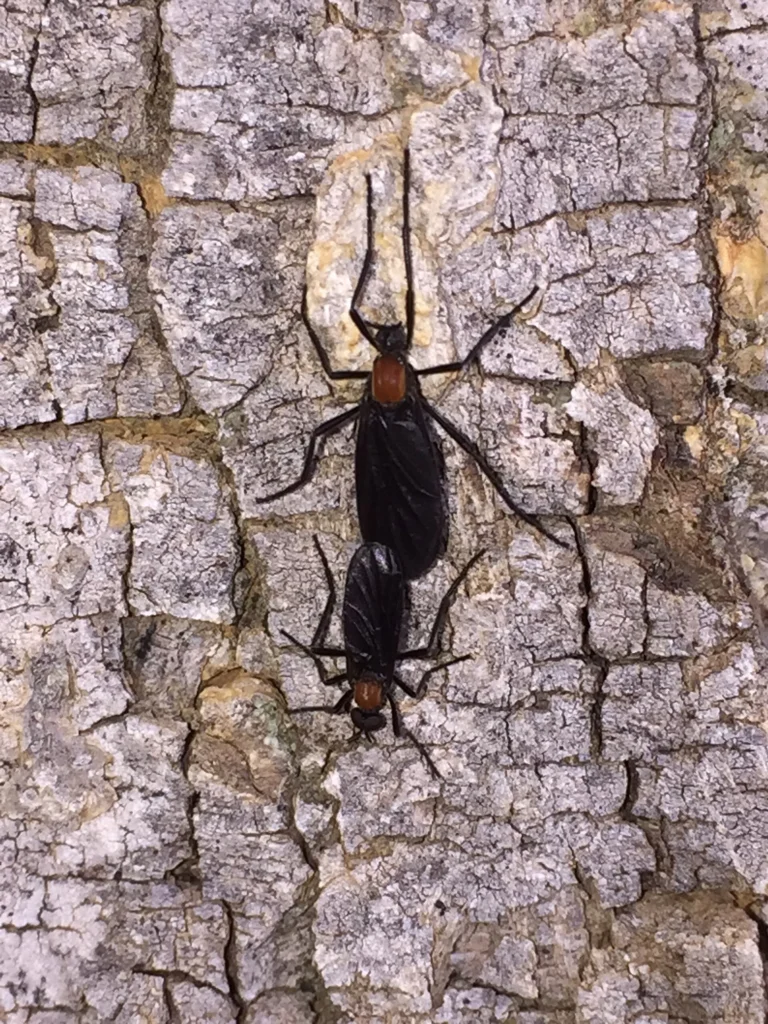
Love bugs (lovebugs, Plecia nearctica) are harmless flies that spend their short adult lives mating, which is why you see them flying joined end to end. They do not bite or sting, and they appear in two flights a year, in April to May and August to September, according to University of Florida IFAS Extension. Their acidic bodies can etch car paint if left on, so wash them off quickly and wax your car before the season.
| Question | Answer | Source |
|---|---|---|
| What are they? | Flies, also called March flies | UF/IFAS Sarasota County |
| When do they fly? | April–May and August–September; each flight lasts 4–5 weeks | UF/IFAS |
| Do they bite or sting? | No | UF/IFAS |
| How long do adults live? | Males about 3 days; females up to 7 days | UF/IFAS Sarasota County |
| What do larvae eat? | Dead plant matter and organic material | UF/IFAS |
| What do adults eat? | Flower nectar | UF/IFAS |
| Why are they a problem? | Splatter on cars, clogged radiators, reduced visibility | UF/IFAS |
What are love bugs?
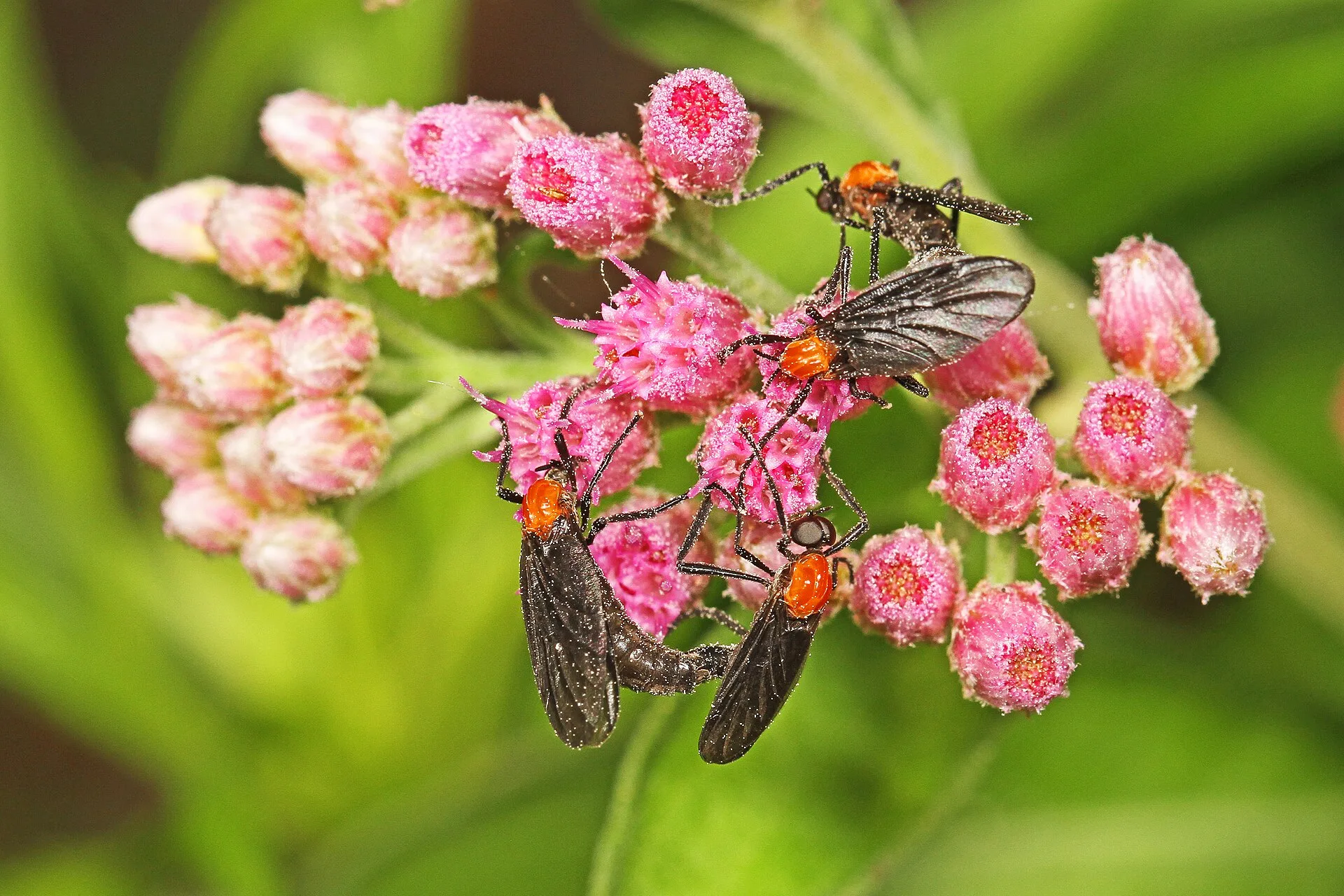
Love bugs are small black flies with a red-orange thorax. UF/IFAS Extension in Sarasota County calls them flies, also known as March flies, that are not native to Florida. Adults are short-lived and feed on flower nectar. The extension office notes that they are acidic-tasting, which helps them avoid predators. They are a seasonal nuisance for drivers, walkers, joggers and cyclists, but they are harmless to people.
Why do love bugs fly stuck together?
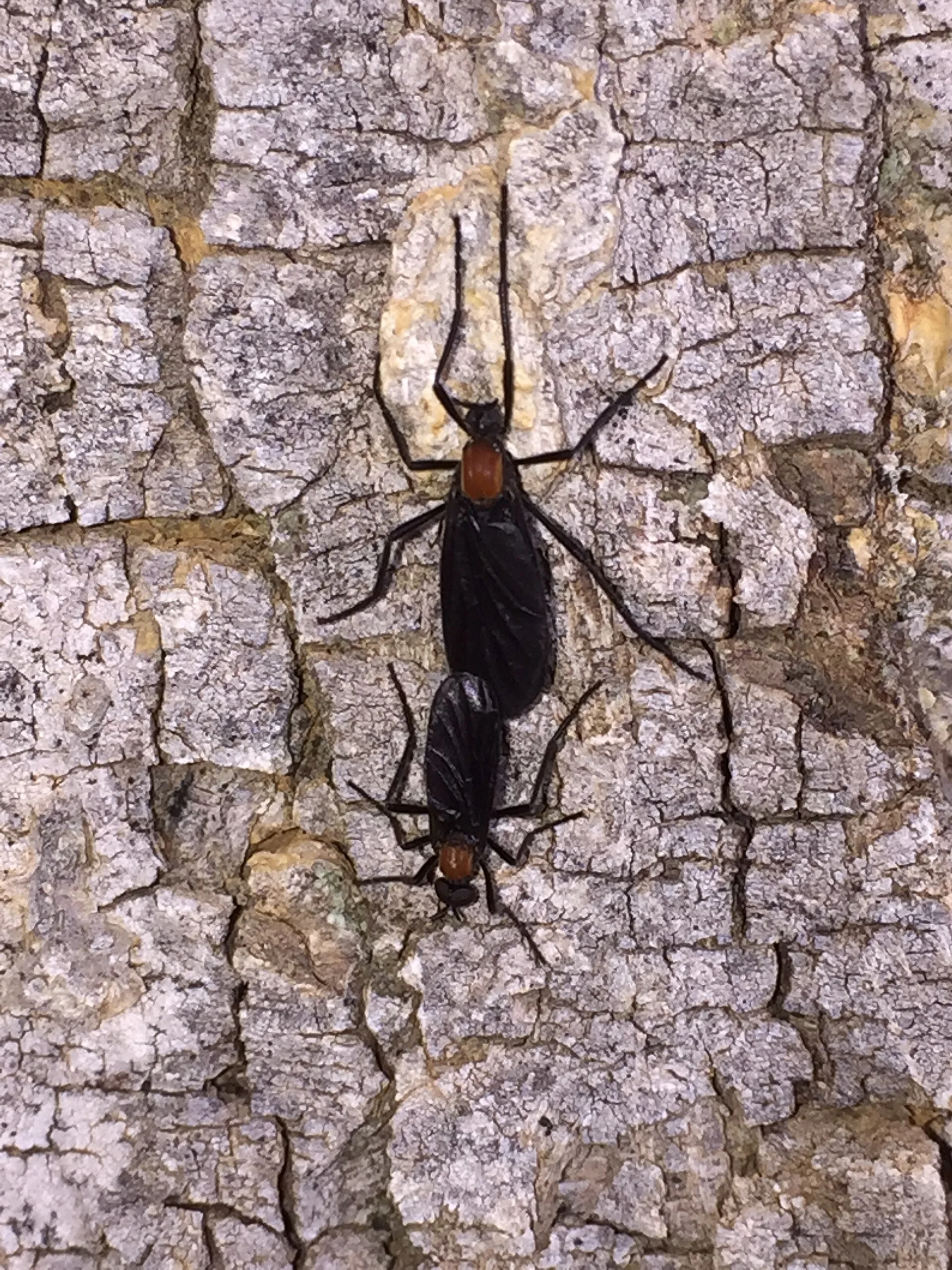
Because adults spend most of their short lives mating. UF/IFAS explains that a female usually mates with one male, and males compete fiercely. The successful male stays attached to the female, even after death, until she is ready to lay eggs. That is why you see pairs joined tail to tail drifting across roads and yards.
When is love bug season?
| Season | Months | Notes |
|---|---|---|
| Spring flight | April–May | Lasts about 4–5 weeks |
| Late-summer flight | August–September | Lasts about 4–5 weeks |
| Daily activity | Mainly 10 a.m.–4 p.m. | Fly only above 68°F; they stop flying at dusk |
UF/IFAS adds that swarms along roads and highways can number in the hundreds of thousands. If you see them in November, they are far out of season. Expect the next spring flight in April.
Where do they come from?
The IFAS sources differ slightly on history. One IFAS page says the invasive species was first identified in southern Louisiana in the 1920s and reached Florida in 1947, while the Sarasota County office says they have been in Florida since 1949. Either way, they are not native to Florida. Females lay eggs under plant debris and decaying vegetation, and the larvae live in grassy areas, feeding on dead plants.
Are love bugs good or bad for your garden?
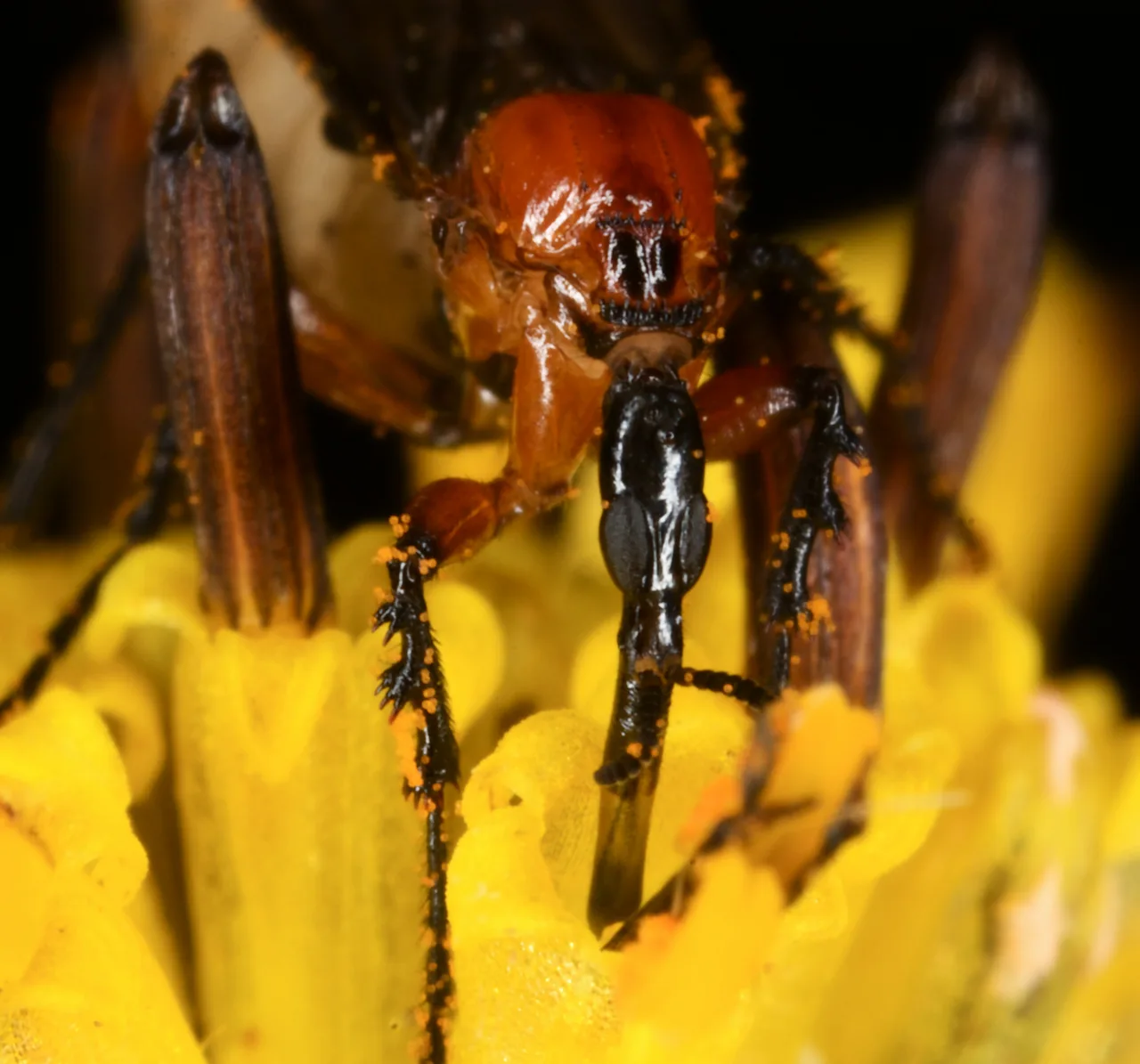
Mostly neutral to helpful. UF/IFAS describes the larvae as “living composters” that break down dead vegetation. Adults feed on nectar from flowers such as sweet clover, goldenrod and Brazilian pepper. The IFAS pages do not describe damage to plants; the damage they mention is to vehicle paint. Because they are not a garden pest, there is no need to spray them in beds. IFAS also states that there is not yet an effective way to control them, so the advice is to limit the damage they cause.
How do you protect your car from love bugs?
- Wax before the season. Wax makes love bugs easier to remove and lowers the risk of paint damage.
- Add a screen. Place a large screen in front of the grille to protect the radiator and front finish, or a small one behind the grille in front of the radiator.
- Drive at the right times. Travel in the evening or at night, since adults stop flying at dusk, and drive slower, which means fewer bugs are splattered. Avoid 10 a.m. to 4 p.m. when you can.
- Carry water and towels for quick cleanup, and use a hood deflector if you have one.
How do you clean love bugs off a car?
| Step | What to do |
|---|---|
| 1. Act fast | Wash splatters off within about 20 minutes if you can; UF/IFAS warns that remains left on an unwaxed car for several days can permanently damage the finish |
| 2. Soak | Soak with water for several minutes to loosen them |
| 3. Rinse | Use a high-pressure spray, then warm soapy water |
| 4. Spot-treat | Lay a wet towel or wet dryer sheet on stubborn spots for about five minutes, then wipe gently |
| 5. Avoid scrubbing | Hard scrubbing can scratch the finish |
UF/IFAS also notes that wiper blades and washer fluid can smear bug remains across the windshield, so clean the glass by hand. Inside the car, do not squish them, since they can stain upholstery; capture and release them or vacuum them up. Light-colored and freshly painted surfaces attract them, so painters may avoid exterior work during the season.
Do love bugs bite, sting or carry disease?
No. UF/IFAS states that adults do not bite or sting. The sources used here describe them as a nuisance, not a health threat. They are not related to the mosquito, and the popular story that University of Florida scientists created them in a lab to fight mosquitoes is a myth; the pages used for this article do not mention such an origin, and UF/IFAS lists a fact-or-fiction article on the topic.
How do you keep love bugs away from your home?
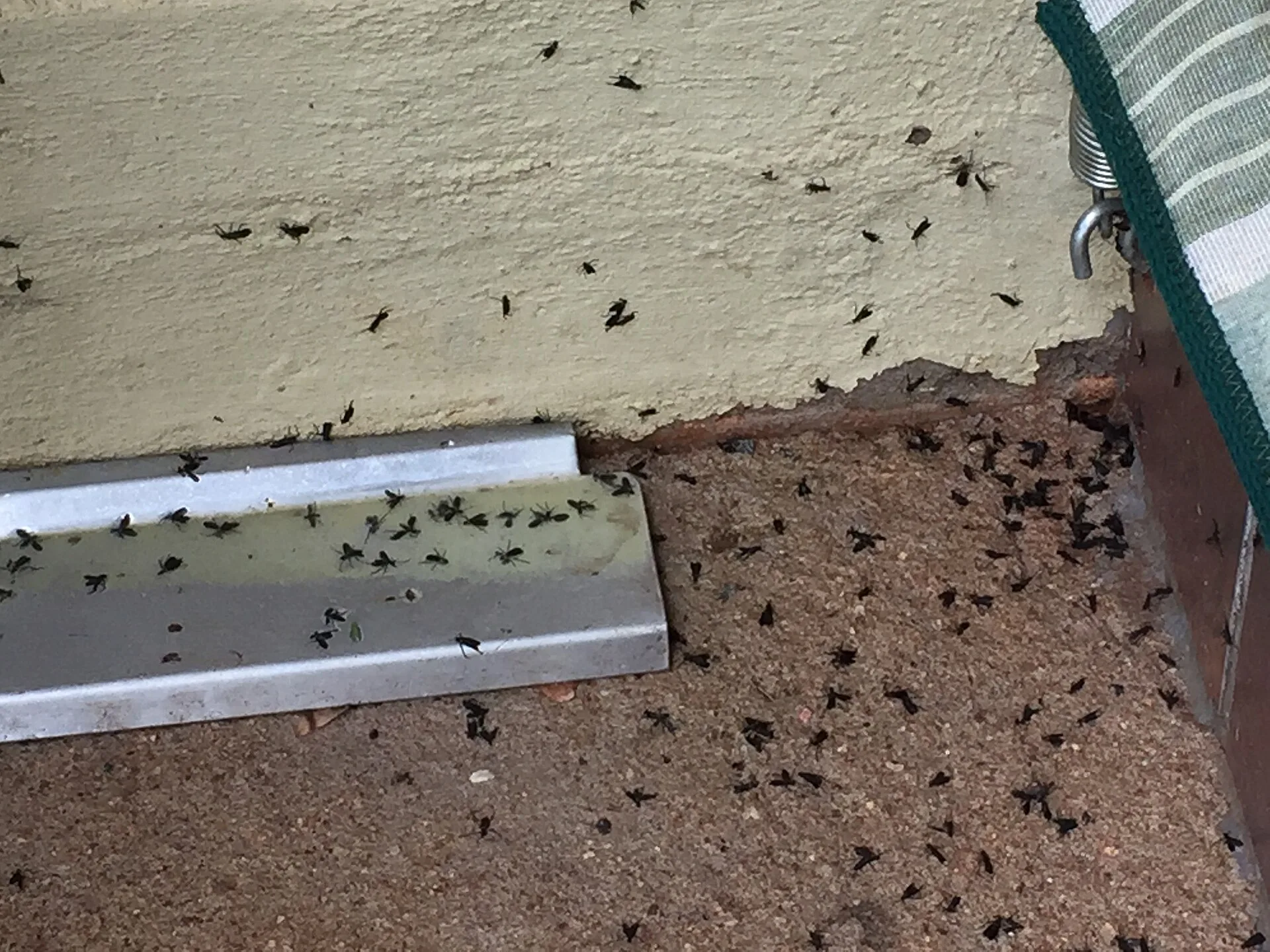
You cannot prevent them, but you can reduce nuisance. Keep light-colored painted surfaces waxed, rinse splatters off house walls, windows and screens quickly, and avoid exterior painting during peak flights. Keeping lawn thatch and debris tidy may reduce egg-laying sites, since females lay eggs under plant debris, though IFAS does not list this as a control method.
Note: Do not use harsh solvents or abrasives on car paint, and test any cleaner on a small hidden area first. Check your vehicle manufacturer’s care instructions.
Watch: what makes love bugs appear and disappear?
This video from the University of Central Florida explains the seasonal cycle of love bugs.
Related guides
Free printable: the Year-Round Garden & Preserving Planner
Planting dates for 24 crops, monthly tasks, blanching times, canning safety numbers and a winter storage chart in one 8-page PDF. Enter your email to download it instantly and get our seasonal garden newsletter.
No spam. Unsubscribe any time. We never sell your email.
Frequently asked questions
What are love bugs?
Flies (Plecia nearctica), also called March flies, that fly joined while mating.
When are love bugs out?
April to May and August to September, per UF/IFAS.
Do love bugs bite?
No. They do not bite or sting.
How long do love bugs live?
Adult males live about three days and females up to seven days.
Can love bugs damage car paint?
Yes, if left on. Wash them off quickly and wax the car beforehand.
Can I get rid of love bugs?
UF/IFAS says there is not yet an effective way to control them, so focus on limiting damage.
Reviewed November 2026. Sources: UF/IFAS Gardening Solutions, Lovebugs; UF/IFAS Sarasota County, Lovebugs: the bug we love to hate.
Photo: RFrohlich, CC BY-SA 4.0, via Wikimedia Commons (resized)