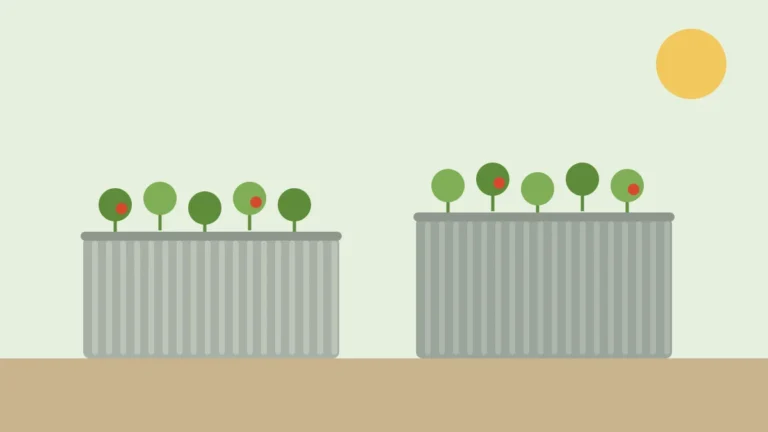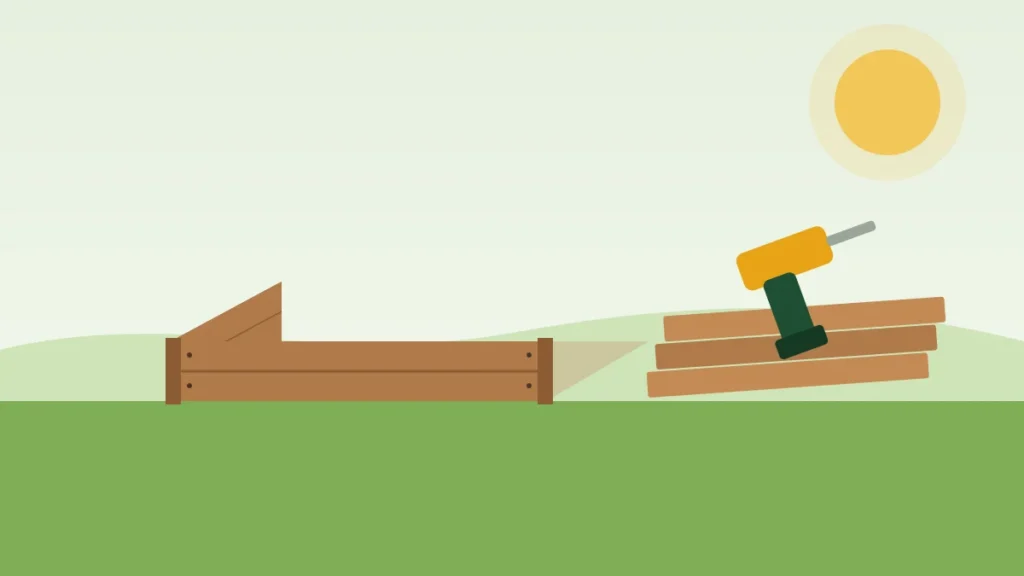
A raised garden bed is one of the best investments a vegetable gardener can make. It warms up earlier in spring, drains well after heavy rain, keeps paths and growing areas separate so the soil never gets trampled, and saves your back and knees. Building one yourself is a satisfying weekend project, and a simple wooden bed needs only a few boards, some screws and basic tools.
This guide gives you complete plans for the classic 4-by-8-foot bed, with a materials list, cut list and step-by-step instructions. It also covers board counts for other sizes, choosing the right wood, filling and planting the bed, adding trellises and irrigation, and plenty of raised garden bed ideas if you want something different.
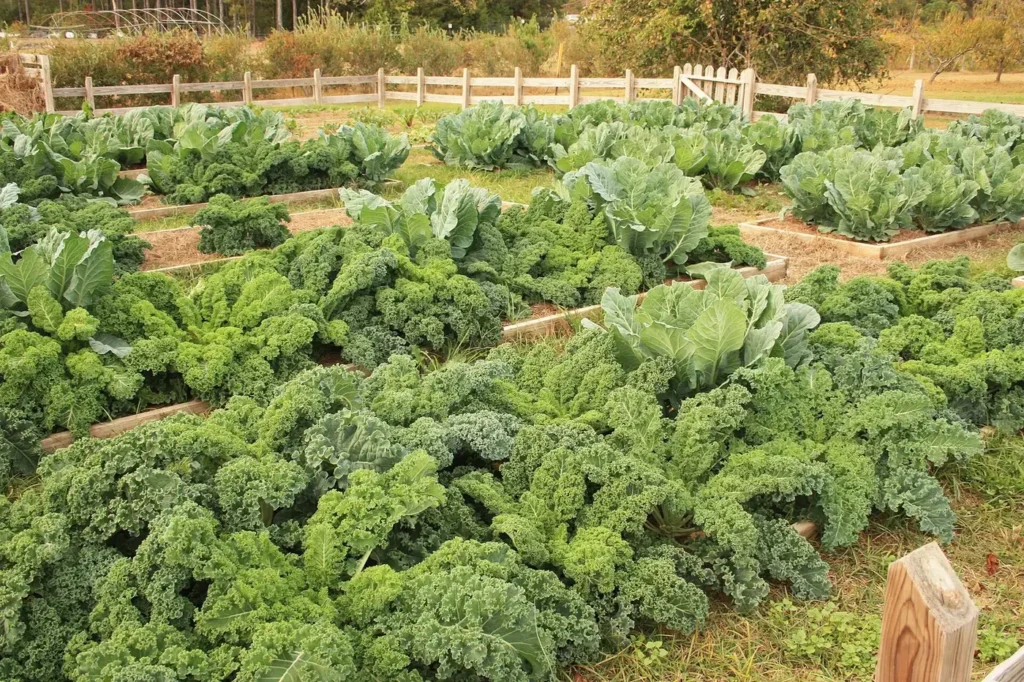
Why build a raised bed?
- Better soil from day one. You fill the bed with a loose, rich mix instead of working with poor or compacted ground.
- Better drainage. Raised soil drains faster after rain, which most vegetables prefer.
- Earlier planting. Raised soil warms up sooner in spring.
- No trampled soil. You work from the paths, so the growing area stays loose.
- Easier on your body. Less bending, and taller beds can be worked sitting down.
- Fewer weeds and a tidy, defined garden.
Oregon State University Extension’s raised bed gardening fact sheet is a helpful reference on siting, depth and soil, including loosening the native soil beneath a framed bed so roots can grow down into it.
Choose the right size
| Dimension | Recommended | Why |
|---|---|---|
| Width (open on both sides) | 4 ft maximum | You can reach the center from either side |
| Width (against a fence or wall) | 2 to 3 ft | You can only reach in from one side |
| Length | 8 ft | Matches standard lumber with little waste |
| Height on decent soil | 11 to 12 in | Enough root room for most vegetables |
| Height over poor soil or paving | 18 to 24 in | Roots cannot use the ground below |
| Height for accessibility | 24 to 30 in | Work standing or from a seat on the edge |
Beds longer than 8 feet need a brace across the middle to stop the long sides bowing outward under the weight of wet soil. Want to see how many plants a bed will hold before you build? Sketch it in the raised bed planner.
Choose your wood
| Material | Typical lifespan | Pros | Cons |
|---|---|---|---|
| Untreated pine or fir | Shortest; often a handful of years | Cheapest, easy to find | Rots sooner, especially in wet climates |
| Cedar or redwood | Long | Naturally rot-resistant, attractive | Often two to three times the price of pine |
| Modern pressure-treated | Long | Durable and affordable | Some gardeners prefer to avoid it near food |
| Composite boards | Very long | No rot, little maintenance | Higher cost; can flex on long spans |
Lifespans depend heavily on your climate, soil moisture and board thickness, so treat them as relative rather than exact.
Is pressure-treated wood safe for vegetables?
Older pressure-treated wood used chromated copper arsenate (CCA), which was phased out for most residential uses in the United States at the end of 2003. Today’s residential treated lumber uses copper-based preservatives. Many gardeners use it for raised beds, sometimes with a plastic liner on the inside walls, while others choose untreated or naturally rot-resistant wood to avoid the question entirely. Organic certification programs generally do not allow treated lumber in contact with soil.
Thicker lasts longer. Nominal 2-inch lumber, actually about 1.5 inches thick, outlasts 1-inch boards by years and resists bowing.
Materials for a 4 × 8 ft bed, 11 inches tall
| Item | Quantity | Notes |
|---|---|---|
| 2×6 boards, 8 ft long | 6 | A 2×6 is about 5.5 in tall; two stacked make an 11 in bed |
| 4×4 post | 1, at least 4 ft long | Cut into four corner posts |
| Exterior deck or structural screws, 3 in | About 48 | Two per board end into each post |
| Galvanized hardware cloth (optional) | About 4 × 8 ft | Only where gophers, moles or voles are a problem |
| Plain cardboard (optional) | Enough to cover 32 sq ft | Smothers grass under the bed |
Tools
- Tape measure, pencil and carpenter’s square
- Circular saw or hand saw (many home centers will make the cuts for you)
- Drill with a driver bit and a pilot-hole bit
- Level, shovel and garden fork
- Work gloves and safety glasses
Cut list
| Part | Quantity | Length | From |
|---|---|---|---|
| Long sides | 4 | 8 ft (uncut) | Four 2×6 boards |
| Short ends | 4 | 4 ft | Two 2×6 boards, each cut in half |
| Corner posts | 4 | 11 in | The 4×4 post |
With the end boards fixed to the ends of the long sides, the finished bed measures about 8 feet 3 inches by 4 feet on the outside. The raised bed cost calculator prices this list for you, along with the soil to fill it.
How to build a raised garden bed, step by step
Step 1: Prepare the site
Choose a level spot with at least six to eight hours of direct sun. Mark the outline, remove the sod or plan to lay cardboard over it, and loosen the soil inside the outline with a garden fork so roots can grow into it later. On a gentle slope, dig the high side down slightly so the bed sits level.
Step 2: Cut the boards
Cut two of the 8-foot boards in half to make four 4-foot end pieces, and cut the 4×4 into four 11-inch posts. Square, clean cuts make a stronger, neater bed.
Step 3: Build the two long sides
Lay two 8-foot boards on edge, one above the other, on a flat surface. Place a corner post at each end, flush with the board ends and the top edge. Drill pilot holes to stop the wood splitting, then drive two screws through each board into each post.
Step 4: Attach the ends
Stand the two long sides up and fit the 4-foot end boards across the posts, stacking two boards at each end. Screw each end board into the posts. You now have a box.
Step 5: Check that it is square
Measure diagonally from corner to corner in both directions. If the two measurements match, the bed is square. If not, push the corners of the longer diagonal gently together until they do.
Step 6: Set and level the bed
Place the frame on the prepared site. Check it with a level along the sides and ends, and dig out or pack soil under the boards until it sits level and firm.
Step 7: Add protection if needed
Where burrowing animals are a problem, staple galvanized hardware cloth across the bottom before filling. The University of Arizona Extension’s guide to managing critters in vegetable gardens (PDF) covers barriers for different animals. Otherwise, lay cardboard over any remaining grass inside the bed.
Step 8: Fill the bed
Fill with a blend of roughly 60 percent topsoil, 30 percent compost and 10 percent perlite or fine bark, or a premixed raised bed soil. Water each layer as you fill, and fill slightly above the top, because fresh soil settles.
| Bed size | Soil at 11 in deep | With 15% for settling |
|---|---|---|
| 4 × 4 ft | 14.7 cu ft | About 17 cu ft |
| 3 × 6 ft | 16.5 cu ft | About 19 cu ft |
| 4 × 8 ft | 29.3 cu ft | About 34 cu ft (1.25 cu yd) |
| 4 × 12 ft | 44 cu ft | About 51 cu ft (1.9 cu yd) |
Our guide on how much soil you need for a raised bed has charts for other depths, and the raised bed soil calculator works it out exactly, split into topsoil, compost and aeration.
Step 9: Plant
Mark the bed into one-foot squares with string to make spacing easy. Put tall crops on the north side, and you are ready to plant. The square foot gardening calculator tells you how many of each crop fit, and our comparison of square foot and row gardening explains the method.
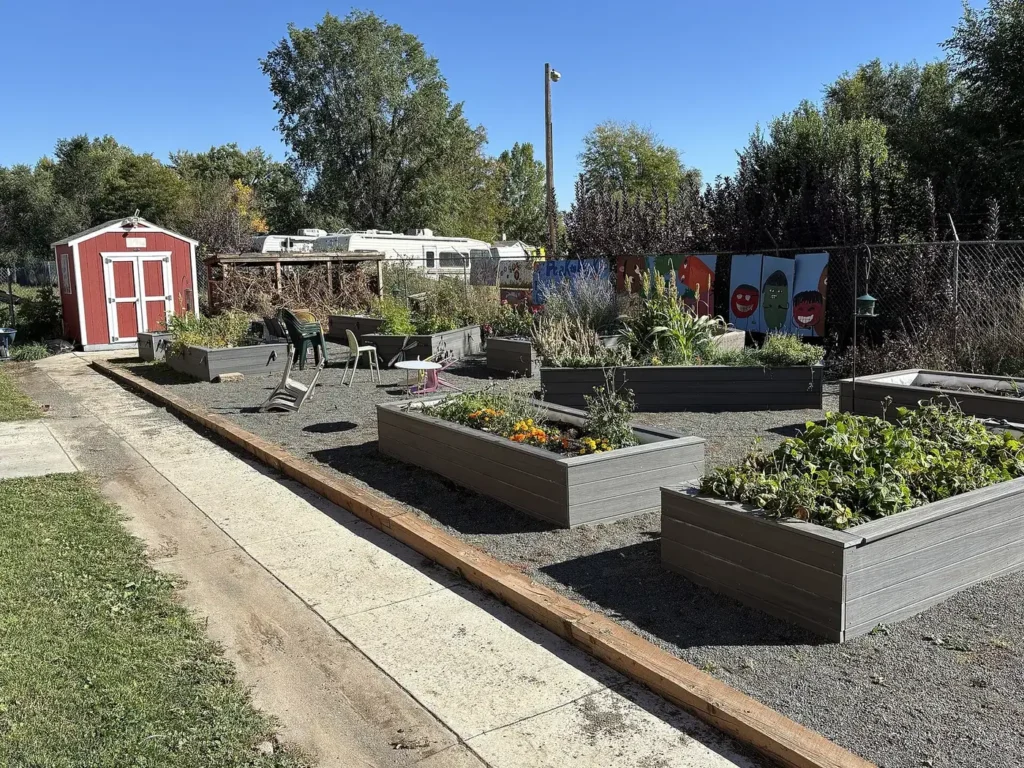
Board counts for other bed sizes
All figures assume 2×6 boards (about 5.5 inches tall) and that ends are cut from 8-foot boards where possible.
| Bed size | Height | Boards to buy | Corner posts |
|---|---|---|---|
| 4 × 4 ft | 11 in (2 boards high) | Four 8 ft boards, each cut in half | Four, 11 in |
| 3 × 6 ft | 11 in | Six 8 ft boards (sides cut to 6 ft; ends cut to 3 ft) | Four, 11 in |
| 4 × 8 ft | 11 in | Six 8 ft boards | Four, 11 in |
| 4 × 8 ft | 16.5 in (3 boards high) | Nine 8 ft boards | Four, 16.5 in |
| 4 × 8 ft | 22 in (4 boards high) | Twelve 8 ft boards | Four, 22 in, plus a mid-side brace |
| 4 × 12 ft | 11 in | Four 12 ft boards plus two 8 ft boards | Four, 11 in, plus a center brace |
For a complete list of everything to buy for several beds, including screws, cardboard, mulch and irrigation parts, use the garden shopping list generator.
Add-ons that make a bed more useful
Drip irrigation
Two or three drip lines running the length of a 4-foot bed water every plant at the roots, with no wet leaves and little waste. Raised beds dry out faster than the ground in summer, so automatic watering on a timer pays off quickly. The drip irrigation calculator sizes the system, and NC State Extension’s guide to how much water a vegetable garden needs explains how much to apply.
A trellis on the north side
Fix two sturdy posts inside the north end or side of the bed and stretch netting or a cattle panel between them. Cucumbers, peas and pole beans climb it and take up almost no ground space.
Hoops for covers
Screw short lengths of pipe to the inside walls and slot in bent conduit or PVC hoops. They hold row cover against frost and insects in spring and fall, insect netting in summer, or plastic for a mini greenhouse.
A cap rail
A flat board screwed along the top edge makes a handy seat and ledge for tools, and protects the end grain of the side boards from rain.
Raised garden bed ideas
A wooden box is not the only option. For 25 designs with pros and cons, see our full guide to raised garden bed ideas. Popular alternatives include:
- Metal raised beds: galvanized or coated steel kits go together quickly, come in tall sizes, and do not rot. Choose ones with rolled or covered top edges.
- Tall beds for easy access: 24 to 30 inches tall lets you garden standing up. To save soil, fill the bottom third with untreated logs, branches and leaves.
- Elevated beds on legs: waist-high planter tables suit patios, balconies and wheelchair users. They hold less soil, so water them often.
- Cinder block or stone beds: permanent and sturdy, and the hollows in blocks can hold herbs or flowers.
- Stock tank beds: galvanized livestock tanks make instant tall beds; drill drainage holes in the base.
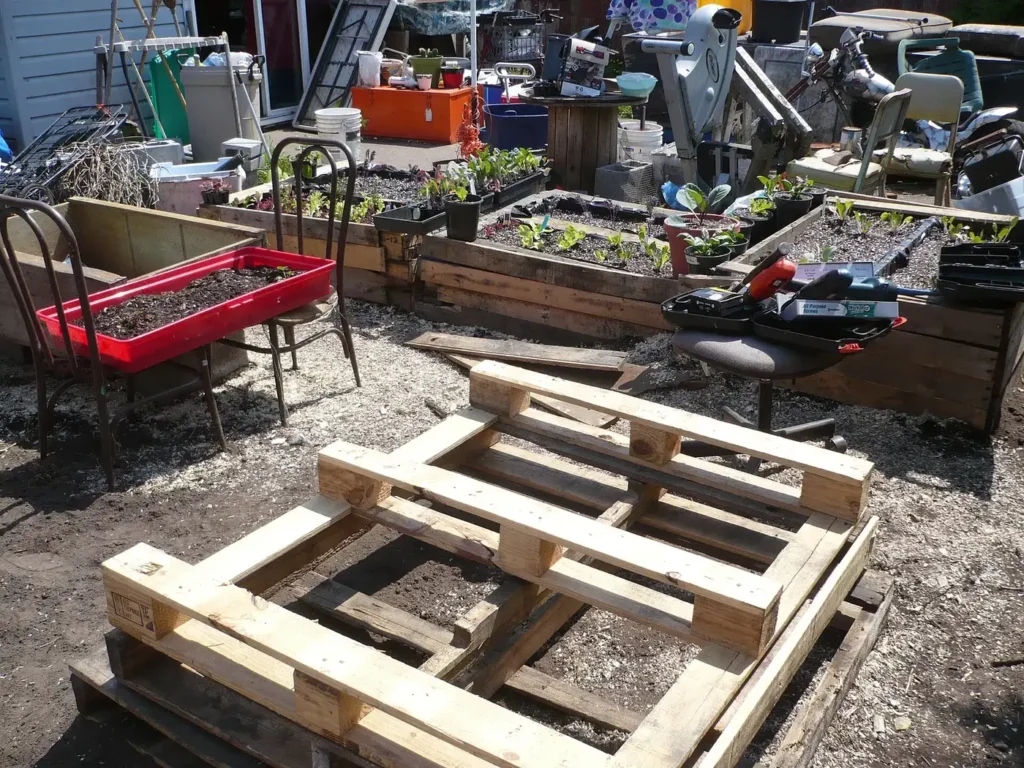
- Reclaimed-wood beds: pallets and salvaged boards make budget beds. Use only heat-treated pallets (marked HT), never chemically treated ones (marked MB).
- Keyhole or U-shaped beds: a narrow access path into the middle lets you reach every part of a wider bed.
- Corner and L-shaped beds: fit awkward spaces along fences and patios.
Looking after your raised bed
- Top up every year with an inch or two of compost, because the soil sinks as organic matter breaks down. Our article on why raised bed soil sinks explains why.
- Mulch the surface in summer to hold moisture; the mulch calculator works out how much.
- Rotate crop families between beds each year to reduce pests and diseases.
- Check screws and corners each spring and replace any that have loosened.
- Cover the soil in winter with mulch, leaves or a cover crop to protect it.
For more planning help, the University of Maryland Extension’s vegetable garden planning resources and Texas A&M AgriLife Extension’s Planning a Garden guide (PDF) are excellent free references.
How much does a DIY raised bed cost?
Costs vary with lumber prices and where you live. A simple 4-by-8 pine bed is usually the cheapest option, while cedar and metal kits cost more but last longer. Soil is often the biggest expense, frequently as much as the frame. Price your own build with the raised bed cost calculator, and if you are watching costs, our guide to starting a vegetable garden on a budget shows where to save.
Watch: Extending the Gardening Season Using Raised Beds, Part 1
University of Maine Cooperative Extension has a video series on building and using raised beds. Here is the first part:
Common raised bed mistakes
- Beds too wide to reach the middle.
- Building in shade. Raised beds still need six to eight hours of sun.
- No corner posts, so the bed pulls apart under the weight of wet soil.
- No center brace on long beds, so the sides bow.
- Filling with topsoil alone, which compacts and drains poorly.
- Using nominal sizes: two 2×6 boards make an 11-inch bed, not 12.
- Building far taller than you need, which multiplies the soil bill.
- Paths too narrow for kneeling or a wheelbarrow.
Frequently asked questions
How do you build a simple raised garden bed?
Screw two stacked 8-foot 2×6 boards to 11-inch corner posts to make each long side, attach 4-foot end boards to the posts, check the box is square, set it level on loosened soil, and fill it with a blend of topsoil and compost.
What is the best wood for raised garden beds?
Cedar and redwood resist rot naturally and last longest. Untreated pine is cheapest but rots sooner. Modern copper-treated lumber lasts well; some gardeners line it or avoid it near food crops.
How deep should a raised garden bed be?
About 11 to 12 inches is enough for most vegetables on loosened ground. Build 18 to 24 inches deep over poor soil or paving, or for easier access.
What do you put in the bottom of a raised garden bed?
Cardboard to smother grass and weeds, and hardware cloth if burrowing animals are a problem. In tall beds, untreated logs and branches can fill the bottom third.
How many boards do I need for a 4×8 raised bed?
Six 8-foot 2×6 boards for a bed 11 inches tall: four used whole for the long sides and two cut in half for the ends. A bed three boards high needs nine.
Should a raised bed have a bottom?
Usually not. An open bottom lets roots grow into the soil below and lets water drain. Add hardware cloth only to keep out burrowing animals.
How long does a wooden raised bed last?
It depends on the wood and climate. Untreated pine may last only a handful of years, while cedar, redwood and treated lumber last considerably longer. Thicker boards and good drainage extend the life of any bed.
Can I build a raised bed on concrete or a patio?
Yes, but make it at least 18 to 24 inches deep, since roots cannot grow into the ground, and make sure water can drain out at the base.