A pollinator garden is one of the most rewarding things you can plant. Within a season or two, a patch of lawn or a bare border can be humming with bees, visited by butterflies, and full of color from spring to fall. It also does real good: many bees, butterflies and other pollinators have lost much of their habitat, and home gardens can help fill the gap.
This guide shows you how to plan, plant and look after a pollinator garden, including a butterfly garden. You will learn the difference between nectar plants and host plants, how to keep something in bloom all season, which plants to choose, and the simple habits, such as skipping insecticides and leaving fall cleanup until spring, that make the biggest difference.
What is a pollinator garden?
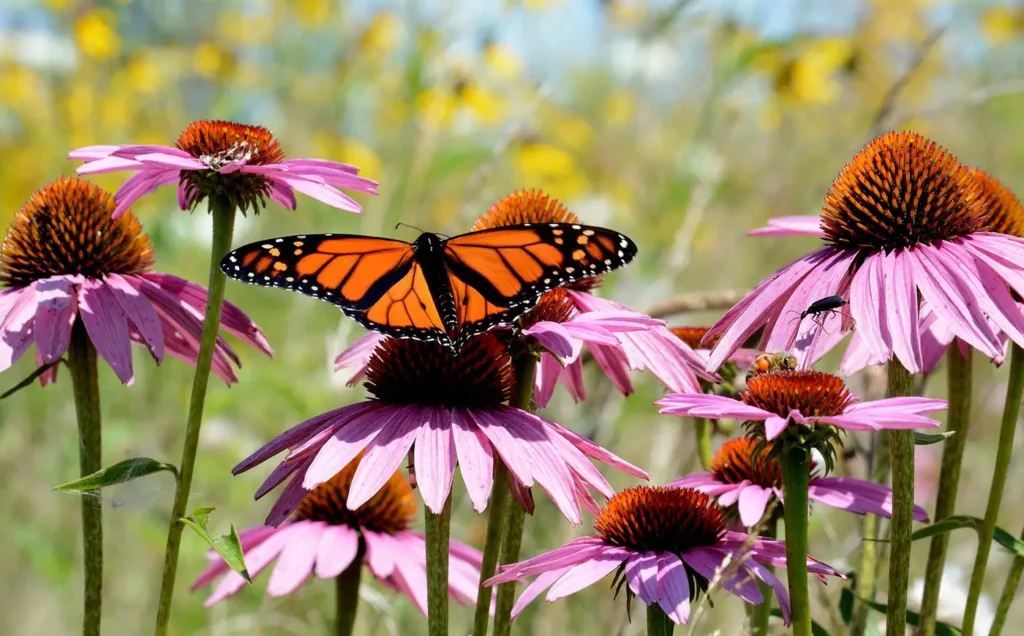
A pollinator garden is planted to provide food and shelter for pollinating insects and animals: bees, butterflies, moths, flies, beetles and, in some regions, hummingbirds. It looks much like any flower garden, but it is planned around three needs:
- Nectar and pollen for adult insects, from flowers in bloom across the whole season.
- Host plants where butterflies and moths lay eggs and their caterpillars feed.
- Shelter and nesting sites, such as bare soil, hollow stems and leaf litter.
A butterfly garden is a pollinator garden that puts extra emphasis on butterflies and their caterpillars. The principles are the same.
Why plant one?
- Better harvests. Squash, cucumbers, melons, many fruit trees and berries depend on insect pollinators. A pollinator garden near the vegetable patch means more fruit.
- Natural pest control. Many flowers also feed beneficial insects, such as hoverflies and parasitic wasps, that help control aphids and caterpillars.
- Habitat. Even a small planting provides food and shelter that pollinators struggle to find in lawns and paved areas.
- Low maintenance. Once established, native perennials need little watering and no fertilizer.
- Beauty from spring to fall, and the constant interest of watching visitors come and go.
Step 1: Choose a sunny site
Most nectar-rich flowers and most pollinators like sun. Choose a spot with at least six hours of direct sun a day, sheltered from strong wind, which makes it hard for butterflies and small bees to fly. A south-facing border, a corner of the yard or a strip along the vegetable garden all work. The sunlight requirement finder helps you check your light.
You do not need much space. A bed of 50 to 100 square feet holds plenty of plants, and even a few large containers on a balcony attract bees and butterflies. If your space is shady, see our guide to shade garden plants: several native woodland flowers feed early-season bees.
Step 2: Plant native plants
Native plants are the backbone of a good pollinator garden. Penn State Extension’s guide to planting pollinator-friendly gardens recommends choosing plants native to your region and planting a diverse mix, because native insects evolved alongside native plants and many depend on them.
That does not mean every plant must be native. Many non-native herbs and annuals, such as basil, oregano, zinnias and cosmos, are valuable nectar sources. But natives should make up most of the planting, especially if you want to support butterflies and native bees, not just honeybees.
Watch for invasive plants. Some popular “butterfly” plants spread aggressively in certain regions. Butterfly bush, for example, offers nectar but is not a caterpillar host plant, and it is considered invasive in parts of the country. Check your state’s invasive plant list, or ask your local Extension office, before planting.
Step 3: Include host plants for caterpillars
This is the step most flower gardens miss. Adult butterflies drink nectar from many flowers, but their caterpillars can eat only certain plants. Penn State Extension’s guide to gardening for butterflies stresses that without the right host plants there will be no butterflies, and that many caterpillars feed on only one or two plant groups.
| Butterfly | Caterpillar host plants |
|---|---|
| Monarch | Milkweeds (Asclepias), such as common, swamp and butterfly milkweed |
| Black swallowtail | Parsley family: parsley, dill, fennel, golden Alexanders |
| Eastern tiger swallowtail | Trees such as wild black cherry and tulip tree |
| Spicebush swallowtail | Spicebush and sassafras |
| Fritillaries | Violets |
| Painted lady | Thistles, mallows and hollyhocks |
| Pipevine swallowtail | Pipevines (Aristolochia) |
| Pearl crescent | Asters |
Expect host plants to be eaten: holes in the leaves mean the garden is working. Planting a little extra parsley or dill for black swallowtail caterpillars keeps some for the kitchen too. Herbs that double as host and nectar plants are covered in our guide to starting an herb garden.
A note on milkweed
Milkweed is essential for monarchs, which lay their eggs only on milkweed plants. Choose milkweed species native to your region, such as common milkweed, swamp milkweed or butterfly milkweed. Many experts recommend native species over tropical milkweed, which in some warm regions keeps growing through winter and may disrupt monarch migration and harbor a monarch parasite.
Step 4: Plan for bloom from spring to fall
Pollinators need food throughout the growing season, not just in midsummer. Aim for at least three plants in bloom in each season.
| Season | Native plants often recommended | Easy non-native additions |
|---|---|---|
| Early spring | Wild columbine, Virginia bluebells, golden Alexanders, redbud, serviceberry | Crocus, early fruit tree blossoms |
| Late spring to early summer | Wild indigo, beardtongue (Penstemon), spiderwort, phlox | Chives, catmint |
| Midsummer | Purple coneflower, bee balm, black-eyed Susan, milkweeds, mountain mint | Zinnias, lavender, basil and oregano in flower |
| Late summer to fall | Blazing star, Joe-Pye weed, goldenrods, asters | Cosmos, sedum |
Which species do best depends on your region. Your local Cooperative Extension office or native plant society can recommend plants for your area, and the USDA Plant Hardiness Zone Map helps confirm which perennials will survive your winters.
Step 5: Design and plant
Plant in groups
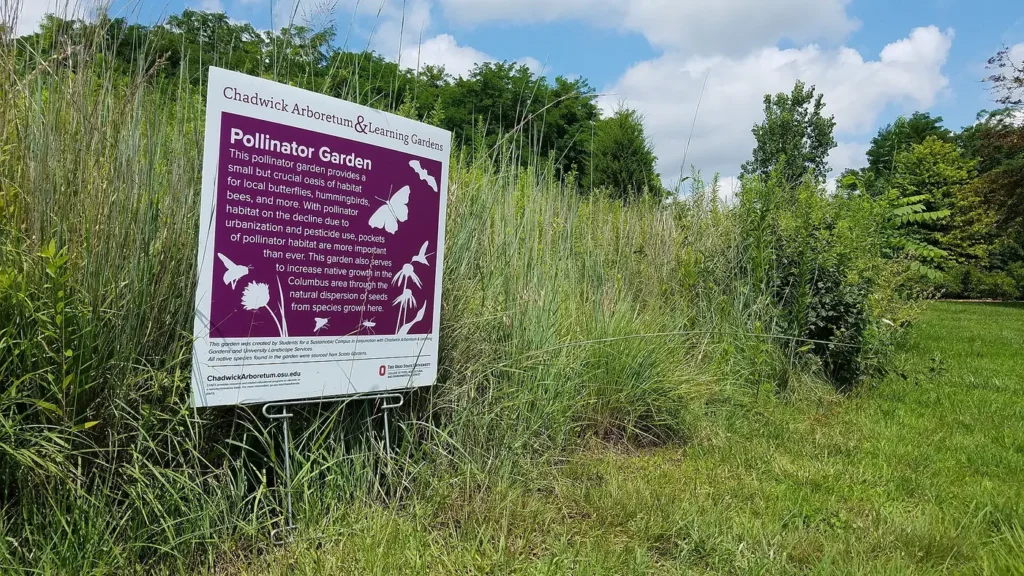
Pollinators find flowers more easily, and forage more efficiently, when the same plant grows in a clump rather than as scattered singles. Plant groups of three to seven of each species, or drifts of one plant about three feet across.
Vary heights and flower shapes
Different pollinators use different flowers. Flat-topped flowers such as coneflowers and yarrow give butterflies a landing pad; tubular flowers such as bee balm and penstemon suit long-tongued bees and hummingbirds; tiny clustered flowers such as mountain mint and goldenrod feed small native bees and beneficial wasps. Put taller plants at the back of the bed and shorter ones at the front.
Plant closely
Dense planting shades out weeds, reduces watering, and gives caterpillars cover from predators. Space perennials about 12 to 18 inches apart for a full look within a couple of seasons.
When to plant
Spring and fall are both good. Fall planting lets roots establish over the cool months, and many Extension offices recommend it in warmer regions; UGA Extension notes that fall or winter is the best time to plant pollinator gardens in Georgia. In colder areas, spring planting after the last frost is often easier. Use small plants or plugs, which establish quickly and cost much less than large pots. The frost date tool helps you time spring planting.
Prepare the soil lightly
Most native perennials do not need rich soil or fertilizer. Remove grass and weeds, loosen the soil, and add a little compost only if the soil is very poor or compacted. Mulch lightly between plants, leaving some patches of bare soil for ground-nesting bees.
Step 6: Provide water, shelter and nesting sites
- Water: a shallow dish with pebbles or marbles, kept topped up, gives bees and butterflies a safe place to drink. Butterflies also sip from damp soil or sand, called puddling.
- Sunny basking spots: flat stones that warm in the sun help butterflies warm up on cool mornings.
- Bare soil: many native bees nest in the ground, so leave a few sunny patches unmulched.
- Hollow stems: some bees nest in old plant stems. Leave stems standing over winter, or cut them to 12 to 18 inches tall in spring so new growth hides them.
- Shelter: shrubs and taller plants protect insects from wind and predators.
Step 7: Avoid insecticides
Insecticides do not distinguish between pests and pollinators, and some are harmful to bees even in small amounts. UGA Extension advises avoiding insecticides in and near pollinator spaces. Instead:
- Tolerate some damage. A few chewed leaves are normal and often mean caterpillars are feeding.
- Hand-pick or hose off pests such as aphids.
- Let beneficial insects work. Ladybugs, lacewings and hoverflies control many pests if they are not killed off.
- Read labels carefully if you must treat a problem, never spray open flowers, and treat in the evening when bees are not active.
Not sure what is eating your plants? The pest identifier helps you work out whether it is a pest or a caterpillar you want to keep.
Step 8: Leave fall cleanup until spring
Many butterflies, moths and native bees spend the winter in leaf litter, plant stems or seed heads, and seed heads feed birds. Penn State Extension recommends saving perennial garden cleanup for spring. Leave stems and leaves standing through winter, then cut back in spring once daytime temperatures are consistently warm.
Pollinators and the vegetable garden
A pollinator garden next to your vegetables pays off directly. Squash, cucumbers, melons and pumpkins produce separate male and female flowers and need bees to move pollen between them; poor pollination leads to small, misshapen or shriveled fruit. Plant pollinator-friendly flowers along the edges of the vegetable garden or between beds, and let a few herbs such as dill, cilantro, oregano and chives flower. Our guide to companion planting that actually works explains which flower and vegetable pairings are backed by evidence, and the companion plant finder suggests partners for each crop.
A pollinator garden in containers
No yard? Large containers can still feed pollinators. Use the biggest pots you can, at least 12 to 18 inches across, and fill them with compact nectar plants such as butterfly milkweed, coreopsis, lavender, salvia, oregano and dwarf zinnias. Group several pots together in a sunny spot so pollinators find them easily, and water often in summer. The container garden planner helps with pot sizes.
A sample 6 × 10 ft pollinator bed
| Position | Plants | Season of bloom |
|---|---|---|
| Back row | 3 Joe-Pye weed, 3 swamp milkweed | Mid to late summer |
| Middle row | 5 purple coneflower, 5 bee balm, 3 New England aster | Summer to fall |
| Front row | 5 black-eyed Susan, 3 butterfly milkweed, 5 golden Alexanders | Spring to late summer |
| Edges | Wild columbine, chives, a patch of dill for caterpillars | Spring to early summer |
Swap in species native to your region as needed. Plan it on a grid with the garden layout generator, then use the mulch calculator to work out how much light mulch you need between plants.
Looking after a pollinator garden
| When | Tasks |
|---|---|
| First year | Water weekly in dry spells; weed regularly while plants fill in |
| Spring | Cut back old stems once it is warm, leaving some standing stems; divide crowded clumps |
| Summer | Pull weeds; water only in long droughts; watch for caterpillars |
| Fall | Leave seed heads and stems standing; plant new perennials |
| Winter | Order seeds and plan additions |
Common mistakes
- Nectar plants only, no host plants, so butterflies visit but cannot breed.
- Everything blooming at once, leaving gaps in spring and fall.
- Single plants dotted around instead of groups.
- Using insecticides in or near the garden.
- Tidying everything in fall, removing overwintering insects.
- Thick mulch everywhere, leaving no bare soil for ground-nesting bees.
- Planting invasive species without checking local lists.
Frequently asked questions
How do I start a pollinator garden?
Choose a sunny spot, plant mostly native flowering plants in groups, include caterpillar host plants such as milkweed, plan for bloom from spring to fall, avoid insecticides, and leave cleanup until spring.
What is the difference between a pollinator garden and a butterfly garden?
A butterfly garden is a type of pollinator garden that emphasizes butterflies, so it pays particular attention to caterpillar host plants as well as nectar flowers.
What are host plants?
Host plants are the plants butterflies and moths lay eggs on and their caterpillars eat. Monarch caterpillars eat only milkweed, and black swallowtails eat plants in the parsley family.
What are the best plants for a pollinator garden?
Native plants such as milkweeds, purple coneflower, bee balm, black-eyed Susan, blazing star, asters and goldenrods are widely recommended. Choose species native to your region.
How big should a pollinator garden be?
Any size helps. A bed of 50 to 100 square feet holds a good range of plants, and even a few containers attract pollinators.
When should I plant a pollinator garden?
Spring or fall. Fall planting works well in milder regions; in colder areas, plant in spring after the last frost.
Should I cut back my pollinator garden in fall?
No. Leave stems and leaves standing over winter, because many insects overwinter in them, and cut back in spring once it is consistently warm.