An herb garden is the easiest and most rewarding place to start growing your own food. Herbs are small, forgiving and expensive to buy, and a handful of plants by the kitchen door or on a sunny windowsill can replace dozens of supermarket packets every year. Basil for pesto, parsley and chives for everyday cooking, mint for tea, rosemary and thyme for roasts: all are simple to grow once you know what each one likes.
This guide covers both kinds of herb garden: outdoors in beds and pots, and indoors on a windowsill or under lights. You will learn which herbs to start with, how much sun and water they need, how to plant and harvest them, and how to keep them going year after year.
Why grow your own herbs?
- They save money. A small pack of fresh herbs costs about the same as a whole plant that keeps producing for months.
- They taste better. Herbs lose flavor quickly after picking. Freshly cut herbs are noticeably more aromatic.
- They fit anywhere. A windowsill, balcony, patio pot or the corner of a vegetable bed is enough.
- They are forgiving. Many herbs thrive on a little neglect, especially the Mediterranean ones.
- They help the garden. Flowering herbs such as dill, cilantro, thyme and chives attract pollinators and beneficial insects.
Annual, biennial or perennial?
Knowing how long each herb lives tells you where to plant it and whether to replant every year.
| Herb | Life cycle | Sun | Water | Notes |
|---|---|---|---|---|
| Basil | Annual | Full sun | Even moisture | Killed by frost; plant after the last frost |
| Cilantro | Annual | Sun to part shade | Even moisture | Bolts in heat; sow in spring and fall |
| Dill | Annual | Full sun | Moderate | Sow directly; dislikes transplanting |
| Parsley | Biennial (grown as annual) | Sun to part shade | Even moisture | Slow to germinate; flowers in its second year |
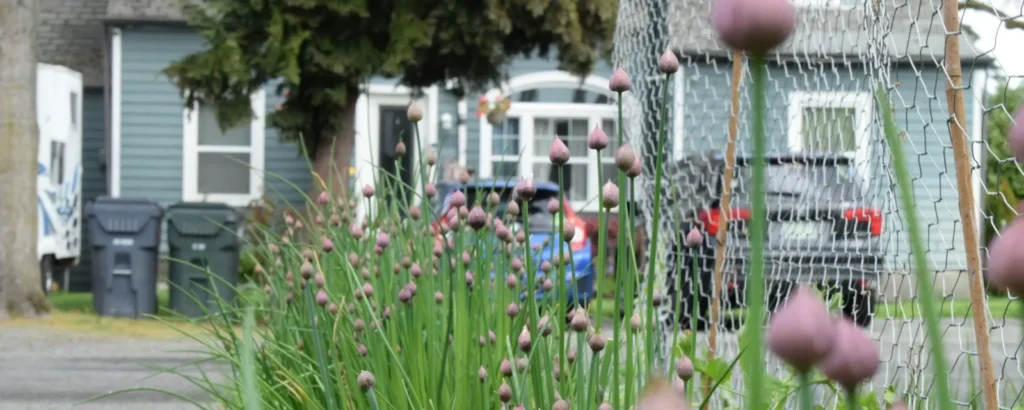
| Chives | Perennial | Sun to part shade | Moderate | Very hardy; edible purple flowers |
| Mint | Perennial | Sun to part shade | Moist | Spreads aggressively; grow in a pot |
| Thyme | Perennial | Full sun | Dry between waterings | Needs sharp drainage |
| Oregano | Perennial | Full sun | Dry between waterings | Flavor is strongest in lean soil |
| Sage | Perennial | Full sun | Dry between waterings | Woody shrub; prune in spring |
| Rosemary | Perennial in mild climates | Full sun | Dry between waterings | Often grown in pots and brought indoors where winters are cold |
Whether a perennial herb survives winter depends on your climate. The USDA Plant Hardiness Zone Map shows your zone, and our growing zone finder explains which perennial herbs are usually hardy in it.
The best herbs for beginners
If you are new to herbs, start with five to seven you will actually use. A reliable starter set:
- Basil for summer cooking and pesto.
- Parsley for almost everything.
- Chives, which come back every year with almost no care.
- Mint for tea and drinks, kept in its own pot.
- Thyme for roasts, soups and sauces.
- Oregano for Italian and Mexican dishes.
- Rosemary if you have a sunny, well-drained spot.
Part 1: Starting an outdoor herb garden
Choose a sunny spot near the kitchen
Most herbs need at least six hours of direct sun a day. Mediterranean herbs such as rosemary, thyme, oregano and sage want as much sun as you can give them. Parsley, chives, mint and cilantro tolerate a little afternoon shade, which helps in hot climates. Plant herbs as close to the kitchen as you can: you will use them far more if they are a few steps away. The sunlight requirement finder helps you check your light.
Get the soil right
Herbs fall into two groups, and they want different soil:
| Group | Herbs | Soil they want |
|---|---|---|
| Mediterranean herbs | Rosemary, thyme, oregano, sage, lavender | Lean, sharply drained soil; little fertilizer; dry between waterings |
| Leafy herbs | Basil, parsley, cilantro, chives, mint, dill | Richer soil with compost; steady moisture |
Grouping herbs by these needs makes watering simple. In heavy clay, grow Mediterranean herbs in a raised bed or containers so their roots never sit wet. Our guide to building a raised garden bed covers construction.
Herb garden layout ideas
- A kitchen-door bed: a small bed 2 to 3 feet wide along a sunny wall.
- A corner of the vegetable garden: basil and parsley tucked among tomatoes and peppers, which like the same conditions.
- A raised herb bed: ideal for drainage-loving Mediterranean herbs.
- A container cluster on a patio: each herb in its own pot, so you can match soil and water to each one.
- An herb spiral: a spiraling mound of stone and soil with dry, sunny conditions at the top for rosemary and thyme, and moister soil at the base for parsley and chives.
- A border edging: low chives, thyme and parsley make attractive, useful edges for beds.
Keep mint out of beds entirely: it spreads by underground runners and takes over. Grow it in its own container.
Seeds or plants?
| Easy from seed | Best bought as plants or divisions |
|---|---|
| Basil, cilantro, dill, parsley (slow but reliable), chives | Rosemary, thyme, oregano, sage, mint, tarragon |
Basil, cilantro and dill grow quickly from seed and are cheap to sow in batches. Woody herbs such as rosemary and thyme are slow and uneven from seed, so most gardeners buy small plants. Mint is easiest from a division or cutting. Parsley seed can take three weeks or more to germinate; soaking it overnight before sowing helps.
When to plant
- Frost-tender herbs such as basil go out after your last spring frost, once nights are warm.
- Hardy herbs such as parsley, chives, cilantro, thyme and oregano can go out a few weeks before the last frost.
- Cilantro and dill do best sown in spring and again in late summer, because they bolt quickly in heat.
The frost date tool and planting calendar give exact dates for your area.
Spacing
| Herb | Spacing | Per square foot |
|---|---|---|
| Chives, cilantro, parsley | 6 in | 4 |
| Basil, thyme, oregano, dill | 12 in | 1 |
| Sage, rosemary | 18 to 24 in | 1 per 2 to 4 sq ft |
| Mint | In its own pot | — |
The square foot gardening calculator includes common herbs, so you can plan a herb bed square by square.
Watering and feeding
- Leafy herbs such as basil, parsley and cilantro like steady moisture; water when the top inch of soil feels dry.
- Mediterranean herbs prefer to dry out between waterings. Overwatering is the most common way to kill rosemary and thyme.
- Feed lightly. Too much fertilizer produces lush growth with less flavor. A little compost each spring is usually enough outdoors.
- Mulch leafy herbs to hold moisture, but keep mulch away from the stems of Mediterranean herbs.
Part 2: Starting an indoor herb garden
Growing herbs indoors keeps fresh flavor on hand all winter. The challenge is almost always light.
Light: the key to indoor herbs
University of Illinois Extension notes that most herbs need about six hours of full sun a day, with a south-facing window usually providing the best light indoors, followed by east or west windows. North windows are generally too dim. If your windows fall short, grow lights solve the problem: Illinois Extension suggests keeping fluorescent lights within about 12 inches of the plants and running them 12 to 16 hours a day.
| Light source | How well herbs grow | Tips |
|---|---|---|
| South-facing window | Best natural light | Rotate pots every few days for even growth |
| East or west window | Good for leafy herbs | Rosemary and basil may stretch in winter |
| North window | Usually too dim | Add a grow light |
| LED or fluorescent grow light | Reliable year-round | Close to the plants, 12 to 16 hours a day on a timer |
Containers and potting mix
- Use pots with drainage holes. Herbs rot quickly in waterlogged soil.
- Choose 4- to 6-inch pots for individual herbs, or a wide, shallow container for two or three herbs with similar needs.
- Use a light, well-draining potting mix, not garden soil.
- Set pots on saucers and empty any standing water after watering.
Our guides to container gardening and the container garden planner help you match pot sizes to herbs.
Temperature, humidity and water
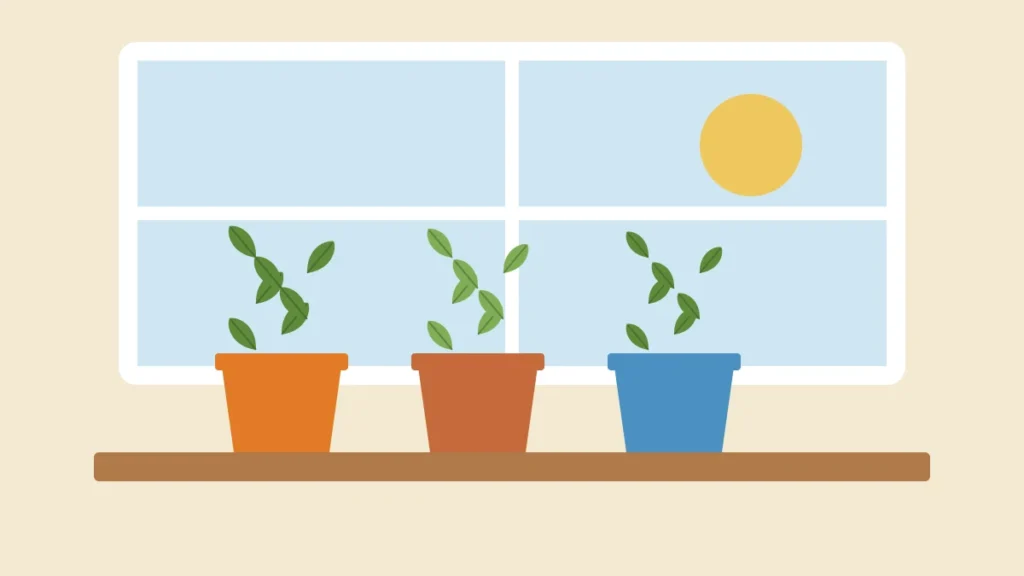
NC State Extension’s guide to growing herbs indoors recommends daytime temperatures of about 65 to 70°F with nights about 10 degrees cooler, and feeding sparingly: herbs need only modest amounts of fertilizer. Heated homes are dry in winter, so group pots together or set them on a tray of pebbles and water to raise humidity. Keep pots from touching cold window glass. Water when the top inch of mix feels dry, then let excess water drain away.
The best herbs for growing indoors
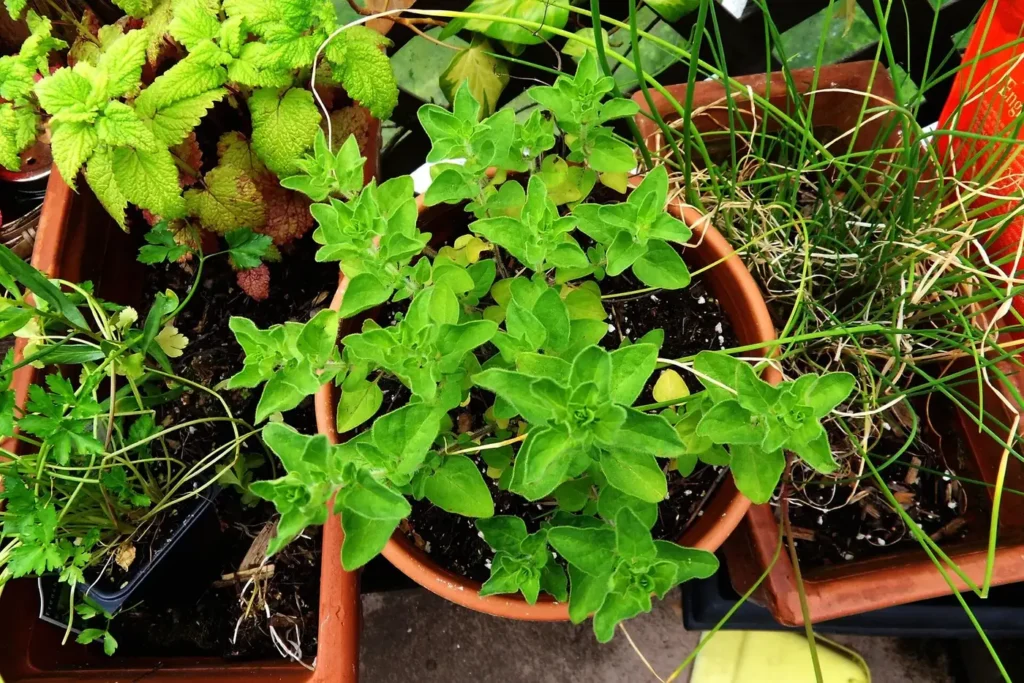
- Chives, parsley and mint cope best with lower indoor light.
- Thyme and oregano do well in a bright window.
- Basil needs the brightest spot or a grow light, and warmth.
- Rosemary needs strong light and dislikes both soggy soil and very dry air.
- Cilantro is short-lived indoors; sow small batches every few weeks.
How to harvest herbs
- Start picking once plants are established and growing well.
- Take no more than about a third of the plant at once, so it can regrow.
- Pinch basil above a pair of leaves. Two new shoots grow from that point, making the plant bushier.
- Cut chives and parsley from the outside, close to the base, and new growth comes from the center.
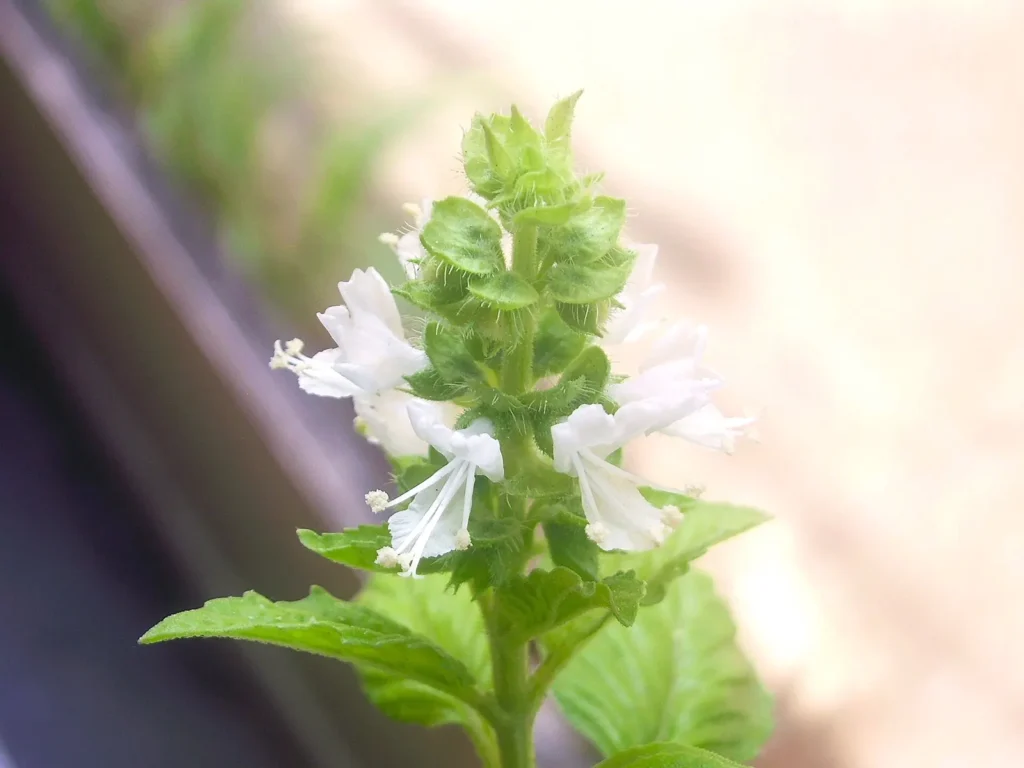
- Harvest before flowering for the best leaf flavor, and pinch off basil flower buds to keep leaves coming.
- Pick in the morning, after the dew dries, when flavor is strongest.
Preserving your herbs
| Method | Best for | How |
|---|---|---|
| Air drying | Thyme, oregano, sage, rosemary | Hang small bundles upside down somewhere warm, dry and out of direct sun |
| Freezing | Basil, parsley, chives, cilantro | Chop and freeze in ice cube trays with a little water or oil |
| Herb butter or pesto | Basil, parsley, chives | Blend with butter, oil or nuts and freeze in portions |
Troubleshooting common herb problems
| Problem | Likely cause | Fix |
|---|---|---|
| Tall, leggy, pale growth | Too little light | Move to a brighter spot or add a grow light |
| Yellow leaves | Overwatering or poor drainage | Let soil dry out; check drainage holes |
| Rosemary drying out and dying | Usually wet roots, sometimes very dry indoor air | Water only when the top inch is dry; raise humidity |
| Cilantro bolting quickly | Heat and long days | Sow in cool seasons; sow small batches often |
| Basil leaves blackening | Cold temperatures | Keep basil above about 50°F |
| Sticky leaves, tiny insects | Aphids or whiteflies | Rinse with water; use insecticidal soap if needed |
| Fine speckling and webbing | Spider mites, often in dry indoor air | Rinse leaf undersides; raise humidity |
For other problems, the yellow leaf identifier and pest identifier help you find the cause, and the overwatering checker is especially useful for potted herbs.
Herbs as garden companions
Herbs earn their place in the vegetable garden too. Basil shares tomatoes’ love of warmth and steady moisture. Flowering dill, cilantro and chives attract hoverflies and parasitic wasps that help control aphids and caterpillars. Our guide to companion planting that actually works explains which pairings are backed by evidence, and the companion plant finder lists good partners for each crop.
Looking after perennial herbs through the year
- Spring: cut back woody herbs such as sage and thyme by about a third to encourage fresh growth. Divide crowded clumps of chives and mint.
- Summer: harvest regularly, and pinch off flowers on basil.
- Fall: stop heavy harvesting of perennials so they harden off before winter. Pot up basil, parsley or chives to bring indoors.
- Winter: mulch around hardy perennials after the ground freezes. Bring tender rosemary indoors in cold climates.
Penn State Extension’s guide to container gardening success covers pots, soil, light and feeding in more depth if you grow most of your herbs in containers.
A simple starter plan
| Space | What to plant |
|---|---|
| Sunny windowsill | Three 6-inch pots: parsley, chives and thyme; add basil under a grow light in winter |
| Patio or balcony | Six pots: basil, parsley, chives, thyme, rosemary, and mint in its own pot |
| 2 × 4 ft bed | 2 basil, 4 parsley, 4 chives, 1 thyme, 1 oregano, 1 sage, with rosemary and mint in nearby pots |
Frequently asked questions
How do I start an herb garden for beginners?
Choose five to seven herbs you cook with, find a spot with at least six hours of sun, use well-drained soil or pots with drainage holes, and water leafy herbs regularly while letting Mediterranean herbs dry between waterings.
What herbs are easiest to grow?
Chives, mint, parsley, basil, thyme and oregano are among the easiest. Grow mint in its own pot because it spreads aggressively.
How much sun do herbs need?
Most herbs need at least six hours of direct sun. Parsley, chives, mint and cilantro tolerate some shade; rosemary, thyme, oregano and basil want full sun.
Can I grow herbs indoors all year?
Yes, with enough light. A south-facing window works for many herbs, and a grow light run 12 to 16 hours a day makes indoor herbs reliable even in winter.
Which herbs should not be planted together?
Keep mint in its own pot so it does not crowd others. Group Mediterranean herbs that like dry soil separately from moisture-loving herbs such as basil and parsley.
How often should I water herbs?
Water when the top inch of soil is dry. Leafy herbs need water more often than rosemary, thyme, oregano and sage, which prefer to dry out between waterings.
Why is my indoor basil dying?
Usually too little light, cold drafts or overwatering. Give basil the brightest spot or a grow light, keep it warm, and water only when the top of the mix is dry.
Do herbs come back every year?
Perennial herbs such as chives, mint, thyme, oregano and sage return each year in suitable climates. Basil, cilantro and dill are annuals and must be replanted.