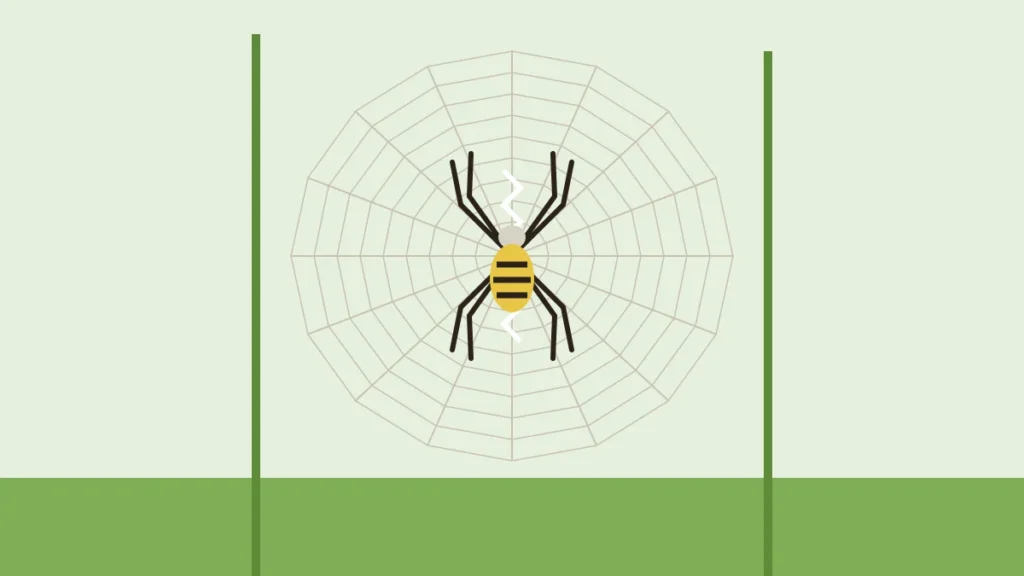
Every late summer, gardeners across the United States find a large black-and-yellow spider sitting head-down in the middle of a big web stretched between tomato cages, sunflowers or shrubs. It looks alarming, but the yellow garden spider is harmless to people and one of the most effective insect hunters in the garden. It is just one of many spiders quietly working as free pest control among your plants.
This guide explains how to identify the yellow garden spider and other common garden spiders, what they eat, whether they bite, what their egg sacs look like, and how to encourage these helpful predators while staying safe around the few spiders that do deserve caution.
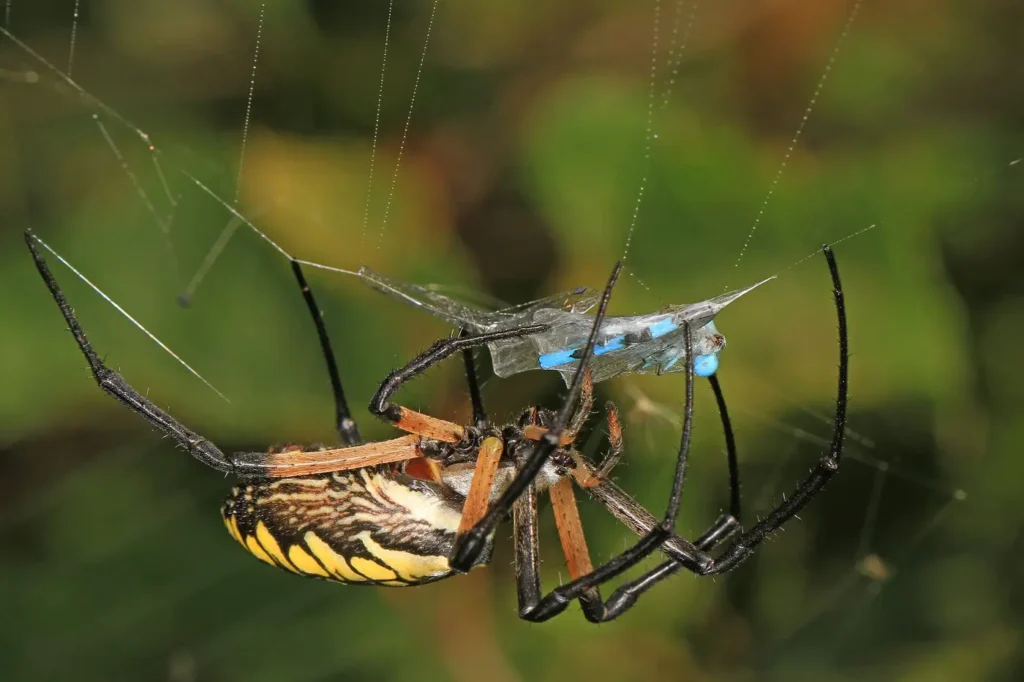
The yellow garden spider (Argiope aurantia)
The yellow garden spider is a large orb-weaving spider found throughout much of North America. NC State Extension’s profile of the black and yellow garden spider lists its many common names: black-and-yellow argiope, corn spider, golden garden spider, writing spider, yellow garden orb-weaver and zipper spider, among others.
How to identify it
| Feature | What to look for |
|---|---|
| Abdomen | Large, egg-shaped, boldly marked black and yellow |
| Front body | Covered in silvery-white hairs |
| Legs | Long and black, with yellow, orange or reddish bands near the body |
| Size | Females are large, with bodies around an inch long; males are much smaller and slimmer |
| Web | A large, round orb web in an open, sunny spot, often with a bold zigzag band in the center |
| When seen | Mostly mid to late summer and early fall |
The zigzag in the web
Yellow garden spiders weave a thick zigzag band of silk, called a stabilimentum, through the center of the web. It is the reason for the nickname “writing spider”. Scientists have proposed several explanations for its purpose, from making the web visible so birds do not fly through it, to attracting prey or camouflaging the spider, and it may serve more than one role.
What it eats
The yellow garden spider catches insects that fly or jump into its web, sensing their vibrations through the silk. NC State Extension notes that it captures a wide range of prey, including insects larger than itself; their photographs even show one that caught a small lizard. In a vegetable garden, its catches include grasshoppers, flies, beetles, moths and wasps.
Is it dangerous?
No. University of Florida IFAS Extension’s species profile of the yellow garden spider describes it as relatively harmless and notes that it will generally flee rather than attack. NC State Extension states that these spiders are not aggressive toward humans and, because they are beneficial, no control is necessary. Like most spiders, it could bite if pinched or grabbed, but bites are rare and not considered medically serious for healthy people.
Garden spider egg sacs
In fall, female yellow garden spiders produce distinctive egg sacs. University of Florida IFAS Extension describes the garden spider egg sac as brown and pear-shaped, hung from plants or structures by strands of silk, with hundreds of eggs inside. The eggs hatch in late fall, but the tiny spiderlings stay inside the sac through winter and emerge in spring.
- Leave egg sacs where you find them if you can. They will produce next year’s pest controllers.
- Take care when cutting back plants in fall; check for sacs on stems, tomato cages and shrubs.
- If one must move, cut the stem it is attached to and tie it in a sheltered spot nearby.
This is another good reason to leave some garden cleanup until spring, as our guide to planting a pollinator garden recommends.
Other big yellow and black garden spiders
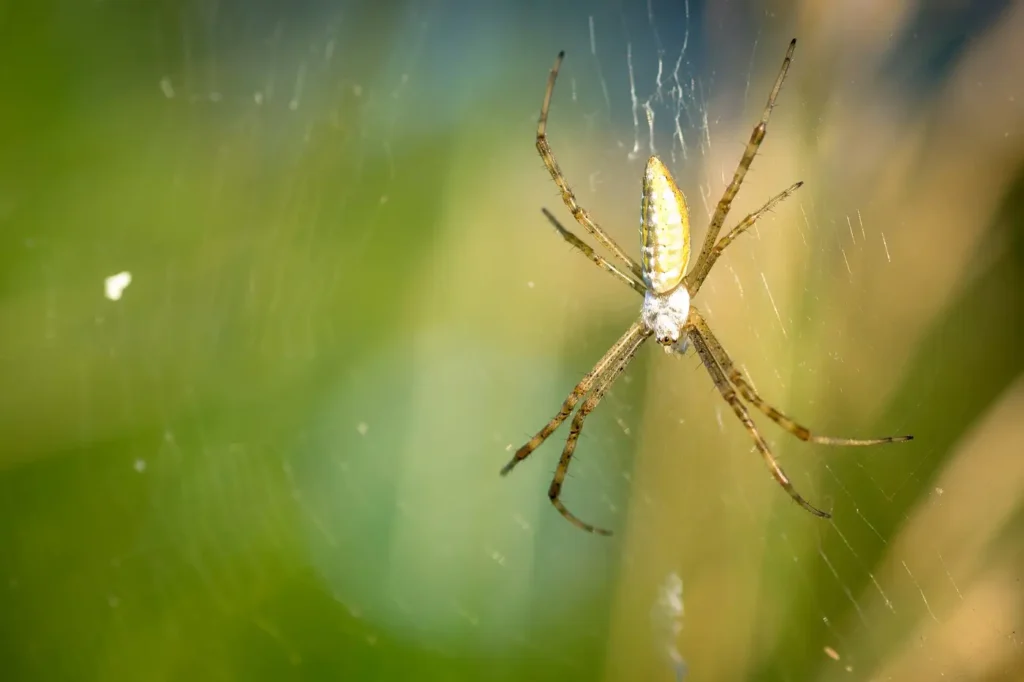
Clemson Extension’s guide to big yellow spiders describes four large yellow and black orb weavers found in South Carolina: the yellow garden spider, the banded garden spider, the golden silk orb weaver and the Jorō spider, a relatively new arrival.
| Spider | How to tell it apart |
|---|---|
| Yellow garden spider | Black abdomen with bold yellow patches; zigzag web decoration |
| Banded garden spider | Thin yellow, white and black horizontal stripes across the abdomen |
| Golden silk orb weaver | Long, slender body; very large web with golden-colored silk; mainly in the Southeast |
| Jorō spider | Long legs banded yellow and black; a non-native species spreading in parts of the Southeast |
According to Clemson Extension, yellow garden spiders lay up to four egg sacs, while the banded garden spider lays a single sac, usually between September and October. Garden spiders often rest with their legs held together in pairs, forming an X shape.
Other common garden spiders
Not all garden spiders build webs. Many hunt on the ground, on plants or on flowers, and all of them eat insects.
| Spider | Where you find it | How it hunts |
|---|---|---|
| Orb weavers | Webs between plants, fences and shrubs | Round webs that trap flying insects |
| Wolf spiders | On the ground, under mulch and stones | Run down prey; no web |
| Jumping spiders | On plants, walls and fences in daylight | Stalk and pounce, using excellent eyesight |
| Crab spiders | On flowers | Ambush insects that visit flowers |
| Grass spiders | Funnel-shaped webs in lawns and ground cover | Wait in a funnel retreat |
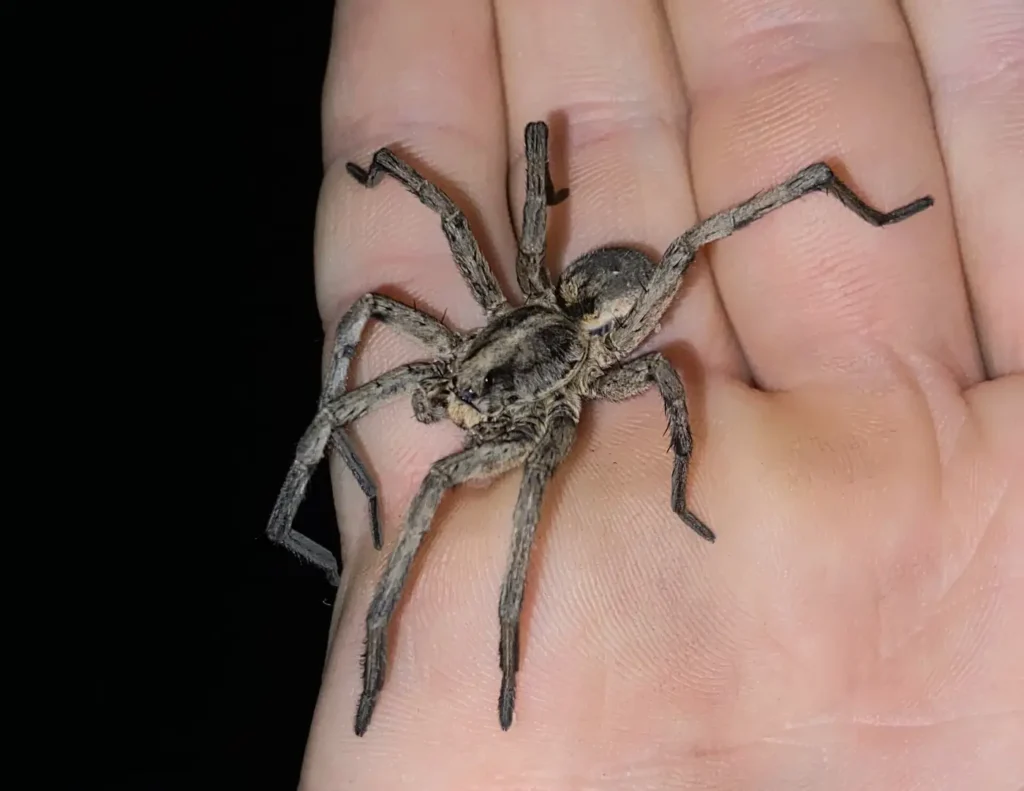
Wolf spiders
Wolf spiders are fast, hairy, brown or gray hunters that live on the ground. They do not build catching webs; they chase prey across the soil and under mulch. The Carolina wolf spider is the largest in North America. Females carry their egg sac attached to their spinnerets and then carry the young spiderlings on their backs. They are common in mulched beds and are good predators of ground-dwelling insects.
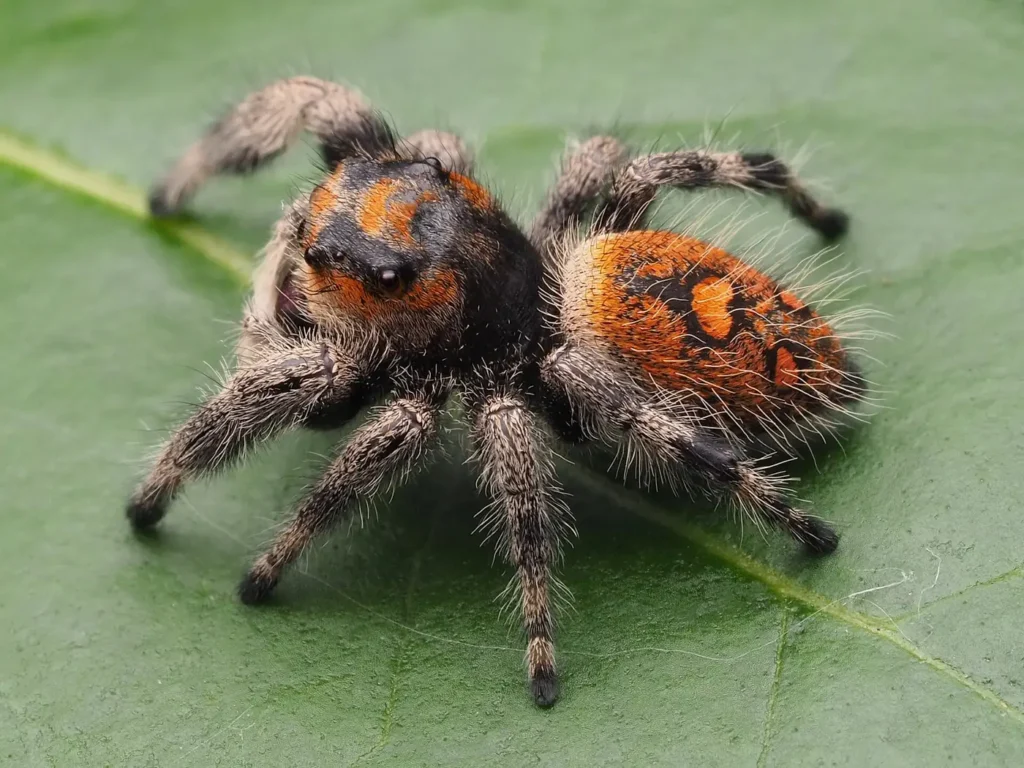
Jumping spiders
Jumping spiders are small, compact and often brightly colored or fuzzy, with large front eyes. They hunt in daylight on plants, fences and walls, stalking insects and leaping on them. Many people find them charming rather than frightening, as they often turn to look at you.
Why spiders are good for your garden
- They eat pests: aphids, flies, caterpillars, grasshoppers, beetles and many other insects that damage plants.
- They work all season, day and night, with no cost or chemicals.
- They are part of a balanced garden: spiders are also food for birds, lizards and toads.
Spiders are generalist predators, so they also catch some beneficial insects; crab spiders, for example, ambush pollinators on flowers. Overall, though, a garden with plenty of spiders is a garden with natural pest control. To identify what is eating your plants, try the pest identifier.
How to encourage spiders in the garden
- Avoid broad-spectrum insecticides, which kill spiders along with pests.
- Mulch beds with straw or shredded leaves, which shelters ground-hunting spiders. The mulch calculator works out how much you need.
- Grow a mix of plant heights, from ground covers to tall flowers, which gives web-builders anchor points.
- Leave some stems and seed heads standing over winter, where egg sacs and young spiders shelter.
- Tolerate webs where they are not in the way.
Our guides to companion planting and pollinator gardens explain how diverse plantings support beneficial insects and spiders alike.
What to do about a web in your way
Orb weavers often build across paths and between tomato cages. If a web is somewhere inconvenient:
- Leave it if you can: many orb weavers take down and rebuild their webs regularly, and the spider may move on by itself.
- Move the spider gently by letting it walk onto a stick or into a jar, and release it on a nearby shrub out of the way.
- Brush the web away with a stick if needed; the spider will usually rebuild elsewhere.
Spiders that deserve caution
Nearly all garden spiders are harmless to people. In the United States, the two groups that are medically significant are:
| Spider | Appearance | Where it hides |
|---|---|---|
| Widow spiders | Shiny black (or brown) with a red or orange hourglass marking underneath | Woodpiles, sheds, under pots and rocks, dark corners |
| Brown recluse | Brown, with a darker violin-shaped mark on the front body; found mainly in the central and southern US | Undisturbed dark spaces such as boxes, sheds and closets |
Neither is aggressive; bites usually happen when a spider is pressed against skin. Simple precautions prevent most bites:
- Wear gloves when moving pots, firewood, boards or stored items, and when reaching into sheds.
- Shake out gloves, boots and garden clothes left outdoors before putting them on.
- Keep woodpiles and clutter away from the house.
- Seek medical care for a suspected widow or recluse bite, or for any bite that causes severe pain, spreading redness or other symptoms.
Spiders through the gardening year
| Season | What you will see |
|---|---|
| Spring | Tiny spiderlings emerging from overwintered egg sacs and dispersing |
| Early summer | Small, growing spiders; jumping spiders and wolf spiders active |
| Late summer | Large orb weavers, including yellow garden spiders, at their most visible |
| Fall | Females laying egg sacs; adult orb weavers die with hard frost |
| Winter | Egg sacs and some spiders sheltering in leaf litter and stems |
Common spider myths
| Myth | The reality |
|---|---|
| “Big spiders are the dangerous ones.” | Size says little about risk. The large yellow garden spider is harmless, while the medically significant widow spiders are fairly small. |
| “Spiders bite people often.” | Spider bites are uncommon. Many skin sores blamed on spiders turn out to have other causes. |
| “Spiders in the garden mean an infestation.” | Spiders follow their prey. Plenty of spiders usually means plenty of insects being eaten. |
| “Every spider builds a web.” | Wolf spiders, jumping spiders and crab spiders hunt without catching webs. |
| “Spiders are insects.” | Spiders are arachnids, with eight legs and two main body parts, while insects have six legs and three body parts. |
Spiders in raised beds, greenhouses and containers
Raised beds, cold frames and greenhouses offer spiders shelter and a steady supply of insects, and they are welcome there. A few spiders in a greenhouse help keep whiteflies, fungus gnats and aphids in check. When you open a cold frame or lift a row cover, expect to find spiders underneath and let them move away. If you store pots, trays or bags of soil in a shed or garage, wear gloves when handling them, since dark, undisturbed corners are where widow spiders like to hide. Our guides to raised garden bed ideas and container gardening cover setting up these spaces.
How to get a spider identified
- Take clear photos from a safe distance, ideally from above and from the side, showing the body pattern and legs.
- Note where you found it: in a web, on the ground, on a flower or in a shed.
- Note the size by placing a coin or ruler nearby in the photo, without touching the spider.
- Ask your local Cooperative Extension office or Master Gardener program; many will identify spiders from photos.
For insects and other garden problems, the plant problem identifier is a good starting point.
Frequently asked questions
Are yellow garden spiders poisonous?
They have venom to subdue insects, like nearly all spiders, but they are not considered dangerous to people. They are not aggressive and bites are rare.
Why is it called a writing spider?
Because of the thick zigzag band of silk, called a stabilimentum, that it weaves through the center of its web, which looks like writing.
Should I kill garden spiders?
No. Garden spiders are beneficial predators of insect pests. If a web is in the way, move the spider gently to a nearby plant.
What does a garden spider egg sac look like?
The yellow garden spider’s egg sac is brown and pear-shaped, hung by silk from plants or structures. Spiderlings hatch in late fall and stay inside until spring.
What is the difference between a yellow garden spider and a banded garden spider?
The banded garden spider has thin horizontal stripes of yellow, white and black across its abdomen, while the yellow garden spider has bold yellow patches on black.
What happens to garden spiders in winter?
Adult orb weavers die with hard frost, leaving egg sacs that overwinter. Some other spiders shelter in leaf litter and plant stems.
Which garden spiders are dangerous?
In the US, widow spiders and the brown recluse are the main medically significant species. Wear gloves when moving wood, pots and stored items.
Do garden spiders come back every year?
Adult orb weavers usually live only one season, but their egg sacs overwinter and a new generation of spiders appears the following year.
Can I move a garden spider to another spot?
Yes. Let it walk onto a stick or into a jar and release it on a nearby shrub. It will usually build a new web within a day or two.