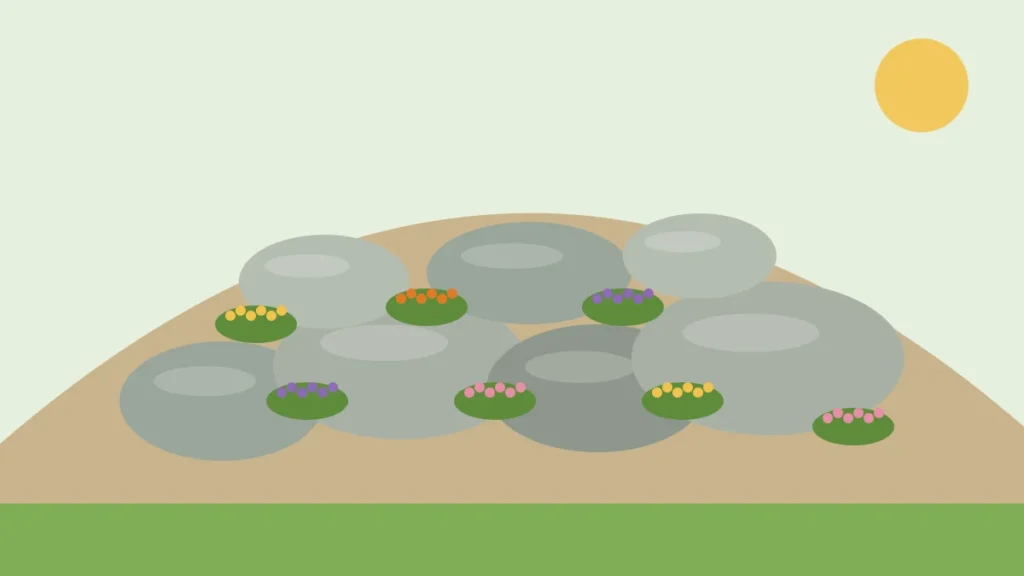
A rock garden turns a sunny slope, a dry corner or an awkward bank into one of the most interesting features in the yard. Weathered stones set into gritty, fast-draining soil create perfect conditions for small, tough plants: creeping phlox, sedums, hens and chicks, thyme, dwarf conifers and the jewel-like alpines that grow wild on rocky mountainsides. Done well, a rock garden looks like a natural outcrop that has always been there.
This guide explains how to choose a site, select and place rocks, make the right soil mix for drainage, choose rock garden plants, plant and maintain the garden, and adapt the idea to small spaces with troughs, crevice gardens and dry creek beds.
What is a rock garden?
A rock garden, sometimes called a rockery, combines rocks with small plants that thrive in sharply drained soil and plenty of light. Traditionally, rock gardens were built to grow alpine plants, which live on mountain slopes where drainage is excellent and winters are cold and dry. Oklahoma State University Extension’s guide to rock gardening (PDF) points out that few true alpine plants perform well in hot, humid climates, but many other dwarf, low-growing plants have a similar look and thrive in a rock garden with the right soil mix.
Why build one?
- Solves problem areas: slopes that are hard to mow and dry banks where little else grows.
- Low water use once established, since most rock garden plants are drought-tolerant.
- Year-round structure from the rocks themselves, even in winter.
- Room for many small plants in a modest space.
- Habitat: warm stones and nooks shelter beneficial insects, lizards and pollinators.
Step 1: Choose the site
Colorado State University Extension’s guide to rock gardens recommends a natural slope or terrace as the ideal location, stresses that good drainage is necessary, and advises that the garden should be no larger than you can easily maintain, since rock gardens have high maintenance requirements, mainly weeding.
- Sun: most rock garden plants need full sun, at least six hours a day.
- Drainage: avoid low spots where water collects. On heavy clay, build up a raised mound or berm.
- Away from trees, whose roots and falling leaves smother small plants.
- Visible: near a path, patio or entrance, where you can see the small plants up close.
The UK’s Royal Horticultural Society, in its guide to rock gardening, advises choosing a position where drainage is perfect unless you are prepared to build raised beds or improve drainage, and calls winter wet the enemy of rock plants. The sunlight requirement finder helps you check your light.
Step 2: Choose your rocks
| Guideline | Why |
|---|---|
| Use one type of rock | Colorado State Extension recommends rocks of one geological type for a natural look |
| Prefer local stone | Looks at home in the landscape and is cheaper to transport |
| Include some large rocks | Colorado State suggests several large rocks, some weighing 200 pounds or more, as anchors |
| Choose weathered rocks | Lichen and moss-covered stones look established |
| Vary the sizes | A few large anchors plus medium and small stones look natural |
Limestone, sandstone, granite and fieldstone are all common choices. Buy from landscape suppliers or stone yards, and never take rock from public lands or natural areas without permission. Large rocks are very heavy: use proper lifting technique, a dolly or bar, and help, or have stone placed by machine.
Step 3: Prepare the soil and drainage
Drainage is the secret to a successful rock garden. Most rock garden plants rot if their roots sit wet, especially in winter.
- Remove all weeds, especially perennial weeds with deep roots. They are very hard to remove once rocks are in place.
- Improve drainage on heavy soil: build the garden up as a mound or berm, and on very wet sites add a base layer of coarse rubble or gravel.
- Mix a gritty planting soil. A common recipe is roughly equal parts loamy soil, coarse grit or crushed gravel, and compost. The University of California Master Gardeners’ guide to building a rock garden (PDF) notes that mixing sand or gravel into the soil usually provides adequate drainage, with compost for nutrients.
- Avoid rich soil. Too much fertilizer and organic matter make rock plants grow soft and floppy.
For heavy clay, Colorado State Extension suggests incorporating organic matter to improve texture and drainage. The soil calculator works out how much mix you need for your mound or bed.
Step 4: Place the rocks
- Start with the largest rocks as keystones, usually at the base of the slope.
- Bury each rock deeply, often a third or more of its height, so it looks like a natural outcrop rather than a stone sitting on the surface. This also keeps rocks stable.
- Follow the grain. Colorado State Extension advises placing rocks in a natural way, following the grain of the rock, with strata or lines all running the same direction.
- Tilt rocks slightly back into the slope so rain runs toward the plant roots.
- Create pockets and crevices between rocks for plants.
- Step back often to check the overall look; it is easier to adjust while building.
Step 5: Choose rock garden plants
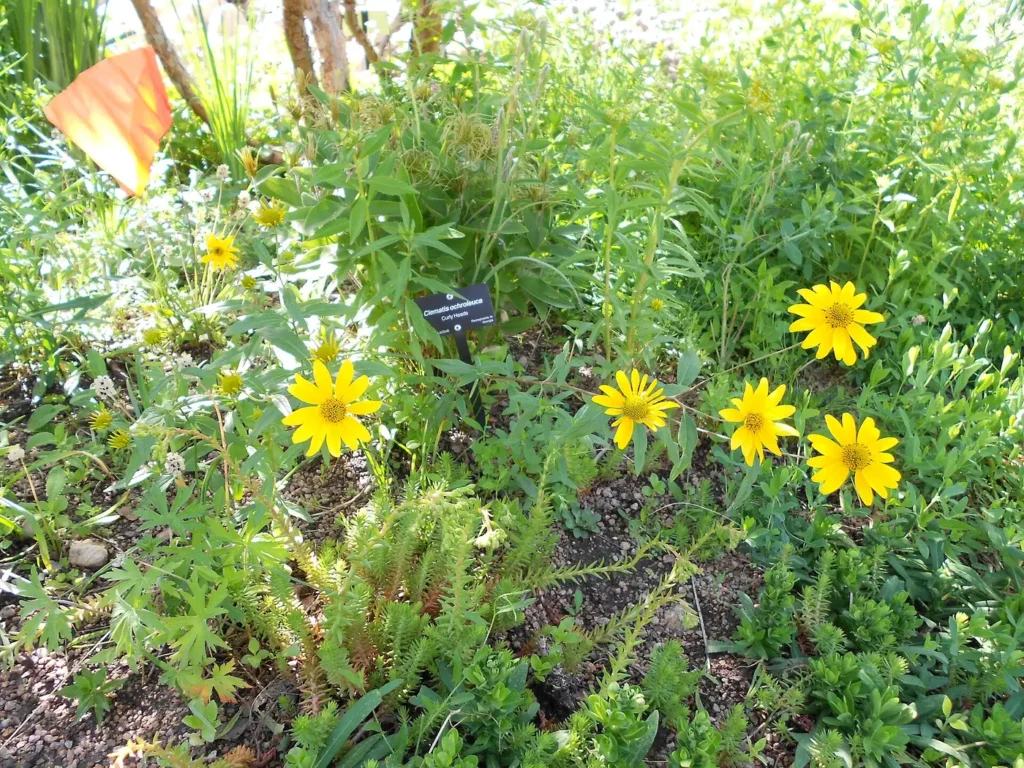
Colorado State Extension notes that low-growing, clumping plants are generally preferred, and that rock garden plants should ideally spread slowly so they do not swamp their neighbors. Good choices vary by climate, but these are widely grown:
| Plant | Type | Season of interest | Notes |
|---|---|---|---|
| Creeping phlox (Phlox subulata) | Perennial ground cover | Spring | Carpets of pink, purple or white |
| Hens and chicks (Sempervivum) | Succulent | Year-round | Rosettes that fill crevices |
| Sedums (stonecrops) | Succulent | Summer to fall | Many low, spreading types |
| Creeping thyme | Herb | Summer | Fragrant; tolerates light foot traffic |
| Dianthus (pinks) | Perennial | Late spring to summer | Fragrant flowers, gray-green foliage |
| Basket-of-gold (Aurinia) | Perennial | Spring | Bright yellow flowers |
| Candytuft (Iberis) | Evergreen perennial | Spring | White flowers |
| Sea thrift (Armeria) | Perennial | Spring to summer | Pink pompom flowers over grassy tufts |
| Hardy ice plant (Delosperma) | Succulent | Summer | Vivid, daisy-like flowers |
| Blue fescue | Ornamental grass | Year-round | Blue-gray tufts |
| Dwarf conifers | Shrub | Year-round | Structure and winter color |
| Dwarf bulbs (crocus, species tulips, dwarf iris) | Bulb | Early spring | First color of the year |
Many rock garden plants also feed early bees and other pollinators; see our guide to planting a pollinator garden. Check hardiness for your area with the growing zone finder, and browse plants by sun and season with the plant finder.
Step 6: Plant and mulch
- Arrange plants in their pots first and look at the effect, as the UC Master Gardeners suggest, noting microclimates: plants at the base of a tall rock may get more shade and moisture than those on top.
- Plant into pockets and crevices, firming the gritty mix around the roots.
- Put drought-lovers at the top and plants that like a little more moisture near the base.
- Top-dress with gravel or grit of a similar stone. Colorado State Extension suggests using smaller, similar rock as a mulch. Gravel keeps the crowns of plants dry, reduces weeds and looks natural.
- Water in well and keep watering regularly while plants establish.
The mulch calculator works for gravel top-dressing too: set the depth to about 1 inch.
Caring for a rock garden
| Task | When | Tips |
|---|---|---|
| Weeding | Regularly, especially early in the season | Pull weeds while small, before they root under rocks |
| Watering | Regularly in the first year; then only in long dry spells | Most rock garden plants need low to moderate water once established |
| Feeding | Rarely, if at all | Rich feeding makes plants floppy |
| Trimming | After flowering | Shear creeping phlox and similar plants lightly to keep them compact |
| Dividing | Every few years, in spring or fall | Divide spreading plants before they swamp neighbors |
| Refreshing gravel | Every year or two | Top up grit around plant crowns |
| Winter | Fall to spring | Clear fallen leaves that trap wet around plants |
The Royal Horticultural Society also notes that ants can be a problem in the well-drained soils where rock plants thrive.
Rock garden ideas
Slope rockery
The classic rock garden: stones set into a sunny bank, with plants trailing between them. It also helps stabilize the slope.
Raised rock berm
On flat ground, build a gently mounded berm of gritty soil and set rocks into it. This lifts plants above wet ground and gives the garden height.
Crevice garden
Flat stones set on edge, close together, like slices of bread, with narrow soil-filled crevices between them. Plant roots run deep into the cool, moist crevices while their crowns stay dry, and many alpines thrive this way. Crevice gardens are increasingly popular in public gardens.
Scree bed
A bed of deep gravel mixed with a little soil, imitating the loose rock at the base of mountain cliffs. Ideal for the most drainage-demanding plants.
Trough garden
A small rock garden in a stone or hypertufa trough on a patio. Use the same gritty mix, a few small rocks and miniature plants. Ideal for small spaces; see our small garden ideas.
Dry creek bed
A meandering channel of river rock and boulders, planted along the edges, that also carries runoff during storms. It pairs well with a rain garden; see our guide to making a rain garden.
Succulent rock garden
Sedums, hens and chicks, hardy ice plants and, in warm climates, other succulents and cacti combine with rocks for a very low-water garden.
Common rock garden mistakes
- Poor drainage, the most common reason rock plants fail.
- Rocks sitting on the surface like scattered boulders rather than buried outcrops.
- Mixing many rock types, which looks unnatural.
- Leaving perennial weeds in the soil before building.
- Rich soil and fertilizer, which produce leggy, short-lived plants.
- Fast-spreading plants that smother small treasures.
- Building too big to keep weeded.
Rock garden plants by situation
| Situation | Plants to try |
|---|---|
| Hot, dry, full sun | Sedums, hens and chicks, hardy ice plant, creeping thyme, blue fescue |
| Cold winters | Creeping phlox, dianthus, basket-of-gold, sea thrift, dwarf conifers |
| Hot, humid summers | Sedums, creeping phlox, dianthus and other heat-tolerant rock garden-type plants rather than true alpines |
| Part shade at the base of rocks | Small ferns, heuchera, dwarf hostas |
| Spring color | Dwarf bulbs, creeping phlox, candytuft, basket-of-gold |
| Year-round structure | Dwarf conifers, hens and chicks, blue fescue |
Visiting a public rock garden or botanical garden in your region is one of the best ways to see which plants thrive locally.
How much does a rock garden cost?
The biggest costs are rock and delivery. Using local stone, starting small, and growing plants from divisions shared by other gardeners all keep costs down. Plants for rock gardens are usually small and inexpensive, and many, such as sedums and hens and chicks, are easy to propagate. The garden cost estimator helps you budget a larger project, including delivery.
Best time to build a rock garden
Build in spring or early fall, when the soil is workable and the weather is mild. The Royal Horticultural Society advises giving plants a growing season to establish before winter wet arrives, so in cold, wet climates spring building and planting is often safest. In hot climates, fall planting lets roots establish before summer heat.
Frequently asked questions
What is a rock garden?
A garden that combines rocks with small, tough plants that thrive in sharply drained soil and full sun, often designed to look like a natural rocky outcrop.
What plants grow well in a rock garden?
Low, clumping plants such as creeping phlox, hens and chicks, sedums, creeping thyme, dianthus, basket-of-gold, candytuft, sea thrift, blue fescue and dwarf conifers.
What soil is best for a rock garden?
A gritty, fast-draining mix, such as roughly equal parts loamy soil, coarse grit or gravel, and compost. Avoid rich, heavy soil.
How deep should rocks be buried in a rock garden?
Bury rocks a third or more of their height so they look like natural outcrops and stay stable.
Can I build a rock garden on flat ground?
Yes. Build a raised mound or berm of gritty soil and set the rocks into it, which also improves drainage.
Do rock gardens need a lot of maintenance?
Mainly weeding, especially in the first few years. Once established, most rock garden plants need little water and little or no fertilizer.
What is a crevice garden?
A type of rock garden made of flat stones set on edge close together, with narrow soil-filled crevices where plant roots stay cool while crowns stay dry.