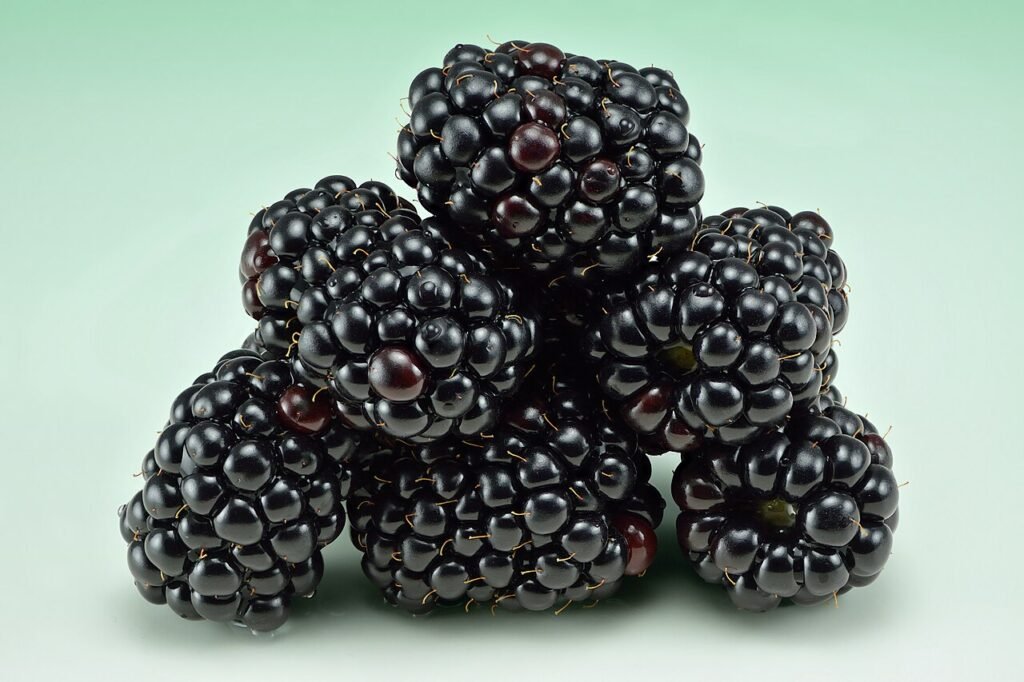
Quick answer: Native flowering perennials, Sweet alyssum, Chives are practical neighbors for blackberry brambles when spacing and seasonal needs align. Avoid crowding and unverified claims that a fragrant plant repels every pest. Design around mature growth, access and the specific harvest you want.
Blackberries produce vigorous canes, which are managed differently from herbs or annual vegetables. Many varieties bear on second-year floricanes; primocane-fruiting cultivars have different pruning patterns. Spacing, trellising and keeping a weed-managed root strip are fundamental. The right companion should never block the cane training, picking access or winter pruning.
How to choose companions for blackberry brambles
Good companion planting combines plant biology with calendar planning. Instead of copying a universal friends-and-enemies list, decide whether a neighbor offers efficient space use, another harvest, or insect habitat. Ask whether either plant will be shaded, deprived of water, or damaged at harvest. University of Minnesota Extension’s evidence review explains why some combinations are useful while many traditional claims are unsupported.
Best blackberry companion plants: comparison
| Neighbor | Practical benefit | How to place it |
|---|---|---|
| Native flowering perennials | A separate flower strip can offer forage before and after blackberry bloom and increase the variety of insects in the garden. | Keep adequate growing and maintenance space. |
| Sweet alyssum | Low flower groups near an access path can be managed without tangling canes, provided they remain sunny. | Keep adequate growing and maintenance space. |
| Chives | Compact edible clumps can live toward the outer planting edge, away from the area used to train fruiting canes. | Keep adequate growing and maintenance space. |
| Thyme | In a well-drained, bright border, thyme can supply a low edging plant; do not force it into a heavily irrigated bramble crown. | Keep adequate growing and maintenance space. |
| Strawberries | Keep strawberries in a neighboring row rather than beneath blackberry canes. | Keep adequate growing and maintenance space. |
Native flowering perennials: when this pairing makes sense
A separate flower strip can offer forage before and after blackberry bloom and increase the variety of insects in the garden. Choose flowers adapted to local climate.
Check mature dimensions rather than nursery-pot size. A pairing can look perfect in spring and become crowded by midsummer. Keep the primary crop healthy, and relocate or harvest the companion if it begins to block light or inspection access. Growing plants near one another does not require they share the same planting hole.
Sweet alyssum: when this pairing makes sense
Low flower groups near an access path can be managed without tangling canes, provided they remain sunny.
Check mature dimensions rather than nursery-pot size. A pairing can look perfect in spring and become crowded by midsummer. Keep the primary crop healthy, and relocate or harvest the companion if it begins to block light or inspection access. Growing plants near one another does not require they share the same planting hole.
Chives: when this pairing makes sense
Compact edible clumps can live toward the outer planting edge, away from the area used to train fruiting canes.
Check mature dimensions rather than nursery-pot size. A pairing can look perfect in spring and become crowded by midsummer. Keep the primary crop healthy, and relocate or harvest the companion if it begins to block light or inspection access. Growing plants near one another does not require they share the same planting hole.
Thyme: when this pairing makes sense
In a well-drained, bright border, thyme can supply a low edging plant; do not force it into a heavily irrigated bramble crown.
Check mature dimensions rather than nursery-pot size. A pairing can look perfect in spring and become crowded by midsummer. Keep the primary crop healthy, and relocate or harvest the companion if it begins to block light or inspection access. Growing plants near one another does not require they share the same planting hole.
Strawberries: when this pairing makes sense
Keep strawberries in a neighboring row rather than beneath blackberry canes. Harvest and runner removal are much easier in separated zones.
Check mature dimensions rather than nursery-pot size. A pairing can look perfect in spring and become crowded by midsummer. Keep the primary crop healthy, and relocate or harvest the companion if it begins to block light or inspection access. Growing plants near one another does not require they share the same planting hole.

What not to plant too close
Raspberries in cramped shared rows
Other Rubus fruits can share some pest or disease pressures. Separate rows make diagnosis, sanitation and cane management easier. Think in terms of root-zone competition, timing, airflow, and access rather than an unsupported claim that the species are chemically incompatible.
Aggressive vines
Climbers can entwine fruiting and replacement canes, creating a pruning and harvesting nightmare. Think in terms of root-zone competition, timing, airflow, and access rather than an unsupported claim that the species are chemically incompatible.
Tall shade-casting shrubs
Brambles fruit best with good light. Dense shrubs also restrict access and airflow. Think in terms of root-zone competition, timing, airflow, and access rather than an unsupported claim that the species are chemically incompatible.
A working bed layout for blackberry brambles
For a berry row, create the support system first. Maintain a clear strip around the cane bases and a harvest path on the fruiting side. Put flowering herbs beyond that path, not in the narrow trellis strip. Cut spent canes according to cultivar and local pruning guidance without damaging companion roots.
Start by marking the main crop’s mature footprint and the paths used for watering, harvesting and checking for disease. Add only companions that fit the remaining space. The GardenVoila plant-spacing calculator and raised-bed planner can help sketch a feasible arrangement, but always use crop-specific planting instructions for final distances.
Pests, pollination and realistic expectations
Blackberries may produce suckers or arching shoots that root at their tips, depending on type. Regularly contain the row; a low herb does not restrain brambles. Pollinator-friendly borders can be valuable, but don’t infer that their presence alone prevents spotted-wing drosophila, fruit rots or cane diseases. Good sanitation, ripeness monitoring and harvest frequency matter.
Inspect plants directly rather than using another plant as an assumed pesticide. Beneficial insects depend on suitable flowers and habitat, yet their presence does not guarantee a particular yield. Rotation and sanitation matter when neighboring plants share pests. Learn more from the University of Minnesota companion-planting review.
Free printable: the Year-Round Garden & Preserving Planner
Planting dates for 24 crops, monthly tasks, blanching times, canning safety numbers and a winter storage chart in one 8-page PDF. Enter your email to download it instantly and get our seasonal garden newsletter.
No spam. Unsubscribe any time. We never sell your email.
Frequently asked questions
What flowers grow near blackberry bushes?
Choose native flowers and manageable low blossoms in an adjacent sunny border, leaving the trellis and harvest path open.
Can blackberries and raspberries grow together?
They can share a larger landscape, but separate rows often make disease, sucker and pruning management more practical.
Should I plant strawberries under blackberries?
A separate strawberry bed is usually easier to maintain and receives more consistent light.
Next steps and relevant guides
For another crop-specific perspective, compare this GardenVoila planting guide and the related growing guide. Focus on the practical question: will both crops grow healthily, remain accessible and actually deliver the intended benefit?
Research and further reading
- University of Minnesota Extension: Training berry canes
- University of Minnesota Extension: Companion planting in home gardens
Featured photo: Photo: Ivar Leidus / Wikimedia Commons source · CC BY-SA 4.0 · Resized for web display.


