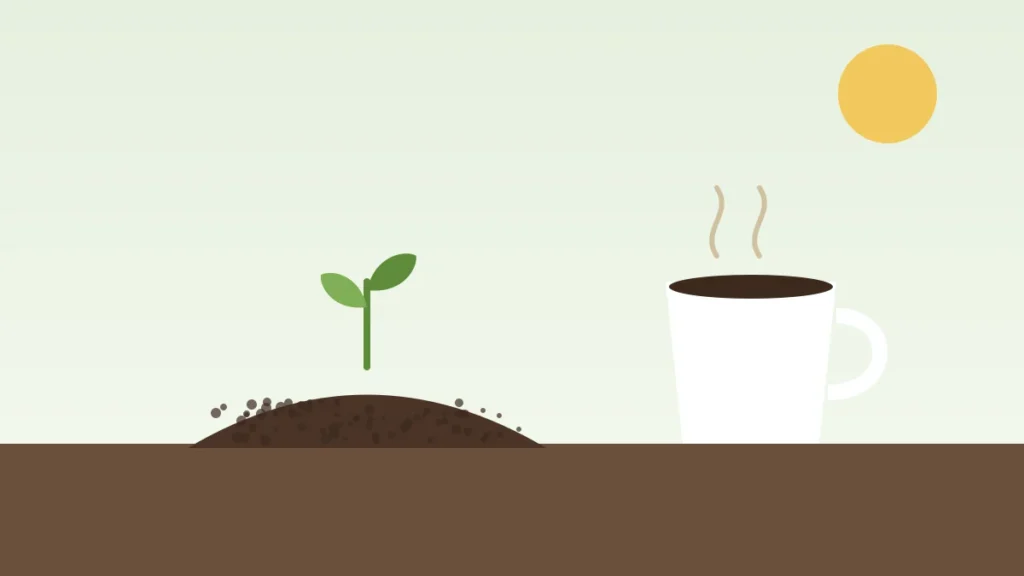
Coffee grounds are one of the most talked-about free garden amendments. Many coffee shops give them away, and the internet is full of claims that they acidify soil, feed acid-loving plants, repel slugs and supercharge tomatoes. Some of that is true, some is exaggerated, and some can actually hold plants back.
This guide sorts the evidence from the myths, drawing on research from university Extension services, and shows you how to use coffee grounds safely: in compost, in worm bins, on the soil, and around which plants.
The short answer
- Coffee grounds are a useful compost ingredient. They count as a nitrogen-rich “green” material.
- Used grounds are close to neutral, not strongly acidic, so they will not meaningfully acidify your soil.
- Use them in moderation. Thick layers or large amounts can slow plant growth.
- They are not a reliable slug barrier or a complete fertilizer.
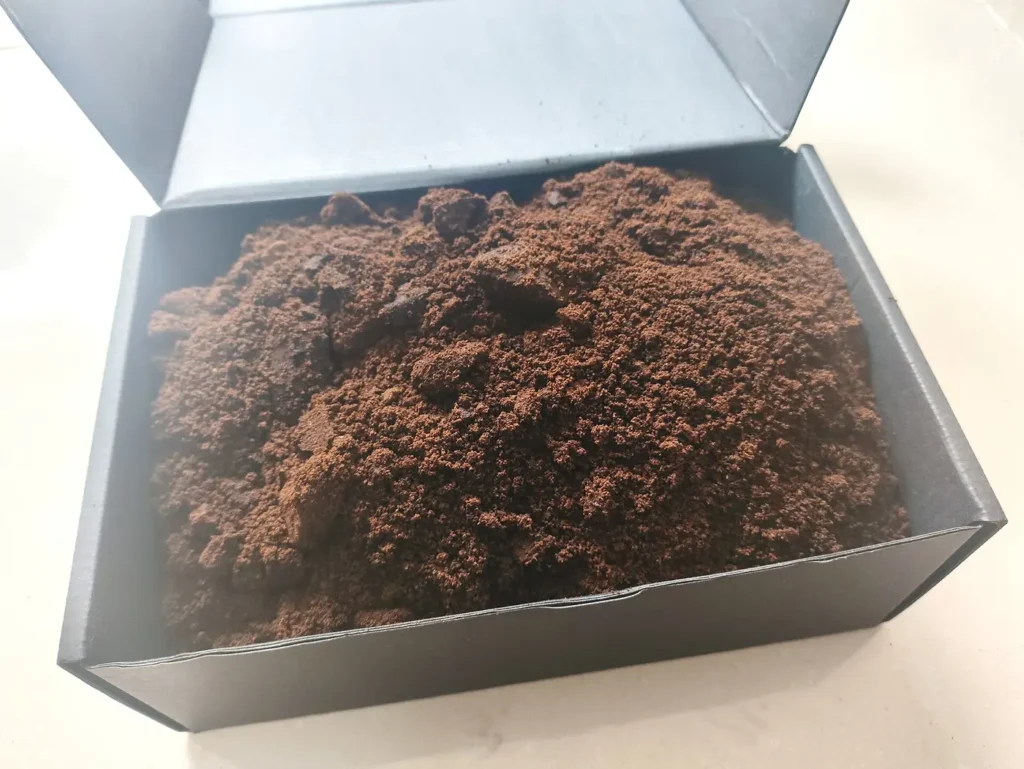
What is actually in coffee grounds?
| Property | Used coffee grounds | What it means for gardeners |
|---|---|---|
| Nitrogen | Roughly 2 percent | Counts as a “green” in compost; a slow, modest nitrogen source |
| Phosphorus and potassium | Small amounts | Not enough to replace a balanced fertilizer |
| pH | Close to neutral | Will not acidify soil in any useful way |
| Caffeine and other compounds | Present, even after brewing | Can suppress seed germination and plant growth in large amounts |
| Texture | Very fine particles | Can pack into a crust if spread thickly |
Oregon State University Extension’s research summary on coffee grounds and composting reports that used grounds contain around 2 percent nitrogen and are close to neutral in pH, because most of the acid in coffee is water-soluble and ends up in the cup. The University of Arizona Cooperative Extension’s guide to using coffee grounds in the garden (PDF) also discusses the compounds in grounds that can affect plant growth.
Myth vs. fact
| Claim | Verdict | The evidence |
|---|---|---|
| “Coffee grounds make soil acidic.” | Mostly myth | Used grounds are close to neutral. Fresh, unbrewed coffee is more acidic, but is not usually used in gardens. |
| “Great for acid-loving plants like blueberries.” | Overstated | Grounds will not lower pH enough to help. Use sulfur or other products based on a soil test instead. |
| “Coffee grounds are fertilizer.” | Partly true | They supply a little slow-release nitrogen as they break down, but they are not a balanced fertilizer. |
| “Grounds repel slugs and snails.” | Unreliable | A ring of grounds does not consistently stop slugs. Concentrated caffeine solutions have shown effects in research, but that is very different from sprinkling used grounds. |
| “Worms love coffee grounds.” | True, in moderation | Grounds are a common, useful worm bin ingredient in modest amounts. |
| “More is better.” | Myth | Large amounts or thick layers can suppress growth and form a water-repelling crust. |
How to use coffee grounds in compost
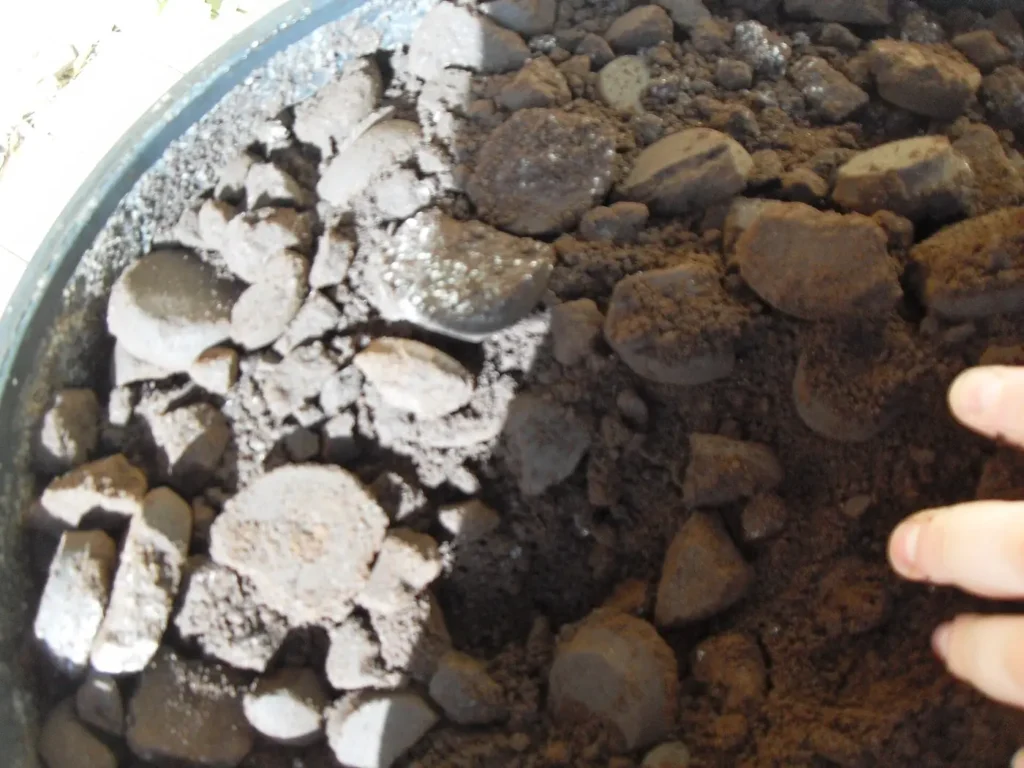
Composting is the safest and most effective way to use coffee grounds. In the compost pile, microbes break down the compounds that can affect plants, and the grounds’ nitrogen helps feed the decomposition.
Treat grounds as a “green”
Compost works best with a mix of nitrogen-rich “greens” and carbon-rich “browns”. Coffee grounds are a green, even though they are brown in color. Balance them with plenty of browns:
| Greens (nitrogen-rich) | Browns (carbon-rich) |
|---|---|
| Coffee grounds and paper filters (filters count as browns) | Dry leaves |
| Vegetable and fruit scraps | Straw |
| Fresh grass clippings | Shredded cardboard and plain paper |
| Garden trimmings | Wood chips and sawdust (untreated) |
How much to add
Extension guidance generally recommends keeping coffee grounds to a minority of the pile: a common rule of thumb is no more than about 20 to 25 percent of the total volume. That is plenty for most households. If you collect large amounts from a coffee shop, mix them with extra leaves or shredded cardboard rather than piling them on their own.
Tips
- Mix grounds in rather than leaving them in a solid layer, which can compact and go slimy.
- Paper filters can go in too; tear them up so they break down faster.
- Turn the pile every week or two to keep air moving.
- Keep it as damp as a wrung-out sponge.
For a full introduction, see our beginner’s guide to composting at home, and the EPA’s guide to composting at home. When your compost is ready, the compost calculator works out how much to spread on your beds.
Using coffee grounds in a worm bin
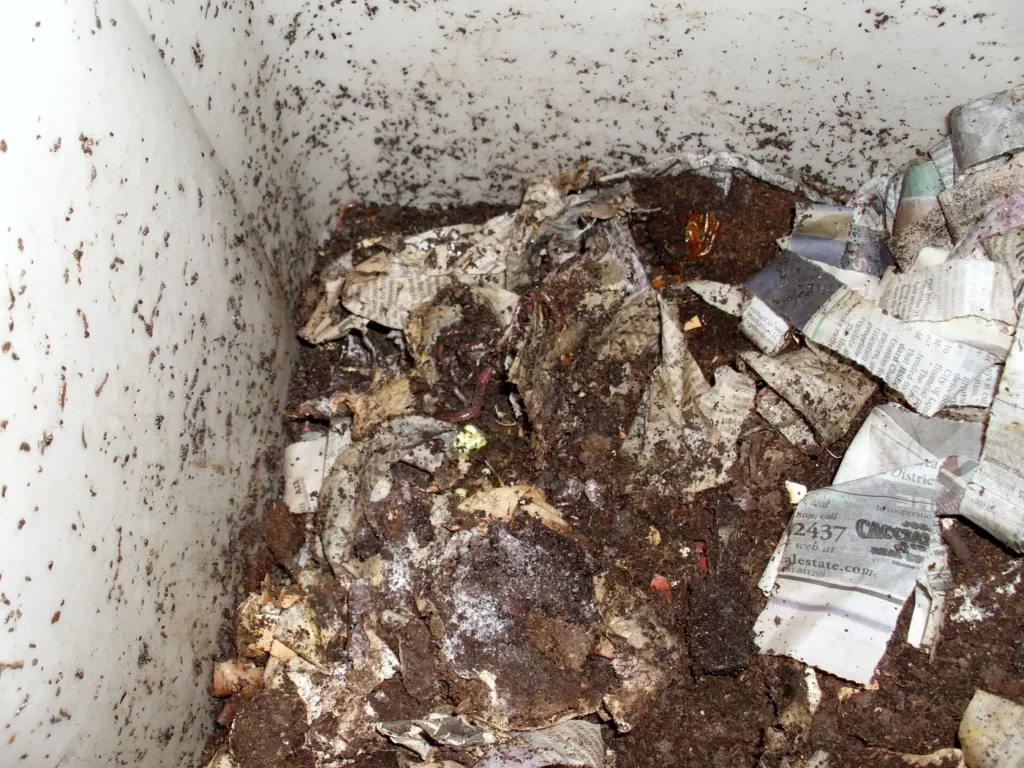
Composting worms readily eat coffee grounds, and they make a good part of a worm bin diet:
- Add grounds in small amounts alongside other food scraps, not as the main food.
- Mix them with bedding such as shredded newspaper or cardboard.
- Watch the bin. If worms avoid an area or the bin turns sour, cut back.
Can you put coffee grounds directly on the garden?
You can, carefully. The risks come from using too much, or using it in a thick layer.
Do
- Mix a thin layer into the soil, or into a much thicker layer of compost or leaf mulch, rather than spreading pure grounds on top.
- Use them around established plants, not where you are sowing seeds.
- Keep amounts modest: a light sprinkling worked into the top inch or two of soil, not a blanket.
Avoid
- Thick layers of grounds as mulch. Fine particles can pack into a crust that sheds water and blocks air.
- Using grounds where you are starting seeds or growing young seedlings, since compounds in grounds can suppress germination.
- Relying on grounds as your only fertilizer. They supply only a little nitrogen.
If you want a mulch, use shredded leaves, straw or wood chips instead, and add grounds to compost. The mulch calculator works out how much mulch your beds need.
Which plants like coffee grounds?
The honest answer is that no plant needs coffee grounds. Plants benefit from the improved soil that comes from composted organic matter, of which grounds can be one ingredient. That said:
| Plant | Advice |
|---|---|
| Tomatoes, peppers, leafy greens | Benefit from compost containing grounds; avoid thick raw layers |
| Blueberries, azaleas, rhododendrons | Grounds will not acidify soil enough; test soil and use sulfur if pH is too high |
| Hydrangeas | Flower color depends on soil pH and aluminum; grounds alone will not reliably turn flowers blue |
| Seedlings and newly sown beds | Avoid raw grounds; use finished compost instead |
| Houseplants | Skip raw grounds in pots, where they can mold and compact; feed with houseplant fertilizer |
For acid-loving crops, a soil test is the best guide: your Cooperative Extension service can tell you whether pH needs adjusting and by how much.
What about slugs?
Slugs are a real problem in damp gardens, and coffee grounds are often recommended as a barrier. In practice, a ring of used grounds does not reliably stop them. Research has found that concentrated caffeine solutions can harm slugs, but that is not the same as the small amount of caffeine left in used grounds. Proven slug controls include hand-picking at dusk, beer traps, copper barriers around raised beds, and iron phosphate baits labeled for vegetable gardens. Our pest identifier helps confirm that slugs are the culprit.
Coffee grounds and soil health
The biggest benefit of coffee grounds is indirect: as part of compost, they add organic matter, which improves soil structure, water-holding capacity and the activity of soil life. Organic matter helps sandy soils hold water and clay soils drain. That is why composting grounds, rather than spreading them raw, gives the best results. Our guide to why raised bed soil sinks explains how organic matter breaks down over time, and why topping up with compost every year matters.
How to collect coffee grounds
- Ask local coffee shops. Many set aside bags of used grounds for gardeners.
- Keep a lidded container by the coffee maker and empty it into the compost every few days.
- Dry large amounts on a tray if you cannot compost them right away, to stop mold.
- Mix as you go: add a scoop of dry leaves or shredded cardboard to the compost each time you add grounds.
A simple plan for using coffee grounds
- Add grounds to your compost pile or worm bin, balanced with plenty of browns.
- Keep grounds to roughly a fifth of the pile at most.
- Use the finished compost on your beds each spring.
- If you put grounds on the garden directly, work a thin layer into the soil around established plants.
- For acid-loving plants and pest problems, use proven methods rather than grounds.
Coffee grounds compared with other free amendments
Coffee grounds are just one of many free materials that can improve garden soil. Here is how they compare:
| Material | Main benefit | Best use | Watch out for |
|---|---|---|---|
| Coffee grounds | Nitrogen-rich compost ingredient | Compost and worm bins | Thick raw layers; seedbeds |
| Shredded fall leaves | Carbon-rich, builds organic matter | Mulch and compost browns | Whole leaves can mat; shred first |
| Grass clippings | Quick nitrogen | Thin mulch layers and compost | Only from lawns not treated with herbicide |
| Wood chips | Long-lasting mulch | Paths and around shrubs | Keep out of seedbeds; do not dig in fresh |
| Kitchen scraps | Balanced compost ingredient | Compost and worm bins | Avoid meat, dairy and oils |
| Eggshells | Small amounts of calcium, slowly | Crushed into compost | Will not fix blossom end rot on their own |
The pattern is the same for all of them: composting first, then spreading the finished compost, gives the most reliable results.
Does the type of coffee matter?
- Drip, pour-over and French press grounds are the most common and behave much the same in compost.
- Espresso grounds are finer and pack more tightly, so mix them especially well with coarse browns.
- Decaf grounds contain less caffeine but otherwise behave like regular grounds.
- Flavored coffee and grounds with milk or sugar are best kept out of the compost in large amounts, as additives can attract pests.
- Unbrewed coffee is more acidic and contains more caffeine; it is not a good garden amendment.
- Coffee pods: remove the grounds from plastic or aluminum pods before composting; only certified compostable pods belong in a home pile, and even those may break down slowly.
Coffee grounds in containers and raised beds
Containers and raised beds hold a limited amount of soil, so any amendment has a bigger effect. Avoid adding raw grounds to pots, where they can mold on the surface and compact the mix. Instead, top-dress containers with an inch of finished compost each season. In raised beds, add grounds through your compost rather than directly. Our guides to container vegetable gardening and raised bed soil cover how to keep those soils healthy.
Signs you have used too many grounds
- A crust on the soil surface that water runs off rather than soaking in.
- Seeds that fail to come up in an area treated with grounds.
- Stunted, pale growth where a thick layer was applied.
- A slimy or moldy layer in the compost pile.
If you see these, rake the grounds into the soil or remove the surface layer, mix more browns into the compost, and use grounds more sparingly from then on.
Frequently asked questions
Are coffee grounds good for the garden?
Yes, in moderation, especially as a compost ingredient. They add organic matter and a little nitrogen, but thick layers or large amounts used raw can slow plant growth.
Do coffee grounds make soil acidic?
Not meaningfully. Used grounds are close to neutral in pH, because most of the acid in coffee dissolves into the drink.
Which plants like coffee grounds?
Most vegetables and flowers benefit from compost that contains grounds. No plant needs raw grounds, and they will not acidify soil enough to help blueberries or azaleas.
Can I put coffee grounds directly on my plants?
You can work a thin layer into the soil around established plants. Avoid thick layers, which can form a crust, and avoid using raw grounds where you are sowing seeds.
Do coffee grounds keep slugs away?
Not reliably. Hand-picking, beer traps, copper barriers and iron phosphate baits are more effective.
How much coffee grounds can go in compost?
A common guideline is no more than about 20 to 25 percent of the pile’s volume, balanced with plenty of carbon-rich browns such as dry leaves.
Are coffee grounds good for tomatoes?
Composted grounds are fine for tomatoes as part of rich soil, but raw grounds will not boost yields. Consistent watering and balanced feeding matter far more.