
Yes, you can grow a lychee tree from seed. Plant a fresh seed from a ripe lychee within a few days of eating the fruit, because seeds lose viability quickly once they dry out. Sow it about half an inch to an inch deep in moist, well-drained potting mix, keep it warm at about 75 to 85°F and evenly moist, and it should sprout in about one to four weeks. But be realistic: seedling lychees do not come true to the parent, and the University of Florida notes they may take 10 or more years to bear fruit, if they fruit at all. For fruit in 3 to 5 years, buy an air-layered or grafted tree.
Lychee-from-seed checklist
| Step | Details |
|---|---|
| Seed source | Fresh, plump seed from a ripe fruit; never dried |
| When to plant | Within a few days of removing from the fruit |
| Depth | About 1/2 to 1 inch |
| Temperature | About 75 to 85°F |
| Germination | About 1 to 4 weeks |
| Light for seedlings | Bright, indirect light; gradually more sun |
| Years to fruit | 10 or more from seed; 3 to 5 for air-layered or grafted trees |
| Cold tolerance | Young trees damaged at 28 to 32°F |
What is a lychee?
Lychee (Litchi chinensis) is a subtropical evergreen tree in the soapberry family, Sapindaceae, native to southern China, where it has been grown for more than 2,000 years. The Wikipedia article on lychee covers its history, cultivation and relatives, including longan and rambutan. Mature trees can reach 30 to 40 feet with a dense, rounded crown of glossy leaves. The fruit has a rough, red, leathery skin, translucent white sweet flesh (the aril) and a single glossy brown seed.
The University of Florida IFAS guide to growing lychee in the home landscape explains that some varieties produce small, shriveled seeds called chicken tongues, which are prized for having more flesh but are usually not viable for planting. For growing from seed, choose fruit with a full, plump seed.
Will a lychee grown from seed produce fruit?
It might, but not soon, and not reliably. The University of Florida states that lychee trees do not come true from seed, and seedling trees may take 10 or more years to bear fruit. The fruit may be smaller, sourer or have larger seeds than the parent. Seedlings also vary in their tolerance of soil conditions. Commercial and home growers propagate lychees by air layering, also called marcotting, which produces a clone of the parent that begins bearing in 3 to 5 years. Lychee also needs a specific climate to flower: a dry, cool but frost-free winter of about three to five months, followed by a warm spring. Without that cool period, even a mature tree may never bloom.
That said, growing a lychee from seed is a rewarding project: seedlings make beautiful, glossy houseplants or patio trees, and in a suitable climate a seedling can become a handsome landscape tree or a rootstock for grafting a named variety later.
How do you choose and prepare a lychee seed?
- Buy fresh lychees from a store or market, choosing plump, heavy fruit with bright skin.
- Eat the fruit and remove the seed; look for a large, glossy, plump seed. Discard small, shriveled seeds.
- Rinse the seed to remove any flesh, which can mold.
- Plant immediately, ideally the same day. If you must wait, keep the seed in a damp paper towel in a sealed bag for no more than a few days. Do not refrigerate or let it dry.
- Optional soak: some growers soak seeds in water for 24 hours before planting to speed germination.
How do you plant a lychee seed?
There are two common methods.
Method 1: Direct sowing in a pot
- Fill a 4- to 6-inch pot with a moist, well-drained, slightly acidic potting mix, such as a seed-starting mix blended with perlite.
- Press the seed in on its side about 1/2 to 1 inch deep and cover lightly.
- Water well, then cover the pot with a clear plastic bag or dome to hold humidity.
- Keep the pot warm, about 75 to 85°F; a heat mat helps in cool rooms.
- Keep the mix evenly moist but not soggy, and remove the cover once the shoot appears.
Method 2: Paper towel germination
- Wrap the seed in a damp paper towel and place it in a sealed plastic bag or container.
- Keep it warm and check every few days, re-moistening the towel as needed.
- When a root emerges, usually within one to three weeks, pot the seed with the root pointing down, just below the soil surface.
Track your success with the seed germination rate calculator if you plant several seeds, which is a good idea since not every seed will sprout.
How long does lychee seed take to germinate?
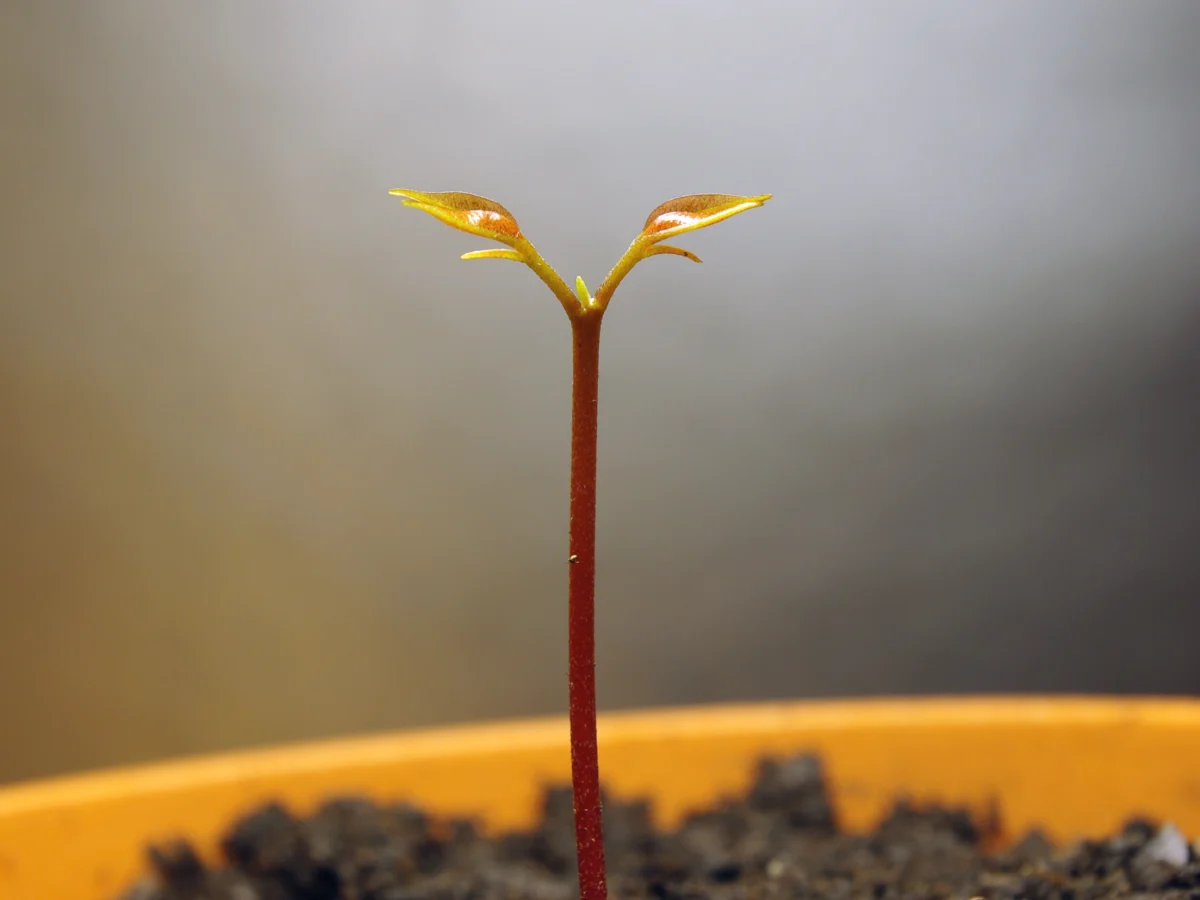
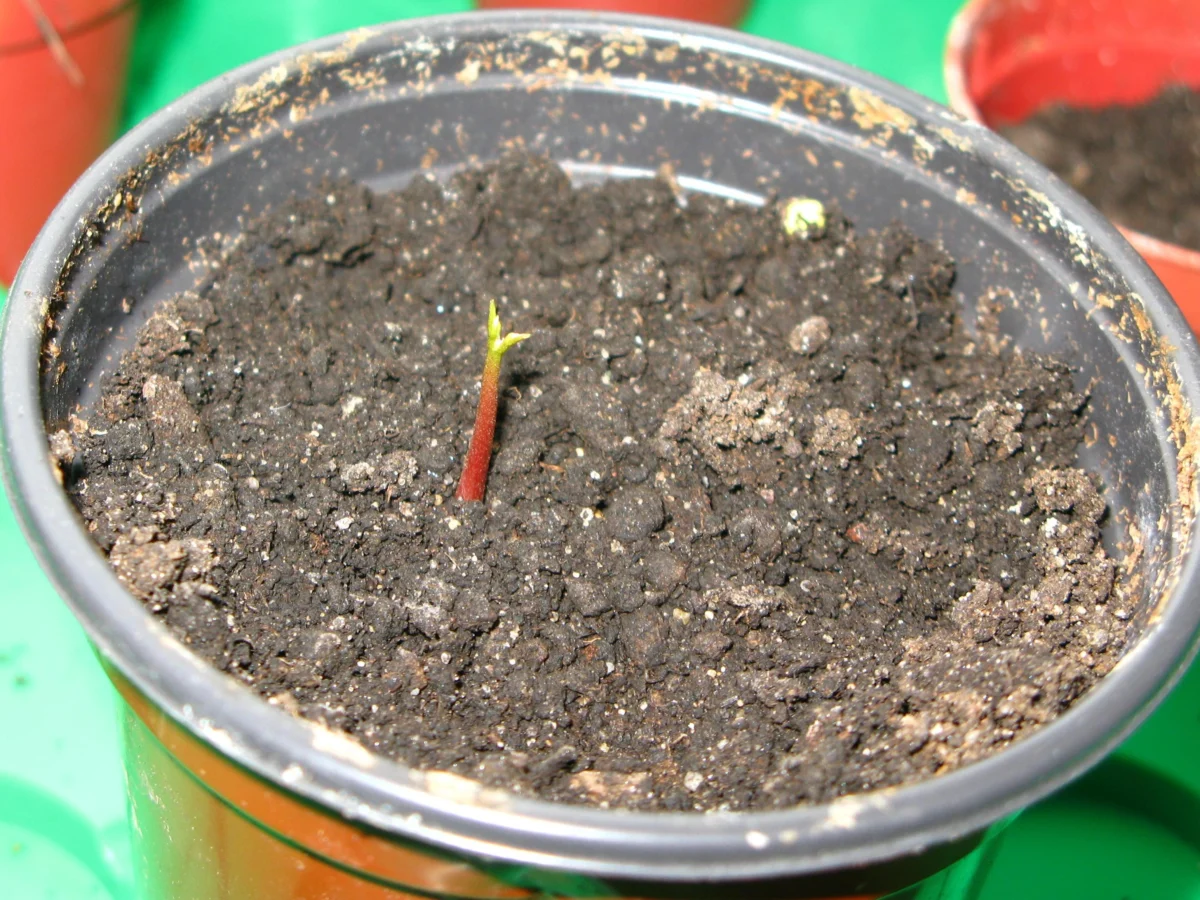
Fresh seeds usually sprout within one to four weeks at warm temperatures. The first growth is a reddish-bronze shoot, and new leaves emerge copper-red before turning glossy green, which is normal. If nothing has happened after six weeks, the seed has probably lost viability or rotted; try again with fresh seed.
How do you care for lychee seedlings?
- Light: Give bright, indirect light at first, then gradually increase to several hours of morning sun. Hot afternoon sun can scorch young leaves.
- Water: Keep the soil evenly moist, never soggy and never bone dry. Lychee roots are sensitive to both drought and waterlogging.
- Humidity: Lychees like humidity; mist or group plants indoors in dry climates.
- Feeding: Lychee seedlings are sensitive to fertilizer salts. Wait until there are several sets of leaves, then use a very diluted balanced fertilizer every month or two during the growing season.
- Repotting: Move up to a slightly larger pot when roots fill the container, using an acidic, well-drained mix.
- Temperature: Keep above about 50°F; protect from frost always.
Lychee seedlings grow slowly in their first year, often only a few inches, in flushes of growth separated by pauses. That is normal. Use the container garden planner to choose pot sizes as the tree grows.
Where can lychee trees grow outdoors?
Lychees grow outdoors only in frost-free or nearly frost-free subtropical climates, such as southern Florida, parts of Hawaii, southern California and similar regions worldwide. The University of Florida reports that young trees are damaged at 28 to 32°F, and temperatures of 24 to 25°F for several hours can severely damage or kill large trees. Lychees also need a cool, dry, nonfreezing winter period to flower, so they rarely fruit in truly tropical lowlands. Check your conditions with the growing zone finder and the frost date tool. In cooler climates, grow lychee as a container plant and bring it indoors for winter.
| Climate | What to expect |
|---|---|
| Frost-free subtropical with a cool, dry winter | Can grow outdoors and may eventually fruit |
| Tropical lowlands (no cool season) | Grows well but often fails to flower |
| Mediterranean with light frost | Marginal; protect young trees; fruiting uncertain |
| Temperate (regular frost) | Container or houseplant only |
Can you grow lychee indoors?
Yes, as a foliage plant. A lychee seedling makes an attractive indoor tree with glossy, copper-flushed leaves. Place it in the brightest window you have, ideally south-facing, or under grow lights, and keep humidity up. Indoor trees are very unlikely to flower or fruit, because they rarely get the right combination of cool winter period, bright light and pollinators. Move the pot outdoors to a sheltered, partly sunny spot in summer, and bring it in before nights fall below about 50°F.
What soil does lychee need?
Lychees prefer slightly acidic, well-drained soil rich in organic matter, roughly pH 5.5 to 6.5. In alkaline soils they often develop yellow leaves from micronutrient deficiencies; the University of Florida recommends foliar applications of manganese and zinc for trees growing in high-pH, calcareous soils. In containers, use an acidic, peat- or bark-based mix with good drainage. If leaves yellow, the yellow leaf identifier helps narrow down the cause.
Safety and plant-import note: Lychee seeds are not edible, and eating unripe lychees, especially on an empty stomach, has been linked to dangerously low blood sugar in undernourished children; keep seeds away from young children and pets. Moving plant material across borders, and in some cases between states such as into Hawaii, California or Florida, can be restricted to prevent pests and diseases. Check national and state plant-quarantine rules before importing seeds, fruit or plants.
How do you get a lychee that actually fruits?
If fruit is the goal, start with an air-layered or grafted tree of a named variety. The University of Florida names Mauritius as Florida’s main commercial variety, bearing more regularly than Brewster, the second most grown. Such trees begin bearing in 3 to 5 years. You can also air layer a branch from a productive tree, or graft a named variety onto your seedling once it is pencil-thick or larger. The Wikipedia article on layering explains air layering, in which a branch is girdled, wrapped in moist moss and plastic, and allowed to root while still attached to the parent.
What problems affect lychee seedlings?
| Problem | Cause | What to do |
|---|---|---|
| Seed rots without sprouting | Old or dried seed; too wet; too cold | Use fresh seed; warm, moist but not soggy mix |
| Brown, crispy leaf tips | Fertilizer salts, low humidity or drought | Flush soil; feed less; raise humidity |
| Yellow leaves | High pH, overwatering or nutrient deficiency | Use acidic mix; check drainage |
| Leaf scorch | Sudden strong sun | Acclimate gradually to sun |
| Wilting and dieback | Root rot or cold damage | Improve drainage; keep above 50°F |
| Spider mites, scale | Dry indoor air | Rinse leaves; raise humidity |
For pests, the pest identifier can help.
Can you graft a named lychee onto a seedling?
Yes. Once your seedling has a stem about pencil-thick or larger, usually after one to two years, it can serve as a rootstock. Cleft or veneer grafting a scion from a productive, named tree such as Mauritius or Brewster can bring the tree into bearing much sooner than waiting for the seedling to mature. Grafting lychee is less common and less reliable than air layering, so expect some failures, and graft during warm weather when the tree is actively growing.
How big will a lychee seedling get?
In the ground in a suitable climate, a lychee can eventually reach 30 to 40 feet, though most home trees are kept at 15 to 20 feet with pruning. In a container, the tree stays much smaller, often 4 to 8 feet, depending on pot size and pruning. Lychees respond well to light pruning after each growth flush, which keeps them compact and bushy.
Above all, enjoy the process: a lychee seedling is a living souvenir of a favorite fruit, and with patience and the right climate it can grow into a handsome, long-lived tree.
Can you grow lychee from a dried seed?
Almost never. Lychee seeds are recalcitrant, meaning they cannot survive drying or cold storage the way most seeds can. A seed that has dried out for more than a few days, or been refrigerated inside the fruit for weeks, rarely germinates.
Planning more fruit? Browse every variety, planting and care article in our complete fruit tree growing guide.
Free printable: the Year-Round Garden & Preserving Planner
Planting dates for 24 crops, monthly tasks, blanching times, canning safety numbers and a winter storage chart in one 8-page PDF. Enter your email to download it instantly and get our seasonal garden newsletter.
No spam. Unsubscribe any time. We never sell your email.
Frequently asked questions
Can you grow lychee from a store-bought fruit?
Yes, if the seed is plump and planted fresh, within a few days of eating the fruit.
How long does a lychee from seed take to fruit?
Often 10 or more years, and it may never fruit outside a suitable subtropical climate.
Will a lychee seedling be the same as the parent?
No. Lychees do not come true from seed.
How long do lychee seeds take to sprout?
About one to four weeks in warm, moist conditions.
Why are new lychee leaves red?
New growth flushes are naturally copper-red and turn green as they mature.
Can lychee grow in a pot?
Yes, as a container tree that you bring indoors in cold weather, though fruiting is unlikely.
Reviewed October 2026. Sources: University of Florida IFAS, Lychee Growing in the Florida Home Landscape; Wikipedia, Lychee; Wikipedia, Layering.
