Succulents are some of the easiest plants to propagate. Many can grow a whole new plant from a single leaf, and almost all can be multiplied from stem cuttings or the offsets they produce. With a tray, some cactus mix and a little patience, a few plants can become dozens.
When to propagate succulents
Spring and early summer are best, when succulents are actively growing and days are long. Indoors under bright light, you can propagate at almost any time. Avoid the hottest part of summer for outdoor plants, and the dormant period of winter-growing types such as aeoniums.
Which method suits which succulent?
| Method | Works well for | Time to new plant |
|---|---|---|
| Leaf propagation | Echeveria, graptopetalum, sedum, pachyphytum, jade plant | 4 to 8 weeks for tiny rosettes |
| Stem cuttings | Leggy echeveria, jade, aeonium, sedum, string of pearls, kalanchoe | 2 to 4 weeks to root |
| Offsets (pups) | Aloe, haworthia, hens and chicks, agave, many cacti | Immediate; roots in 2 to 3 weeks |
| Division | Clumping types, snake plant, haworthia | Immediate |
Some succulents, such as aloe and most haworthias, rarely grow from single leaves; use their pups instead.
Method 1: propagating succulents from leaves
- Pull off a healthy leaf with a gentle side-to-side twist, so it comes away cleanly with its base intact. A torn leaf will not root.
- Let it callus. Leave the leaves on a dry surface out of direct sun for two to five days, until the broken end has sealed over.
- Lay them on soil. Place leaves flat on top of dry cactus mix in a shallow tray. Do not bury them.
- Give bright, indirect light, not full sun.
- Mist lightly every few days once tiny pink roots appear, usually after one to three weeks. Keep the surface barely damp, never wet.
- Wait for the rosette. A tiny plant forms at the base in four to eight weeks. Let the mother leaf wither on its own, then pot up the baby.
Expect some leaves to shrivel without rooting; it is normal to lose a portion.
Method 2: stem cuttings
Stem cuttings are the fastest way to fix a stretched, leggy succulent.
- Cut the stem with clean scissors, leaving 1 to 2 inches of stem below the rosette or top leaves.
- Remove the lowest leaves from the stem (you can propagate them separately).
- Let the cut end callus for several days.
- Set the stem in dry cactus mix, using pebbles to hold it upright, and wait about a week before watering lightly.
The stump left behind often sprouts new rosettes, so you get two plants from one.
Method 3: offsets and pups
Many succulents produce small plants around their base. Once pups are a reasonable size, ideally a third the size of the parent, ease them away with their roots, let any wounds dry for a day and plant them in dry mix. The aloe vera guide shows this step by step.
Method 4: division
Clumping succulents can simply be pulled or cut apart when repotting, keeping roots on each section. This works well for haworthias and for the snake plant, which also grows from leaf sections.
Aftercare for new succulents
- Soil: fast-draining cactus or succulent mix in pots with drainage holes.
- Light: bright indirect light at first, then gradually more sun as plants grow.
- Water: water lightly once rooted, then switch to the usual soak-and-dry routine. Overwatering is the most common way to lose young succulents; our guide to overwatering vs. underwatering shows the signs.
- Feeding: none needed for the first few months.
Troubleshooting
| Problem | Cause | Fix |
|---|---|---|
| Leaf turns black or mushy | Too wet, or leaf was torn | Remove it; keep soil drier; take clean leaves |
| Leaf shrivels, no roots | Too dry or too hot | Mist lightly; move from direct sun |
| Roots but no rosette | Normal; needs more time | Be patient; give brighter light |
| Stretched, pale babies | Not enough light | Move closer to a window or under a grow light |
For a non-succulent comparison, see how to propagate pothos, which roots happily in water.
When to move babies into their own pots
Once the baby rosette is about the size of a coin and the mother leaf has shriveled, gently lift it and plant it in a small pot of cactus mix. Water lightly, then treat it like an adult succulent, letting the soil dry between waterings.
Can you propagate succulents in water?
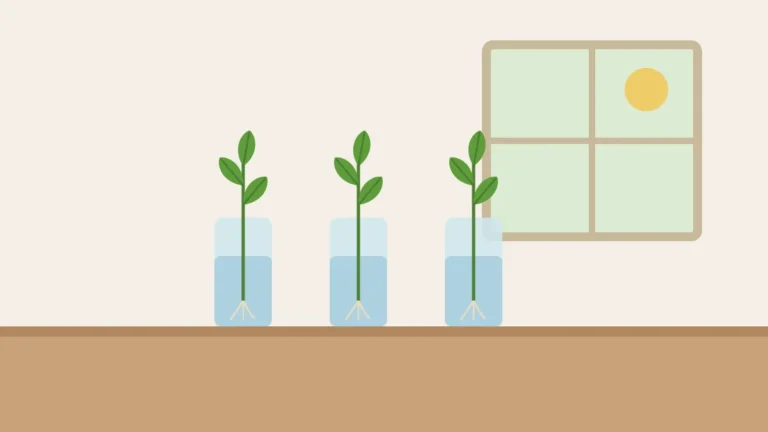
Yes, stem cuttings of many succulents, including jade, echeveria, sedum and string of pearls, will root in water. Let the cut end callus for a few days, then suspend the cutting so only the bottom half inch touches the water, with the leaves held above it in the neck of a narrow jar. Change the water weekly. Roots usually appear in two to four weeks. Move the cutting into dry cactus mix once roots are about an inch long, and wait a few days before the first light watering so the roots adjust. Water propagation is fun to watch, but soil-rooted cuttings usually transition with fewer losses.
A simple propagation mix
Cuttings and leaves root best in a mix that drains instantly and never stays soggy. Combine roughly equal parts cactus potting mix and coarse grit, such as perlite, pumice or poultry grit. Avoid garden soil and moisture-retaining potting mixes, which hold too much water around unrooted cuttings. Shallow trays or small pots work best, and a top layer of grit keeps leaves clean and dry where they touch the surface.
Methods and timings from Iowa State and Illinois extension
Iowa State University Extension lists four main ways to propagate succulents. Offsets and division suit rosette-forming species that produce pups or runners, such as Sempervivum, Agave, Aloe, Lithops, Gasteria, Haworthia and Sansevieria: separate each piece with leaves or stems and roots attached, pot in well-drained media such as cactus mix, and water lightly. Stem cuttings suit Aeonium, Echeveria, Sedum, Crassula, Kalanchoe and others: cut a 3- to 6-inch stem section, remove leaves from the lower half, let the cut end callus for several days, then plant in cactus soil or perlite. Most succulents root poorly in water, and rooting hormone is optional.
Beheading and leaf cuttings
To behead Aeonium or Echeveria, cut off the whole rosette with 1 to 2 inches of stem, callus and root it, and side rosettes will form on the remaining stalk over several months. For leaf cuttings, remove the entire leaf including the tissue where it attaches to the stem, because partial leaves will not root. Lay leaves on slightly damp, well-drained media with the stem end at the soil surface, not buried, and keep the soil damp but not wet; a spray bottle helps. New roots and rosettes form in several weeks. Leaf cuttings suit Graptopetalum, Pachyphytum, Sedum, Crassula and Kalanchoe.
Illinois Extension numbers
University of Illinois Extension recommends 3- to 4-inch stem cuttings from an active growing point, leaving only a few leaves at the top, allowed to callus for 4 to 7 days before insertion. At least one or two sets of nodes should be in the medium, where new roots emerge, and gloves or needle-nose pliers help with cacti. Leaf cuttings also callus for 4 to 7 days, then a small plant forms at the leaf base over one to two months while the original leaf dies off; leaf cuttings take longer than stem cuttings to become good-sized plants. Cuttings and divisions typically develop good roots within a few weeks to a month, and a gentle tug that meets resistance indicates rooting. Repot into a container 1 to 2 inches larger once roots hold together.
Soil and watering
These plants do not tolerate constantly moist media. Illinois suggests 1 part potting mix to 1 part perlite, or 1 part coarse sand to 1 part potting mix, or ready-made cactus mix, and Iowa State says a well-drained medium is essential. Water lightly at first, and then only when the mix has dried. Use small containers with drainage holes so cuttings do not stay too wet, and place them in bright light, out of harsh midday sun, until they establish.
Sansevieria leaf sections
Iowa State notes a special method for snake plant: cut a 3- to 5-inch leaf section with clean tools, callus for one day, and insert into well-drained mix. Track which end was up, since roots and shoots form only on the bottom end; cutting the bottom straight across and the top at an angle helps. Variegated types may lose their variegation when grown from leaf cuttings, so use division to keep the pattern.
Safety and legal note: Cacti and some succulents have sharp spines and irritating sap. Wear gloves or use pliers and keep sap away from eyes and skin. Some succulents are toxic to pets.
A leaf propagation timeline
| Stage | Timing | What to do |
|---|---|---|
| Remove leaf | Day 0 | Twist off the whole leaf cleanly |
| Callus | Days 1 to 7 | Let the end dry (4 to 7 days per Illinois) |
| Place on mix | After callus | Lay on slightly damp, well-drained mix with the stem end at the surface |
| Roots and rosette | 1 to 2 months | Mist lightly; a tiny plant forms at the base |
| Pot up | When roots hold together | Move to a container 1 to 2 inches larger |
Troubleshooting
- Leaves shrivel and nothing grows: the leaf may have been partial; Iowa State says partial leaves will not root.
- Leaves turn mushy: too much water; keep soil damp but not wet.
- Stem cuttings rot: they were planted before callusing, or in heavy soil.
- Slow growth: leaf cuttings take longer than stem cuttings to become sizable plants, according to Illinois.
- Etiolation (stretched growth): too little light; move to a brighter spot.
Choosing the method
Use stem cuttings for the fastest route to a good-sized plant, offsets for species that produce pups like aloe and haworthia, and leaf cuttings for echeveria, sedum and jade when you want many plants cheaply. Behead leggy rosettes to renew them, as Iowa State advises for aeonium and echeveria. Always use clean tools and wear gloves with spiny species.
Light, watering and hardening off new succulents
Once new plants have roots, move them gradually into brighter light, out of harsh midday sun, which can scorch young leaves. Water lightly at first and only when the mix has dried, because these plants do not tolerate constantly moist media, as Illinois says. Use a container with drainage holes and a gritty mix. Fertilize only lightly, if at all, in the first year. Keep tiny plants in small containers, since a pot that is too large holds excess water. If a succulent stretches toward light, move it to a brighter spot, and rotate pots a quarter turn each week.
Planning your propagation season
Propagate during active growth, which for most species is spring and summer, but check your species; winter-growing species such as some lithops and conophytum have different cycles. Take cuttings in batches, label them with the date and variety, and keep a few extra in case some fail. Share cuttings with friends, since a single mother plant can yield many.
Common mistakes to avoid
- Planting cuttings before they have calloused.
- Burying leaf cuttings instead of laying them on the surface.
- Using heavy garden soil rather than a gritty mix.
- Watering on a fixed schedule rather than when the mix has dried.
- Putting new cuttings in full midday sun.
- Giving up too soon: leaf cuttings can take a month or more to show a plantlet.
Using your new succulents
Once rooted, succulents suit shallow dish gardens, wall frames, windowsill rows and outdoor pots in mild climates. Group plants with similar light and water needs, and avoid mixing desert species with moisture-loving ones. Mulch the soil surface with fine gravel to keep leaves dry and reduce rot. Move pots indoors before frost, since most propagated succulents are tender.
Sources and further reading
- Caring for Houseplants, Penn State Extension
- Houseplants, University of Nebraska-Lincoln Extension
Free printable: the Year-Round Garden & Preserving Planner
Planting dates for 24 crops, monthly tasks, blanching times, canning safety numbers and a winter storage chart in one 8-page PDF. Enter your email to download it instantly and get our seasonal garden newsletter.
No spam. Unsubscribe any time. We never sell your email.
Frequently asked questions
How long does it take to propagate succulents from leaves?
Roots usually appear in one to three weeks, and tiny rosettes in four to eight weeks. It can take a few months to have a plant big enough to pot on.
Should I put succulent leaves in water?
It can work for some, but leaves often rot. Laying callused leaves on dry soil is more reliable.
Can all succulents be propagated from leaves?
No. Echeverias, sedums, graptopetalums and jade root well from leaves, but aloe and most haworthias are better propagated from pups.
Do succulent cuttings need sun?
Bright, indirect light is best while they root. Introduce more direct sun gradually once they are established.
Reviewed October 2026. Sources: Iowa State Extension: How to propagate succulents University of Illinois Extension: Propagating succulents and cacti