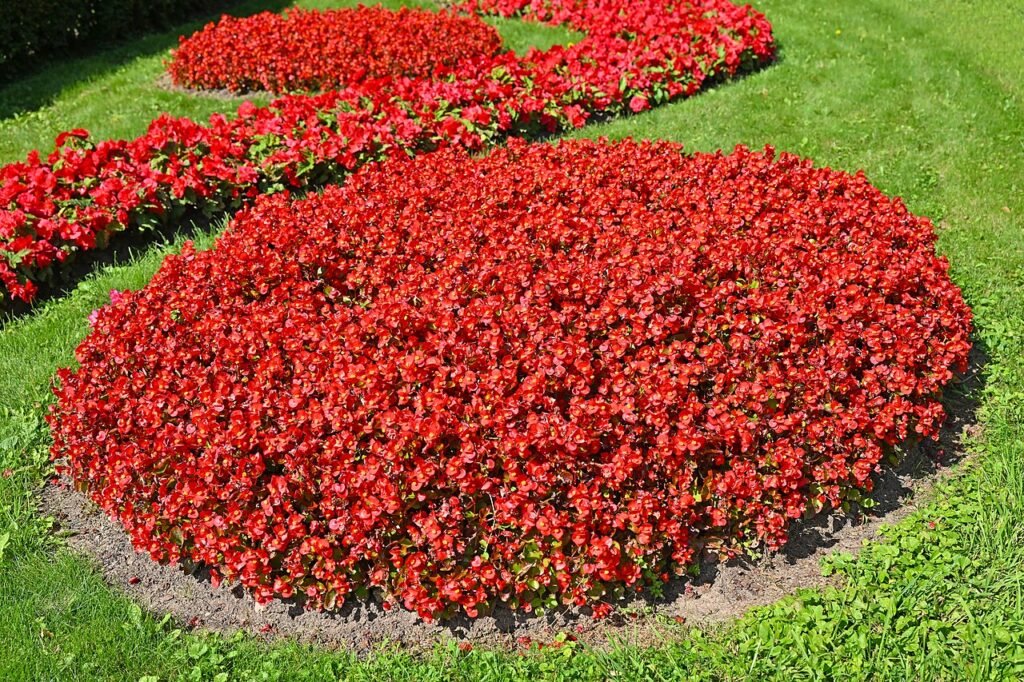
Begonias bring long-lasting color to shade, where few flowers thrive. Wax begonias are neat bedding plants, tuberous begonias have big ruffled blooms for pots and baskets, and angel wing and rex begonias are grown for striking leaves. All of them are frost-tender and dislike wet feet. This page covers planting time, spacing, care, overwintering and problems.
Begonia at a glance
| Type | Flower |
|---|---|
| Season | Warm-season |
| Sun | Part shade |
| Plant spacing | 10 in |
| Row spacing | 10 in |
| Per square foot | 1 |
| Seed depth | At surface |
| Days to maturity | Flowers 10–12 weeks after planting tubers |
| How to start | Plant begonias outdoors after the last frost, once nights stay above about 10°C (50°F) and the soil is warm. |
| Water | 1 in per week |
These are the same numbers our plant spacing, square foot and harvest date calculators use. See every crop in the plant database.
When to plant begonia
Plant begonias outdoors after the last frost, once nights stay above about 10°C (50°F) and the soil is warm. Start tuberous begonias from tubers indoors about 8 weeks before the last frost. Use the frost dates by ZIP code tool to time it. Begonias are perennial only in frost-free zones (about 10 and up); elsewhere they are grown as annuals or lifted for winter. Check your growing zone.
How to plant begonia
- Choose part shade. Wax begonias tolerate more sun if kept moist; tuberous and rex types prefer bright shade with no hot afternoon sun.
- Use loose, fertile, well-drained soil. Mix in compost. In pots, use a peat-based potting mix with good drainage.
- Plant tubers hollow side up. Set them just below the surface, or with the top barely covered.
- Space as in the table above. Good airflow reduces mildew.
- Water in gently. Avoid soaking the foliage.
Caring for begonia
Water when the top 2.5 cm (1 inch) of soil is dry; keep the soil evenly moist but never soggy, because stems and tubers rot easily. Water at the base, in the morning. The overwatering checker helps with limp or yellowing leaves.
Feed every two to three weeks with a balanced or bloom fertilizer at half strength. Pinch off spent blooms and yellow leaves to keep plants tidy and flowering. Pinch back leggy stems to encourage bushiness.
To overwinter tuberous begonias, lift tubers before the first frost, let them dry for a week or two, and store them in dry peat at about 10 to 13°C (50 to 55°F). Use the bulb overwintering scheduler for dates. Wax and angel wing begonias can be brought indoors as houseplants or rooted from cuttings in water.
Companion plants
| Grow nearby | Impatiens, coleus, hostas, ferns, fuchsia |
|---|---|
| Keep apart | Plants that need full sun and dry soil, such as lavender |
Begonias grow well alongside other shade-loving annuals and foliage plants that share their need for steady moisture and bright shade. Check other pairings with the companion plant finder.
Common problems
| Problem | What you see | What to do |
|---|---|---|
| Powdery mildew | White powdery film on leaves in humid, crowded conditions | Space plants, avoid wetting leaves and remove affected leaves. |
| Botrytis (gray mold) | Fuzzy gray mold on spent flowers and leaves | Remove dead flowers and leaves promptly and improve airflow. |
| Stem and tuber rot | Mushy, collapsing stems at the base from wet soil | Improve drainage and water less. Remove and discard rotted tissue. |
| Mealybugs | White cottony masses in leaf joints | Dab with rubbing alcohol. See the pest identifier. |
| Yellow leaves | Lower leaves yellowing from overwatering or low light | Let the top soil dry slightly. See the yellow leaf identifier. |
| Slugs and snails | Ragged holes in leaves and petals | Hand-pick at night or use barriers. |
Not sure what you are looking at? The plant problem identifier ranks likely causes from the symptoms you see.
When and how to harvest
Begonias are grown for color rather than harvest. Wax begonias bloom nonstop from planting until frost, and tuberous types bloom from midsummer to fall. Flowers of some begonias are edible but acidic; do not eat any plant unless you are certain of the variety and that it is pesticide-free, and note that all parts are toxic to pets, especially the tubers.
Propagate by stem cuttings in water or moist mix (roots in 2 to 4 weeks), by dividing tubers in spring, or by rooting a leaf wedge for rex types.
Plan your begonia
- Plant spacing calculator: how many plants fit your bed
- Planting calendar: sowing and transplant dates for your frost dates
- Frost dates by ZIP code: your last spring and first fall frost
- Harvest date calculator: when your crop will be ready
Frequently asked questions
How far apart should I plant begonias?
Space begonias 10 inches apart in rows 10 inches apart. In a square foot garden, plant 1 per square foot.
How deep do I plant plants?
Plant begonia tubers hollow side up, just below the soil surface; set potted plants at the same depth as in the pot.
How long do begonias take to grow?
Begonias usually flower about 10 to 12 weeks after planting tubers or 6 to 8 weeks after transplanting nursery plants.
How much water do begonias need?
About 1 inch of water a week, from rain and watering combined. Water when the top inch of soil is dry; keep evenly moist but never soggy and water at the base in the morning.
Do begonias like sun or shade?
Most prefer part shade or bright shade. Wax begonias tolerate more sun if kept moist, but hot afternoon sun scorches tuberous and rex types.
Can I keep begonias over winter?
Lift tuberous begonias before frost, dry them and store in dry peat at about 10 to 13°C. Wax and angel wing begonias can be potted up and brought indoors.