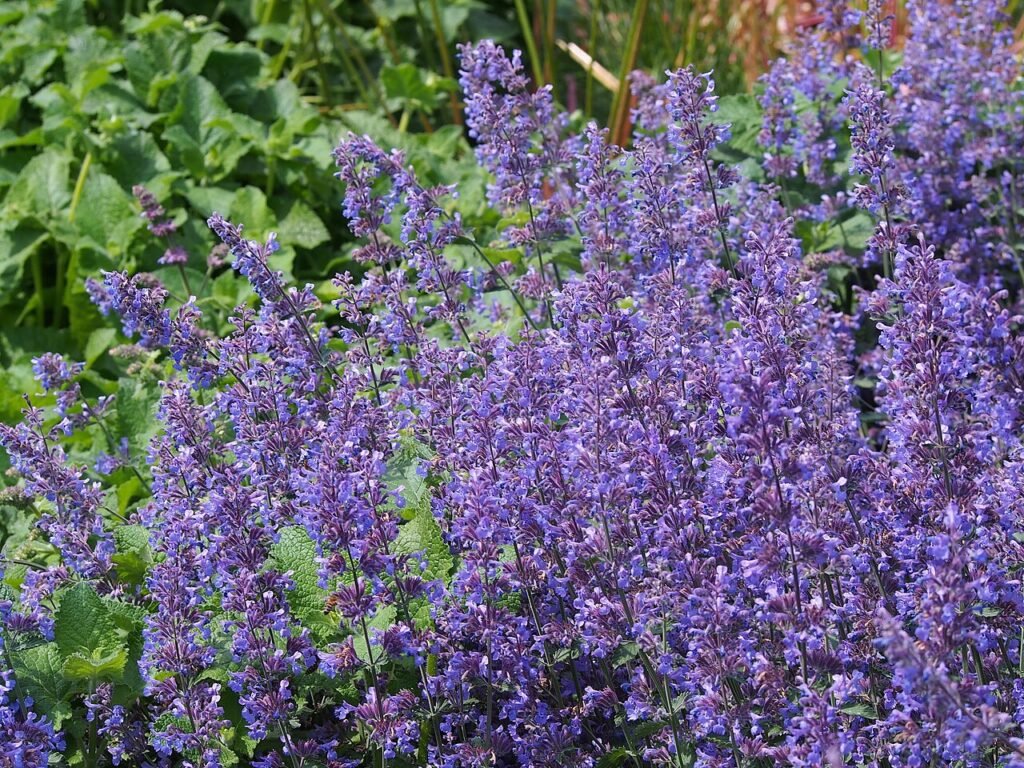
Catmint (Nepeta) is a low-maintenance perennial with spikes of small blue, lavender or white flowers from late spring well into summer. NC State Extension lists it as hardy in USDA zones 3a through 8b, drought tolerant once established, deer resistant and free of significant insect or disease problems, with weediness as its main drawback.
Catmint (Nepeta) at a glance
| Type | Flower |
|---|---|
| Season | Perennial |
| Sun | Full sun |
| Plant spacing | 18 in |
| Row spacing | 18 in |
| Per square foot | 1 |
| Seed depth | At surface |
| Days to maturity | Blooms late spring into summer; shear for a second flush |
| How to start | Plant catmint in full sun and well-drained soil, water until established, then shear off faded flowers to encourage a second flush of blooms |
| Water | 1 in per week |
These are the same numbers our plant spacing, square foot and harvest date calculators use. See every crop in the plant database.
When to plant catmint
NC State lists division or seed as propagation methods. Flowers appear late spring well into summer, and shearing off faded flowers encourages new growth and a second flush of blooms. Check your growing zone.
How to plant catmint
- Full sun. NC State defines this as 6 or more hours of direct sun a day.
- Soil: it tolerates clay, loam, sand and shallow rocky soil but needs good drainage.
- Spacing: NC State does not give a size, and habits vary between spreading and clumping types, so check the label for your cultivar. See the plant spacing calculator.
Caring for catmint
Catmint is drought tolerant once established, so water new plants until they root and then only in long dry spells. See the garden watering calculator. Growth rate is medium and maintenance low.
Shear off faded flowers to encourage new growth and a second flush. NC State’s main caution is that it can be weedy, so remove unwanted seedlings and divide or dig clumps that outgrow their space.
Companion plants
| Grow nearby | Other drought-tolerant sun perennials in well-drained soil |
|---|---|
| Keep apart | Wet, poorly drained soil |
NC State says catmint acts as a repellent for aphids and squash bugs, and lists it as deer resistant. Check other pairings with the companion plant finder.
Common problems
| Problem | What you see | What to do |
|---|---|---|
| No second flush | Flowering stops after the first flush | Shear off faded flowers to encourage new growth and rebloom (NC State). |
| Spreading too much | Seedlings or clumps popping up | NC State notes catmint can be weedy. Remove seedlings and divide or dig clumps. |
| Poor growth | Weak or rotting plants | Catmint needs good drainage and full sun; avoid wet or shady sites. |
Not sure what you are looking at? The plant problem identifier ranks likely causes from the symptoms you see.
When and how to harvest
Catmint is grown for ornament. NC State lists the minty-flavored leaves as edible and usable for herbal tea. Propagate by division or seed.
Plan your catmint
- Plant spacing calculator: how many plants fit your bed
- Planting calendar: sowing and transplant dates for your frost dates
- Frost dates by ZIP code: your last spring and first fall frost
- Harvest date calculator: when your crop will be ready
Frequently asked questions
How far apart should I plant catmints?
Space catmints 18 inches apart in rows 18 inches apart. In a square foot garden, plant 1 per square foot.
How deep do I plant catmint plant?
Plant at the same depth as the nursery pot in well-drained soil.
How long do catmints take to grow?
Blooms late spring well into summer; shearing encourages a second flush.
How much water do catmints need?
About 1 inch of water a week, from rain and watering combined. Drought tolerant once established; water new plants until they root.
When should I cut back catmint?
Shear off faded flowers to encourage new growth and a second flush of blooms.
Is catmint invasive?
NC State notes it can be weedy, so remove unwanted seedlings and divide clumps that outgrow their space.
How much sun does catmint need?
Full sun, 6 or more hours of direct sun daily.