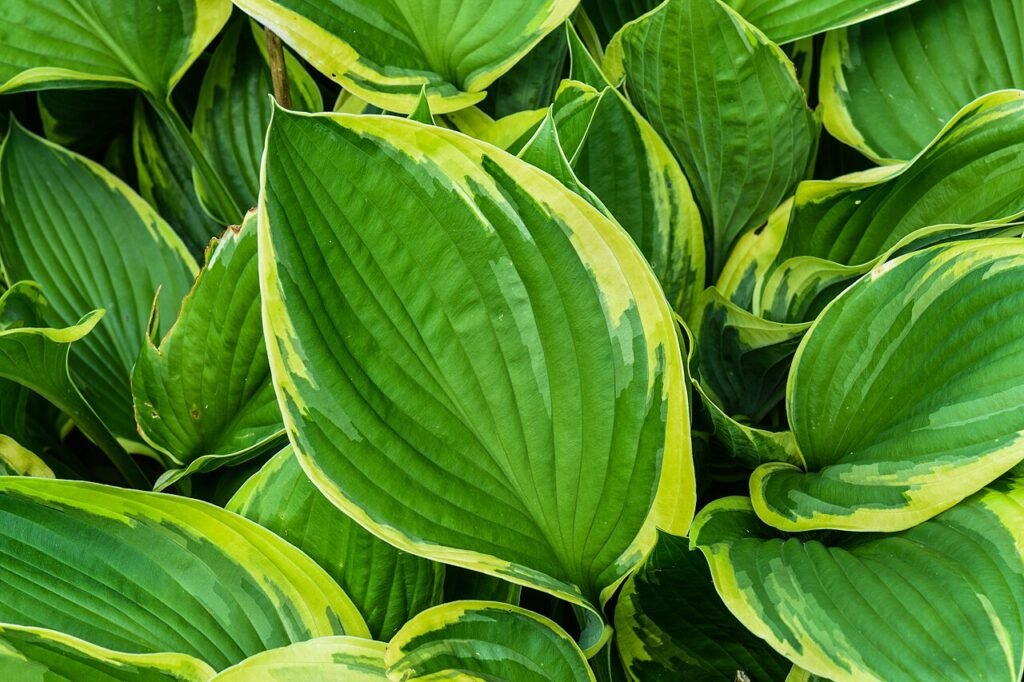
Hostas are the standard foliage perennial for shade. University of Minnesota Extension says they are hardy to zone 3 or 4 depending on variety, and mature size ranges from about 6 inches high and up to 1 foot across to 3 to 4 feet high and 5 to 6 feet across. The two problems gardeners meet most often are slugs and deer.
Hosta at a glance
| Type | Flower |
|---|---|
| Season | Perennial |
| Sun | Part shade |
| Plant spacing | 24 in |
| Row spacing | 24 in |
| Per square foot | 1 |
| Seed depth | At surface |
| Days to maturity | Divide in spring when growing tips emerge |
| How to start | Spring is generally the best planting time, though hostas can be planted throughout the growing season; summer-planted hostas need more water until their roots establish. |
| Water | 1 in per week |
These are the same numbers our plant spacing, square foot and harvest date calculators use. See every crop in the plant database.
When to plant hosta
Spring is generally the best planting time, though hostas can be planted throughout the growing season; summer-planted hostas need more water until their roots establish. Divide in spring once growing tips emerge. Check your growing zone.
How to plant hosta
- Give filtered or dappled shade for much of the day. Hostas can survive in deep shade (less than 4 hours of sun), but too little light slows growth. Yellow and gold varieties benefit from 2 to 3 hours of morning sun; blue hostas need a shadier site to avoid leaf burn.
- Use rich, moist, well-drained soil high in organic matter, improved with peat, composted manure or leaves.
- Plant at the right level. Set bare-root divisions with the crown level with the soil and growing tips visible; plant potted hostas at the same soil level as in the pot. Firm the soil and water after planting. Space plants by their mature size; see the plant spacing calculator.
Caring for hosta
About 1 inch of water per week, applied consistently, is considered best, and deep, infrequent watering beats frequent shallow watering. Dry shade, sunny sites and areas under shallow-rooted trees such as maples or spruce may need extra water. Use the garden watering calculator.
Mulch 2 to 4 inches deep with organic material and keep it away from the crown (see the mulch calculator). Fertilize only if a soil test shows a need, typically twice: in spring as leaves emerge, and before flowering. Stop fertilizing after the end of July.
Division is not required for plant health but can neaten the planting and produce more plants. Keep as much root attached as possible, replant at the original soil level and water well.
Companion plants
| Grow nearby | Other shade perennials such as ferns and hellebores |
|---|---|
| Keep apart | Hot, dry sun |
Hostas pair well with hellebore, bleeding heart and Boston fern in a shaded bed. Check other pairings with the companion plant finder.
Common problems
| Problem | What you see | What to do |
|---|---|---|
| Slugs | Chewed holes in leaves | UMN lists slugs as a common problem. See the pest identifier. |
| Deer | Leaves eaten, especially on young plants | Deer eat almost anything. Reduce damage by planting deer-resistant plants, fencing or using repellents, and do not mix preferred and disliked plants together. |
| Sunscald | Scorched brown leaf edges | Move the plant to a shadier spot or water more. |
| Less common issues | Crown rot, leaf spots, voles, foliar nematodes | UMN also lists variegated cutworm, viruses, earwigs, mice and voles. Early-season hail damage: remove shredded leaves and wait for new growth. |
Not sure what you are looking at? The plant problem identifier ranks likely causes from the symptoms you see.
When and how to harvest
Hostas are grown for foliage and flowers and are not harvested. Winter protection is generally unnecessary, though extra mulch helps late-season transplants: apply about 3 inches after the ground freezes and pull it away from the crown in spring. Check plant toxicity before planting around pets; see our pet-safe plants guide.
Plan your hosta
- Plant spacing calculator: how many plants fit your bed
- Planting calendar: sowing and transplant dates for your frost dates
- Frost dates by ZIP code: your last spring and first fall frost
- Harvest date calculator: when your crop will be ready
Frequently asked questions
How far apart should I plant hostas?
Space hostas 24 inches apart in rows 24 inches apart. In a square foot garden, plant 1 per square foot.
How deep do I plant hosta plants?
Plant potted hostas at the same soil level as in the pot; set bare-root crowns level with the soil.
How long do hostas take to grow?
Divide in spring once growing tips emerge; fertilize in spring and before flowering, and stop after July.
How much water do hostas need?
About 1 inch of water a week, from rain and watering combined. About 1 inch per week, applied consistently; deep, infrequent watering is better than frequent shallow watering.
How much shade do hostas need?
Filtered or dappled shade for much of the day; they can survive in deep shade, and gold varieties like 2 to 3 hours of morning sun.
When should I divide hostas?
In spring once the growing tips emerge, keeping as much root as possible.
How do I stop slugs and deer?
Use fencing or repellents against deer; for slugs, inspect plants and see the pest identifier.