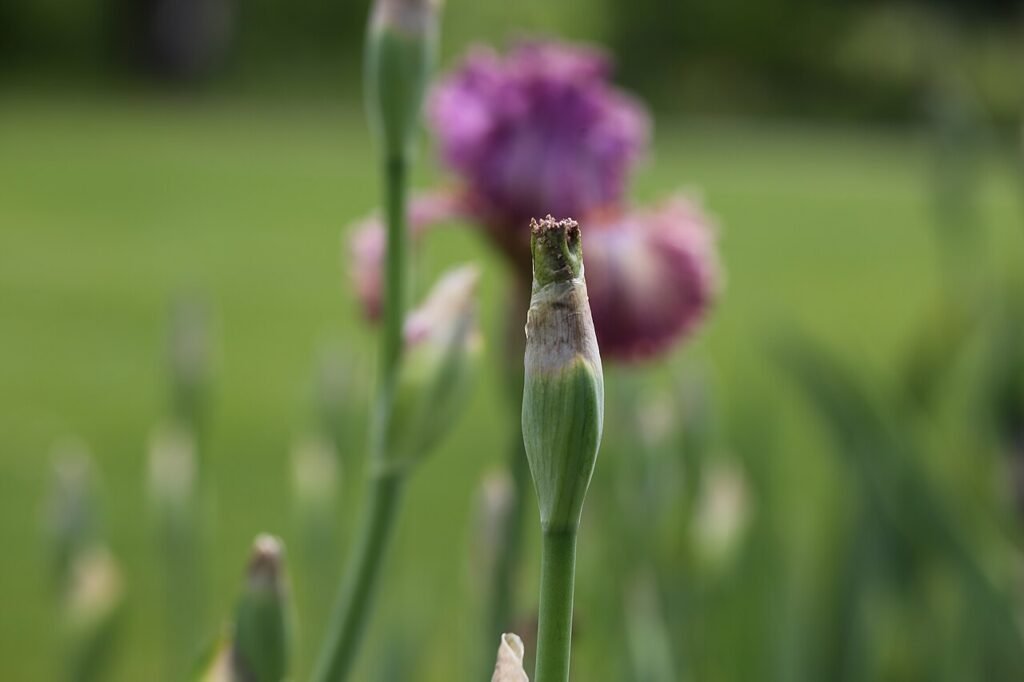
Bearded irises are tough, long-lived perennials with sword-shaped leaves and showy ruffled flowers in late spring. They grow from thick rhizomes that sit at the soil surface, which is the detail most gardeners get wrong. Plant them shallowly in sun and drained soil, and divide the clumps every few years. This page covers planting, spacing, dividing and the main problems.
Iris at a glance
| Type | Flower |
|---|---|
| Season | Perennial |
| Sun | Full sun |
| Plant spacing | 15 in |
| Row spacing | 15 in |
| Per square foot | 1 |
| Seed depth | At surface |
| Days to maturity | Blooms once a year in late spring |
| How to start | The best time to plant or divide bearded iris is about four to six weeks after flowering, according to University of Illinois Extension, which leaves time for roots to establish before winter. |
| Water | 0.5 in per week |
These are the same numbers our plant spacing, square foot and harvest date calculators use. See every crop in the plant database.
When to plant iris
The best time to plant or divide bearded iris is about four to six weeks after flowering, according to University of Illinois Extension, which leaves time for roots to establish before winter. Check your growing zone and use the frost dates by ZIP code tool to count back from your first fall frost.
How to plant iris
- Choose full sun and good drainage. Irises do not tolerate poorly drained soil.
- Plant shallowly. Set the rhizome on a ridge of soil with the roots in the soil and the rhizome just above the surface. Burying it deeply invites rot.
- Space 12 to 18 inches apart. This reduces overcrowding and improves air circulation. Use the plant spacing calculator.
- Allow for height. Plants grow 18 to 36 inches tall depending on the variety.
Caring for iris
Water new plantings until established, then irises need little water. Keep the soil from staying wet around the rhizomes. Remove spent bloom stalks and tidy damaged leaves in late summer. The garden watering calculator can help with new beds.
Divide clumps every three to four years because they become crowded. Dig up the whole clump about four to six weeks after flowering, remove the old mother plant, and replant healthy pieces with leaves and roots.
Companion plants
| Grow nearby | Peonies, catmint, salvia, daylilies and ornamental grasses |
|---|---|
| Keep apart | Plants that need frequent watering and mulch piled against the rhizomes |
Irises pair well with other sun-loving perennials that tolerate dry summers, since their foliage stays upright and attractive after the flowers fade. Check other pairings with the companion plant finder.
Common problems
| Problem | What you see | What to do |
|---|---|---|
| Iris borer | Water-soaked streaks on leaves and hollowed, mushy rhizomes | Destructive and hard to control. Remove and discard infested rhizomes and clean up leaf debris in fall. See the pest identifier. |
| Soft rot | Foul-smelling, mushy rhizomes, often after borer damage | A bacterial infection that enters through wounds. Remove and discard infected rhizomes and plant parts, and improve drainage. |
| Leaf spots | Brown spots on foliage in wet weather | Improve air circulation by dividing crowded clumps and remove spotted leaves. |
| Few flowers | Healthy foliage but no bloom | Often crowding, too much shade or rhizomes buried too deep. Divide, move to full sun and replant shallowly. |
Not sure what you are looking at? The plant problem identifier ranks likely causes from the symptoms you see.
When and how to harvest
Irises are grown for their flowers, which last only a short time on each stalk. Cut stalks for a vase when the first bud shows color. After flowering, cut spent stalks near the base and leave the leaves to feed the rhizome.
Divide in the weeks after flowering, discard soft or borer-damaged pieces, and replant healthy rhizomes with the roots in the soil and the rhizome just at the surface.
Plan your iris
- Plant spacing calculator: how many plants fit your bed
- Planting calendar: sowing and transplant dates for your frost dates
- Frost dates by ZIP code: your last spring and first fall frost
- Harvest date calculator: when your crop will be ready
Frequently asked questions
How far apart should I plant irises?
Space irises 15 inches apart in rows 15 inches apart. In a square foot garden, plant 1 per square foot.
How deep do I plant iris rhizomes?
Plant bearded iris so the rhizome sits just above the soil surface with the roots in the soil; deep planting causes rot.
How long do irises take to grow?
Bearded irises bloom once a year in late spring and need dividing every three to four years to keep flowering well.
How much water do irises need?
About 0.5 inches of water a week, from rain and watering combined. Water new plantings until established, then little; keep soil from staying wet around the rhizomes.
How deep should I plant irises?
Barely at all. Set the rhizome on a ridge of soil with the roots down and the top of the rhizome just above the surface.
When should I divide irises?
About four to six weeks after flowering, and roughly every three to four years when clumps become crowded.
What is the biggest iris problem?
Iris borer is destructive and hard to control. It can also open the way for bacterial soft rot, so remove and discard infested rhizomes.