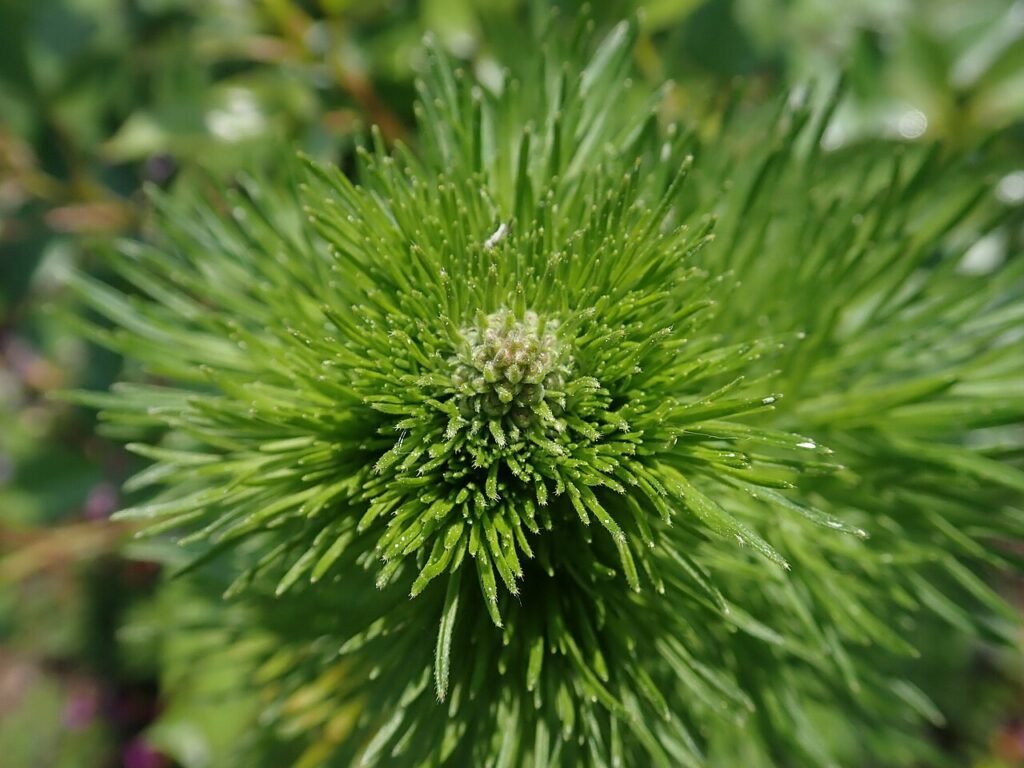
Rocket larkspur (Consolida ajacis, also listed as Delphinium ajacis) is a winter annual with tall, upright spikes of blue, violet, pink or white flowers. Texas A&M AgriLife lists it at 3 to 4 feet tall, Washington State University at 2 to 3 feet tall and about 1 foot wide, and Arkansas Extension at about 3 feet with strong, erect stems. Every part of the plant is poisonous (WSU; NC State), so grow it with care around children, pets and livestock.
Larkspur (Rocket Larkspur) at a glance
| Type | Flower |
|---|---|
| Season | Cool-season |
| Sun | Full sun |
| Plant spacing | 12 in |
| Row spacing | 12 in |
| Per square foot | 1 |
| Seed depth | 0.125 in |
| Days to maturity | Germinates in 15–30 days; blooms in late spring from fall sowing |
| How to start | Scatter larkspur seed 1/8 inch deep in fall (September or October in the South) in full sun and very well-drained soil, keep it out of reach of children and pets because every part is poisonous |
| Water | 1 in per week |
These are the same numbers our plant spacing, square foot and harvest date calculators use. See every crop in the plant database.
When to plant larkspur
Arkansas Extension recommends sowing in fall; in southern gardens that means September or October for spring bloom, with most flowers in May and June (northern areas bloom into summer). Texas A&M lists germination of 15 to 30 days at an optimum soil temperature of 50 to 60°F, which is why it is a cool-season, winter-annual crop. Check your frost dates and the planting calendar, and see the growing zone finder. The sources reviewed do not give a spring-sowing schedule.
How to plant larkspur
- Sowing: scatter seed thinly in open areas (Arkansas) and cover about 1/8 inch deep (Texas A&M).
- Site and soil: full sun is a must (Arkansas). Soil should be fertile and uniformly moist yet very well-drained, since plants can rot at the base if the soil stays wet (Texas A&M).
- Spacing: the sources give no spacing; WSU lists a width of about 1 foot, so thin to roughly that. See the plant spacing calculator.
Caring for larkspur
Larkspur is described as tough and easy to grow. WSU lists it as drought tolerant, while Arkansas and NC State suggest fertile, moist, well-drained soil; avoid soil that stays wet because of base and crown rot. See the garden watering calculator.
It reseeds freely, and unwanted seedlings are easy to remove or relocate. Taller types may need staking and shelter from strong wind and rain (NC State, for the related perennial delphinium). For the related delphiniums, NC State lists powdery mildew, botrytis blight, leaf spots and crown rot, plus slugs, snails and aphids, and says humid summers are a challenge. See the pest identifier.
Companion plants
| Grow nearby | Spring bulbs, roses and perennial borders (Arkansas) |
|---|---|
| Keep apart | Wet, heavy soil and hot, humid summers |
Larkspur is a cool-season plant; it dies back in hot, humid summers (UF/IFAS). Check other pairings with the companion plant finder.
Common problems
| Problem | What you see | What to do |
|---|---|---|
| Base or crown rot | Stems rot at the soil line | Plants can rot at the base in soil that stays wet; use very well-drained soil and avoid planting too deep. |
| Dies back in summer | Plants brown and fade in heat | It prefers cool weather and dies back in hot, humid summers; it is a winter annual. |
| Slugs and mildew | Chewed leaves, or white powdery coating | NC State lists slugs, snails and powdery mildew for larkspur and delphinium; full sun reduces mildew. See the pest identifier. |
Not sure what you are looking at? The plant problem identifier ranks likely causes from the symptoms you see.
When and how to harvest
Larkspur is a good cut flower and works with bulbs, roses and perennial borders. UF/IFAS advises cutting just before peak bloom. Safety: seeds and leaves are poisonous if eaten (Texas A&M); NC State rates the toxicity as high for humans, dogs, cats and horses, with delphinine and ajacine as the main alkaloids. Wear gloves, wash hands after handling, and keep seed away from children and pets.
Plan your larkspur
- Plant spacing calculator: how many plants fit your bed
- Planting calendar: sowing and transplant dates for your frost dates
- Frost dates by ZIP code: your last spring and first fall frost
- Harvest date calculator: when your crop will be ready
Frequently asked questions
How far apart should I plant larkspurs?
Space larkspurs 12 inches apart in rows 12 inches apart. In a square foot garden, plant 1 per square foot.
How deep do I plant larkspur seed?
About 1/8 inch deep.
How long do larkspurs take to grow?
Seed germinates in 15 to 30 days at 50-60°F soil temperature; bloom is in late spring.
How much water do larkspurs need?
About 1 inch of water a week, from rain and watering combined. Fertile, evenly moist but very well-drained; avoid wet soil.
When should I sow larkspur?
In fall (September or October in southern gardens) for spring bloom, according to Arkansas Extension.
Is larkspur poisonous?
Yes, all parts are poisonous to people and pets (WSU, NC State).
How deep do I sow larkspur seed?
About 1/8 inch deep (Texas A&M).