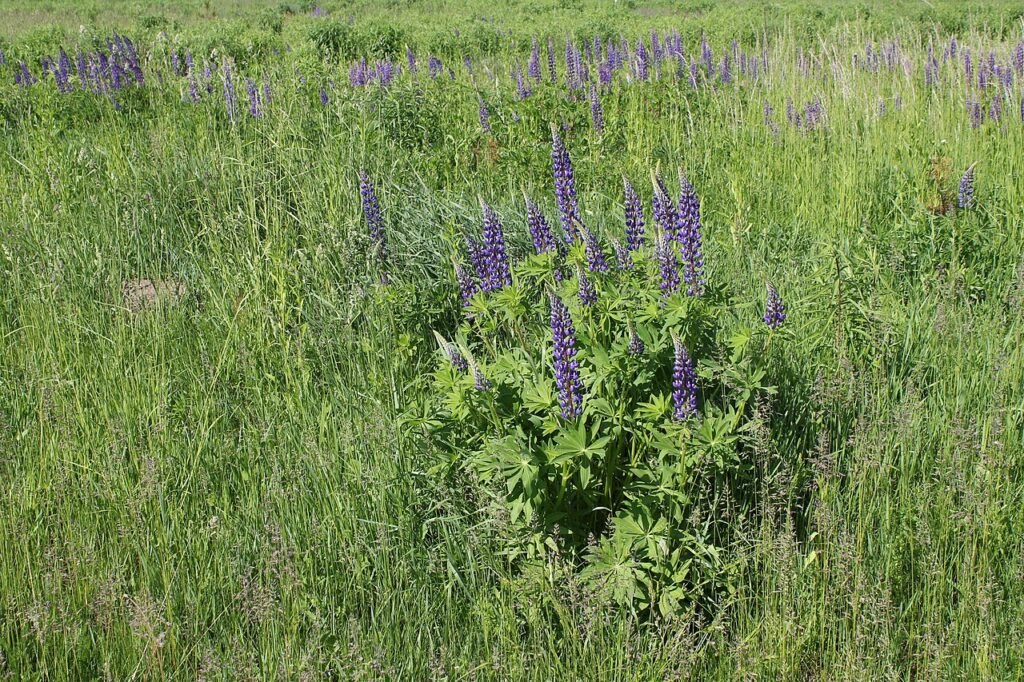
Lupines (Lupinus) are cool-climate perennials with fragrant flower spikes in blue, purple, pink, white or yellow. NC State Extension lists them at 3 to 4 feet tall and 1½ to 2 feet wide, hardy in USDA zones 4a to 9b, and short-lived at roughly 2 to 5 years as perennials. Find yours with the growing zone finder.
Lupine at a glance
| Type | Flower |
|---|---|
| Season | Perennial |
| Sun | Full sun to part shade |
| Plant spacing | 18 in |
| Row spacing | 18 in |
| Per square foot | 1 |
| Seed depth | ¼ in |
| Days to maturity | Blooms late spring to early summer; short-lived |
| How to start | NC State advises planting lupine seeds in the fall. |
| Water | 1 in per week |
These are the same numbers our plant spacing, square foot and harvest date calculators use. See every crop in the plant database.
When to plant lupine
NC State advises planting lupine seeds in the fall. The flowers appear from late spring into early summer. In zones 7 and 8 lupines are often grown as annuals, and the page notes they dislike the heat and humidity of the Deep South.
How to plant lupine
- Choose full sun (6+ hours) or partial shade (2 to 6 hours). In hot-summer areas give them afternoon shade.
- Use well-drained, organically rich loam that is acidic (pH below 6.0) and stays moist with consistent watering.
- Mulch to keep the roots cool.
Caring for lupine
Keep the soil consistently moist; see the garden watering calculator for a schedule. Deadhead spent flower spikes to encourage more blooms. 'Russell Hybrids' suit cool mountain gardens.
Plan for replacement: because lupines are short-lived, let a few seed pods ripen or sow new seed in fall so the planting keeps going.
Companion plants
| Grow nearby | Other cool-season perennials with similar moisture needs |
|---|---|
| Keep apart | Hot, humid sites and dry soil |
Lupines do best where summers are cool. Check other pairings with the companion plant finder.
Common problems
| Problem | What you see | What to do |
|---|---|---|
| Slugs and snails | Ragged holes in leaves | NC State lists slugs and snails as common problems. See the pest identifier. |
| Powdery mildew | White powdery coating on leaves | Listed by NC State among lupine problems. Give plants good airflow and avoid wetting foliage late in the day. |
| Aphids | Clusters of small insects on stems and flower spikes | Another listed problem. Knock them off with water and check often. |
Not sure what you are looking at? The plant problem identifier ranks likely causes from the symptoms you see.
When and how to harvest
Lupines are grown as ornamentals. NC State rates toxicity as low and says problems occur only if large quantities are eaten, mainly the seeds, with symptoms including respiratory depression, slow heartbeat, sleepiness and convulsions. Keep seeds away from children and pets; see our pet-safe plants guide.
Plan your lupine
- Plant spacing calculator: how many plants fit your bed
- Planting calendar: sowing and transplant dates for your frost dates
- Frost dates by ZIP code: your last spring and first fall frost
- Harvest date calculator: when your crop will be ready
Frequently asked questions
How far apart should I plant lupines?
Space lupines 18 inches apart in rows 18 inches apart. In a square foot garden, plant 1 per square foot.
How deep do I plant lupine seed?
Plant seed in the fall in well-drained, organically rich, acidic soil.
How long do lupines take to grow?
Blooms from late spring to early summer; plants are short-lived at about 2 to 5 years.
How much water do lupines need?
About 1 inch of water a week, from rain and watering combined. Keep the soil consistently moist and mulch to keep roots cool.
How long do lupines live?
NC State says usually about 2 to 5 years as perennials.
Do lupines like sun or shade?
Full sun or partial shade, with afternoon shade in hot-summer areas.
Can I grow lupines in the South?
It is difficult: they dislike Deep South heat and humidity and are often grown as annuals in zones 7 and 8.