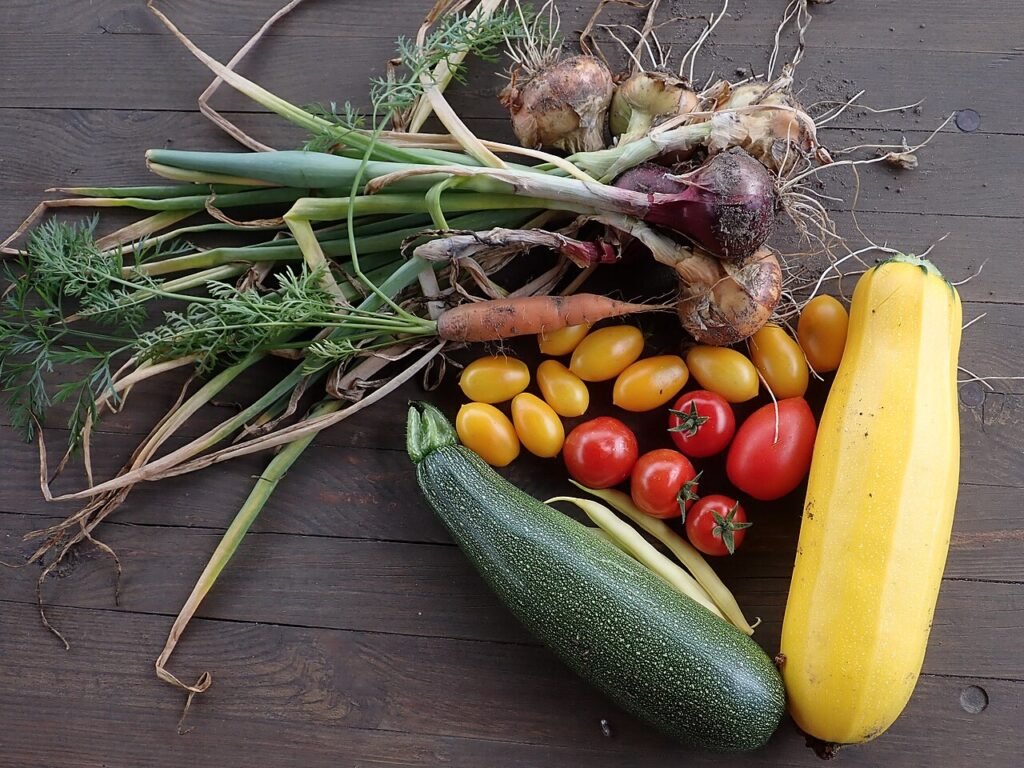
Onions are easy to grow once you choose the right type for where you live. Bulbing is triggered by day length, so a variety suited to the South will not bulb well in the North, and the reverse. Onions are cool-season plants that need full sun, weed-free soil and steady water. This page covers choosing a type, when and how to plant, how to care for them, and how to harvest and cure onions for storage.
Onion at a glance
| Type | Vegetable |
|---|---|
| Season | Cool-season |
| Sun | Full sun |
| Plant spacing | 4 in |
| Row spacing | 12 in |
| Per square foot | 9 |
| Seed depth | ¼ in |
| Days to maturity | 90–120 from seed |
| How to start | Indoors 8–10 weeks before last frost, or plant sets 2–4 weeks before |
| Water | 1 in per week |
These are the same numbers our plant spacing, square foot and harvest date calculators use. See every crop in the plant database.
When to plant onions
Pick the right day-length type first. Long-day onions suit northern states, roughly north of a line from Northern California to Virginia. Short-day onions suit the South, and intermediate (day-neutral) types grow in most areas. In the North, plant in early spring. In mild-winter southern areas, short-day onions are usually planted in fall or winter for a spring harvest.
From seed, start indoors 8 to 10 weeks before your last spring frost. Plant sets or transplants outdoors 2 to 4 weeks before the last frost, as soon as the soil can be worked; young onions tolerate frost. Find your dates with the frost dates by ZIP code tool.
How to plant onions
- Choose full sun and loose soil. Onions need at least 6 to 8 hours of sun and well-drained soil enriched with compost.
- Plant shallow. Set sets about 1 inch deep with the tip at the surface, and transplants about 1 inch deep. Bulbs form on top of the soil, so do not bury them deeper.
- Use small sets. Sets larger than a dime or so are more likely to bolt. Use large ones for green onions.
- Space for bulb size. Use the spacing in the table above; closer spacing gives smaller bulbs. The square foot gardening calculator shows how many fit.
Caring for onions
Onions have shallow roots, so keep the soil evenly moist with about an inch of water a week, especially while bulbs swell. Stop watering once the tops start to fall over. The garden watering calculator turns this into gallons.
Weed carefully and often; onions have thin leaves that cannot shade out weeds, and weeds cut yields sharply. Side-dress with a nitrogen-rich fertilizer every 2 to 3 weeks until bulbs begin to swell, then stop. Pull soil away from swelling bulbs rather than hilling it up.
Companion plants
| Grow nearby | Carrots, lettuce, beets, cabbage-family crops, tomatoes, chamomile |
|---|---|
| Keep apart | Peas and beans (onions are said to slow their growth); asparagus |
Onions are said to help mask carrots and cabbage-family crops from pests. Lettuce and beets fit easily between onion rows. Check other pairings with the companion plant finder.
Common problems
| Problem | What you see | What to do |
|---|---|---|
| Bolting | A flower stalk forms in the center | Caused by large sets or a cold spell after planting. Snap off the stalk and use those onions first; they will not store well. |
| Small bulbs | Plants grow but bulbs stay small | Wrong day-length type for your area, crowding, weeds or late planting. Choose the right type and plant early. |
| Onion thrips | Silvery streaks on leaves in hot, dry weather | Spray leaves with water, keep plants watered and remove weeds. See the pest identifier. |
| Onion maggot | Plants wilt and yellow; maggots in the bulb | Use row cover and rotate onion-family crops. |
| Rot in storage | Soft, moldy necks weeks after harvest | Cure onions fully until necks are dry and tight before storing. |
Not sure what you are looking at? The plant problem identifier ranks likely causes from the symptoms you see.
When and how to harvest
Onions are ready when most of the tops have yellowed and fallen over, usually in mid to late summer. Pull them on a dry day, or loosen with a fork first. You can pull a few at any stage to use as green onions.
Cure onions before storing: spread them in a single layer in a warm, dry, airy spot out of direct sun for 2 to 3 weeks, until the necks are dry and tight and the skins are papery. Trim roots and cut tops to about an inch, then store in a cool, dry place in mesh bags. Pungent types keep longest; sweet onions keep only a few weeks. Use the harvest date calculator to plan.
Plan your onions
- Plant spacing calculator: how many plants fit your bed
- Planting calendar: sowing and transplant dates for your frost dates
- Frost dates by ZIP code: your last spring and first fall frost
- Harvest date calculator: when your crop will be ready
Frequently asked questions
How far apart should I plant onions?
Space onions 4 inches apart in rows 12 inches apart. In a square foot garden, plant 9 per square foot.
How deep do I plant onions?
Sow seeds 1/4 inch deep indoors. Outdoors, plant sets about 1 inch deep with the pointed tip at the surface, and set transplants about 1 inch deep.
How long do onions take to grow?
Most varieties are ready 90–120 days from seed. Check the seed packet, because early and late varieties differ.
How much water do onions need?
About 1 inch of water a week, from rain and watering combined. Keep the soil evenly moist while bulbs swell, and stop watering when the tops fall over.
Which onions should I grow where I live?
Long-day onions suit northern states, short-day onions suit the South and intermediate types grow in most areas. A variety of the wrong type forms small bulbs or none.
How do I know when onions are ready to harvest?
When most of the tops have yellowed and fallen over. Pull them on a dry day and cure them for 2 to 3 weeks before storing.