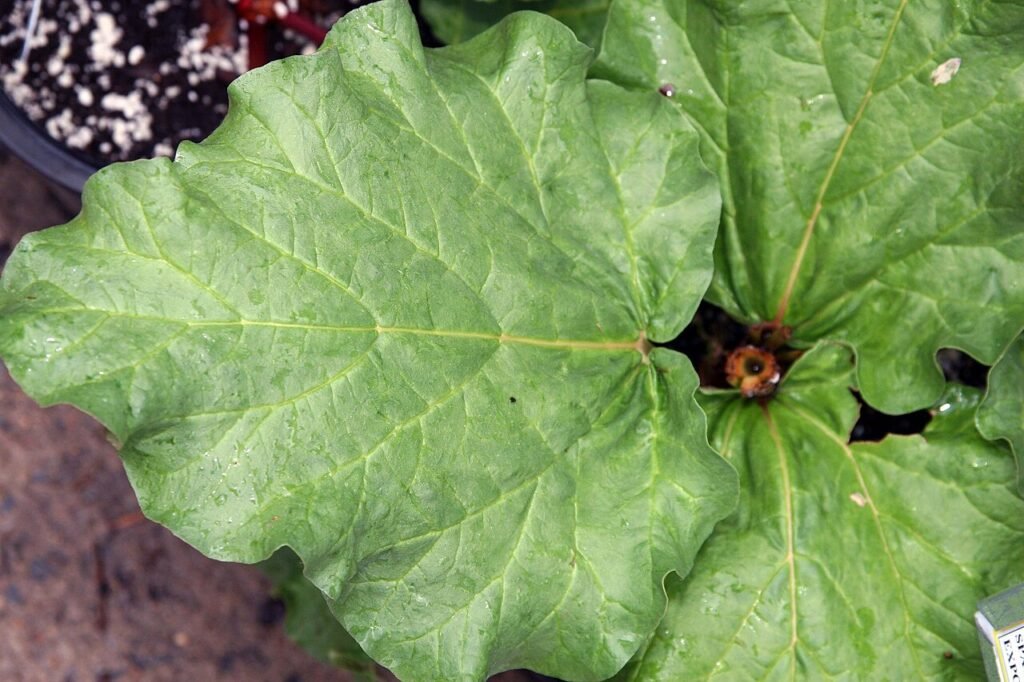
Rhubarb is a hardy perennial that comes back every spring for 10 years or more with very little care. Its tart red or green stalks are used in pies, crumbles and jams. Only the stalks are eaten: the leaves contain high levels of oxalic acid and are toxic. Rhubarb needs a cold winter to grow well. This page covers planting crowns, care, when to start harvesting and how to pick.
Rhubarb at a glance
| Type | Vegetable |
|---|---|
| Season | Perennial |
| Sun | Full sun to part shade |
| Plant spacing | 36 in |
| Row spacing | 48 in |
| Per square foot | 1 per 9 sq ft |
| Seed depth | 2 in |
| Days to maturity | Harvest from year 2 |
| How to start | Plant crowns in early spring with buds 1–2 inches below the surface |
| Water | 1 in per week |
These are the same numbers our plant spacing, square foot and harvest date calculators use. See every crop in the plant database.
When to plant rhubarb
Plant rhubarb crowns or divisions in early spring, as soon as the soil can be worked, while the plants are still dormant. In mild climates, fall planting also works. Rhubarb needs winter temperatures below about 40°F to rest, so it grows best in the northern half of the US and struggles in the hot South.
Find your dates with the frost dates by ZIP code tool.
How to plant rhubarb
- Choose a permanent spot. Pick full sun or light shade where the plant can stay undisturbed for years, at the edge of the garden.
- Prepare rich soil. Dig a wide hole and mix in plenty of compost or well-rotted manure. Rhubarb is a heavy feeder and needs good drainage.
- Plant at the right depth. Set each crown with the buds 1 to 2 inches below the soil surface. Planting too deep or in soggy soil causes rot.
- Give it space. Mature plants spread 3 to 4 feet. Use the spacing in the table above.
Caring for rhubarb
Water about an inch a week, especially in the first year and in dry summers. Mulch with compost each spring to hold moisture and feed the plant. The garden watering calculator turns this into gallons.
Feed with compost or a balanced fertilizer in early spring. Cut off flower stalks at the base as soon as they appear, so the plant puts its energy into leaves and roots. Every 5 to 10 years, when stalks get thin and crowded, dig up the crown in early spring and divide it into pieces, each with a couple of buds, and replant.
Companion plants
| Grow nearby | Strawberries, garlic, onions, cabbage-family crops |
|---|---|
| Keep apart | Nothing serious; avoid low crops in the shade of its large leaves |
Rhubarb is a large, long-lived plant, so it is best given its own corner. Garlic and onions are said to help deter pests nearby. Check other pairings with the companion plant finder.
Common problems
| Problem | What you see | What to do |
|---|---|---|
| Crown rot | Stalks collapse and the crown is soft and smelly | Plant in well-drained soil, do not bury crowns deeper than 2 inches and avoid soggy ground. See the overwatering checker. |
| Flowering | Tall flower stalks appear in spring | Normal on mature plants, especially after stress. Cut flower stalks off at the base. |
| Thin stalks | Stalks are small and spindly | The plant is crowded, overharvested or underfed. Divide old crowns, feed each spring and stop picking by early summer. |
| Leaf spot | Brown or red spots on leaves | Usually minor. Remove affected leaves and clear debris in fall. |
| Rhubarb curculio | Small black spots or holes on stalks | Hand-pick the snout beetles and remove nearby dock weeds. See the pest identifier. |
Not sure what you are looking at? The plant problem identifier ranks likely causes from the symptoms you see.
When and how to harvest
Do not harvest in the first year after planting. In the second year, harvest lightly, a few stalks per plant over 1 to 2 weeks. From the third year, harvest for 8 to 10 weeks in spring, from when stalks are 10 to 15 inches long until early summer, then let the plant grow.
To harvest, grasp a stalk near the base and pull it with a slight twist so it comes away cleanly; do not cut. Always leave at least a third of the stalks on the plant. Cut off the leaves right away and put them on the compost, never in the kitchen, because they are toxic. Store stalks in the fridge for up to 2 weeks, or chop and freeze.
Plan your rhubarb
- Plant spacing calculator: how many plants fit your bed
- Planting calendar: sowing and transplant dates for your frost dates
- Frost dates by ZIP code: your last spring and first fall frost
- Harvest date calculator: when your crop will be ready
Frequently asked questions
How far apart should I plant rhubarb?
Space rhubarb 36 inches apart in rows 48 inches apart. In a square foot garden, plant 1 per 9 sq ft.
How deep do I plant rhubarb crowns?
Rhubarb is planted from crowns or divisions. Set each crown with the buds 1 to 2 inches below the soil surface.
How long does rhubarb take to grow?
Harvest lightly in the second year after planting, and for 8 to 10 weeks each spring from the third year. Plants produce for 10 years or more.
How much water does rhubarb need?
About 1 inch of water a week, from rain and watering combined. Water regularly in the first year and during dry summers.
Are rhubarb leaves poisonous?
Yes. Rhubarb leaves contain high levels of oxalic acid and should never be eaten. Only the stalks are edible. Leaves can go on the compost pile.
Should I cut rhubarb flowers?
Yes. Cut flower stalks off at the base as soon as they appear so the plant puts its energy into stalks and roots.