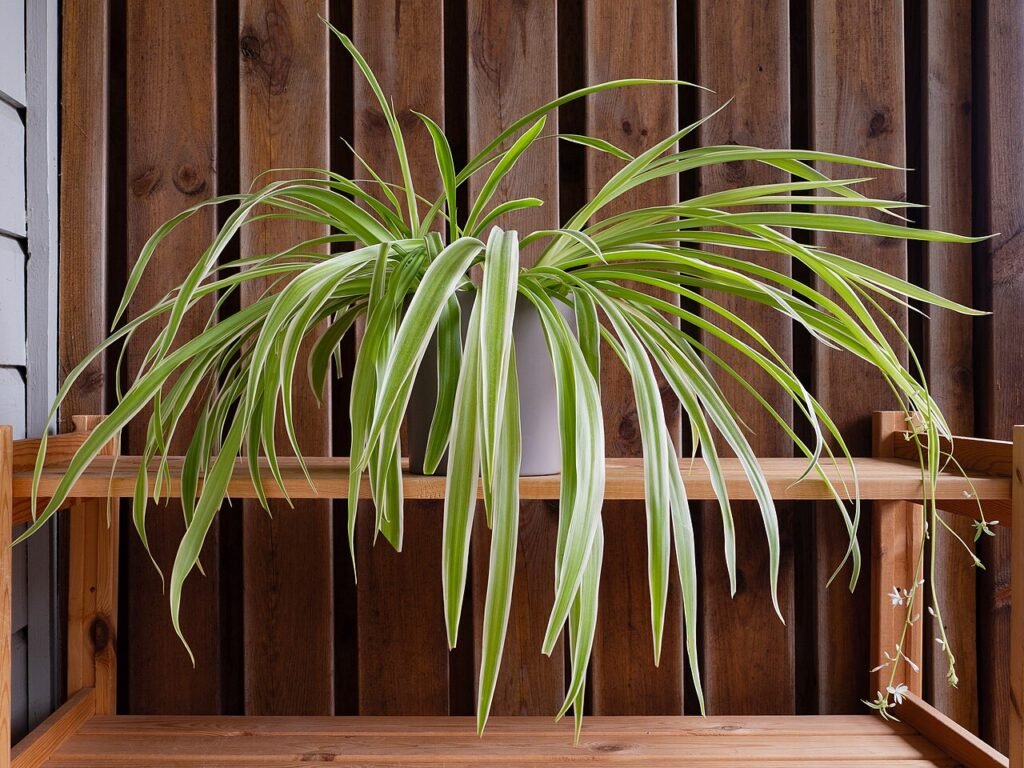
Spider plant (Chlorophytum comosum, also called ribbon plant or airplane plant) is an easy houseplant from South and West Africa with arching, strap-like leaves and wiry stems that carry baby plantlets. University of Wisconsin Extension says plants grow 12 to 15 inches (30 to 38 cm) tall, with plantlet-bearing stems up to 2 feet (60 cm) long; Oklahoma State gives about 2 feet of height and a 3-foot (90 cm) spread, and lists it as hardy to USDA zone 9. It is mostly grown in hanging baskets. The University of Saskatchewan says it is not toxic to cats or dogs.
Spider Plant at a glance
| Type | Houseplant |
|---|---|
| Season | Perennial |
| Sun | Bright indirect light |
| Plant spacing | 12 in |
| Row spacing | 12 in |
| Per square foot | 1 |
| Seed depth | At surface |
| Days to maturity | Plantlets root best in spring; grows quickly and needs frequent repotting |
| How to start | Give spider plant medium to bright indirect light, let the top of the soil dry slightly between thorough waterings, use rainwater or distilled water if the tips brown, and pot up the plantlets to make new plants |
| Water | 1 in per week |
These are the same numbers our plant spacing, square foot and harvest date calculators use. See every crop in the plant database.
When to plant spider plant
Spider plant is a year-round houseplant. Spring is the best time to root plantlets, and they can move outdoors in early summer in morning sun (Saskatchewan). Outdoors it needs bright light but can sunburn in full sun (Wisconsin), and Oklahoma State lists hardiness only in zone 9, so bring it indoors before cold weather. Use your frost dates to time the move.
How to plant spider plant
- Light: medium to bright light year-round (Wisconsin); medium to bright indirect light (Saskatchewan). Oklahoma State lists low light among the causes of brown tips.
- Soil: a general-purpose potting soil or soilless medium (Wisconsin); a general-purpose indoor mix for repotting and a soil-less mix for propagation (Saskatchewan). Always use a pot with drainage holes.
- Temperature and humidity: Wisconsin says cool to average temperatures and average humidity; Saskatchewan says room temperature. Low humidity can cause brown tips (Wisconsin, Saskatchewan).
- Potting: it grows quickly and needs frequent repotting (Wisconsin), and Saskatchewan says repot when root-bound. Wisconsin notes it makes plantlets best when slightly pot-bound.
Caring for spider plant
Watering: let the soil dry slightly between thorough waterings (Wisconsin). Thick, fleshy roots store water, so it tolerates inconsistent watering, but overwatering and poor drainage cause root rot; never let the pot sit in water (Saskatchewan). Use the overwatering checker if leaves look limp.
Brown tips: the sources list low humidity, excessively dry soil, over-fertilizing, and chlorine or fluoride in tap water; Oklahoma State adds low light and spider mites. Saskatchewan says chlorine fades if tap water stands for a day but fluoride does not, so switch to rainwater or distilled water if browning persists.
Feeding: Wisconsin says every 3 to 4 months is usually enough, or feed more often at half strength; heavy feeding can reduce plantlets and brown the tips. Saskatchewan says feed sparingly in spring and summer with half-strength all-purpose fertilizer.
Pests: few problems, mainly scale and mealybugs (Wisconsin, Saskatchewan). See the pest identifier and the yellow leaf identifier.
Companion plants
| Grow nearby | Hanging baskets and shelves in bright rooms, and homes with cats and dogs (Saskatchewan says it is not toxic) |
|---|---|
| Keep apart | Soggy soil, standing water in saucers, and full hot sun |
Trim plantlets that might fall off a shelf, since cats may bat at them (Saskatchewan). Check other pairings with the companion plant finder.
Common problems
| Problem | What you see | What to do |
|---|---|---|
| Brown leaf tips | Crispy brown ends | Low humidity, dry soil, too much fertilizer, or fluoride and chlorine in tap water; try rainwater or distilled water (Wisconsin, Oklahoma State, Saskatchewan). |
| Root rot | Limp leaves and mushy roots | Overwatering or poorly drained soil; use a drained pot and let the soil dry slightly. See the overwatering checker. |
| Few plantlets | Few or no babies on the runners | Heavy fertilizing can reduce plantlets (Wisconsin); a slightly pot-bound plant makes them best. |
| Mealybugs or scale | Cottony or bumpy deposits on leaves | Occasional pests; see the pest identifier. |
Not sure what you are looking at? The plant problem identifier ranks likely causes from the symptoms you see.
When and how to harvest
This is an ornamental plant, so there is no harvest. To propagate, root plantlets while they are still attached and pin them into damp soil-less mix with a bent paper clip or wire, then cut the stem once roots form (Wisconsin, Saskatchewan). You can also root a plantlet in a jar of water and pot it once roots form, divide large plants, or use seed, though seedlings may not match the parent’s leaf color (Wisconsin).
Plan your spider plant
- Plant spacing calculator: how many plants fit your bed
- Planting calendar: sowing and transplant dates for your frost dates
- Frost dates by ZIP code: your last spring and first fall frost
- Harvest date calculator: when your crop will be ready
Frequently asked questions
How far apart should I plant spider plants?
Space spider plants 12 inches apart in rows 12 inches apart. In a square foot garden, plant 1 per square foot.
How deep do I plant spider plant?
Plant at the same depth it grew before and use a pot with drainage holes; pin plantlets lightly to the soil surface to root.
How long do spider plants take to grow?
Spring is the best time to root plantlets; it grows quickly and needs frequent repotting.
How much water do spider plants need?
About 1 inch of water a week, from rain and watering combined. Let the soil dry slightly between thorough waterings.
Is spider plant safe for cats and dogs?
The University of Saskatchewan says it is not toxic to cats or dogs, though cats may bat at the plantlets.
Why are my spider plant tips brown?
Common causes are low humidity, dry soil, too much fertilizer, or fluoride and chlorine in tap water. Try rainwater or distilled water.
How do I propagate a spider plant?
Root the plantlets while attached by pinning them to damp soil-less mix, or root them in a jar of water, then pot them up.