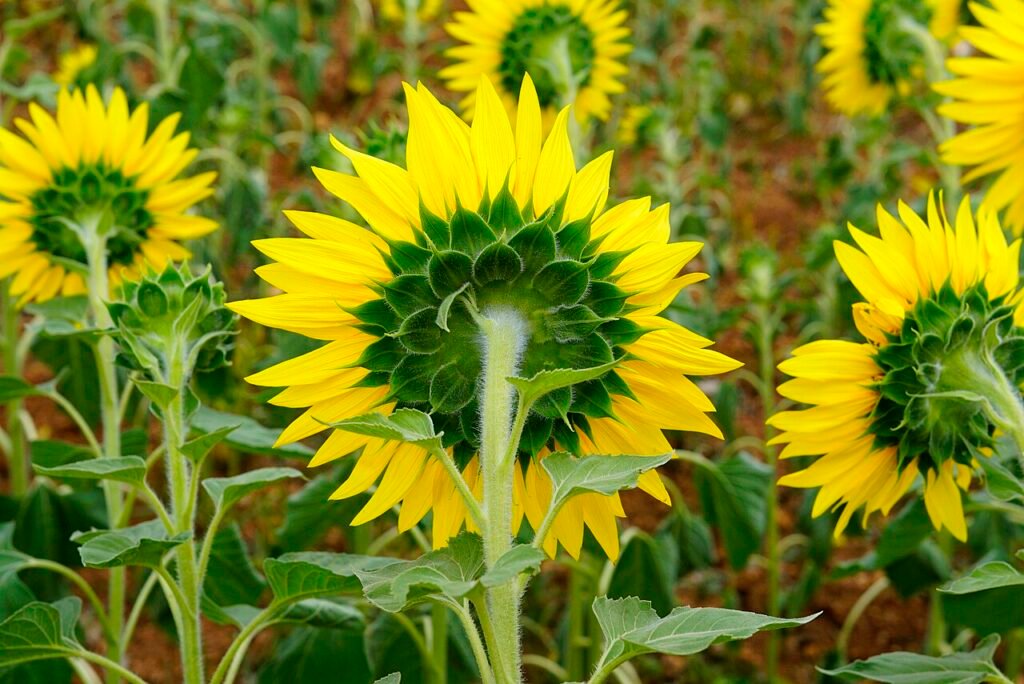
Sunflowers are fast, cheerful and nearly foolproof, which makes them a favorite first crop for children and new gardeners. A single seed can become a plant taller than you in a couple of months. They feed bees and birds, work as a living windbreak for vegetables, and the seeds are edible. This page covers when to plant, spacing, care, common problems and how to harvest the flowers and seeds.
Sunflower at a glance
| Type | Flower |
|---|---|
| Season | Warm-season |
| Sun | Full sun |
| Plant spacing | 12 in |
| Row spacing | 30 in |
| Per square foot | 1 |
| Seed depth | 1 in |
| Days to maturity | 70–100 from seed |
| How to start | Sunflowers are a warm-season annual and do not tolerate frost. |
| Water | 1 in per week |
These are the same numbers our plant spacing, square foot and harvest date calculators use. See every crop in the plant database.
When to plant sunflower
Sunflowers are a warm-season annual and do not tolerate frost. Sow seed directly outdoors 1 to 2 weeks after your last spring frost, when the soil has warmed to about 55°F or more. Sow again every 2 to 3 weeks until midsummer for a long season of blooms. Sunflowers have a taproot and resent transplanting, so direct sowing is best.
Find your last frost with the frost dates by ZIP code tool and plan repeat sowings with the succession planting planner.
How to plant sunflower
- Choose full sun. Sunflowers need at least 6 to 8 hours of direct sun, and the heads face it as they grow.
- Prepare the soil. Loosen the soil deeply, because the taproot goes down far. Sunflowers tolerate poor soil but grow bigger with some compost.
- Sow about 1 inch deep. Space seeds as in the table above and thin to the final spacing once seedlings are a few inches tall. Large varieties need more space than dwarf ones.
- Protect seeds. Birds and squirrels dig up seed and eat young seedlings; cover new sowings with netting until plants are established.
- Choose by purpose. Tall single-stem types give big heads and seeds, branching types give many cut flowers, and dwarf types suit pots.
Caring for sunflower
Water young plants regularly, then deeply about once a week; established sunflowers handle dry spells well. Mulch to hold moisture. The garden watering calculator turns this into gallons.
Sunflowers need little fertilizer; too much nitrogen gives tall, weak stems. Stake tall varieties in windy spots. Pick off lower damaged leaves, and let heads mature fully on the plant if you want seeds.
Companion plants
| Grow nearby | Cucumbers, corn, squash, beans, lettuce, herbs |
|---|---|
| Keep apart | Potatoes and pole beans (said to be suppressed by sunflower roots) |
Sunflowers draw bees and birds to the garden, give cucumbers and pole beans a natural support when grown nearby, and shelter shade-loving crops. Avoid planting them directly over crops that need full sun. Check other pairings with the companion plant finder.
Common problems
| Problem | What you see | What to do |
|---|---|---|
| Birds and squirrels | Seed dug up or heads stripped | Cover sown seed and ripening heads with netting or paper bags. |
| Powdery mildew | White, powdery coating on leaves late in the season | Improve airflow, water at the base and remove badly affected leaves. |
| Falling over | Tall stems lean or snap in wind | Stake tall varieties or plant in a sheltered spot; hill soil around the base. |
| Downy mildew and rust | Yellow patches or orange pustules on leaves | Rotate planting spots, avoid overhead watering and remove infected leaves. |
| Aphids and caterpillars | Clusters of insects or chewed leaves | Rinse with water or pick by hand. See the pest identifier. |
Not sure what you are looking at? The plant problem identifier ranks likely causes from the symptoms you see.
When and how to harvest
For cut flowers, pick when the first petals begin to open and cut long stems in the morning, then place them in water right away. For seeds, wait until the back of the head turns yellow-brown, the petals have dried and the seeds look plump, usually 30 to 45 days after flowering.
Cut the head with a foot of stem and hang it upside down in a dry, airy place, covered with a paper bag or mesh to catch seeds and keep birds off. When the seeds rub out easily, brush them loose and dry them fully before storing. Leave some heads for the birds and some seed for next year’s planting.
Plan your sunflower
- Plant spacing calculator: how many plants fit your bed
- Planting calendar: sowing and transplant dates for your frost dates
- Frost dates by ZIP code: your last spring and first fall frost
- Harvest date calculator: when your crop will be ready
Frequently asked questions
How far apart should I plant sunflowers?
Space sunflowers 12 inches apart in rows 30 inches apart. In a square foot garden, plant 1 per square foot.
How deep do I plant sunflower seeds?
Sow sunflower seeds about 1 inch deep and thin seedlings to the final spacing once they are a few inches tall.
How long do sunflowers take to grow?
Most sunflowers bloom 70 to 100 days after sowing, depending on the variety. Seeds are ready about 30 to 45 days after flowering.
How much water do sunflowers need?
About 1 inch of water a week, from rain and watering combined. Water young plants regularly, then deeply once a week; established plants handle dry spells.
When should I plant sunflowers?
Sow seed outdoors 1 to 2 weeks after your last spring frost, when the soil is at least 55°F, and sow again every 2 to 3 weeks until midsummer for continuous blooms.
How do I know when sunflower seeds are ready?
The back of the head turns yellow-brown, the petals dry and fall, and the seeds look plump. Cut the head and dry it fully before removing the seeds.