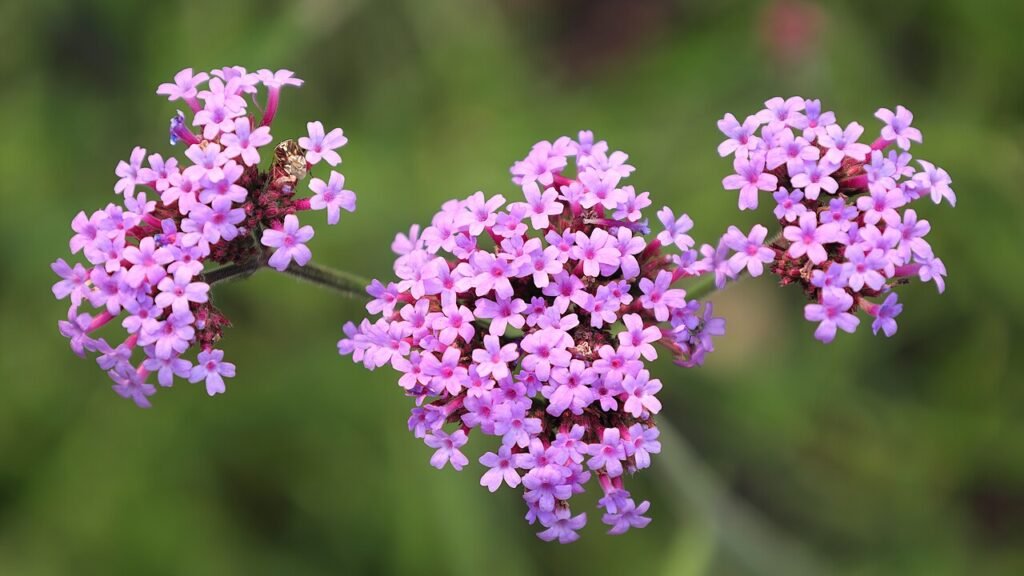
Tall verbena, also called purpletop or Brazilian vervain (Verbena bonariensis), is a tender perennial with airy stems topped by small purple flower clusters from mid-summer to frost. University of Wisconsin Extension lists it at 3 to 6 feet tall and 1 to 3 feet wide, hardy in zones 7 to 11 and often grown as an annual in cooler climates. NC State notes it is native to South America, reseeds readily and is tagged as weedy; some sources label it invasive in mild regions, and it advises: do not let it spread into natural areas.
Tall Verbena (Purpletop Vervain) at a glance
| Type | Flower |
|---|---|
| Season | Perennial |
| Sun | Full sun |
| Plant spacing | 24 in |
| Row spacing | 24 in |
| Per square foot | 1 per 4 sq ft |
| Seed depth | 0.0625 in |
| Days to maturity | Sow 8–12 weeks before last frost; blooms mid-summer to frost |
| How to start | Start tall verbena seed indoors 8–12 weeks before your last frost under a thin cover of mix, space plants about 2 feet apart in full sun, and deadhead if you do not want it to self-seed |
| Water | 1 in per week |
These are the same numbers our plant spacing, square foot and harvest date calculators use. See every crop in the plant database.
When to plant tall verbena
Per Wisconsin Extension, sow indoors 8 to 12 weeks before the average last frost. Germination is slow and irregular. Arkansas Extension recommends setting pot-grown plants out in spring (except in milder regions). In colder areas volunteer seedlings may not appear until June, so avoid disturbing spring soil if you want them. Check your frost dates and the planting calendar.
How to plant tall verbena
- Sowing: cover seed with a thin layer of mix, because it needs darkness to germinate (Wisconsin).
- Spacing: set transplants or thinned volunteers about 2 feet apart. Pinching young shoots encourages branching. See the plant spacing calculator.
- Site and soil: full sun (Arkansas allows very light shade). Well-drained soil; it tolerates poor soil, but thrives in fertile soil with plenty of organic matter. It is intolerant of cold, wet soil.
Caring for tall verbena
Plants are fairly drought tolerant and need no watering once established except during drought (Wisconsin). See the garden watering calculator.
Pinch shoots in early spring to make a fuller plant and keep height manageable; cutting back after flowering can trigger a second flush (Arkansas). Few problems occur; the main issue is powdery mildew, which causes white leaf spots but little real damage (Wisconsin). See the pest identifier. Deer and rabbits generally leave it alone.
Spread: it reseeds prolifically, especially when not deadheaded. Deadhead before seed ripens, or cut stems back in spring and remove unwanted seedlings, to keep it in your garden.
Companion plants
| Grow nearby | Front or middle of borders, cottage gardens and mass plantings; pairs well with yellow, orange or pink flowers |
|---|---|
| Keep apart | Cold, wet soil and any spot adjacent to natural areas |
Butterflies, hummingbirds and bees visit the flowers, goldfinches eat the seeds, and native stem-nesting bees use the dead hollow stems (NC State). Check other pairings with the companion plant finder.
Common problems
| Problem | What you see | What to do |
|---|---|---|
| Spreads everywhere | Seedlings appear all over the garden | It reseeds prolifically; deadhead before seed set, and do not let it spread into natural areas. |
| Short-lived or lost over winter | Plants vanish after a wet winter | It is intolerant of cold, wet soil and is short-lived where soil stays wet in winter (Arkansas); give it well-drained soil. |
| White spots on leaves | Powdery mildew | It causes white spots but little real damage; see the pest identifier. |
Not sure what you are looking at? The plant problem identifier ranks likely causes from the symptoms you see.
When and how to harvest
It makes a good cut flower with long-lasting stems (Wisconsin). Leave dead stems standing through winter for native stem-nesting bees, then cut back to 12 to 24 inches in spring (NC State).
Plan your tall verbena
- Plant spacing calculator: how many plants fit your bed
- Planting calendar: sowing and transplant dates for your frost dates
- Frost dates by ZIP code: your last spring and first fall frost
- Harvest date calculator: when your crop will be ready
Frequently asked questions
How far apart should I plant tall verbenas?
Space tall verbenas 24 inches apart in rows 24 inches apart. In a square foot garden, plant 1 per 4 sq ft.
How deep do I plant tall verbena seed?
Cover seed with only a thin layer of mix; it needs darkness to germinate.
How long do tall verbenas take to grow?
Sow indoors 8 to 12 weeks before the last frost; germination is slow and irregular; blooms mid-summer to first frost.
How much water do tall verbenas need?
About 1 inch of water a week, from rain and watering combined. Fairly drought tolerant once established.
Is tall verbena invasive?
It reseeds prolifically and is considered weedy or invasive in some mild regions; deadhead and keep it out of natural areas.
How far apart do I plant tall verbena?
About 2 feet apart.
Does tall verbena need darkness to germinate?
Yes, cover the seed with a thin layer of mix.