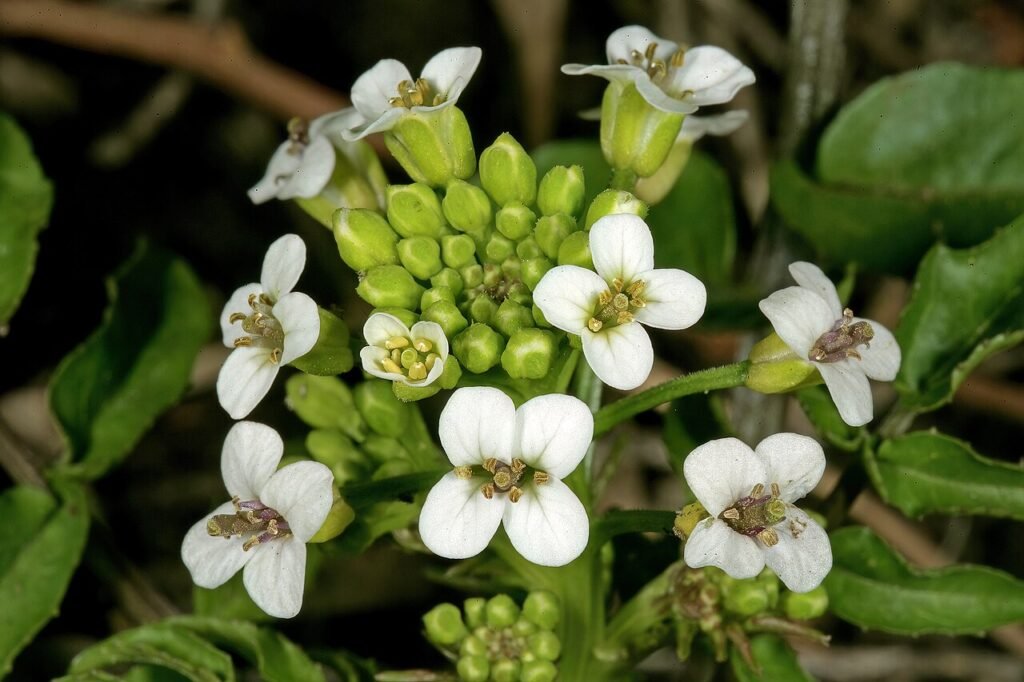
Watercress is a cool-season, semi-aquatic leafy green with a peppery bite. Utah State University Extension says it grows best in submerged or shallow moving water, but you can grow it in a pot standing in a few inches of water. The University of Florida says harvest can begin about 3 weeks after seedlings appear.
Watercress at a glance
| Type | Vegetable |
|---|---|
| Season | Cool-season |
| Sun | Full sun |
| Plant spacing | 8 in |
| Row spacing | 12 in |
| Per square foot | 4 |
| Seed depth | ¼ in |
| Days to maturity | 26 from seed |
| How to start | Sow watercress about 3 weeks before your last frost, keep the soil wet and the roots standing in 2–3 inches of water, and harvest dime-sized leaves |
| Water | 1 in per week |
These are the same numbers our plant spacing, square foot and harvest date calculators use. See every crop in the plant database.
When to plant watercress
USU says to sow seed about three weeks before your area’s frost-free date. Germination happens at 50 to 60°F in cool, wet conditions, and the soil must not dry out. Seedlings emerge in about 5 days (University of Florida). Transplant outdoors after the last frost. Flavor is best in cool spring and fall and declines above 85°F. Check your frost dates.
How to plant watercress
- Sow seed about ¼ inch deep or just below the surface; space transplants 8 inches apart (USU) or about 6 inches in the final stand (University of Florida). See the plant spacing calculator.
- Containers: use a soilless mix with perlite or vermiculite and peat, saturate it before seeding, and set the pot in 2 to 3 inches of water so the roots stay submerged. Change the water once or twice a week.
- Soil: wet, organically rich, with a preferred pH of 6.5 to 7.5. Choose a sunny location.
Caring for watercress
Watercress is aquatic, so never let it dry out. Outdoors, plant near a water feature where soil stays saturated. Its nutrient needs are low; USU suggests mixing a complete soluble fertilizer into the water at the recommended rate, and describes stunted dark plants (phosphorus), scorched older leaf edges (potassium) and yellowing between veins on new winter growth (iron) as deficiency signs. See the garden watering calculator.
Pests include whiteflies (soapy water or insecticidal soap), spider mites and snails (hand-pick or trap). See the pest identifier.
Companion plants
| Grow nearby | Other cool-season greens that like moist soil, grown in separate trays or beds |
|---|---|
| Keep apart | Dry, hot spots; water stored in a way that stagnates |
Sources do not give companion plants. Grow it in its own water-filled container, since it needs far more water than most vegetables. Check other pairings with the companion plant finder.
Common problems
| Problem | What you see | What to do |
|---|---|---|
| Bitter or weak flavor | Leaves taste less pleasant in heat or after flowering | USU says flavor is best before flowering and in cool spring and fall, and declines above 85°F. Harvest young leaves. |
| Flecked, scorched leaves | Tiny flecking, discoloration or scorching | Spider mites. Severe injury can kill the plant; see the pest identifier. |
| Pale or stunted plants | Stunted dark plants, scorched edges or yellowing between veins | Possible phosphorus, potassium or iron deficiency (USU). Add a complete soluble fertilizer at the recommended rate. |
Not sure what you are looking at? The plant problem identifier ranks likely causes from the symptoms you see.
When and how to harvest
Harvest dime-sized, dark green leaves (USU). To harvest bunches, cut tops about 6 inches below the tips (University of Florida). Cut the plant back to 4 inches tall and let it regrow for a fall harvest. Refrigerate for about a week and harvest only what you will use in one meal. Wash thoroughly. Do not gather watercress from the wild: pollutants in wild plants have been reported to cause illness (USU).
Plan your watercress
- Plant spacing calculator: how many plants fit your bed
- Planting calendar: sowing and transplant dates for your frost dates
- Frost dates by ZIP code: your last spring and first fall frost
- Harvest date calculator: when your crop will be ready
Frequently asked questions
How far apart should I plant watercress plants?
Space watercress plants 8 inches apart in rows 12 inches apart. In a square foot garden, plant 4 per square foot.
How deep do I plant watercress seed?
Sow seed about ¼ inch deep, just below the surface.
How long do watercress plants take to grow?
About 3 weeks after seedlings appear, and seedlings emerge in about 5 days (University of Florida).
How much water do watercress plants need?
About 1 inch of water a week, from rain and watering combined. Roots must stay wet or submerged; in pots, stand them in 2–3 inches of water and change it once or twice a week.
When do I plant watercress?
About 3 weeks before your area’s frost-free date, or in cool spring and fall.
Can I grow watercress in a pot?
Yes. Use a soilless mix and set the pot in 2–3 inches of water, changing it once or twice a week.
Is wild watercress safe to eat?
USU advises not to gather it from the wild because pollutants in wild plants have been reported to cause illness.