A garden fence does more than mark a boundary. The right fence keeps out deer, rabbits and dogs, shelters plants from wind, gives you privacy, keeps children and pets safe, supports climbing crops, and frames the garden so it looks finished. The wrong fence, too short, too flimsy or in the wrong material, wastes money and still lets the rabbits in.
This guide covers garden fence ideas for every purpose and budget: how tall a fence needs to be for different animals, the pros and cons of each material, decorative and edible fence ideas, and how to plan and install a fence that lasts.
Start with the purpose
The most important question is what the fence is for, because that decides its height, material and construction.
| Purpose | Typical height | Key features |
|---|---|---|
| Keep out rabbits | About 2 ft | Small mesh, pinned or buried at the base |
| Keep out groundhogs | 3 to 4 ft | Buried apron; loose, floppy top |
| Keep out deer | About 8 ft | Tall mesh or wire; or smaller enclosed plots |
| Keep in dogs and children | 3 to 4 ft or more | Sturdy, no gaps, secure gate latch |
| Privacy and screening | Often up to 6 ft (check local rules) | Solid panels, hedges or dense climbers |
| Wind shelter | Varies | Partly open (slatted) fences slow wind better than solid ones |
| Decoration and definition | 2 to 4 ft | Picket, wattle or low rail fences |
Fences to keep animals out
If animals are your main problem, build the fence to the specifications that actually work. University of Georgia Extension’s guide to garden fencing and the University of Arizona Extension’s guide to managing critters in vegetable gardens (PDF) both give practical figures.
Rabbits
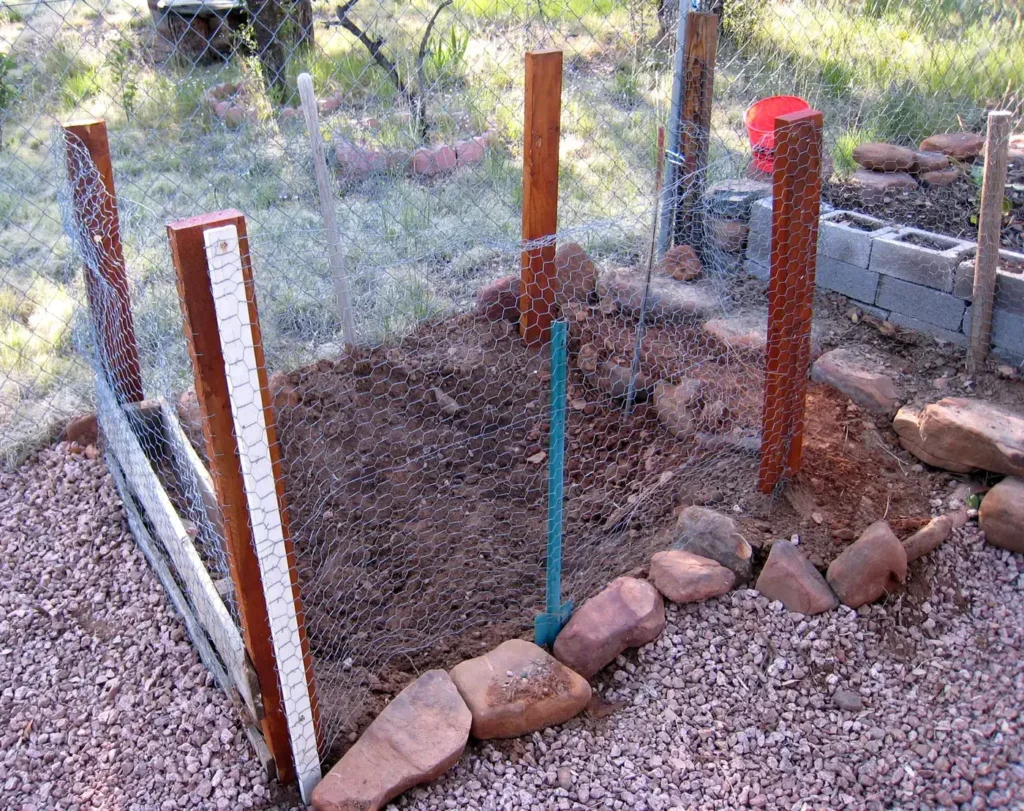
The Arizona guide recommends a sturdy poultry wire fence about 2 feet tall, stretched tight to the ground. Use mesh of 1 inch or smaller so young rabbits cannot squeeze through, and pin the bottom firmly or bury it a few inches.
Groundhogs and other diggers
Groundhogs dig and climb. A woven wire fence about 3 to 4 feet tall with a loose, floppy top that bends outward stops climbing, and UGA Extension recommends a horizontal wire apron about 24 inches wide, buried a few inches deep on the outside, to stop digging.
Deer
Deer can jump high, so the Arizona guide advises a deer fence at least 8 feet tall; UGA Extension suggests a minimum of 6 to 8 feet, with 8 feet where deer pressure is heavy. Deer are reluctant to jump into small, enclosed spaces, so smaller plots can sometimes be protected with lower fences. Experts answering questions on Ask Extension still recommend 8 feet for reliable protection.
Identifying the culprit first
Before building, confirm which animal is causing the damage. Purdue Extension’s guide to what is eating your garden plants explains the telltale signs, and our full guide to keeping animals out of your garden covers each animal in detail.
Garden fence materials compared
| Material | Cost | Lifespan | Best for | Watch out for |
|---|---|---|---|---|
| Poultry wire (chicken wire) | Low | Several years | Rabbits, temporary fences | Flimsy; rusts |
| Welded wire or hardware cloth | Low to medium | Long | Rabbits, rodents, diggers | Needs sturdy posts |
| Livestock (cattle) panels | Medium | Very long | Strong enclosures; doubles as a trellis | Large openings; add finer mesh at the base for rabbits |
| Polypropylene deer mesh | Low to medium | Several years | Tall deer fences | Can be chewed at the base |
| Wood picket | Medium | Medium | Cottage and kitchen gardens | Needs painting or sealing; gaps let rabbits through unless backed with wire |
| Split rail with wire mesh | Medium | Long | Rustic, larger gardens | Rails alone keep nothing out |
| Vinyl | Medium to high | Long | Low maintenance, privacy | Looks less natural |
| Ornamental metal (aluminum, steel) | High | Very long | Formal front gardens | Gaps may need wire backing |
| Bamboo or reed screening | Low | Short to medium | Quick privacy screens | Weathers quickly |
| Woven willow (wattle) | Low to medium | Short | Cottage and potager style | Lasts only a few years |
| Living hedge | Low (plants) | Decades | Privacy, wind shelter, wildlife | Slow; needs trimming; competes with crops |
| Electric fencing | Medium | Long | Deer, raccoons, groundhogs | Check local rules; needs a proper charger and warning signs |
Garden fence ideas
1. The classic picket fence
A white or natural wood picket fence frames a cottage or kitchen garden beautifully. To keep out rabbits, staple galvanized wire mesh to the inside along the bottom.
2. Wire panels on wooden posts
Welded wire or livestock panels fixed to wooden posts make a strong, practical fence that also doubles as a trellis for peas, beans and cucumbers. See our garden trellis ideas.
3. Split rail with mesh
Rustic split rails backed with welded wire combine country charm with real animal protection.
4. Tall deer fence with discreet mesh
Black polypropylene deer mesh on tall posts nearly disappears from a distance, protecting large gardens without looking like a cage. Add wire along the bottom where rabbits or groundhogs might chew through.
5. Raised bed cages
Instead of fencing the whole garden, fence individual raised beds with hardware cloth walls and hinged mesh lids. It is often cheaper for small gardens and stops squirrels and birds too. See our raised garden bed ideas.
6. Wattle fence
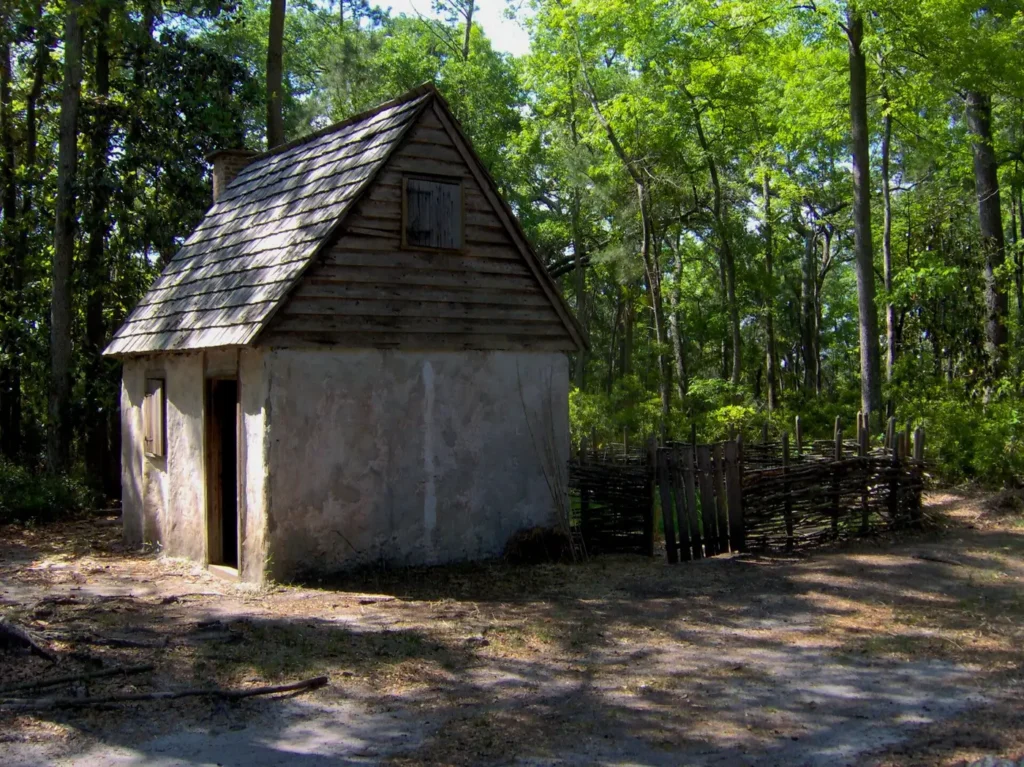
Woven willow or hazel panels suit potagers and cottage gardens. They are beautiful but last only a few seasons; see our guide to potager gardens.
7. Living fence or hedge
A hedge of shrubs makes a soft, long-lasting boundary that shelters wildlife. Leave enough space between the hedge and vegetable beds, since hedge roots compete for water and nutrients.
8. Edible fences
Make the fence productive: train espaliered apple or pear trees flat along wires, grow raspberries and blackberries on a post-and-wire fence, cover a fence with grapes or hops, or plant a row of pole beans and runner beans along wire mesh.
9. Flowering fence lines
Climbing roses, clematis, morning glories and sweet peas soften a plain fence. Our rose garden guide covers training climbing roses.
10. Slatted windbreak fence
In exposed, windy gardens, a fence with gaps between the boards slows the wind more gently than a solid fence, which can create turbulence on the sheltered side.
11. Bamboo or reed screens
Quick, inexpensive privacy for patios and small gardens. They weather within a few years, so treat them as a short-term solution or a backing for climbing plants.
12. Low decorative edging fence
A knee-high fence of rails, metal hoops or woven willow defines beds without blocking views. For lower borders, see our garden edging ideas.
Planning your fence
- Check property lines and local rules. Many towns and homeowner associations limit fence height and style, especially in front yards, and some require permits.
- Call 811 a few days before digging post holes in the US, so underground utilities are marked.
- Measure the perimeter and decide where gates go. The garden size calculator helps you measure the area.
- Plan a gate wide enough for a wheelbarrow, and ideally a garden cart or small mower.
- Price the materials with the garden cost estimator.
How to install a simple wire garden fence
- Mark the line with string and stakes.
- Set corner and gate posts first. These take the most strain, so make them the sturdiest, set deep and braced. A common rule of thumb is to set posts about a third of their length into the ground, deeper where the ground freezes.
- Set line posts between the corners, typically every 6 to 10 feet depending on the material.
- Stretch the mesh tight and fasten it to the posts with fence staples or wire ties.
- Secure the bottom: pin it to the ground, bury it a few inches, or add a buried apron for digging animals.
- Hang the gate so it closes flush to the ground, with no gap underneath.
- Walk the fence and close any gaps; rabbits find them quickly.
Fence maintenance
- Inspect regularly for gaps, especially at the base and around gates.
- Repair holes promptly before animals discover them.
- Keep the fence line clear of weeds and debris, which hide gaps and give rodents cover.
- Re-tension wire and mesh as it stretches.
- Treat or paint wooden fences every few years to extend their life.
Being a good neighbor
- Talk to neighbors before building on a shared boundary.
- Keep the fence on your side of the property line unless you agree otherwise.
- Face the finished side outward where local custom or rules expect it.
- Avoid blocking a neighbor’s light with very tall solid fences.
Common garden fence mistakes
- Building for the wrong animal: a 4-foot fence will not stop deer.
- Leaving a gap at the bottom that rabbits slip under.
- Weak corner posts that lean as soon as the wire is tensioned.
- No gate, or a gate too narrow for a wheelbarrow.
- Ignoring local rules on height and placement.
- Picket or rail fences without wire backing where rabbits are a problem.
Garden gate ideas
The gate is the part of a fence you use most, and the most common weak point. A good gate is wide, sturdy and closes tightly.
| Gate type | Width | Good for |
|---|---|---|
| Single walk-through gate | About 3 to 4 ft | Foot traffic and wheelbarrows |
| Wide single gate | About 5 to 6 ft | Garden carts and small mowers |
| Double gate | 8 ft or more combined | Deliveries of soil and mulch, small tractors |
| Arbor gate | 3 to 4 ft | A decorative entrance with climbing roses or beans overhead |
- Brace the gate with a diagonal board running from the bottom hinge corner up to the latch side, so it does not sag.
- Use strong hinges and a self-closing latch so the gate is never left open for animals.
- Close the gap underneath with a board, a buried wire strip or a paver threshold.
- Plan for deliveries: a wide gate makes moving soil, compost and mulch far easier. The soil calculator and mulch calculator show how much material you will be moving.
Fences on slopes and uneven ground
On sloping ground, fences can follow the slope or step down in level sections.
- Racked (sloped) fences follow the ground closely, leaving no gaps underneath; wire mesh adapts to slopes most easily.
- Stepped fences keep each panel level, stepping down the slope, but leave triangular gaps at the bottom that must be filled with mesh or boards to keep out rabbits.
- On uneven ground, fill dips under the fence with soil, stones or extra mesh pinned to the ground.
Frequently asked questions
What is the best fence for a vegetable garden?
It depends on the animals you face. A 2-foot fine-mesh wire fence stops rabbits; welded wire or livestock panels with a buried apron stop groundhogs; deer need a fence about 8 feet tall.
How tall should a garden fence be?
About 2 feet for rabbits, 3 to 4 feet for groundhogs, dogs and children, around 6 feet for privacy where allowed, and about 8 feet for deer.
What is the cheapest way to fence a garden?
Poultry wire or welded wire on T-posts or wooden stakes is the cheapest effective option. For small gardens, caging individual beds can cost even less.
How do I stop animals digging under my fence?
Bury the bottom of the fence a few inches, or add a horizontal wire apron about 24 inches wide on the outside, buried just below the surface.
Do I need permission to build a garden fence?
Often, for taller fences or front-yard fences. Check local zoning rules and any homeowner association guidelines, and call 811 before digging post holes.
Can a fence double as a trellis?
Yes. Wire and livestock panel fences make excellent supports for peas, beans, cucumbers and climbing flowers.
What fence keeps deer out?
A fence about 8 feet tall made of woven wire, high-tensile wire or deer mesh. Smaller enclosed plots can sometimes be protected with lower fences.
How wide should a garden gate be?
At least 3 to 4 feet for a wheelbarrow; 5 to 6 feet if you use a garden cart or small mower; and a double gate if you need deliveries driven in.
How far apart should fence posts be?
Typically 6 to 10 feet, depending on the fence material and wind exposure. Corner and gate posts should be the sturdiest and braced.