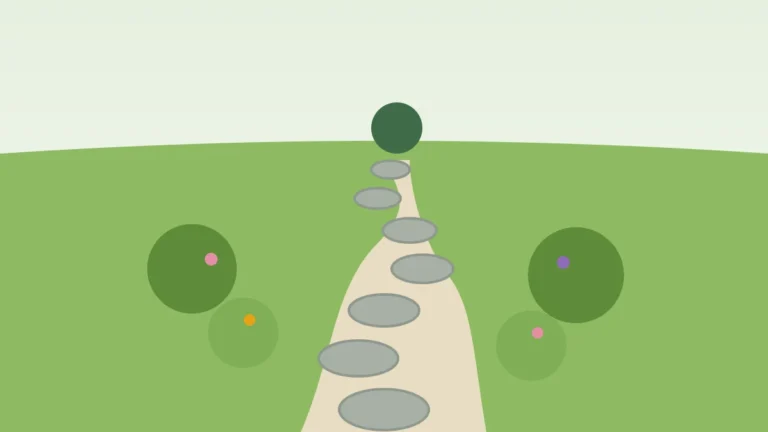
A potager is a vegetable garden designed to be beautiful as well as productive. Instead of plain rows hidden at the back of the yard, a potager mixes vegetables, herbs, fruit and flowers in neat, patterned beds close to the kitchen, so the garden becomes a place you want to spend time in, not just a place to grow food.
The style comes from France, but it works anywhere, in any size of space. This guide explains what a potager is, the design principles that give it its charm, the most ornamental vegetables and companion flowers to grow, sample layouts, and how to keep it looking good from spring to fall.
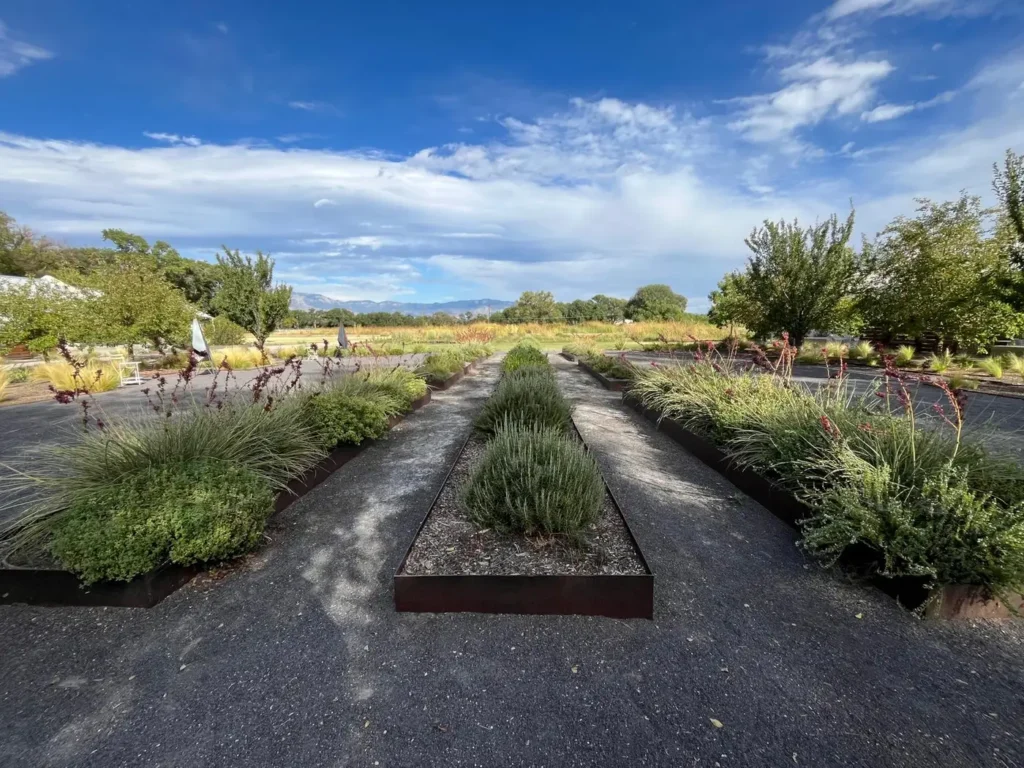
What is a potager garden?
“Potager” (pronounced roughly “poh-tah-ZHAY”) is the French word for a kitchen garden, linked to “potage”, a soup made with vegetables from the garden. Colorado State University Extension’s guide to designing a potager kitchen garden describes it as a beautiful mixture of vegetables, fruits, herbs and ornamental plants, and notes that any size of plot works.
A short history
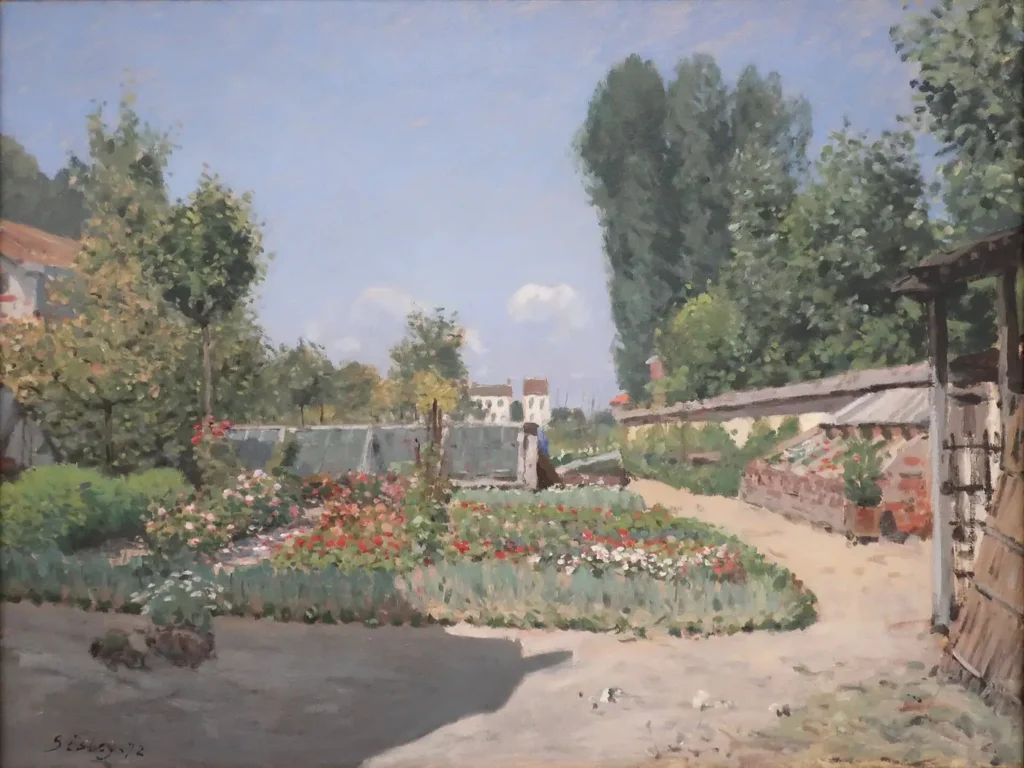
Kitchen gardens have grown beside homes for centuries, but in France they developed into an art form. Large estates built formal, geometric potagers, the most famous being the Potager du Roi at Versailles, created for King Louis XIV, and the ornamental kitchen garden at the Château de Villandry in the Loire Valley, where vegetables are planted in colorful patterns within low hedges. Home potagers borrow the same ideas on a much smaller scale.
Potager vs. ordinary vegetable garden
| Typical vegetable garden | Potager | |
|---|---|---|
| Layout | Long rows or plain beds | Geometric beds with a clear pattern |
| Plants | Mostly vegetables | Vegetables, herbs, fruit and flowers together |
| Location | Often out of the way | Close to the kitchen, part of the landscape |
| Goal | Maximum harvest | Harvest and beauty |
| Features | Functional | Paths, edging, a focal point, structures |
The design principles of a potager
1. Put it near the kitchen
A potager is meant to be visited daily, so the traditional spot is right outside the kitchen. Any sunny location works, but the closer it is, the more you will use it. Like any vegetable garden, it needs at least six to eight hours of sun; the sunlight requirement finder helps you check.
2. Use a geometric layout
Symmetry and repetition give a potager its structure. Beds are laid out in squares, rectangles, triangles or circles around a central point, often with paths crossing in the middle. Even when the planting is loose and abundant, the strong layout keeps the garden looking orderly.
3. Define paths and edges
Paths are part of the design, not leftover space. Gravel, brick, stone, wood chips or mown grass all work. Edge the beds with low hedges, herbs, timber or brick, so the pattern stays crisp even when plants spill over.
4. Add a focal point
Most potagers have a centerpiece where the paths meet: a birdbath, a sundial, a large pot, a small fruit tree, or an arch covered in beans or flowers.
5. Add vertical structure
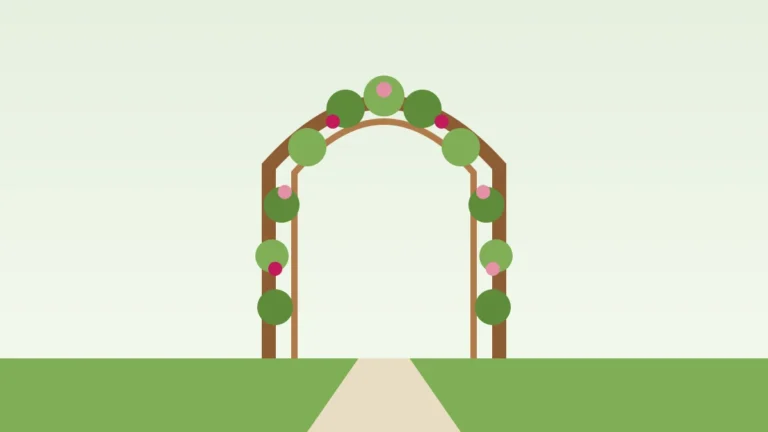
Obelisks, arches and trellises add height and room for climbing crops such as pole beans, peas, cucumbers and small squash. Colorado State Extension also suggests framing the garden with raised beds, fences or a flower border to give it a sense of enclosure.
6. Mix edibles and flowers
Flowers bring color, attract pollinators and many are edible. Colorado State Extension suggests imagining a potager lined with colorful nasturtiums and sprinkled with calendula.
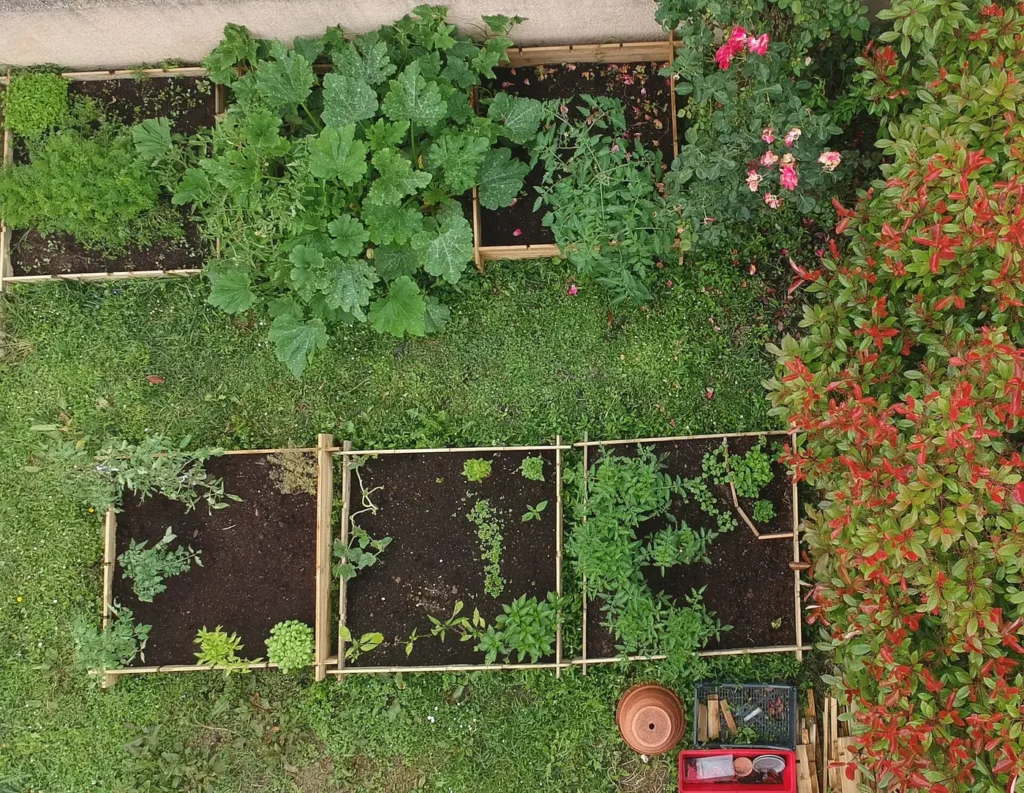
The most ornamental vegetables
In a potager, choose varieties for looks as well as flavor:
| Vegetable | Ornamental feature | Use in the design |
|---|---|---|
| Rainbow Swiss chard | Red, yellow, pink and orange stems | Bold color through summer and fall |
| Red and frilly lettuces | Burgundy, speckled and ruffled leaves | Patterned edging and fill |
| Purple kale and Lacinato kale | Dark, textured leaves | Structure and contrast |
| Red cabbage | Blue-purple rosettes | Striking centerpieces in beds |
| Leeks | Blue-green upright fans | Vertical lines and repeated patterns |
| Scarlet runner beans | Bright red flowers | Arches, teepees and obelisks |
| Purple basil | Deep purple leaves | Contrast with green herbs |
| Artichokes | Silver foliage and dramatic flower heads | Focal plants where hardy |
| Cherry tomatoes | Red, yellow and purple fruit | Trained on obelisks |
| Purple and yellow beans | Colorful pods | Easy to spot when picking |
Browse crops and their spacing in the plant database, and use the plant finder to filter by sun and season.
Flowers and herbs for a potager
- Nasturtiums: edible flowers and leaves, cascading over bed edges.
- Calendula: bright orange and yellow flowers with edible petals.
- Marigolds: cheerful edging that blooms all summer.
- Borage: starry blue edible flowers that bees love.
- Zinnias and cosmos: color and cut flowers; see our guide to growing a cut flower garden.
- Chives, parsley, thyme and lavender: neat, low edging that is useful in the kitchen.
- Dill and fennel: feathery texture that attracts beneficial insects.
Many of these also feed pollinators, which improves the harvest of squash, cucumbers and beans; our guide to planting a pollinator garden explains why. For herbs, see how to start an herb garden.
Edging ideas
| Edging | Look | Notes |
|---|---|---|
| Low boxwood hedges | Formal, classic French | Slow to establish; needs clipping |
| Herb edging (chives, parsley, thyme) | Soft and productive | Edible and quick to fill in |
| Brick or stone | Permanent and tidy | Sharp lines all year |
| Low timber or woven willow | Rustic, cottage style | Inexpensive; replace as it ages |
| Raised wooden beds | Clean, modern | Easiest to keep tidy |
Potager layouts to try
The classic four-square
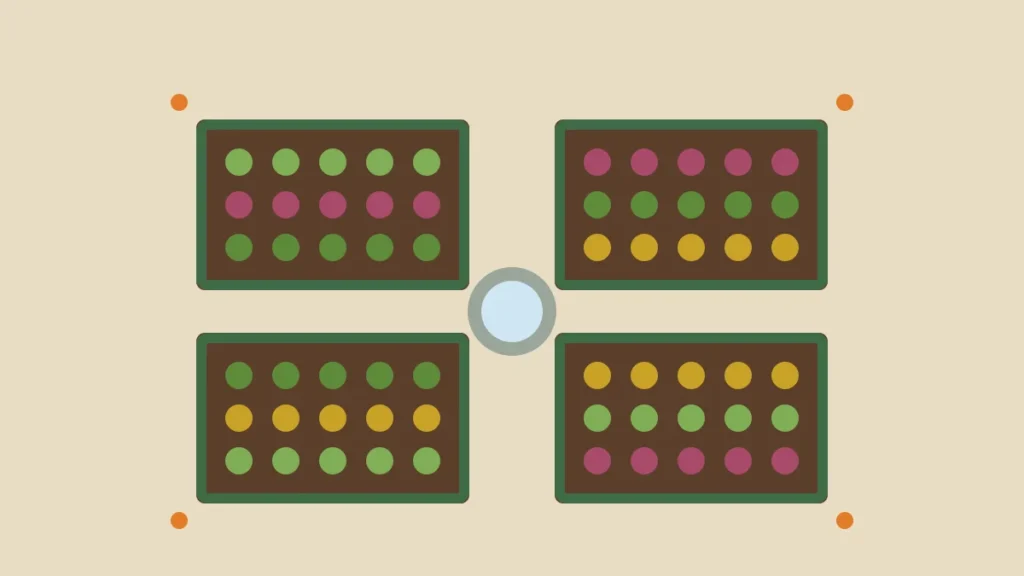
Four square or rectangular beds around a central focal point, with paths forming a cross. It is simple, symmetrical and perfect for a four-bed crop rotation, with each bed holding a different crop family each year.
Center circle
A round central bed for herbs or a small fruit tree, with beds radiating around it like spokes.
Parterre pattern
Low hedges or herb borders form a pattern of small compartments, each filled with a block of one crop. This is the Villandry approach, scaled down.
The small potager
Even a single 4-by-4-foot bed divided into four squares, or four matching containers around a central pot, captures the style on a patio. Our guide to small garden ideas has more compact designs.
Plan your pattern with the garden layout generator, then work out each bed square by square in the raised bed planner. If you are building new beds, see how to build a raised garden bed and our raised garden bed ideas.
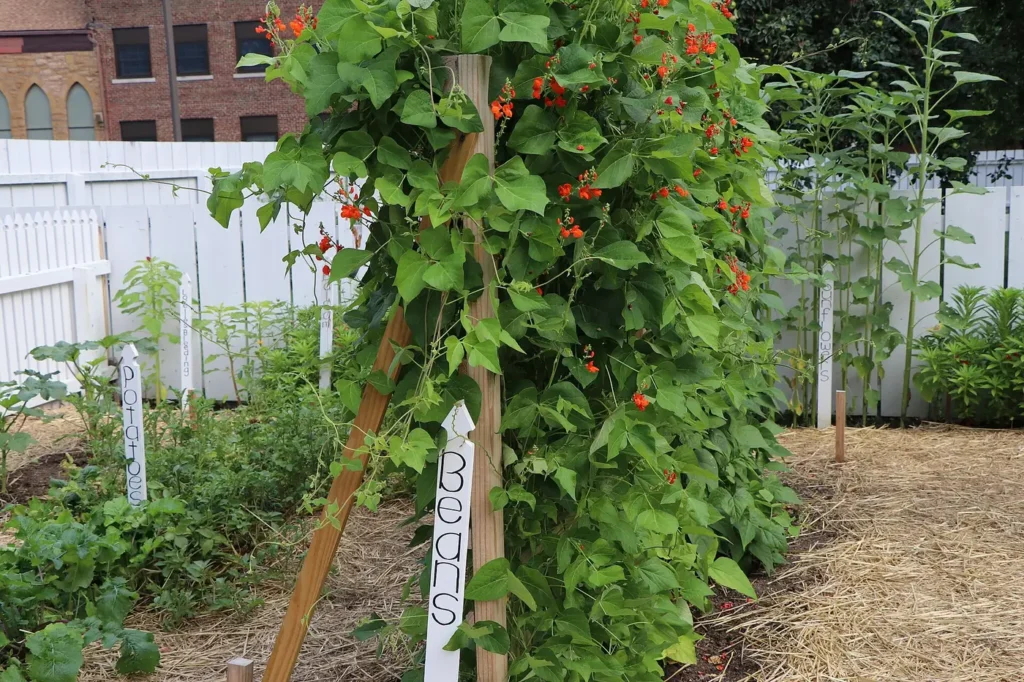
Planting for beauty all season
The challenge of a potager is keeping it full and attractive as crops are harvested. A few habits help:
- Plant in blocks and patterns rather than single rows: a diamond of red lettuce inside a square of green, or alternating stripes of chard and parsley.
- Succession plant: as soon as a crop is harvested, replant the gap with something new. Sow lettuce, radishes and herbs every few weeks.
- Keep transplants on hand to fill gaps quickly.
- Use long-season plants for structure: chard, kale, leeks, herbs and flowers stay attractive for months.
- Harvest from the back or the inside of a planting to keep the edges tidy.
| Season | Potager planting ideas |
|---|---|
| Spring | Lettuces in patterns, peas on obelisks, radishes, spinach, chives in flower, pansies and violas |
| Summer | Tomatoes and beans on supports, rainbow chard, basil, nasturtiums, calendula, zinnias |
| Fall | Kale, leeks, red cabbage, fall lettuces, late herbs, marigolds and asters |
| Winter | Structure from edging, evergreen herbs, and garlic planted for next year |
The planting calendar gives sowing dates for each crop based on your frost dates.
Caring for a potager
- Feed the soil: add an inch or two of compost to each bed every year. The compost calculator works out how much.
- Water at the roots: drip lines or soaker hoses keep leaves dry and paths tidy. See our guide on how often to water.
- Mulch paths and beds to keep weeds down.
- Clip edges regularly, since neat edges carry the whole design.
- Rotate crops between beds each year to reduce pests and disease.
Common potager mistakes
- Too big to keep tidy. A small, well-kept potager looks far better than a large, overgrown one.
- No structure in winter, leaving bare beds; edging, paths and a focal point carry the design year-round.
- Tall crops blocking the view: put tall plants at the back or center.
- Gaps after harvest that are never refilled.
- Too many colors at once. A limited palette, such as green, purple and orange, often looks more elegant.
How to build a four-square potager, step by step
- Choose a sunny, level spot close to the kitchen, ideally at least 12 by 12 feet for four 4-by-4-foot beds with paths.
- Mark the layout with string and stakes: four square beds, with a central path crossing in the middle and a path around the outside.
- Clear the ground by removing turf or smothering it with cardboard.
- Build or edge the beds with timber, brick or a low herb hedge. Raised beds 8 to 12 inches tall keep the edges crisp.
- Fill the beds with a blend of topsoil and compost. The raised bed soil calculator works out how much you need.
- Lay the paths with gravel, brick, bark or wood chips over landscape fabric or cardboard.
- Add a focal point where the paths cross: a birdbath, a large pot or an obelisk for climbing beans.
- Plant in patterns: blocks, stripes or diamonds of contrasting colors, with flowers and herbs along the edges.
A sample four-bed potager plan
| Bed | Spring | Summer | Fall |
|---|---|---|---|
| Bed 1: Leaves | Red and green lettuces in a checkerboard | Rainbow chard and basil | Kale and fall lettuces |
| Bed 2: Fruiting crops | Peas on an obelisk | Cherry tomatoes and peppers with marigolds | Garlic planted for next year |
| Bed 3: Roots | Radishes and carrots in stripes | Beets with calendula edging | Leeks and late carrots |
| Bed 4: Legumes and flowers | Spinach and violas | Bush beans, nasturtiums and zinnias | Red cabbage and asters |
Rotate the crop families one bed clockwise each year to reduce pests and diseases. Plan exact quantities with the square foot gardening calculator.
A potager on a budget
A potager does not need brick paths and boxwood hedges. Edge beds with herbs such as chives and parsley instead of hedging, use wood chips for paths, make obelisks from bamboo canes and twine, and grow most plants from seed. A single focal point, even a large pot of herbs, gives the garden its structure. Our guide to starting a vegetable garden on a budget has more savings.
A container potager
No yard? Arrange four matching containers in a square around a fifth, taller pot. Plant each with a mix of one vegetable, one herb and one flower, such as a patio tomato with basil and marigolds, and keep the central pot for an obelisk of climbing beans or a small bay tree.
Sources and further reading
These university Extension and government resources informed this guide and are useful for going deeper. Recommendations can vary by region, so your local Cooperative Extension office is always a good next step.
- Vegetable Garden Planning, University of Maryland Extension
- Raised Bed Gardening, Oregon State University Extension
- Planting Pollinator-Friendly Gardens, Penn State Extension
Frequently asked questions
What is a potager garden?
A potager is an ornamental kitchen garden that mixes vegetables, herbs, fruit and flowers in attractive, often geometric beds near the house.
How do you pronounce potager?
Roughly “poh-tah-ZHAY”, from the French word for a kitchen garden.
What is the difference between a potager and a vegetable garden?
A potager is designed for beauty as well as harvest: it uses patterned beds, paths, edging, a focal point and flowers mixed with vegetables.
How big should a potager be?
Any size works. A four-bed layout of about 4 by 4 feet each is a manageable start, and even a single divided bed or a group of containers can capture the style.
What flowers go in a potager?
Nasturtiums, calendula, marigolds, borage, zinnias and cosmos are popular, along with flowering herbs such as chives, lavender and dill.
How do I keep a potager looking good after harvest?
Succession plant to fill gaps quickly, keep transplants on hand, harvest from the inside of plantings, and keep edges clipped.
Do potagers need raised beds?
No. Raised beds make edges neat and easy to maintain, but in-ground beds edged with herbs, brick or timber work just as well.
Can a potager produce as much food as a regular vegetable garden?
Nearly as much. Flowers and paths take some space, but intensive planting and succession sowing keep potagers highly productive.