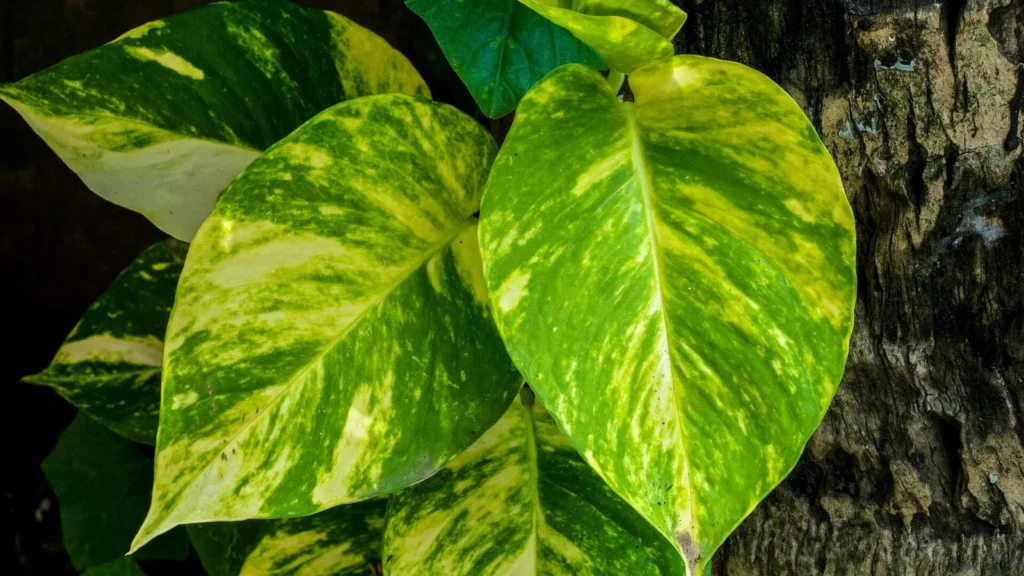
Pothos (Epipremnum aureum), also called devil’s ivy, is one of the easiest trailing houseplants. Give it medium to bright indirect light (it tolerates low light but loses variegation), water when the top 1 to 2 inches of soil are dry, usually every 1 to 2 weeks, and grow it in an ordinary well-draining potting mix in a pot with drainage holes. Keep it between 65°F and 85°F, feed monthly in spring and summer with a diluted balanced fertilizer, and trim long vines to keep it full; the cuttings root easily in water. Yellow leaves usually mean overwatering, and brown, crispy leaves usually mean underwatering or too much sun. Pothos is toxic to pets if chewed.
Pothos care at a glance
| Need | What pothos likes |
|---|---|
| Botanical name | Epipremnum aureum |
| Light | Medium to bright indirect light; tolerates low light |
| Water | When the top 1 to 2 inches are dry; every 1 to 2 weeks |
| Soil | Well-draining potting mix, optionally with perlite or bark |
| Temperature | 65°F to 85°F; keep above 50°F |
| Humidity | Average household humidity is fine |
| Fertilizer | Half-strength balanced liquid fertilizer monthly, spring and summer |
| Growth | Trailing or climbing vines; 6 to 10 feet indoors |
| Propagation | Stem cuttings with a node, in water or soil |
| Pet safety | Toxic to cats and dogs (calcium oxalate crystals) |
What is pothos?
Pothos is a climbing vine in the arum family, native to Mo’orea in French Polynesia. In the wild and in tropical gardens it climbs trees with aerial roots and produces enormous split leaves, but indoors it stays in its juvenile form with heart-shaped leaves on long, trailing stems. It earned the name devil’s ivy because it is so hard to kill and stays green even in dim rooms. The University of Wisconsin–Madison Extension article on pothos describes it as one of the most widely grown houseplants, tolerant of a wide range of conditions and easy to propagate. It is often confused with heartleaf philodendron, which has thinner, softer, more heart-shaped leaves and new leaves that emerge from a sheath called a cataphyll.

How much light does a pothos need?
Pothos grows best in medium to bright indirect light, such as near an east window or a few feet back from a south or west window. In this light it grows faster, produces larger leaves, and keeps strong variegation. It tolerates low light, which is why it is common in offices and bathrooms, but growth slows, gaps between leaves lengthen, and variegated types such as ‘Marble Queen’ and ‘Snow Queen’ turn greener because they need light to keep their white and cream patterns. Direct hot sun can scorch leaves, leaving pale, bleached or brown patches. A pothos under bright fluorescent or LED office lighting can grow well even with no window.
How often should you water a pothos?
Water when the top 1 to 2 inches of soil are dry, roughly every one to two weeks in spring and summer and less often in winter. Water thoroughly until it drains from the bottom, then empty the saucer. Pothos tells you when it is thirsty: leaves droop and soften slightly, then recover within hours of watering. Do not let it reach this point repeatedly, though, as frequent wilting causes yellow and brown leaves. Pothos is far more often killed by overwatering than underwatering; in low light, water even less often.
- Too wet: yellow leaves, often several at once, black stems at the soil line, mushy roots.
- Too dry: drooping, curling leaves, brown crispy edges, and soil pulling away from the pot.
See overwatering vs underwatering for more help.
What is the best soil and pot for pothos?
Pothos is not fussy. Any good-quality indoor potting mix works, and adding a handful of perlite or orchid bark improves drainage and airflow around the roots. Avoid garden soil. Use a pot with drainage holes, sized about 1 to 2 inches wider than the root ball. Hanging baskets, shelves and high plant stands show off the trailing vines. Pothos can also grow in water long-term, or climb a moss pole, where it produces larger leaves as it matures.
What temperature and humidity does pothos need?
Keep pothos between 65°F and 85°F. It tolerates brief drops to 50°F, but cold drafts and temperatures below that cause dark, damaged patches on leaves. Average household humidity is fine, though pothos grows a little faster and produces bigger leaves in higher humidity, such as in a bright bathroom or kitchen. Keep it away from heating vents, which dry the leaves, and from cold windows in winter.
How should you fertilize pothos?
Feed once a month in spring and summer with a balanced liquid houseplant fertilizer diluted to half strength. Stop feeding in fall and winter. Pothos grows well with little fertilizer, and overfeeding causes brown leaf tips and salt buildup on the soil surface. Pale, small new leaves in a plant that has been in the same soil for years can mean it needs feeding or repotting.

How do you prune pothos to make it fuller?
Pothos vines naturally grow long and can become bare near the pot as older leaves drop. Pruning keeps the plant full and bushy.
- Use clean, sharp scissors or pruners.
- Cut vines back to just above a leaf node, the point where a leaf meets the stem. New growth emerges from the node below the cut.
- Trim the longest vines first, removing up to a third of the plant at a time.
- Remove yellow or damaged leaves at the base of their stems.
- Root the cuttings and plant them back into the same pot to fill out bare areas.
Spring and summer are the best times to prune, when the plant regrows quickly.
How do you propagate pothos?
Pothos is one of the easiest plants to propagate from stem cuttings, which root in water or soil within a few weeks.
- Cut a vine section 4 to 6 inches long with at least two or three leaves and one or more nodes (the small brown bumps where leaves join the stem, often with stubby aerial roots).
- Remove the lowest leaf so the node can be submerged or buried.
- Place the cutting in a jar of water with the node under water, or insert it into moist potting mix.
- Keep it in bright, indirect light, changing the water weekly.
- Once roots are 1 to 2 inches long, usually in two to four weeks, plant cuttings in potting mix. Planting several cuttings together makes a fuller plant.
A leaf without a node will not grow into a new plant, so always include a node.
Pet and child safety: Pothos contains insoluble calcium oxalate crystals and is listed as toxic to cats and dogs by the ASPCA. Chewing causes mouth irritation, drooling, difficulty swallowing and vomiting. Hang plants out of reach of pets and young children, and contact your veterinarian or poison control if any part is eaten.
Which pothos varieties can you grow?
| Variety | Appearance | Light needs |
|---|---|---|
| Golden pothos | Green leaves streaked with yellow-gold | Low to bright indirect |
| ‘Marble Queen’ | Heavily marbled white and green | Medium to bright indirect |
| ‘Snow Queen’ | Mostly white with green flecks | Bright indirect; slow growing |
| ‘Neon’ | Bright chartreuse leaves | Medium to bright indirect |
| ‘Jade’ | Solid dark green | Tolerates low light best |
| ‘Pearls and Jade’ and ‘N’Joy’ | Smaller leaves with crisp white and green variegation | Bright indirect |
| ‘Manjula’ | Wide, wavy leaves with cream, silver and green patches | Bright indirect |
| ‘Cebu Blue’ | Silvery blue-green, narrow leaves | Medium to bright indirect |
Satin pothos (Scindapsus pictus), with silver-spotted matte leaves, is a related plant with similar care needs. The North Carolina State Extension plant toolbox entry for Epipremnum aureum lists its cultivars and its status as an invasive species in some tropical regions.
What are the most common pothos problems?
| Problem | Likely cause | What to do |
|---|---|---|
| Yellow leaves | Overwatering, or old leaves aging | Let the topsoil dry; check roots; remove yellow leaves |
| Brown, crispy leaves or edges | Underwatering, too much sun, dry air | Water more consistently; move from direct sun |
| Brown spots with yellow halos | Overwatering or bacterial leaf spot | Water less; remove spotted leaves; avoid wetting leaves |
| Leggy vines, small leaves | Low light | Brighter indirect light; prune and replant cuttings |
| Loss of variegation | Low light | Brighter indirect light; trim all-green growth |
| Drooping leaves | Thirst, or root rot if soil is wet | Water if dry; check roots if wet |
| Black, mushy stems at soil line | Root and stem rot | See root rot; take healthy cuttings |
| White cottony clusters | Mealybugs | See mealybugs |
| Tiny flies around soil | Fungus gnats | See fungus gnats |
Can pothos grow in water?
Yes. Pothos cuttings can live in water for months or years, making attractive displays in glass jars and vases. Change the water every week or two to keep it fresh and oxygenated, rinse the container to prevent algae, and add a few drops of liquid fertilizer once a month in spring and summer. Plants grown in water develop water roots, which are adapted to that environment; if you move them to soil later, keep the soil evenly moist for the first few weeks while they adjust.
Is pothos invasive outdoors?
In frost-free regions such as southern Florida, Hawaii and other tropical areas, pothos escapes from gardens and climbs trees, smothering native plants, and is listed as invasive in some places. Never dump pothos trimmings or plants into natural areas. Indoors, and in cold climates, it poses no such risk. In zones 10 to 12 it can be grown outdoors in shade as a groundcover or climber, but keep it contained.
Where should you put a pothos?
Pothos is ideal for hanging baskets, high shelves, bookcases, kitchen windows, bathrooms with a window, and office desks, where its vines can trail. Train it along hooks or a trellis around a window, or up a moss pole for larger leaves. Avoid direct afternoon sun, heating vents and cold drafts, and keep it out of reach of cats and dogs, which may chew the dangling vines. The Penn State Extension article on pothos as a houseplant has more display ideas and care tips.
Common pothos care mistakes
- Watering on a schedule instead of checking that the topsoil is dry.
- Keeping variegated types in dim corners, which fades the variegation.
- Using pots without drainage holes, which leads to root rot.
- Never pruning, leaving long, bare vines with leaves only at the tips.
- Taking cuttings without a node, which never grow.
- Placing it in direct hot sun, which scorches leaves.
- Letting vines hang within reach of pets.
A seasonal pothos care routine
- Spring: repot if root-bound, prune leggy vines and root the cuttings, and begin monthly feeding.
- Summer: water about weekly, wipe dust from leaves, and train vines along supports.
- Fall: stop feeding and move plants slightly closer to windows as days shorten.
- Winter: water less often and keep away from cold windows and heaters.
For help with other indoor plant problems, see the plant pests and diseases library, and for more easy houseplants read our guides to snake plant care, peace lily care and monstera care.
Free printable: the Year-Round Garden & Preserving Planner
Planting dates for 24 crops, monthly tasks, blanching times, canning safety numbers and a winter storage chart in one 8-page PDF. Enter your email to download it instantly and get our seasonal garden newsletter.
No spam. Unsubscribe any time. We never sell your email.
Pothos FAQ
How fast does pothos grow?
In bright indirect light and warm conditions, vines can grow 12 inches or more a month in summer.
Why are my pothos leaves turning yellow?
Most often overwatering; occasionally old leaves aging or a sudden change in light.
Can pothos live in low light?
Yes, but it grows slowly, becomes leggy and loses variegation.
How do I make my pothos fuller?
Prune long vines above a node and plant the rooted cuttings back into the pot.
Is pothos the same as philodendron?
No; they look similar but pothos has thicker, waxier leaves with a groove along the stem.
Is pothos poisonous to cats and dogs?
Yes, chewing causes mouth irritation, drooling and vomiting.
References used in this guide: University of Wisconsin–Madison Extension, Pothos; Penn State Extension, Pothos as a Houseplant; NC State Extension, Epipremnum aureum.
Pothos care numbers from Clemson Extension
Clemson Extension’s guide to growing pothos indoors recommends bright indirect light, though pothos tolerates low light at the cost of faded variegation. Marble Queen, Pearls and Jade and Snow Queen need more light, while Neon, Jessenia and Skeleton Key tolerate less. Ideal temperatures are about 60 to 70°F (16 to 21°C) at night and 70 to 85°F (21 to 29°C) by day, away from AC vents and drafts. Preferred humidity is 50 to 70 percent, while the average home sits at 30 to 60 percent, which pothos tolerates. Let the soil dry between waterings, then water thoroughly.
- Soil and repotting: an airy, well-draining mix; repot every one to two years when roots show through drainage holes.
- Propagation: stem cuttings root in soil or water, but each cutting needs at least one node.
- Climbing: a moss pole or wooden rod encourages climbing and larger leaves.
- Feeding: houseplant fertiliser every other month in spring and summer.
- Problems: root rot from overwatering, leaf scorch from low humidity or intense light, and mainly spider mites and mealybugs.
- Toxicity: all parts are mildly toxic if eaten because of calcium oxalate crystals, causing mouth irritation and vomiting. Keep away from children and pets.
Clemson also notes the look-alikes: heartleaf philodendron has smooth leaf stalks while pothos has grooved ones, and satin pothos (Scindapsus) has broader silvery leaves and tolerates overwatering less. See our garden watering calculator.
Safety and legal note: Pothos is toxic to cats, dogs and small children if chewed, and the sap can irritate skin: place it out of reach and wear gloves when pruning. Rules vary by country and region.
Reviewed October 2026. Sources: Clemson Cooperative Extension, How to Grow Pothos Indoors