Damping-off is a disease of seeds and young seedlings caused by soil-borne fungi and water molds, mainly Pythium, Rhizoctonia, Fusarium and Phytophthora. Seeds may rot before they emerge, or seedlings suddenly collapse and fall over, with a thin, water-soaked, brown or pinched stem at the soil line, often spreading in patches across a seed tray. Once a seedling has damped off, it cannot be saved. Prevent damping-off by using fresh, sterile seed-starting mix and clean trays, sowing thinly, watering from below and only when the surface begins to dry, providing good air circulation with a small fan, giving seedlings bright light and moderate warmth, removing humidity domes as soon as seeds germinate, and discarding any affected seedlings and their mix immediately.
Damping-off at a glance
| Feature | Details |
|---|---|
| Causes | Pythium, Rhizoctonia solani, Fusarium, Phytophthora and other soil organisms |
| Pre-emergence damping-off | Seeds rot or seedlings die before breaking the soil surface; poor or patchy germination |
| Post-emergence damping-off | Seedlings collapse at the soil line with a thin, brown, water-soaked or wiry stem |
| Favored by | Wet, cold or poorly drained mix; crowding; low light; still, humid air; reused soil and containers |
| Most at risk | Seedlings from germination to the first few true leaves |
| Common crops | Tomatoes, peppers, brassicas, lettuce, cucumbers, beans, petunias, snapdragons, zinnias, most indoor sowings |
| Cure | None for affected seedlings; prevention is everything |
What causes damping-off?
Damping-off is not a single disease but a symptom caused by several common soil organisms that attack seeds and tender young stems. The Wikipedia article on damping off explains that these organisms are present in most garden soils and can contaminate potting mixes, containers, tools and water. They are kept in check in healthy soils by competition from other microbes, but in the warm, humid, crowded conditions of a seed tray, they can multiply quickly and attack seedlings whose stems have not yet toughened. The UConn IPM fact sheet on damping-off of ornamental and vegetable seedlings notes that overwatering, poor drainage and low light greatly increase the risk.

How do you recognize damping-off?
- Poor or patchy germination, with seeds that rot in the soil (pre-emergence damping-off).
- Seedlings that fall over suddenly, often overnight, as if cut at the base.
- Thin, brown, water-soaked or pinched stems at or just below the soil line.
- Dead seedlings in expanding patches that spread outward in a tray.
- White, cottony fungal growth on the soil surface or on dead seedlings in humid conditions.
- Wiry, reddish-brown, shriveled stems (wirestem) in older brassica seedlings affected by Rhizoctonia.
Other problems can look similar. Seedlings that flop over without a pinched stem may be leggy from low light, or wilting from dry soil. Cutworms cut stems cleanly at the soil line outdoors; see cutworms. Fungus gnat larvae can damage roots in wet trays; see how to get rid of gnats in plants.
How do you prevent damping-off?
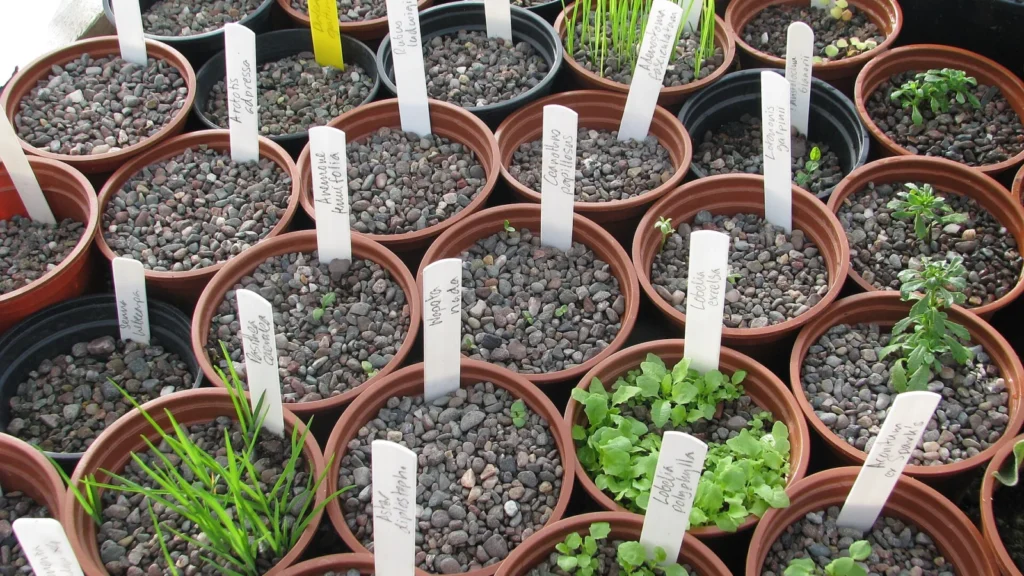
- Use fresh, sterile seed-starting mix. Commercial seed-starting mixes are lightweight, well-drained and usually free of pathogens. Do not use garden soil or old potting mix for starting seeds.
- Start with clean containers. Wash reused trays, cells and pots in hot, soapy water, then dip them in a solution of one part household bleach to nine parts water for ten minutes and rinse.
- Sow thinly at the recommended depth. Crowded seedlings create humid microclimates and spread disease quickly. The planting depth calculator helps.
- Water carefully. Keep the mix evenly moist but never soggy. Water from below by setting trays in a shallow pan for 15 to 20 minutes, then draining. Use room-temperature water.
- Remove domes early. Take off humidity domes or plastic covers as soon as most seeds have germinated.
- Provide air movement. A small fan running gently on low for a few hours a day dries the surface, strengthens stems and reduces humidity.
- Give strong light. Use grow lights 2 to 4 inches above seedlings for 14 to 16 hours a day, or a very bright window. Weak light makes stems thin and vulnerable.
- Keep temperatures appropriate. Bottom heat speeds germination of warm-season crops, but turn it off once seeds sprout; cool, wet mix favors Pythium, while warm, wet mix favors Rhizoctonia.
- Do not overfeed. Wait until the first true leaves appear, then use a dilute fertilizer.
What should you do if seedlings damp off?
- Remove affected seedlings immediately, along with the mix around them. In cell trays, discard the whole cell; in open flats, remove a generous area around the dead patch.
- Let the surface dry a little and improve air flow with a fan.
- Check your watering; most outbreaks follow overwatering or trays sitting in water.
- Transplant healthy seedlings from badly affected trays into fresh, sterile mix if they are large enough to handle by the leaves.
- Resow in clean containers with fresh mix if losses are heavy; there is usually time for a second sowing. Plan dates with the seed starting calculator.
Do home remedies prevent damping-off?
| Remedy | Evidence | Notes |
|---|---|---|
| Sterile mix and clean trays | Strong | The single most important step |
| Bottom watering and a fan | Strong | Reduces surface moisture and humidity |
| Thin layer of vermiculite, sand or perlite on the surface | Good | Keeps the stem base dry |
| Cinnamon dusted on the surface | Limited | May have mild antifungal effects; not a substitute for good practice |
| Chamomile tea watering | Little | Anecdotal only |
| Diluted hydrogen peroxide | Limited | Can damage tender roots if too strong |
| Biological fungicides (Trichoderma, Streptomyces, Bacillus) | Good when used preventively | Mixed into the medium or applied as a drench; follow labels |
Safety note: When disinfecting trays with bleach, work in a ventilated area, wear gloves, never mix bleach with other cleaners, and rinse containers well. Use biological or chemical fungicides only if they are labeled for damping-off on your plants, and follow the label exactly.
Damping-off outdoors
Seeds sown directly in the garden can damp off too, especially in cold, wet soil in early spring or in poorly drained beds. Beans, peas, cucumbers, squash and corn sown too early often rot before emerging. Wait until the soil has warmed to the right temperature for each crop, sow in well-drained beds or raised rows, avoid overwatering after sowing, and use fresh seed, which germinates faster and is less vulnerable. Check soil temperatures and dates with the frost date tool.
Which seedlings are most prone to damping-off?
The Texas A&M Plant Clinic fact sheet on damping off lists the main pathogens involved and stresses sanitation and moisture management as the core of prevention.
Almost any seedling can be affected, but slow-germinating and tiny-seeded plants that spend a long time as tender seedlings are most at risk: petunias, snapdragons, begonias, impatiens, lobelia and many perennials. Among vegetables, tomatoes, peppers, eggplant, brassicas, lettuce, cucumbers and squash are commonly affected. Large-seeded crops such as beans and peas are more likely to rot before emergence in cold, wet soil.
How do you harden seedlings against disease?
Seedlings become much less vulnerable once their stems toughen and they develop a few true leaves. Strong light, gentle air movement from a fan or brushing your hand across the tops each day, moderate temperatures and careful watering all help stems thicken. Before planting outside, harden off seedlings gradually over a week or two, using the hardening-off schedule calculator. Sturdy, well-hardened transplants also resist cutworms, flea beetles and other early-season problems far better than soft, leggy ones.
Can you reuse seed-starting mix after damping-off?
It is best not to. The organisms that cause damping-off can survive in used mix and on trays. Dispose of affected mix in the trash or spread it in an ornamental bed away from seedlings, and start fresh. Some gardeners pasteurize mix by heating moist mix in an oven-safe container to 180°F for 30 minutes, but this is smelly and only worthwhile for large quantities.
See the full list of garden pests and plant diseases for identification tips and safe controls.
Free printable: the Year-Round Garden & Preserving Planner
Planting dates for 24 crops, monthly tasks, blanching times, canning safety numbers and a winter storage chart in one 8-page PDF. Enter your email to download it instantly and get our seasonal garden newsletter.
No spam. Unsubscribe any time. We never sell your email.
Damping-off FAQ
Can seedlings recover from damping-off?
No; affected seedlings die. Remove them and protect the rest.
What causes damping-off?
Soil-borne fungi and water molds that thrive in wet, crowded, poorly ventilated seed trays.
Does cinnamon prevent damping-off?
Evidence is limited; sterile mix, careful watering and air flow work far better.
Is white fuzz on seed-starting soil damping-off?
It may be harmless mold from overly wet conditions, but it is a warning sign to water less and add air flow.
Should I use bottom heat?
Yes for germination of warm-season crops, but turn it off once seedlings emerge.
Can garden soil be used to start seeds?
It is not recommended; it drains poorly and may carry damping-off organisms.
Why do seedlings fall over if it is not damping-off?
Not every toppled seedling has damping-off. Leggy seedlings grown in weak light stretch toward the window and become too thin to support themselves; they bend rather than collapse, and their stems are green and firm, not pinched or brown. Seedlings in dry mix wilt and flop but perk up within an hour of watering. Seedlings left in strong, hot sun without hardening off can scorch and collapse. Look closely at the stem base: a narrow, water-soaked, brown band right at the soil line is the signature of damping-off. If the stem is healthy, the cause is light, water or temperature, and the fix is to adjust growing conditions. Moving grow lights closer and running a fan usually cures legginess.
How warm should seedlings be?
| Crop group | Germination temperature | Growing-on temperature |
|---|---|---|
| Tomatoes, peppers, eggplant | About 75 to 85°F | About 65 to 75°F days, slightly cooler nights |
| Cucumbers, squash, melons | About 75 to 90°F | About 70 to 80°F |
| Brassicas, lettuce | About 60 to 75°F | About 55 to 65°F |
| Many annual flowers | About 65 to 75°F | About 60 to 70°F |
Seeds that sit in cold, wet mix germinate slowly and are more likely to rot, while seedlings kept too warm and humid after germination grow soft and are more vulnerable to Rhizoctonia. Use bottom heat for germination, then move trays to slightly cooler, bright, airy conditions. A heat mat thermostat makes this easy to control; see the heat mat capacity calculator for sizing.
Do soil blocks or peat pellets reduce damping-off?
Soil blocks and well-draining cell trays allow excellent air flow around each seedling and limit the spread of disease from plant to plant, which can reduce damping-off losses compared with open flats. Compressed peat or coir pellets work well if not kept soggy, but they can stay very wet and are hard to rewet once dry, so watch moisture closely. Whatever system you use, the same rules apply: clean containers, fresh mix, careful watering and good air movement.
Is damping-off worse in some seasons?
Indoor seed starting in late winter is a high-risk time, because cool rooms, short days and enthusiastic watering combine to keep mix cold and wet. Spring sowings outdoors are vulnerable after heavy rain or in cold, poorly drained soil. Late-summer sowings of lettuce and brassicas can suffer in hot, humid weather when Rhizoctonia is active. Adjust watering to the season: water less often when it is cool and cloudy, and focus on air movement when it is warm and humid.
With clean supplies, careful watering, strong light and a gentle breeze, damping-off becomes a rare problem, and your seed-starting success rate climbs dramatically.
Should you use a fungicide for damping-off?
Most home gardeners do not need one. Biological products containing beneficial microbes such as Trichoderma, Streptomyces or Bacillus can be mixed into seed-starting media or applied as a drench to help protect seedlings, and they are useful if you have had repeated problems. They work as preventives, not cures, and only alongside good sanitation and watering. Follow the label carefully.
Good luck with your seedlings this season.
Further reading: UConn IPM, Damping-off of Ornamental and Vegetable Seedlings; Texas A&M Plant Clinic, Damping Off; Wikipedia, Damping off.
The conditions behind damping-off, and a prevention checklist
University of Minnesota Extension’s guide on how to prevent seedling damping-off names the culprits: Rhizoctonia, Fusarium and the water mold Pythium, all of which survive in soil and plant debris. They spread on reused pots and tools, garden soil or compost, fungus gnats, splashing water, dirty hands and dirty hose ends. The risk rises with cool, wet conditions, low light, overwatering, salts from over-fertilising and anything that slows seedling growth.
- Soak used pots and trays in a 10 percent household bleach solution for 30 minutes, then rinse.
- Use fresh potting mix each time; never fill seed trays with garden soil or compost.
- Use a heating mat to hold soil at 70 to 75°F (21 to 24°C) indoors.
- Water with clean water at 68 to 77°F; water near 50°F slows growth and raises infection risk.
- Give 12 to 16 hours of light from fluorescent or grow lights; window light alone is not enough.
- Fertilise only after several true leaves form, at quarter strength; many mixes need none.
Outdoors, wait for soil to reach the minimum germination temperature. Minnesota lists, for example, 60°F minimum for cucumbers, melons and squash, 50°F for sweet corn and potatoes, 40°F for peas and 35°F for onions. Our frost dates tool helps with timing.
Safety and legal note: Bleach is hazardous: wear gloves and eye protection, ventilate the area, never mix it with ammonia or acids, and rinse trays thoroughly before use. Keep heating mats on a GFCI-protected circuit away from standing water. Rules on pesticide use vary by country and region.
Reviewed October 2026. Sources: University of Minnesota Extension, How to prevent seedling damping off