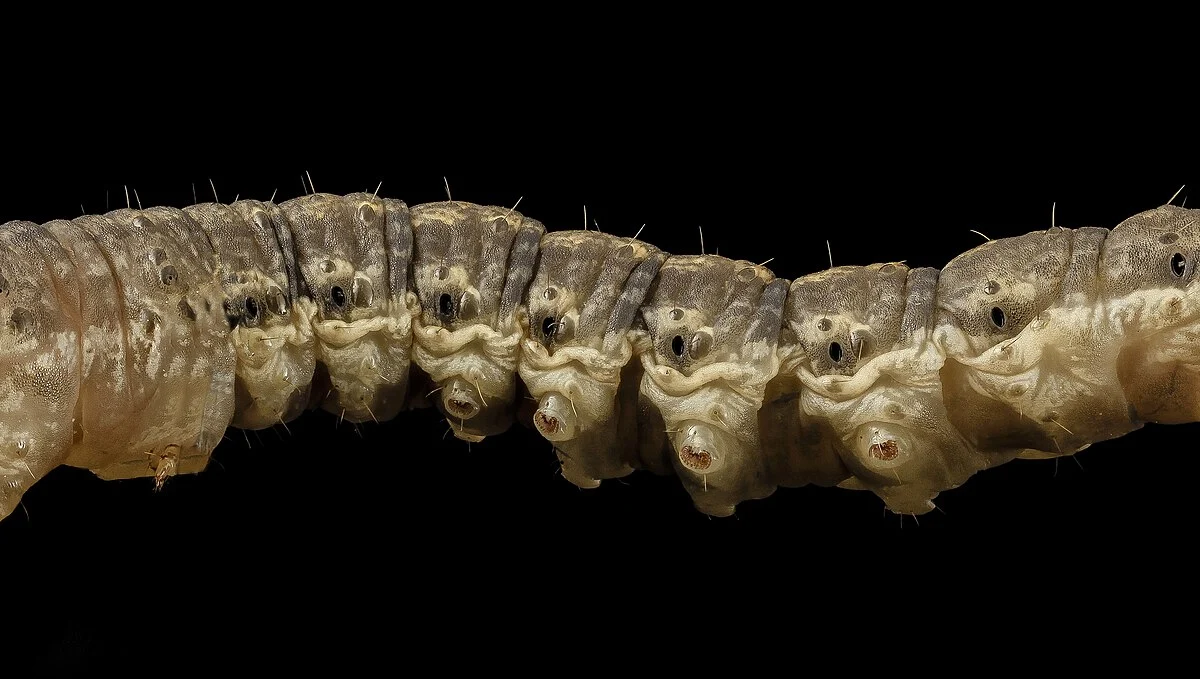
Cutworms are plump, smooth caterpillars, usually gray, brown or black and up to 1 1/2 to 2 inches long, that hide in the soil by day and come out at night to chew through the stems of young plants at or just below the soil line, leaving seedlings and transplants toppled over as if cut with scissors. They are the larvae of several night-flying moths. To protect plants, put a collar of cardboard, a paper cup or a plastic bottle around each transplant stem, pushed an inch into the soil; hunt cutworms at night with a flashlight; dig gently around damaged plants to find the curled caterpillars; keep beds weed-free before planting; and, if needed, use Bt or beneficial nematodes in moist soil.
Cutworm basics
| Feature | Details |
|---|---|
| What they are | Larvae of night-flying moths (family Noctuidae) |
| Appearance | Smooth, plump, gray, brown, black or greenish caterpillars, 1 to 2 inches; curl into a C-shape when disturbed |
| When they feed | At night; hide in the top inch or two of soil by day |
| Damage | Seedlings cut off at the soil line; holes in leaves and fruit for climbing species |
| Most vulnerable crops | Tomatoes, peppers, cabbage, broccoli, beans, corn, lettuce, flowers such as marigolds and zinnias |
| Peak damage | Spring, when transplants and seedlings are small |
| Common species | Black cutworm, variegated cutworm, dingy cutworm, army cutworm, spotted cutworm |
What are cutworms?
Cutworms are the caterpillars of various moths in the owlet moth family. The Wikipedia article on cutworms explains that the name refers to the habit of many species of cutting off young plants at ground level. Some species, called climbing cutworms, crawl up plants at night to feed on leaves, buds and fruit instead. The UConn IPM guide to cutworms on tomatoes notes that damage is usually worst on newly transplanted plants in spring, especially in gardens that were weedy or in sod the previous year, where moths laid eggs.
How do you know cutworms are the problem?
- Seedlings or transplants cut off at or just below the soil surface overnight, with the top lying on the ground, often only partly eaten.
- Damage moving along a row night after night.
- Curled caterpillars found in the top inch or two of soil within a few inches of the damaged plant.
- Holes chewed in leaves, buds or fruit near the ground, from climbing cutworms.
- No visible pest by day, but caterpillars active on plants after dark.
Similar damage can be caused by slugs, rabbits, voles or damping-off disease. Cutworm damage is a clean cut at the stem base, whereas slugs leave slime and ragged leaves, rabbits clip plants at an angle higher up, and damping-off causes seedlings to collapse at a pinched, water-soaked stem. See garden snails and slugs and keeping animals out of the garden for those culprits, or use the plant problem identifier.
What is the cutworm life cycle?
Cutworm species vary, but most follow a similar pattern. Some, such as the dingy cutworm, overwinter as partly grown larvae in the soil and start feeding as soon as spring arrives, which is why early transplants are at risk. Others, such as the black cutworm, migrate north each spring as moths from southern regions. Moths lay eggs on weeds, grass and plant debris, often in weedy or grassy areas. Larvae feed for three to five weeks, growing through several stages, and do the most damage when they are large. They pupate in the soil, and some species have two or more generations a year, though spring damage is usually the most serious.
| Season | What happens | Action |
|---|---|---|
| Late winter to early spring | Overwintering larvae begin feeding; migrating moths arrive | Clear weeds 2 weeks before planting; till lightly |
| Spring planting | Large larvae cut transplants | Collars; night patrols; dig around damage |
| Early summer | Larvae pupate; new moths lay eggs | Keep beds weeded; protect late transplants |
| Fall | Some species lay eggs in weedy areas | Clean up weeds and debris |
How do you protect plants from cutworms?
- Use stem collars. Make collars from 2- to 3-inch-wide strips of cardboard, paper cups with the bottom cut out, toilet paper tubes, or plastic bottles cut into rings. Place one around each transplant so it extends about an inch into the soil and 2 to 3 inches above. Collars are cheap and extremely effective for tomatoes, peppers, brassicas and other transplants.
- Toothpick or nail trick. Some gardeners push a toothpick or small nail into the soil right next to each stem, which prevents cutworms from wrapping around the stem to chew it.
- Prepare beds early. Remove weeds and grass at least two weeks before planting, so any larvae present starve or leave, and lightly till to expose them to birds.
- Hand-collect at night. Go out after dark with a flashlight and pick cutworms off plants and the soil surface.
- Dig around damaged plants. Gently scratch the soil within a few inches of a cut plant; you will often find the culprit curled in a C-shape and can destroy it before it moves to the next plant.
- Use bait traps. Boards or folded newspaper laid on the soil overnight attract caterpillars seeking shelter; check them in the morning.

Do natural or biological controls work?
- Beneficial nematodes (Steinernema carpocapsae) applied to moist soil in the evening seek out and kill cutworms; water the soil before and after application.
- Bacillus thuringiensis (Bt) kills cutworms that eat treated plants; spray stems and lower leaves of young plants in the evening.
- Bran baits mixed with Bt or spinosad, sold for cutworms, attract and kill caterpillars when scattered around plants.
- Natural enemies: ground beetles, parasitic wasps, tachinid flies, toads and birds eat many cutworms. Mulched, diverse gardens support these predators.
- Diatomaceous earth sprinkled around stems may deter some caterpillars when dry but loses effect when wet.
Label note: Bt, spinosad baits and beneficial nematodes are sold as pesticides or biological controls; use products labeled for cutworms on your crops, follow the label and pre-harvest interval, and keep baits away from pets and children.
How do you prevent cutworms next year?
- Control weeds in and around the garden in late summer and fall, since moths lay eggs on weedy areas.
- Till or turn the soil in fall and early spring to expose larvae and pupae to birds and cold.
- Avoid planting directly into freshly turned sod; if you convert lawn to garden, prepare the area in fall.
- Use transplants with thicker stems rather than tiny seedlings where cutworms are common; time indoor sowing with the seed starting calculator.
- Keep collars on hand for every spring planting; they can be reused.
Which plants do cutworms attack most?
| Group | Examples | Notes |
|---|---|---|
| Nightshades | Tomatoes, peppers, eggplant | Transplants cut at the soil line |
| Brassicas | Cabbage, broccoli, cauliflower, kale | Very common target in spring |
| Legumes | Beans, peas | Seedlings cut as they emerge |
| Grasses | Sweet corn, lawns | Black cutworm cuts corn seedlings; lawn damage from some species |
| Leafy greens | Lettuce, spinach, chard | Young plants cut or chewed |
| Flowers | Marigolds, zinnias, petunias, dahlias | Bedding plants cut overnight |
Cutworms vs armyworms
The Washington State University HortSense fact sheet on cutworms and armyworms describes how both groups damage corn and vegetables and recommends cultural controls such as weed management first.
Armyworms are close relatives of cutworms, often striped, that feed on leaves in large groups and can move across a lawn or field in an “army.” They are more common in late summer and fall and attack lawns, corn and vegetables. Bt, beneficial nematodes and good lawn care help with both. If you see large numbers of striped caterpillars marching across turf, you are probably dealing with fall armyworms rather than cutworms.
See the full list of garden pests and plant diseases for identification tips and safe controls.
Free printable: the Year-Round Garden & Preserving Planner
Planting dates for 24 crops, monthly tasks, blanching times, canning safety numbers and a winter storage chart in one 8-page PDF. Enter your email to download it instantly and get our seasonal garden newsletter.
No spam. Unsubscribe any time. We never sell your email.
Cutworm FAQ
What do cutworms look like?
Smooth, plump, gray, brown or black caterpillars up to about 2 inches long that curl into a C-shape when disturbed.
When do cutworms come out?
At night; they hide in the soil during the day.
How do I stop cutworms naturally?
Use stem collars, remove weeds before planting, hand-collect at night and apply beneficial nematodes or Bt.
Do cutworms turn into moths?
Yes, they become dull brown or gray night-flying moths.
Are cutworms harmful to people?
No, they are harmless to people and pets.
Can a plant recover after a cutworm attack?
If the stem is cut through, the plant usually cannot recover, though some tomatoes resprout from buried stem; replace it and protect it with a collar.
Which cutworm species are most common in gardens?
| Species | Appearance | Habits |
|---|---|---|
| Black cutworm (Agrotis ipsilon) | Gray to nearly black, greasy-looking skin with tiny granules | Migrates north each spring; cuts corn and vegetable seedlings |
| Variegated cutworm (Peridroma saucia) | Brown-gray with a row of pale yellow spots down the back | Climbing cutworm; feeds on leaves, buds and fruit |
| Dingy cutworm | Dull brown-gray | Overwinters as larvae; feeds early in spring |
| Army cutworm | Gray-brown with pale stripes | Feeds in early spring in the western Plains; may move in large numbers |
| Spotted cutworm | Gray-brown with dark triangular marks along the back | Common on vegetables and flowers |
| Bronzed cutworm | Dark bronze with pale stripes | Feeds on grasses and vegetables near lawns |
For practical purposes, all are managed the same way: protect stems, remove weeds and hunt at night.
Are there cutworm-resistant plants?
Not really, but plants with thick, tough stems are less likely to be cut through. Large, well-hardened transplants with sturdy stems survive better than tender seedlings. Direct-sown crops such as beans and corn are most vulnerable just after emergence, so sow a few extra seeds to allow for losses, or cover rows with floating row cover until seedlings are established. Harden off transplants properly with the hardening-off schedule calculator so their stems toughen before planting.
Do cutworms damage lawns?
Some species, especially black cutworms and bronzed cutworms, feed on turf, leaving small, sunken dead spots or pockmarks, particularly on golf greens and short-mown lawns. Birds probing the lawn are often a sign of cutworms or other caterpillars. In home lawns, damage is usually minor and recovers with proper watering and fertilizing. If you suspect cutworms, pour a soapy water drench (about a tablespoon of dish soap in a gallon of water) over a square yard of lawn; caterpillars will wriggle to the surface within a few minutes, letting you see how many there are.
How do you make cutworm collars?
- Cardboard strips: cut 2- to 3-inch-wide strips from cereal boxes or file folders, wrap them loosely around the stem and staple or tape them into a ring.
- Paper or plastic cups: cut out the bottom and slide the cup over the transplant.
- Toilet paper or paper towel tubes: cut into 3-inch sections; they break down in the soil by midsummer.
- Plastic bottles: cut into rings for a reusable, weatherproof collar.
- Aluminum foil: wrap a 3-inch strip loosely around the base of the stem.
Push each collar about an inch into the soil and leave about two inches above ground. Collars can be removed once stems are thick and woody, usually a few weeks after planting.
Cutworms are a spring problem above all. A few minutes spent putting collars around transplants and a couple of flashlight patrols after planting will protect nearly every plant in a home garden.
Keep a few spare transplants on hand during the first weeks after planting, so any losses can be replaced quickly while the season is still young.
Remember that the moth stage is harmless to plants; only the caterpillars feed, so focus your effort on protecting stems during the first few weeks after planting.
Further reading: UConn IPM, Tomato Cutworms; Washington State University HortSense, Cutworms and Armyworms; Wikipedia, Cutworm.
Cutworm life cycle and exactly when to check
University of Minnesota Extension’s cutworm guide explains that cutworms are the caterpillars of several moth species, about 2 inches (5 cm) long when fully grown. Adult moths do not damage plants. Females lay hundreds of eggs near low-growing plants and plant residue, and moths fly from early spring (black cutworm) to late summer or fall (dingy, glassy and bronzed cutworms). Young larvae feed on leaves or small roots until about half an inch long, then move to seedling stems. They feed in the evening and at night and hide in debris or soil by day, so the damage appears overnight.
- Find them: check in the morning for fresh cuts or wilting, then in late afternoon or evening run your hand through soil within a foot of the damage. Cutworms curl into a "C" when disturbed.
- Collars: aluminium foil or cardboard collars around transplants, with one end pushed a few inches into the soil and the other extending several inches above it.
- Hand control: crush the larvae or drop them in soapy water; control works best while they are small.
- Cultural control: remove residue and weeds, till before planting and in fall, and keep a 3 to 4 foot buffer of dry soil around the garden.
Minnesota notes that insecticides are usually unnecessary in home gardens and that black and variegated cutworms migrate in from the south each year, with rainfall driving population size. Variegated cutworms can climb and eat leaves, buds and fruit, while glassy cutworms attack roots. Time transplanting with our frost dates tool.
Safety and legal note: Wear gloves when digging for larvae and wash hands afterwards. Use any pesticide only as the label directs, keep it away from pets, children and pollinators, and never spray open flowers. Rules on pesticide use vary by country and region.
Reviewed October 2026. Sources: University of Minnesota Extension, Cutworms