A backyard can be so much more than a patch of lawn. With a little planning, the same space can feed your family, fill your home with flowers, attract birds and butterflies, catch rainwater, give children somewhere to explore, and become the outdoor room where you spend summer evenings. The best backyard gardens are not copied from a magazine; they grow from how you actually want to use the space, what your site offers, and how much time you have.
This guide collects practical backyard garden ideas, grouped by what you want from your yard: growing food, flowers, water-wise and wildlife gardens, outdoor living, family-friendly spaces, low-maintenance ideas, and ideas for small, shady, sloping and budget backyards. Each idea includes what it involves and links to free tools and detailed guides to help you plan it.
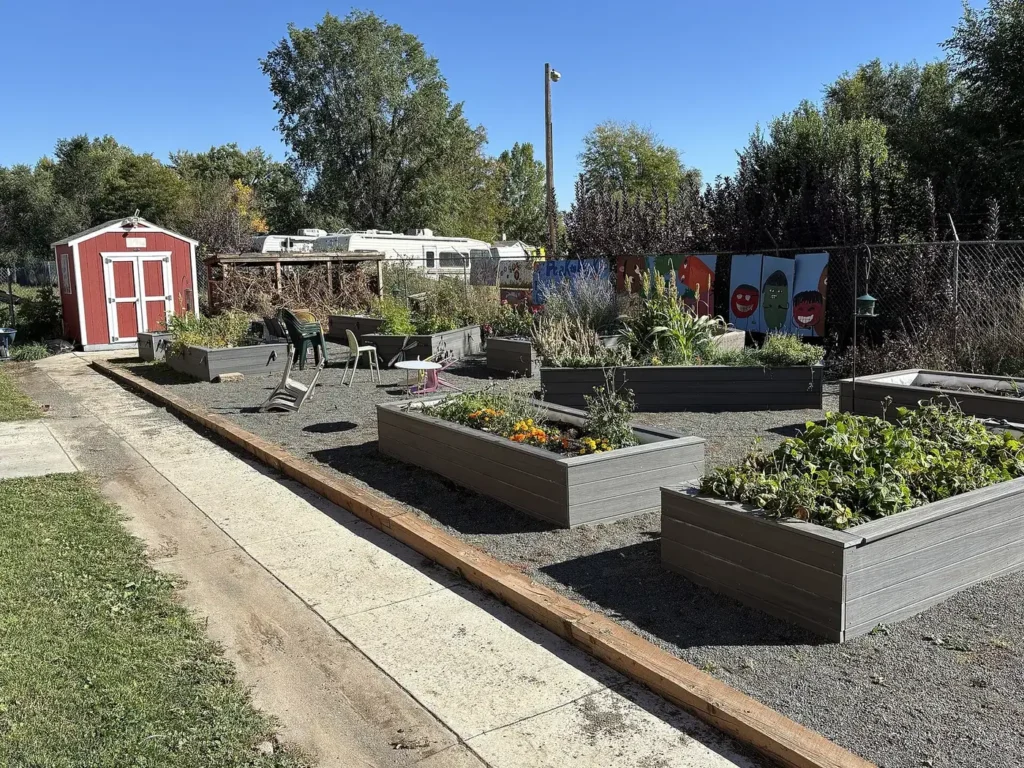
Start with a plan
Before choosing ideas, spend a little time understanding your yard. A good plan saves money, effort and disappointment.
1. Decide how you want to use the space
Make a list of everything you would like your backyard to do: grow vegetables, entertain friends, give children a place to play, grow flowers for cutting, provide privacy, attract wildlife, or simply be a calm place to sit. Rank the list. Most yards cannot do everything, but most can do three or four things well.
2. Map sun and shade
Sun decides what you can grow. Watch the yard through a full day in late spring or summer and note which areas get six or more hours of direct sun (ideal for vegetables and most flowers), three to six hours (leafy greens, many perennials) and less (shade plants). The sunlight requirement finder matches plants to your light.
3. Note the practical details
| Check | Why it matters |
|---|---|
| Where water collects after rain | A possible rain garden site; avoid for vegetables |
| Where the hose reaches | Vegetables and new plantings need regular water |
| Views from the house | Put flowers and focal points where you will see them |
| Privacy and noise | Where screening, fences or hedges would help |
| Slopes | May need terraces, rock gardens or ground covers |
| Existing trees and shrubs | Shade, roots and structure to work with |
| Underground utilities | Call 811 before digging beds, posts or ponds |
| Local rules | Fence heights, HOA guidelines and rules for structures |
4. Zone the yard
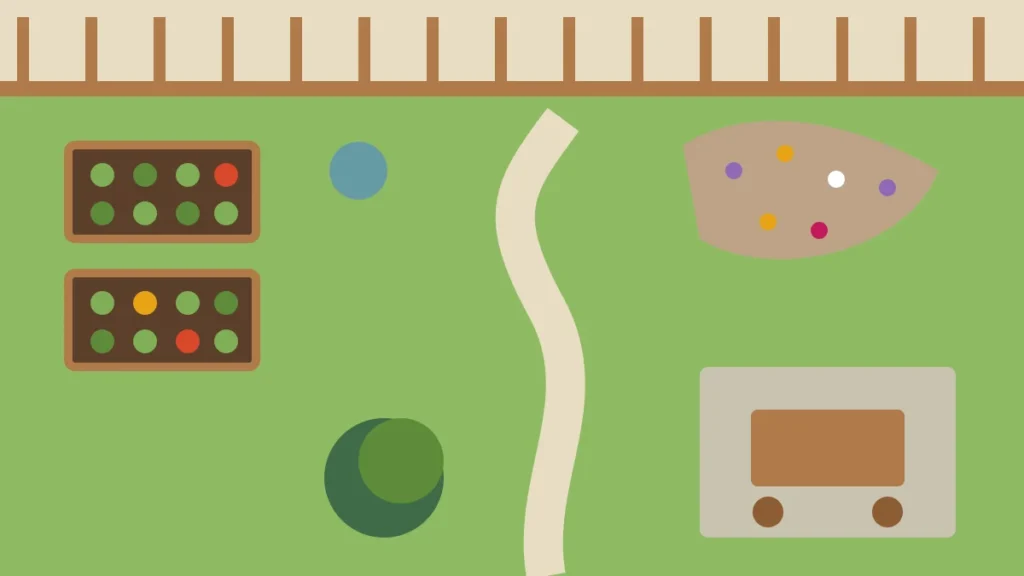
Divide the yard into areas by use, much as you would rooms in a house: a dining or seating area near the house, a sunny growing area, a play area within sight of the kitchen window, a quiet corner, and a utility area for compost, tools and bins. Put the things you use most often closest to the house, a principle at the heart of permaculture zone planning.
5. Sketch it
Measure the yard and sketch it to scale, marking the house, trees, paths and existing features. The garden size calculator helps you measure areas, and the garden layout generator drafts bed layouts quickly. The University of Maryland Extension’s garden planning resources are a helpful free reference.
Backyard ideas for growing food
Idea 1: A raised bed kitchen garden
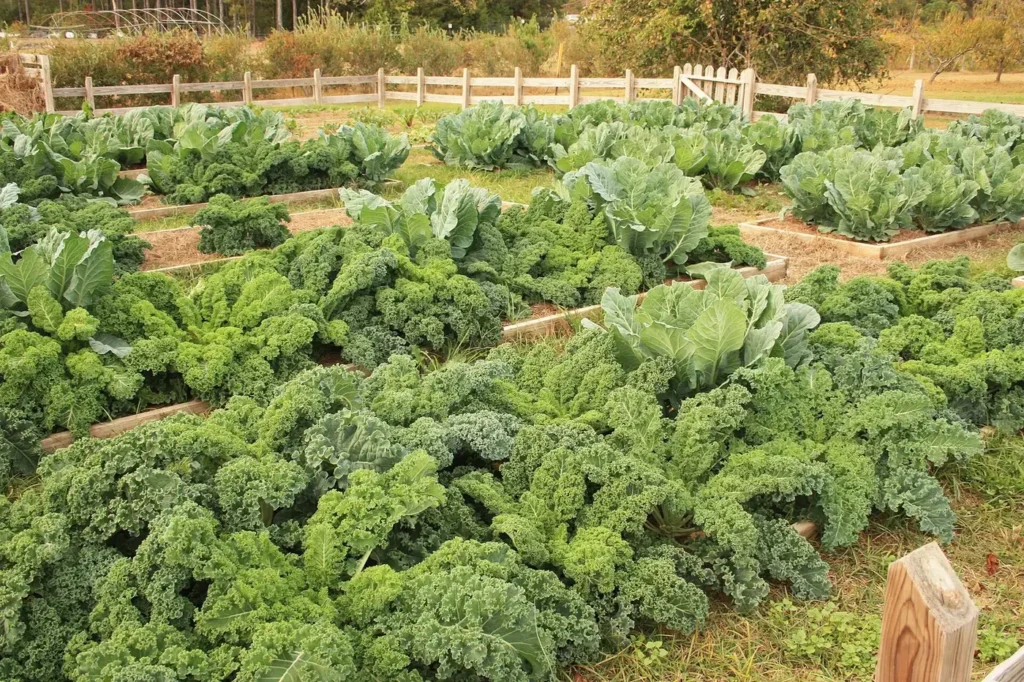
Two to four 4-by-8-foot raised beds in the sunniest part of the yard can supply salads, tomatoes, peppers, beans and herbs all season. Raised beds drain well, warm up early in spring, keep paths and growing areas separate, and look tidy. Oregon State University Extension’s raised bed gardening fact sheet explains the benefits. See our guides to building a raised garden bed and 25 raised garden bed ideas, and plan each bed square by square with the raised bed planner.
Idea 2: A potager
Make the vegetable garden a feature rather than something hidden away. A potager mixes vegetables, herbs and flowers in patterned beds around a central focal point, so it is as beautiful as it is productive. Our guide to potager gardens covers layouts and plants.
Idea 3: Herbs by the back door
A small bed or a cluster of pots right outside the kitchen door is the most-used part of any backyard. Basil, parsley, chives, thyme, rosemary and mint give the best value for the least space. See how to start an herb garden.
Idea 4: Edible landscaping
Replace ordinary shrubs and ornamentals with plants that also feed you: blueberry bushes as a hedge, strawberries as ground cover, rhubarb and artichokes for bold foliage, rainbow chard and kale in flower borders, and a dwarf fruit tree as a focal point.
Idea 5: Fruit trees and berries
Dwarf and semi-dwarf apple, pear, plum and cherry trees fit in small yards, and berries such as raspberries and blackberries can be trained along a fence. Choose varieties suited to your climate with the growing zone finder, and check whether they need a pollination partner.
Idea 6: Vertical growing
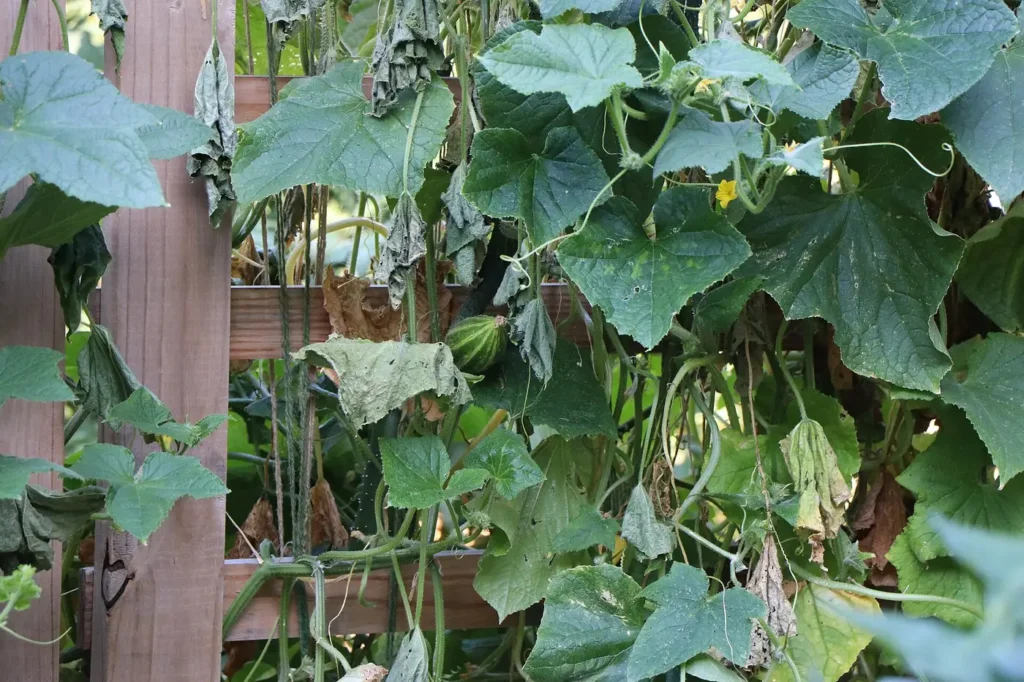
Arches, trellises and fence panels let cucumbers, beans, peas and small squash grow up rather than out, saving space and making harvesting easier. See our garden trellis ideas.
Idea 7: A container patio garden
No space for beds? Large containers on a sunny patio can grow tomatoes, peppers, herbs, salad greens and even dwarf fruit trees. See our guide to container vegetable gardening and use the container garden planner for pot sizes.
Getting started with food growing
If you are new to growing vegetables, start with our step-by-step guide to starting a vegetable garden and our list of the easiest vegetables for beginners. The planting calendar shows what to sow and when for your frost dates.
Backyard ideas for flowers
Idea 8: A mixed flower border
A deep border along a fence or the edge of the lawn, with shrubs and tall perennials at the back, medium plants in the middle and low flowers at the front, gives color from spring to fall. Our complete guide to starting a flower garden covers design, bloom sequence and the best plants.
Idea 9: A cottage garden
For a relaxed, romantic look, pack beds with roses, foxgloves, hollyhocks, peonies and self-sowing annuals along winding paths. See our guide to cottage gardens.
Idea 10: A cutting garden
A bed or a few rows of zinnias, cosmos, sunflowers and snapdragons provides bouquets every week. See how to grow a cut flower garden.
Idea 11: A rose garden
Modern disease-resistant shrub roses make it easier than ever to grow roses without constant spraying. Our rose garden guide covers varieties, planting and pruning.
Idea 12: A spring bulb display
Plant daffodils, tulips, crocus and alliums in fall for a burst of color before most of the garden wakes up. Bulbs can be tucked among perennials or planted in drifts under deciduous trees and in the lawn.
Water-wise backyard ideas
Idea 13: A rain garden
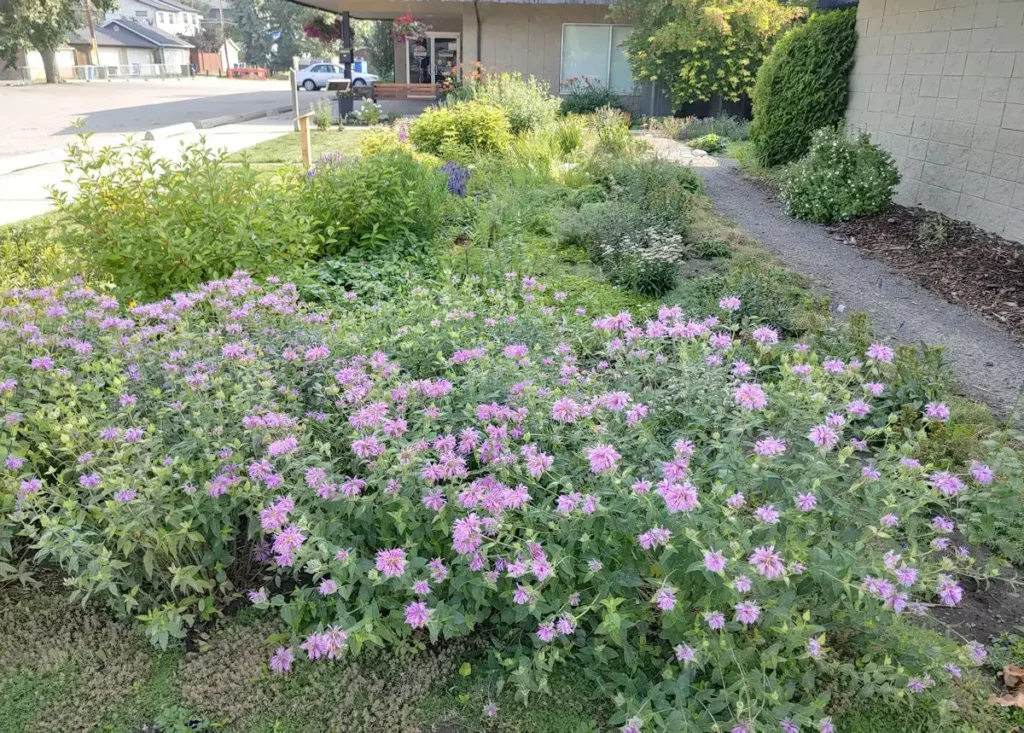
A rain garden is a shallow, planted basin that collects runoff from a downspout or slope and lets it soak into the ground, usually within a day or so. It reduces runoff and erosion, filters pollutants, and makes a beautiful home for native plants. The EPA’s Soak Up the Rain program explains how rain gardens reduce stormwater pollution, and our guide to making a rain garden covers sizing, digging and planting step by step.
Idea 14: Rain barrels
A rain barrel at a downspout stores free water for dry spells. One inch of rain on 1,000 square feet of roof yields about 623 gallons, so even a small roof fills a barrel quickly. Use the rain barrel calculator and the rainwater collection calculator to size a system, and see our guide to rainwater harvesting.
Idea 15: A drought-tolerant garden
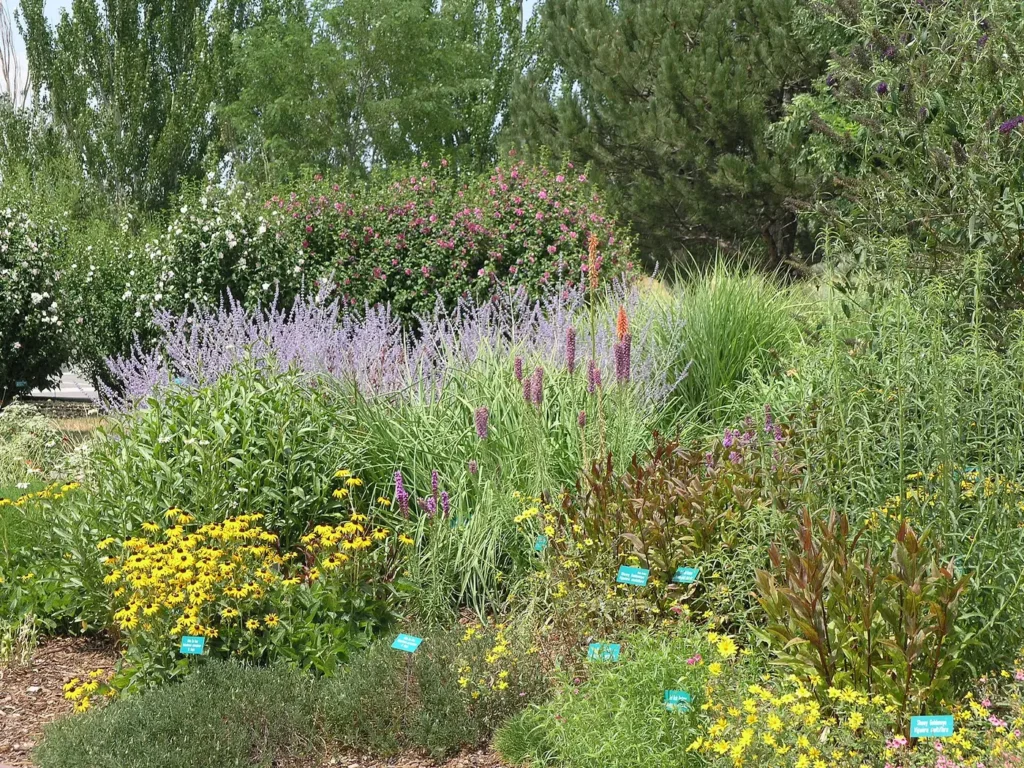
In dry climates, or simply to save water, choose plants that thrive with little irrigation once established: lavender, Russian sage, yarrow, sedum, ornamental grasses, salvias and many native plants. Group plants by water needs, mulch well, and water deeply but infrequently. The EPA’s WaterSense outdoor tips have more ideas for using water efficiently in the yard.
Idea 16: Drip irrigation
Drip lines deliver water straight to plant roots with very little waste, keep leaves dry, and can run on a simple timer. See the drip irrigation calculator and our comparison of drip irrigation and soaker hoses.
Idea 17: A dry creek bed
A meandering channel of river rock and boulders, planted along its edges, looks like a natural streambed and carries runoff away during storms. It suits slopes and areas where water flows after rain.
Idea 18: A rock garden
A sunny slope or dry corner becomes a feature when planted as a rock garden, with low, tough plants tucked between stones. See our guide to building a rock garden.
Backyard ideas for wildlife
Idea 19: A pollinator garden
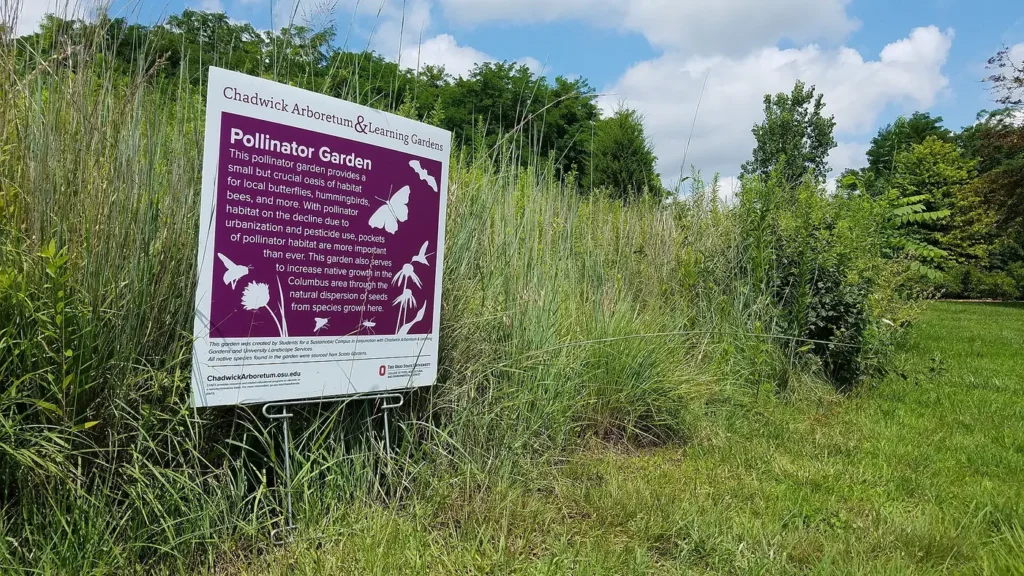
A bed of native flowering plants, with caterpillar host plants such as milkweed and flowers blooming from spring to fall, feeds bees, butterflies and hummingbirds and improves vegetable harvests nearby. Penn State Extension’s guide to planting pollinator-friendly gardens recommends choosing native plants and planting a diverse mix. Our guide to planting a pollinator garden includes a sample bed plan.
Idea 20: A bird-friendly yard
- Plant shrubs and trees with berries, such as serviceberry, viburnum, winterberry and native dogwoods.
- Leave seed heads of coneflowers, black-eyed Susans and sunflowers standing in fall.
- Add water: a shallow birdbath, cleaned and refilled regularly.
- Provide cover: dense shrubs and evergreens give shelter from predators and weather.
- Place feeders away from vegetable beds, since spilled seed attracts rodents and squirrels.
Idea 21: Homes for beneficial insects
Many native bees nest in bare soil or hollow stems. Leave a few sunny patches of bare ground, leave some plant stems standing over winter, and avoid insecticides. Spiders, ladybugs, lacewings and ground beetles are free pest control; our guide to garden spiders explains why they are welcome.
Idea 22: Leave the leaves
Instead of bagging fall leaves, shred them and use them as mulch on beds, or add them to the compost. Leaf litter shelters overwintering insects and returns organic matter to the soil. Our composting guide shows how to turn leaves and kitchen scraps into free soil food.
Idea 23: A small wildlife pond
Even a small pond or a sunken container of water attracts birds, frogs and dragonflies. Give it a gently sloping side so animals can get in and out, plant around the edges, and avoid fish if you want frogs and other wildlife. Ponds can be a drowning hazard for young children, so fence or cover them, or choose a shallow birdbath instead while children are small.
Outdoor living ideas
Idea 24: A patio garden room
Turn the patio into an outdoor room: comfortable seating, a table for meals, containers of herbs and flowers, a rug and string lights. Surround it with fragrant plants such as lavender, roses and jasmine so you enjoy them while you sit.
Idea 25: A pergola or arbor
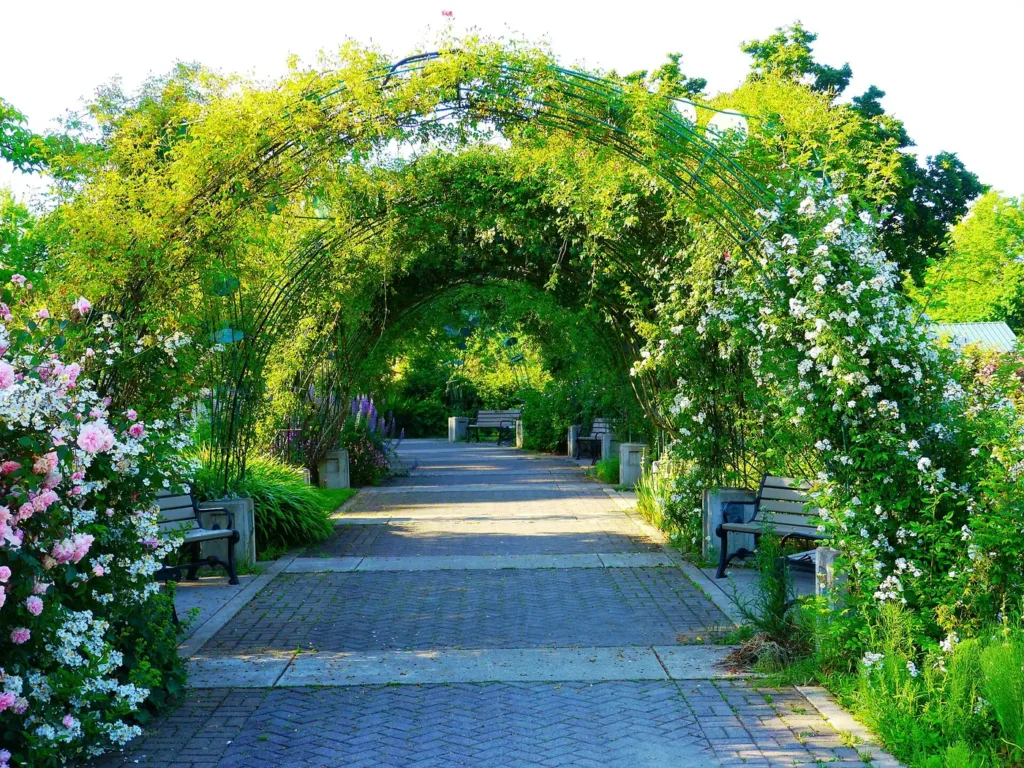
A pergola over a seating area gives shade and a sense of enclosure, especially once covered with climbing plants such as grapes, wisteria, climbing roses or hardy kiwi. An arbor over a path or gate makes a welcoming entrance. Choose strong structures, since mature climbers are heavy.
Idea 26: Winding paths
A curving path of gravel, stepping stones or brick invites people to explore the garden and makes a yard feel bigger. Edge paths so plants can spill over without blocking them; see our garden edging ideas.
Idea 27: A fire pit area
A gravel circle with a fire pit and simple seating extends the season into cool evenings. Keep fire pits well away from structures, overhanging branches and dry plants, check local burn rules, and keep water or an extinguisher nearby.
Idea 28: A hidden seating nook
A bench tucked behind a hedge, under a tree or at the end of a path creates a quiet retreat. Even a small yard can have one.
Idea 29: Garden lighting
Solar path lights, string lights over a patio and uplights on a tree make the garden usable after dark. Warm, low lighting is kinder to night-flying insects than bright white lights.
Family-friendly backyard ideas
Idea 30: A children’s garden
Give children their own small bed with fast, fun crops: radishes ready in weeks, sunflowers taller than they are, cherry tomatoes to snack on, snap peas, strawberries and pumpkins. A bean teepee makes a hideout. Let them choose what to grow and keep the bed close to the house so they visit it often. Our vegetable garden ideas include a children’s theme bed.
Idea 31: Room to play
Keep an open area of tough lawn or soft mulch for running and ball games, ideally visible from the kitchen window. Place delicate beds and thorny plants away from play areas, and avoid toxic plants where young children play; ask your local Extension office or poison control center if you are unsure about a plant.
Low-maintenance backyard ideas
Idea 32: Shrink the lawn
Lawn takes more mowing, watering and feeding than almost any other part of the yard. Keep only as much as you actually use, and replace the rest with planted beds, ground covers, meadow or mulched areas.
Idea 33: Native plants and ground covers
Plants native to your region are adapted to local conditions and often need less water and care once established. Low ground covers such as creeping thyme, sedum, native sedges and wild ginger fill space and suppress weeds. Check what survives your winters with the USDA Plant Hardiness Zone Map.
Idea 34: Mulch and automatic watering
A layer of mulch on every bed and drip irrigation on a timer remove two of the biggest garden chores: weeding and watering. The mulch calculator works out how much you need.
Idea 35: A living privacy screen
A row of shrubs, ornamental grasses or tall perennials, or a fence covered in climbers, gives privacy that is softer than a solid fence and supports wildlife. Evergreens provide year-round screening; deciduous shrubs let winter sun through. For fence options, see our garden fence ideas.
A backyard with four seasons of interest
The best backyards look good all year, not just in June. Plan for each season so there is always something to enjoy from the window.
| Season | What provides interest |
|---|---|
| Spring | Bulbs (daffodils, tulips, crocus), flowering trees such as redbud and serviceberry, early perennials, fresh greens in the vegetable beds |
| Summer | Perennial and annual flowers, roses, vegetables and herbs at their peak, shade from trees and pergolas |
| Fall | Asters, sedum and ornamental grasses, colorful leaves, berries on shrubs, pumpkins and late harvests |
| Winter | Evergreens, the bark of trees such as birch and red twig dogwood, seed heads and grasses left standing, birds at feeders and berries, the structure of paths, fences and arches |
Structure matters most in winter, when flowers are gone. Paths, edged beds, fences, arches, evergreen shrubs and a few well-placed ornaments keep the yard looking designed even in the dormant season.
A pet-friendly backyard garden
Gardens and pets can share a yard happily with a little planning:
- Give dogs their own path. Dogs often run the same route along a fence; lay a durable path of mulch or gravel there instead of fighting it.
- Protect vegetable beds with raised beds, low fencing or hoops with netting, so beds are not dug up or used as a toilet.
- Choose tough plants at the edges of play areas, such as ornamental grasses and sturdy shrubs.
- Provide shade and water for pets in summer.
- Check plant safety. Some common garden plants are toxic to pets. For example, true lilies are dangerous to cats, and plants such as sago palm, oleander, foxglove and lily of the valley are toxic to dogs and cats. Check plants against a reliable pet poison list, such as the ASPCA’s, and ask your veterinarian if you are unsure.
- Store fertilizers, slug baits and pesticides securely, and choose pet-safe products, following labels carefully.
- Avoid cocoa bean mulch, which can be harmful to dogs if eaten.
Setting up a compost corner
Every backyard garden benefits from compost, and a tidy compost corner turns kitchen scraps, leaves and spent plants into free soil food.
- Pick a level, partly shaded spot with good drainage, close enough to the kitchen to use in winter but away from the patio.
- Choose a system: a simple open pile, a wooden or wire bin, a closed plastic bin, or a tumbler. A pair of bins lets one pile finish while you fill the other.
- Balance greens and browns: mix nitrogen-rich greens such as vegetable scraps and grass clippings with plenty of carbon-rich browns such as dry leaves and shredded cardboard.
- Keep it moist and aerated: as damp as a wrung-out sponge, and turned every week or two.
- Use the finished compost on beds each spring and fall.
Our beginner’s guide to composting covers what to add and what to leave out, our article on coffee grounds in the garden explains one popular ingredient, and the compost calculator shows how much your beds need.
Tools, storage and work areas
A small utility area makes every other part of the backyard easier to look after. Keep it out of the main view, behind a hedge, trellis or shed.
- A shed or storage box for tools, hoses and supplies.
- A potting bench for sowing seeds, repotting and mixing soil.
- A hose reel or tap close to the vegetable beds.
- A spot for bulk deliveries of soil and mulch, reachable from the driveway. The soil calculator and mulch calculator tell you how much to order.
Compare the ideas at a glance
| Idea | Relative cost | Ongoing effort | Time to look established |
|---|---|---|---|
| Raised bed vegetable garden | Medium | Medium to high in season | First season |
| Herbs by the door | Low | Low | Weeks |
| Flower border | Low to medium | Medium | One to three seasons |
| Pollinator garden | Low to medium | Low once established | Two to three seasons |
| Rain garden | Low to medium | Low once established | Two seasons |
| Rain barrels | Low | Low | Immediate |
| Fruit trees and berries | Medium | Medium (pruning) | Several years to full crops |
| Patio garden room | Medium | Low | Immediate |
| Pergola with climbers | Medium to high | Low to medium | Two to four years for full cover |
| Rock garden | Medium | Medium (weeding) | One to two seasons |
| Lawn reduction with natives | Low to medium | Low once established | Two to three seasons |
Costs vary widely by region and materials. The garden cost estimator helps you price a project, including delivery and materials.
Ideas for small backyards
- Go vertical: trellises, wall planters and climbing plants use height instead of ground space.
- Use containers on patios and steps, grouped for impact.
- Choose compact varieties: patio tomatoes, dwarf fruit trees, bush beans.
- Make one strong focal point rather than many small features.
- Repeat a few plants and colors to make the space feel calm and larger.
- Use multi-purpose features: a bench with storage, a fence that doubles as a trellis.
Our full guide to small garden ideas has many more.
Ideas for shady backyards
- Grow leafy greens such as lettuce, spinach and kale, which manage with a few hours of sun.
- Plant a woodland garden of hostas, ferns, astilbe, hellebores and native woodland flowers.
- Brighten dark corners with white flowers and variegated or silver leaves.
- Make it a cool retreat: shady yards are perfect for seating areas in summer.
See our guide to shade garden plants.
Ideas for sloping backyards
- Terrace the slope with stepped beds or low retaining walls to create level planting areas.
- Plant ground covers and deep-rooted perennials to hold the soil.
- Build a rock garden into a sunny bank.
- Add a dry creek bed to guide runoff downhill.
- Use steps and switchback paths for safe access.
Tall or structural retaining walls may need professional design and permits.
Backyard garden ideas on a budget
- Start small and add one area each year.
- Grow from seed: vegetables and many flowers cost a fraction as much as transplants.
- Build no-dig beds with cardboard, leaves and compost instead of buying soil.
- Make your own compost from kitchen scraps and yard waste.
- Use free materials: wood chips from tree crews, salvaged bricks, branches for trellises.
- Divide and swap plants with neighbors and garden clubs.
See our guide to gardening on a budget and use the garden cost calculator to plan spending.
Sample backyard layouts
Small yard (about 20 × 25 ft)
| Area | What goes there |
|---|---|
| Next to the house | Small patio with table, herb pots by the door |
| Sunniest side | Two 4 × 8 ft raised beds with a trellis along the fence |
| Opposite fence | Narrow flower border with climbing roses |
| Back corner | Compost bin and rain barrel |
Medium yard (about 40 × 50 ft)
| Area | What goes there |
|---|---|
| Near the house | Patio garden room under a pergola; herb bed |
| Sunny middle | Four-bed potager or raised bed vegetable garden |
| Along one side | Deep mixed flower and pollinator border |
| Center | Lawn for play |
| Low corner | Rain garden fed by a downspout |
| Back | Two dwarf fruit trees, berry bushes, compost |
Large yard
Add a larger vegetable plot with wide rows, a small orchard, a wildflower meadow in place of distant lawn, a woodland shade garden under existing trees, a fire pit area, and paths linking each zone.
Lay out your own with the garden layout generator.
A year of backyard projects
| Season | Projects |
|---|---|
| Winter | Plan and sketch; order seeds; build raised beds and trellises; prune fruit trees |
| Spring | Prepare beds; plant cool-season crops and perennials; install rain barrels and drip lines |
| Summer | Plant warm-season crops; enjoy the patio; harvest; deadhead flowers |
| Fall | Plant bulbs, trees, shrubs and perennials; dig a rain garden; collect leaves for mulch |
Fall is often the best time for planting trees, shrubs and perennials, and for building new beds ready for spring. The gardening calendar lists monthly tasks for your frost dates.
Common backyard garden mistakes
- Doing everything at once and running out of time, money or energy.
- Putting vegetables in shade.
- Ignoring drainage and planting where water collects.
- Forgetting maintenance when choosing features.
- Too many small, scattered beds instead of a few generous ones.
- No paths, so you trample beds getting around.
- Planting trees too close to the house or each other.
- Skipping the 811 call before digging.
Sources and further reading
These university Extension and government resources informed this guide. Recommendations vary by region, so your local Cooperative Extension office is always a good next step.
- Composting at Home, U.S. Environmental Protection Agency
- How to Build a Rain Garden (PDF), University of Wisconsin–Extension
Frequently asked questions
How do I start a backyard garden?
Decide how you want to use the space, map sun and shade, zone the yard by use, sketch a plan, and start with one or two projects such as raised vegetable beds or a flower border.
What is the best layout for a backyard garden?
Put seating and herbs near the house, vegetables in the sunniest spot, flowers where you can see them, play space within view of the house, and compost and storage in a back corner.
How can I make my backyard look nice on a budget?
Start small, grow from seed, build no-dig beds, make compost, use free materials such as wood chips and salvaged brick, and swap plants with neighbors.
What can I grow in a shady backyard?
Leafy greens, herbs such as parsley and mint, and shade-loving ornamentals such as hostas, ferns, astilbe, hellebores and impatiens.
How do I make a low-maintenance backyard?
Reduce lawn, use native plants and ground covers, mulch every bed, install drip irrigation on a timer, and choose plants suited to your conditions.
How do I attract wildlife to my backyard?
Plant native flowers and berry-producing shrubs, add a birdbath, leave some leaves and stems over winter, and avoid insecticides.
Can I grow vegetables in a small backyard?
Yes. One or two raised beds, vertical trellises and containers can produce a surprising amount in a small, sunny space.
What should I do with a sloping backyard?
Terrace it with stepped beds, plant ground covers and deep-rooted perennials to hold the soil, or build a rock garden or dry creek bed.
When is the best time to start a backyard garden project?
Plan in winter. Fall is ideal for planting trees, shrubs, perennials and bulbs and for building beds; spring is best for most vegetables and annual flowers.
Do I need permission to build structures in my backyard?
Sometimes. Check local rules and any homeowner association guidelines for fences, pergolas, sheds and retaining walls, and call 811 before digging.