Technology improves soil health by measuring what gardeners and farmers used to guess. Soil moisture sensors, soil tests with digital analysis, automated drip irrigation, drone and satellite imaging, smart composting systems and precise delivery of amendments make it possible to water and feed only where the soil needs it. That reduces overwatering, compaction, nutrient runoff and unnecessary tillage, which are the main ways soil is damaged.
For a home garden, the most useful starting points are a laboratory soil test and a moisture sensor or a timer-controlled drip system. This guide explains seven innovations, what the research says about them, and how they fit with the basics of healthy soil and mulch.
The Digital Transformation of Soil Management
Soil is a complex, living matrix. Traditionally, assessing its health required sending samples to a lab and waiting weeks for results. Now, real-time feedback loops allow for immediate intervention. The primary goal of using technology in soil science is to transition from reactive management to proactive stewardship. When we use tools like a soil calculator to determine exactly what the earth needs, we prevent the common pitfall of over-fertilisation, which can leach toxins into groundwater and harm beneficial soil bacteria.
Technological intervention works by bridging the gap between visible plant stress and invisible soil deficiencies. By using sensors and AI-driven diagnostic tools, gardeners can identify if a plant is suffering from poor drainage, nutrient lockout, or pathogen presence before the damage becomes irreversible. This precision is the cornerstone of modern horticulture.
1. Precision Soil Sensors and IoT Monitoring
The Internet of Things (IoT) has brought a silent revolution to the garden. Wireless soil sensors are now small, unobtrusive devices that can be buried in the root zone to provide continuous data on moisture levels, temperature, and electrical conductivity (which indicates salinity and nutrient availability).
These sensors transmit data directly to your smartphone or computer. Instead of guessing when to irrigate, you can view real-time analytics to ensure the soil remains in the optimal range for the specific plants you are growing. This prevents waterlogging, which strips soil of oxygen and promotes fungal root rot, and ensures that the soil biome remains stable.
2. AI-Driven Diagnostic Platforms
One of the most exciting developments for the everyday gardener is the rise of machine-learning diagnostics. When your crops show signs of yellowing or stunted growth, it is often a symptom of underlying soil health issues rather than just a lack of fertiliser. Using a plant problem identifier allows you to cross-reference visual symptoms with data-backed solutions. These platforms often suggest soil amendments or management practices that directly address the root cause, helping you restore balance to the earth rather than just masking the symptoms.
Expert perspective: Many beginners mistake nutrient deficiency for pest issues. By using AI diagnostics, you avoid the unnecessary application of chemicals, which is crucial for maintaining a healthy population of earthworms and mycorrhizal fungi.
3. Automated Irrigation and Precision Hydration
Water is the lifeblood of the soil, but improper watering is the fastest way to degrade soil structure. Traditional sprinklers often lead to surface runoff and compaction. Technology has enabled the development of smart irrigation controllers that adjust watering schedules based on local weather forecasts and real-time soil moisture data.
By utilising a garden watering calculator, you can ensure that you are delivering exactly the right amount of moisture to the root zone. This prevents the soil from becoming compacted or water-logged, ensuring that air pockets remain available for aerobic bacteria, which are essential for nutrient cycling.
4. Drone Technology and Multispectral Imaging
While once reserved for large-scale agricultural enterprises, drone technology is becoming increasingly accessible for intensive gardening and land management. Drones equipped with multispectral cameras can detect variations in plant vigour and soil moisture across a property. This “bird’s-eye view” reveals patterns of soil compaction or drainage issues that are invisible from the ground.
By identifying these “hot spots,” you can apply compost or aerate specific areas of your garden rather than treating the entire site. This targeted approach not only saves money but also minimises the disruption to the soil ecosystem, allowing beneficial organisms to thrive in undisturbed areas.
5. Smart Composting Systems
Compost is the gold standard for soil health, but managing a compost pile effectively requires balancing nitrogen and carbon, maintaining moisture, and ensuring proper aeration. New smart composting bins include sensors that monitor internal temperature and humidity, alerting you via an app when the pile needs turning or additional material.
Technology ensures that the decomposition process is efficient and produces a high-quality amendment. A well-managed compost pile is rich in humic acids and beneficial microbes, which, when added to your garden, significantly improve soil structure and water-holding capacity. If you are calculating the costs of establishing these systems, using a garden cost calculator can help you plan your investment in soil-building infrastructure.
6. Robotic Weeding and Soil Disturbance Reduction
Mechanical tilling is a double-edged sword. While it breaks up hardpan, it also destroys the fungal networks (mycorrhizae) that are essential for plant nutrient uptake. Robotic weeders are changing this by providing precise, mechanical removal of weeds without the need for large-scale tilling or chemical herbicides.
By keeping the soil structure intact, these robots allow the complex web of life—from bacteria to fungi and nematodes—to remain undisturbed. This creates a stable environment where organic matter can accumulate, leading to deeper, healthier, and more fertile topsoil over time.
7. Advanced Soil Amendment Delivery Systems
The application of organic amendments like biochar, humic acid, or microbial inoculants has been revolutionised by precision delivery systems. Instead of broadcasting these expensive inputs over the entire garden, technology allows for “spot application.”
Using GPS-enabled or sensor-guided spreaders, you can deposit amendments exactly where the roots need them most. This ensures that the soil microbiome receives the specific stimulants it needs to flourish. At Gardenvoila, we have found that precision application of these biological stimulants is the most effective way to rehabilitate degraded land quickly.
The Role of Data in Long-Term Soil Stewardship
Technology is not just about the gadgets; it is about the data. By logging your soil health metrics over several seasons, you create a historical record of your garden’s performance. This allows you to identify trends—such as the gradual increase in organic matter or the improvement in water infiltration rates—that validate your management practices.
Comparison Table: Traditional vs. Tech-Enabled Soil Management
| Feature | Traditional Method | Tech-Enabled Method |
|---|---|---|
| Soil Moisture | Finger test (subjective) | Sensor-based (data-driven) |
| Nutrient Needs | Annual lab test (delayed) | Real-time conductivity sensing |
| Weed Control | Tilling (disturbs life) | Robotic removal (preserves life) |
| Watering | Scheduled timers (rigid) | Weather-adaptive smart systems |
| Diagnostics | Visual observation (reactive) | AI-powered imagery (proactive) |
How to Start Integrating Technology in Your Garden
You do not need to overhaul your entire garden overnight. Start small by identifying the biggest “pain point” in your soil management. Is it water retention? Nutrient deficiency? Or perhaps difficulty in planting success rates? Once you identify the challenge, select one piece of technology to address it.
Pro Tip: Always start with a baseline soil test. Technology is most effective when you have a clear starting point. Use a local lab to get a full chemical and biological profile, then use digital sensors to maintain that profile throughout the growing season.
What the research says about soil moisture sensors
Of all soil technologies, moisture sensors are the most proven. University of New Hampshire Extension’s soil moisture sensors fact sheet describes granular matrix sensors, which measure electrical resistance between two electrodes buried in a granular material: the more water in the soil, the lower the resistance. Readings are given in kilopascals (kPa), equal to centibars, where 0 means saturated soil and about 15 means somewhat drier. Because they are calibrated to soil water tension, their readings can be compared directly with those from a tensiometer.
| Question | What UNH Extension reports |
|---|---|
| Typical irrigation trigger | 20 to 40 kPa for most soils except heavy clay |
| Sandy loam at 40 kPa | About 50% of soil water still plant-available |
| Loamy sand at 40 kPa | Only about 35% available |
| Overhead irrigation | Start when available moisture is no lower than about 50% |
| Drip irrigation | Can start before it falls below about 80%, around 17 kPa in the sandy loam example |
| Placement | Match the crop’s rooting depth; two sensors per location show irrigation effects at two depths |
| Cost (at publication) | Digital reader about $210; about $36 per sensor |
The growers in the fact sheet reported skipping irrigation for an extra day or two in some cases, discovering cycles that ran too often and too long, and even finding malfunctioning irrigation components from areas that stayed unusually dry. The author is clear that sensors support, not replace, observation: thresholds depend on soil type and irrigation method, and sensor data should be combined with looking at the crop and soil. The page is written for growers rather than home gardeners, so treat the numbers as a starting point for a vegetable bed, not a guarantee.
Choosing a sensor: types, accuracy and cost
The University of Arizona Cooperative Extension publication on soil moisture sensor selection compares the main technologies: capacitance, time-domain transmissivity and frequency-domain reflectometry, plus resistance-based and soil-water-tension sensors. Its November 2023 survey found single-depth sensors costing roughly $100 to $700 and multi-depth probes roughly $600 to $1,750, with wireless gateways and data plans adding more. Those are professional prices; hobby-grade sensors cost far less but share the same physics.
- Accuracy: typically 0.5 to 3 percent of volumetric water content, depending on technology.
- Calibration: capacitance sensors should be calibrated for sandy, loamy or clayey soil, and both capacitance and resistance sensors are affected by soil texture and salinity, so regular calibration is needed.
- Installation: typical root-zone depths are 6 to 60 inches (15 to 150 cm). Avoid air gaps, and fill voids with a soil slurry so water does not run down the probe and cause false readings.
- Volume of influence: sensors read only about 0.1 to 1.0 litre of soil around them, so one probe describes one spot, not the whole garden.
- Battery and connectivity: sensor battery life of 3 to 15 years and a one-year warranty are typical; prefer low-power wireless if you want remote readings.
For most home gardens, a simple wetting-depth check with a trowel and a watering schedule from our garden watering calculator remain the cheapest options; a sensor pays off mainly for large beds, drip systems, containers that dry unpredictably or people who water on autopilot. Our watering section has the basics.
Safety and legal note: Use outdoor-rated, low-voltage equipment for garden electronics and keep mains-powered controllers, adaptors and extension leads protected from water, ideally on a residual-current (GFCI) circuit. Check local water-restriction rules before automating irrigation, and read the manufacturer’s instructions for batteries and wireless devices. Dispose of electronic waste and batteries through proper recycling. Rules vary by country and region.
Free printable: the Year-Round Garden & Preserving Planner
Planting dates for 24 crops, monthly tasks, blanching times, canning safety numbers and a winter storage chart in one 8-page PDF. Enter your email to download it instantly and get our seasonal garden newsletter.
No spam. Unsubscribe any time. We never sell your email.
Frequently Asked Questions
Does technology replace the need for organic matter?
Absolutely not. Technology is a tool to manage and monitor, but the foundation of soil health remains organic matter. You still need to add compost and mulch; technology simply helps you understand when and where those additions will be most effective.
Is technology expensive to implement?
While high-end commercial systems are costly, there are many affordable IoT sensors and diagnostic apps available for home gardeners. The long-term savings on water, fertiliser, and plant replacements often outweigh the initial investment.
How do I ensure my soil sensors are accurate?
Calibration is key. Ensure your sensors are placed at the correct depth for your root zone and clean them periodically to prevent mineral buildup on the probes. Following the manufacturer’s instructions for seasonal recalibration is essential for data integrity.
Can technology help with soil compaction?
Yes. By monitoring moisture levels, you can avoid walking on or working the soil when it is too wet, which is the primary cause of compaction. Additionally, data-driven irrigation prevents the surface crusting that often leads to compaction.
Conclusion: The Future of Your Garden
Technology offers us a window into the hidden world of our soil. By moving from intuition to data-informed action, we can cultivate gardens that are not only more productive but also more resilient to climate variability. At Gardenvoila, we encourage all gardeners to view their soil as a living asset. Whether you are using a simple moisture probe or a sophisticated AI diagnostic tool, the goal remains the same: to create a balanced, thriving environment where your plants can reach their full potential.
For those looking to explore further, our extensive range of digital tools is designed to help you manage every aspect of your garden with the precision of a professional. By embracing these seven key innovations, you are not just growing plants—you are building a legacy of healthy, fertile earth for years to come.
Remember, the most advanced technology in the garden is still the human observer. Use these tools to augment your senses, not replace them. When you combine your passion for gardening with the precision of modern engineering, the results in your beds and borders will speak for themselves.
As you continue your journey, keep in mind that soil health is a continuous process. Regularly check your moisture levels, keep an eye on your nutrient cycles, and don’t be afraid to experiment with new technologies as they become available. The future of gardening is here, and it is firmly rooted in the health of our soil.
Reviewed October 2026. Sources: University of New Hampshire Extension, Soil Moisture Sensors fact sheet; University of Arizona Cooperative Extension, Guidance for Soil Moisture Sensor Selection.
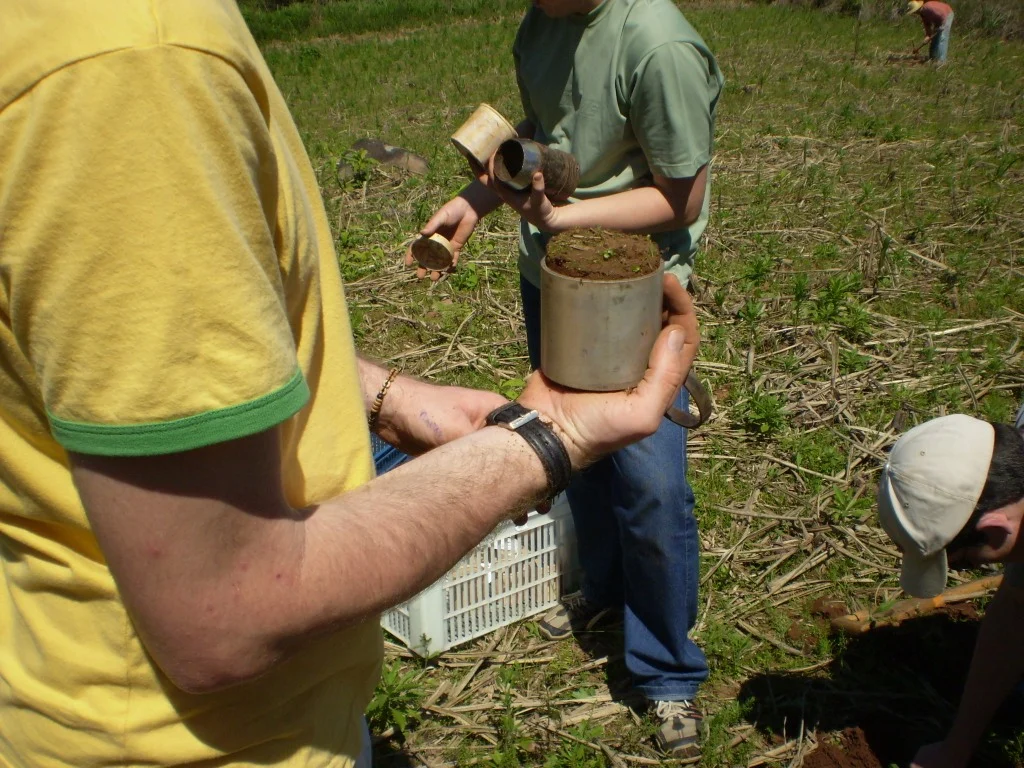
Photo: Prof. Dr. Alessandro Samuel-Rosa, CC0, via Wikimedia Commons (resized)