Squash bugs are flat, gray-brown, shield-shaped insects about 5/8 inch long that suck sap from squash, pumpkins, zucchini, melons and cucumbers, causing yellow speckles, wilting and blackened, crispy leaves that look like frost damage. They lay clusters of shiny bronze eggs on the undersides of leaves, and their gray nymphs feed in groups. Control squash bugs by checking leaves every day or two in early summer, crushing or scraping off egg clusters, handpicking adults and nymphs into soapy water, trapping them under boards overnight, covering young plants with row cover until flowering, and cleaning up crop debris in fall. Insecticidal soap and neem work on young nymphs; adults are hard to kill with sprays.
Squash bug field guide
| Stage | Appearance | Where to find it |
|---|---|---|
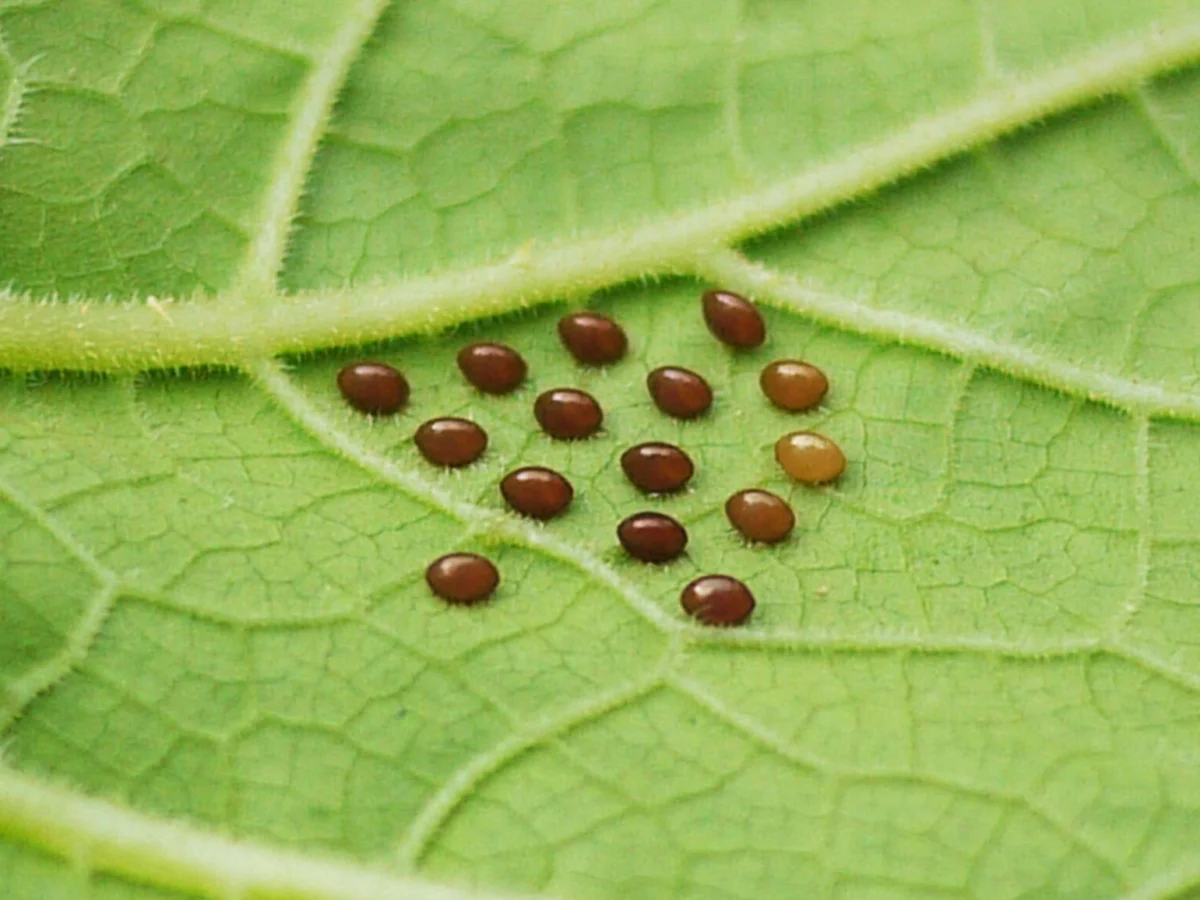
| Eggs | Shiny, bronze to copper, oval, in clusters of about 10 to 40 in a diamond or V pattern | Undersides of leaves, often in the angle between veins; sometimes stems |
| Young nymphs | Green-gray body with black legs and head | In groups near hatched eggs |
| Older nymphs | Gray, powdery-looking, with dark legs | Under leaves, at the plant base |
| Adults | Flat, gray-brown, about 5/8 inch, with orange-brown edges on the abdomen | Under leaves, near the crown, under mulch and debris |
What are squash bugs?
The squash bug, Anasa tristis, is a true bug in the leaf-footed bug family (Coreidae) found throughout North America. The Wikipedia article on the squash bug notes that it feeds on cucurbits, with squash and pumpkins its favorites. The University of California IPM pest notes on squash bugs explain that adults overwinter in sheltered places such as plant debris, woodpiles and buildings, and fly to squash plants in late spring to feed and lay eggs.
What damage do squash bugs cause?
- Yellow or white speckles on leaves where bugs have fed.
- Wilting leaves and vines, especially in heat, that may recover at night at first.
- Brown, black and crispy leaves as feeding continues, sometimes called anasa wilt.
- Dead seedlings and young plants when bugs attack early.
- Scarred, sunken spots on fruit late in the season, especially pumpkins and winter squash.
- Disease transmission: squash bugs can transmit cucurbit yellow vine disease in parts of the southern and central US.
Squash bug wilting can be confused with squash vine borer damage or bacterial wilt. Look for bugs and eggs under leaves; vine borers leave holes and sawdust-like frass at the base of stems. See our guide to squash vine borers, and try the plant problem identifier if you are unsure.
What is the squash bug life cycle?
Adults that spent the winter under debris emerge in late spring and move to young squash plants. After mating, females lay egg clusters on leaf undersides over several weeks. Eggs hatch in about one to two weeks, and nymphs pass through five stages over four to six weeks before becoming adults. In most regions there is one generation a year, with a partial second in the South, but because egg-laying is spread out, all stages are present together by midsummer. Adults move into sheltered spots in fall to overwinter.
| Time of year | What is happening | Best action |
|---|---|---|
| Late spring | Overwintered adults arrive; first eggs | Row covers; daily egg checks |
| Early summer | Eggs hatching; nymphs feeding in groups | Crush eggs; soap or neem on young nymphs |
| Midsummer | All stages present | Handpick, board traps, remove badly damaged leaves |
| Late summer to fall | Adults feed on fruit; seek shelter | Harvest promptly; clean up debris |
How do you get rid of squash bugs?
- Destroy egg clusters. Check the undersides of leaves every day or two from early summer. Scrape eggs off with a butter knife into soapy water, or press them off with duct tape. This is the single most effective step.
- Handpick adults and nymphs. Knock them into a container of soapy water. They hide quickly, so work early in the morning or late in the day.
- Use board traps. Lay flat boards or shingles on the soil near plants. Squash bugs hide underneath overnight; lift the boards each morning and destroy the bugs.
- Vacuum them. A handheld vacuum removes adults and nymphs from leaves.
- Spray young nymphs. Insecticidal soap and neem oil kill small nymphs on contact; spray leaf undersides thoroughly. Adults are much harder to kill.
- Remove badly damaged leaves and, at the end of the season, pull and dispose of vines and fruit debris.

How do you prevent squash bugs?
The Colorado State University Extension guide to squash bug management in home gardens emphasizes combining row covers, sanitation and regular removal of eggs and bugs, since chemical control of adults is difficult.
- Use row covers on young plants from planting until flowering, then remove them so bees can pollinate. Secure the edges well.
- Delay or stagger planting: some gardeners avoid peak egg-laying by planting a few weeks later or by sowing a second crop in midsummer.
- Choose resistant varieties: butternut squash and some zucchini, such as Butternut and Royal Acorn types, are less favored than Hubbard and pumpkins.
- Use a trap crop: Blue Hubbard squash planted at the edge of the garden attracts squash bugs, which you can then destroy there.
- Avoid heavy organic mulches such as straw around squash early in the season, which give bugs shelter; use them only after you have bug pressure under control.
- Rotate crops and clean up debris, woodpiles and boards where adults overwinter.
- Keep plants vigorous with good soil, steady watering and proper spacing; the plant spacing calculator helps lay out squash.
Pesticide label note: If you use insecticides on squash, choose products labeled for squash bugs on cucurbits, follow the label, observe the pre-harvest interval, and spray only in the late evening after squash flowers have closed, because squash depends on bees for pollination.
Which natural enemies attack squash bugs?
The tachinid fly Trichopoda pennipes, a bristly-legged fly with an orange abdomen, lays eggs on adult squash bugs, and its larvae kill them. A small wasp, Gryon pennsylvanicum, parasitizes squash bug eggs. Spiders, assassin bugs, ground beetles and birds also take some bugs. Flowering plants such as dill, fennel, cilantro and sweet alyssum near the squash patch provide nectar for these beneficial insects. Natural enemies rarely give complete control on their own but help keep numbers down when combined with handpicking.
Squash bugs vs stink bugs vs leaf-footed bugs
| Bug | Shape and color | Main hosts |
|---|---|---|
| Squash bug | Flat, elongated, gray-brown; orange edges on abdomen | Squash, pumpkins, melons |
| Brown marmorated stink bug | Shield-shaped, mottled brown; white bands on antennae | Fruit, tomatoes, peppers, beans, ornamentals |
| Leaf-footed bug | Long, brown, with leaf-like flattened hind legs | Tomatoes, pomegranates, citrus, nuts |
| Squash beetle | Round, orange-yellow with black spots (a lady beetle) | Squash leaves |
Can plants recover from squash bugs?
Yes, if you act early. Plants with a few wilted leaves usually recover once bugs and eggs are removed, especially if you keep them well watered and fed. Seedlings and young plants are most vulnerable and can die quickly, so protect them with row covers. Heavily infested plants late in the season are often better pulled and destroyed, along with the bugs, to reduce the overwintering population. Use the garden watering calculator to keep stressed plants hydrated while they recover.
Still not sure what you are looking at? Compare symptoms in the plant pests and diseases library.
Free printable: the Year-Round Garden & Preserving Planner
Planting dates for 24 crops, monthly tasks, blanching times, canning safety numbers and a winter storage chart in one 8-page PDF. Enter your email to download it instantly and get our seasonal garden newsletter.
No spam. Unsubscribe any time. We never sell your email.
Squash bug FAQ
What kills squash bugs instantly?
Dropping them into soapy water kills them quickly; sprays work mainly on young nymphs.
What do squash bug eggs look like?
Shiny, bronze, oval eggs in neat clusters on the undersides of leaves.
Do squash bugs bite?
They rarely bite people and are harmless, though they smell unpleasant when crushed.
Where do squash bugs come from?
Adults overwinter in debris, woodpiles and buildings, then fly to squash in spring.
Does diatomaceous earth kill squash bugs?
It may affect some nymphs, but results are inconsistent and it also harms beneficial insects.
What plants repel squash bugs?
Repellent plants such as nasturtiums and radishes are often suggested but have little proven effect.
Which squash varieties resist squash bugs?
| Level of attack | Squash types |
|---|---|
| Most attacked | Blue Hubbard and other Hubbards, Pink Banana, many pumpkins, yellow summer squash |
| Moderately attacked | Zucchini, scallop squash, acorn types |
| Less attacked | Butternut and other Cucurbita moschata squash, Royal Acorn, Sweet Cheese, some cushaw types |
Resistance is relative, not total: less favored varieties still need monitoring, but they usually suffer less damage and recover more easily. Planting a few highly attractive Hubbard plants as a trap crop along the edge of the garden, and destroying the bugs that gather on them, can protect the main planting.
How do you keep squash bugs from overwintering?
Fall cleanup breaks the cycle. As soon as the harvest is over, pull squash and pumpkin vines and remove fallen leaves, rotting fruit and other debris, and put them in the trash or a hot compost pile that reaches at least 140°F. Move or stack boards, woodpiles and plant pots away from the vegetable garden, since adults shelter under them. Till or turn the soil lightly in fall where you grew squash. In spring, plant squash in a different part of the garden than last year. These steps reduce the number of adults that survive winter close to your crop.
Should you use mulch around squash?
Mulch has trade-offs. Straw and other loose organic mulches keep soil moist and fruit clean but provide hiding places for squash bugs, especially early in the season. Many gardeners delay mulching until plants are well established and bug numbers are under control, or use plastic mulch, which offers fewer hiding spots and warms the soil for faster early growth. If you mulch, check under it during your daily inspections. The mulch calculator helps estimate how much you need.
How many squash bugs are too many?
Commercial growers in some states consider treatment when they find about one egg mass per plant on young plants. In a home garden, a practical rule is to act as soon as you see eggs or nymphs, because groups of nymphs can quickly overwhelm small plants. Established, vigorous plants tolerate a few adults with little effect on yield, but young plants and seedlings do not.
Do squash bugs smell?
Yes. Like stink bugs, squash bugs release an unpleasant odor when crushed or handled, which is a defense against predators. Wear gloves if the smell bothers you, and use soapy water rather than crushing bugs by hand.
Can you compost squash vines with squash bugs?
Only in a hot compost pile that reaches at least 140°F throughout; cool piles let adults survive the winter. If you are unsure, bag infested vines and fruit for the trash, or bury them deeply away from next year’s squash bed. Removing debris promptly after harvest is one of the most effective ways to reduce next year’s squash bug population.
When should you plant squash to avoid squash bugs?
Timing helps. Overwintered adults arrive in late spring, so plants set out very early under row cover get a head start, while a second planting sown in midsummer often escapes the worst of the first generation. Check your local dates with the frost date tool and plan successive sowings with the succession planting planner. Whatever the timing, keep up daily checks for eggs during the peak egg-laying weeks of early summer.
Squash bugs reward persistence. A few minutes each morning spent turning leaves, scraping off eggs and dropping bugs into soapy water during early summer will protect most home squash plantings through the season.
Good luck, and happy squash growing.
Rotate squash to a new bed each year as well.
Further reading: University of California IPM, Squash Bug Pest Notes; Colorado State University Extension, Squash Bug Management in Home Gardens; Wikipedia, Squash bug.
Squash bug life cycle and what it means for timing
University of Minnesota Extension’s squash bug guide says adults overwinter in sheltered spots such as plant debris, around buildings or under rocks, then fly to growing cucurbits in spring. Females usually appear in gardens in early June and keep laying through mid-summer. Eggs are oval, about 1/16 inch (1.5 mm), yellowish to bronze, laid in clusters of about 20 on leaf undersides, often in a V between the veins, and hatch in about 10 days. Nymphs pass five instars from 1/10 to 1/2 inch long, light green at first and then grey, maturing in four to six weeks. There is generally one generation a year, but life stages overlap so every stage can be present at once. Nymphs die at freezing temperatures.
- Damage: adults and nymphs pierce leaves and suck sap, causing yellow spots that turn brown; wilting follows, and young plants may die while larger plants tolerate feeding better. Squash bugs also vector yellow vine decline.
- Crush eggs on leaf undersides and stems at every visit.
- Board traps: lay boards or newspaper so bugs gather underneath overnight, then collect and destroy them in the morning. Drop adults and nymphs into soapy water.
- Cultural: keep plants healthy with proper watering and fertilising, remove debris in season and clean up cucurbits in fall.
- Tolerant varieties: butternut, buttercup and sweet cheese pumpkins tolerate feeding better. Blue hubbard squash planted around the edge can act as a trap crop.
Pesticides are usually not required in home gardens. Use our plant spacing calculator for airflow.
Safety and legal note: Wear gloves when handling squash bugs, which emit an unpleasant odour. If you use a pesticide, spray in the evening when flowers are closed to protect pollinators and follow the label. Rules on pesticide use vary by country and region.
Reviewed October 2026. Sources: University of Minnesota Extension, Squash bugs