
Dahlias are one of the best flowers for a summer garden or cutting bed, but their tubers cannot survive frozen ground. In USDA zones 7 and colder, the usual way to keep them from year to year is to dig them up in fall and store them indoors over winter. Done well, one clump of tubers can turn into three or four plants next spring, so storing dahlias saves money and builds your collection.
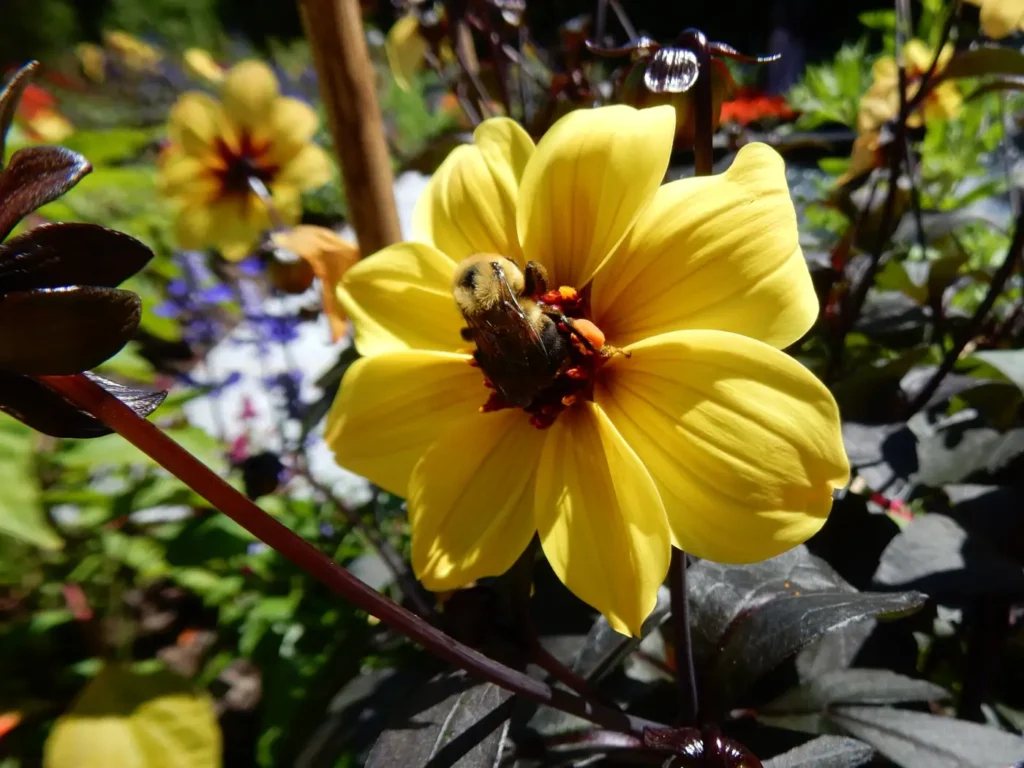
Do you need to dig up dahlias?
- Zones 8 and warmer: tubers usually survive in the ground if the soil drains well. Cut stems back after frost and cover the crown with 3 to 4 inches of mulch.
- Zone 7: borderline. Dahlias often survive mild winters under heavy mulch in well-drained soil, but lifting is safer for varieties you do not want to lose.
- Zones 6 and colder: dig and store, or treat dahlias as annuals.
Wet winter soil kills more dahlias than cold does, so even in mild zones, lift tubers from heavy clay.
When to dig dahlia tubers
Wait until the first frost blackens the foliage. The cold signals the plant to go dormant and helps the tubers develop a tougher skin that stores better. Many growers wait one to two more weeks after that frost to let the skins cure in the ground, but dig before the soil freezes hard.
Find your typical first frost date with the frost date tool.
How to dig up dahlias
- Cut the stems back to 4 to 6 inches. Label each clump with its variety name now, before you forget.
- Loosen the soil with a garden fork about a foot out from the stem on all sides.
- Lift the clump gently by levering the fork under it. Do not pull on the stem; the neck where tubers attach to the crown breaks easily, and a tuber without a neck will not sprout.
- Remove soil. Shake off loose soil or rinse it gently with a hose. Rinsing makes it easier to see the eyes for dividing.
- Turn the clump upside down for a few hours so water drains out of the hollow stems.
Handle tubers carefully. Bruises and broken skin are where rot gets in during storage.
How to cure dahlia tubers
Let the clumps or divided tubers dry in a frost-free, airy spot at about 60 to 70°F for a few days to a week, until the skins are dry to the touch. Do not leave them in sun or a hot room, which shrivels them.
Should you divide dahlias in fall or spring?
Either works. Dividing in fall saves storage space and the tubers are softer to cut, but cut surfaces need to dry before storage. Dividing in spring is easier for beginners because the eyes (growth buds) begin to swell and are easier to see.
Each division needs three parts: a firm tuber, an unbroken neck and a piece of the old stem crown with at least one eye. Use a clean, sharp knife and let cut surfaces dry for a day.
How to store dahlia tubers over winter
The goal is to keep tubers cool, dark and slightly humid, so they neither rot nor dry out.
- Temperature: 35 to 45°F is ideal. Never let them freeze. An unheated basement, cool crawl space or insulated garage usually works.
- Humidity: about 50 to 75 percent.
- Packing material: bury tubers in slightly damp peat moss, vermiculite, coconut coir, wood shavings or sand in a box, crate or bucket. Tubers should not touch each other.
- Plastic wrap method: some growers wrap each dry tuber tightly in plastic wrap, which holds moisture in and saves space.
- Label everything. Write the variety on the tuber with a permanent marker or keep labels in each container.
Check tubers through the winter
Look at stored tubers once a month.
| What you see | What to do |
|---|---|
| Shriveling or wrinkling | Mist the packing material lightly or move to a more humid spot |
| Soft spots or mold | Cut away the bad part with a clean knife and dust with sulfur, or discard |
| Early sprouting | Storage is too warm; move somewhere cooler |
| Mushy, smelly tuber | Throw it out before rot spreads |
Replanting in spring
Plant tubers outdoors after your last frost, once the soil reaches about 60°F. For earlier flowers, start them in pots indoors four to six weeks before that. Lay each tuber on its side about 4 to 6 inches deep with the eye pointing up, and do not water heavily until shoots appear.
Dahlias are a centerpiece of any cut flower garden. Other tender plants can be saved the same season: see how to overwinter geraniums, and compare with how to store tulip bulbs, which are hardy and follow a different schedule. Our fall garden prep checklist covers the rest of the season’s jobs.
Storage methods compared
| Method | Pros | Cons |
|---|---|---|
| Box of slightly damp peat moss or vermiculite | Reliable, holds steady humidity | Takes space; check moisture monthly |
| Wood shavings or coir in a bin | Cheap, breathable, easy to find | Can dry out in heated basements |
| Plastic wrap around each tuber | Very space-saving, prevents shriveling | Rot spreads fast if a tuber was not cured well |
| Whole clumps left unwashed in a crate | Fast, minimal handling | Harder to inspect; clumps can rot inside |
Labeling tips that save headaches
By spring, unlabeled tubers all look the same. Write the variety name, color and height directly on each tuber with a fine permanent marker, or tie on a plant label before digging. If you divide in spring, keep each variety in its own paper bag inside the storage box.
Starting stored tubers early in spring
About four to six weeks before your last frost, pot tubers into 1-gallon containers of barely moist potting mix, with the neck just below the surface. Keep them warm and bright and water sparingly until shoots are a few inches tall. Started tubers flower several weeks earlier than those planted dormant, and you can take cuttings from the new shoots to multiply favorite varieties.
What extension specialists recommend for dahlias
University of New Hampshire Extension says to wait until the tops die back or are killed by the first hard frost, because tubers keep developing for a while after the foliage dies. Leaving them in the ground longer improves their chances in storage. Cut stems right before digging, since hollow stems can collect water and promote crown rot. Loosen soil around the whole plant with a fork or spade and lift gently: the tuber neck is delicate, and cuts or skinning let disease in. Wash off soil, and divide in the fall or leave clumps intact and divide in spring.
Curing and storage numbers
UNH advises drying tubers for a few days in a well-ventilated place at a constant 60 to 70 degrees F, out of direct sun, and labelling directly on the tubers with felt-tipped pen. Store them chilled below 50 F but above freezing, in moistened vermiculite, wood shavings or sand, using only a little moisture because too much invites rot. University of Wisconsin Extension recommends 35 to 45 F and about 50 percent humidity for tender bulbs generally, layered 2 to 3 inches deep in peat moss, sand, vermiculite, sawdust, wood shavings or coir in ventilated containers such as cardboard boxes. Wisconsin says dahlias should be dug before a hard freeze or after a light frost kills the tops, dried for several hours, and divided only in spring.
Checking through winter
Check tubers occasionally, and monthly if possible. Remove rotting tubers before decay spreads, or cut out damaged tissue on larger ones. If tubers look shriveled, lightly moisten the medium and repack; if they are very moist, air-dry them for a few days and repack in dry material. Keep tubers from touching each other.
Why sources differ
The two sources disagree slightly on curing time and fall versus spring division, which reflects different climates and varieties. If your storage space is cold and damp, favour a short cure and dry medium; in a dry heated space, favour a slightly moister medium and more frequent checks. Whatever you choose, the principles are the same: dig after frost, handle gently, dry briefly, keep cool but frost-free and check often.
Safety and legal note: Wear gloves when handling tubers and fungicide dusts, and keep any chemicals away from children and pets. Rules on products vary by country, and cold-hardiness varies by climate, so check local guidance.
Growing dahlias: Oregon State numbers
Oregon State University Extension recommends digging holes 4 to 6 inches deep, setting each tuber horizontally with the eye facing up, and spacing plants about 2 feet apart. Plant outdoors in late April to late May, once soil stays around 60 degrees F or warmer for several days, and keep soil slightly moist but do not water until the first two leaves appear. Dahlias need loose, fertile, well-drained soil with a pH of 6.5 to 7.0 and at least six hours of sun. Stake plants expected to exceed 36 inches with stakes at least 4 to 5 feet tall.
Feeding, pinching and pests
Use a low-nitrogen fertilizer such as 5-10-10 or 10-20-20, because too much nitrogen weakens stems, reduces blooms and causes tubers to rot or shrivel. Start about 30 days after planting, repeat every 3 to 4 weeks, and stop in September so tubers harden off. When plants are 12 to 16 inches tall with at least four sets of leaves, pinch the center sprout for a bushier plant. Watch for aphids, earwigs, slugs and snails, and powdery mildew; discard plants with crown gall or viruses and do not compost them.
Division and storage details
UC Master Gardeners advise dividing clumps every 2 to 3 years, with each piece having a quarter to half square inch of crown with at least one eye. A tuber should be larger than a pinky finger to flower. Wash, sanitize in 1 part bleach to 10 parts water, and air-dry for 24 to 48 hours. Store in a cool, dry, dark place at 40 to 50 degrees F with about 70 percent humidity in peat moss, vermiculite or wood shavings, check every few weeks, and expect to lose about 20 percent to rot or dehydration. Oregon State recommends 34 to 40 degrees F, unsealed bags and moving tubers to 40 to 50 F in March and April to trigger eyes. In USDA zone 7 or warmer, Oregon State suggests cutting stems to the ground after the first frost, covering with 6-mil black plastic and at least 4 inches of mulch, and dividing every three years.
A dahlia calendar
| When | Task |
|---|---|
| March to April | Move stored tubers to 40 to 50 F to wake the eyes; divide so eyes are visible |
| Late April to May | Plant when soil is about 60 F; stake at planting |
| Two leaves showing | Begin watering |
| About 30 days after planting | First low-nitrogen feed; repeat every 3 to 4 weeks |
| 12 to 16 inches tall | Pinch for bushier plants |
| September | Stop feeding so tubers harden off |
| After a killing frost | Cut stems to 4 to 6 inches, wait a few days, then dig and cure |
Planting tubers that were stored well and are large enough to carry an eye gives the best flowers. Remember that stored tubers lose some weight over winter, so plant a few extra if you want a full bed. Note the variety label with the tuber each year so you can keep the best performers.
Sources and further reading
- Storing Tender Bulbs for Winter, University of Wisconsin-Madison Extension
- Digging and storing tender bulbs, Michigan State University Extension
- USDA Plant Hardiness Zone Map, USDA Agricultural Research Service
Free printable: the Year-Round Garden & Preserving Planner
Planting dates for 24 crops, monthly tasks, blanching times, canning safety numbers and a winter storage chart in one 8-page PDF. Enter your email to download it instantly and get our seasonal garden newsletter.
No spam. Unsubscribe any time. We never sell your email.
Frequently asked questions
When should I dig up my dahlias?
After the first frost blackens the leaves, ideally waiting one to two weeks more, and before the ground freezes.
What temperature should dahlia tubers be stored at?
Between 35 and 45°F, in a dark spot with moderate humidity. They must never freeze.
Can I leave dahlias in the ground over winter?
In zones 8 and warmer, usually yes, with mulch and good drainage. In zone 7 it is a gamble, and in zones 6 and colder tubers will freeze.
Why did my stored dahlia tubers rot?
Usually from storing them wet, packing them too tightly, damaged skin, or storage that was too warm. Cure tubers well and check them monthly.
Reviewed October 2026. Sources: UNH Extension: Dig and store dahlia tubers University of Wisconsin Extension: Storing tender bulbs
Additional sources: Oregon State University Extension FS 95: Dahlias UC Master Gardeners San Luis Obispo: Dahlias


