
Quick answer: Potatoes pair best with crops that do not interfere with hilling, airflow, or harvesting. Bush beans in a distinct adjacent row, low-maintenance flowering borders and fast spring crops that finish before potatoes fill the bed can all work. The most defensible plant to keep separate is tomato, because tomatoes and potatoes share late blight and other problems. A marigold beside a potato plant does not reliably repel Colorado potato beetles, despite what many companion charts say.
Potatoes are an unusual vegetable to share a bed with. You start with seed tubers underground, then repeatedly pull soil around the stems as they grow. When harvest arrives, you disturb an entire section of soil to lift the tubers. That means the perfect companion plant isn’t necessarily the one with the prettiest “friend” symbol on a chart. It is the one you can grow, water, and harvest without getting in the way of the potatoes.
Evidence matters, too. Some mixed-crop systems reduce pest or disease pressure under defined circumstances, but home-garden trials don’t support every claim about flowers “driving away” beetles. The University of Minnesota Extension companion planting review specifically cautions that research has not supported common marigold-versus-Colorado-potato-beetle claims. This article shows what is practical, why it might work and where to draw the line between useful advice and folklore.
For broader planning, compare crops using GardenVoila’s companion plant finder and see the science-first introduction to companion planting.
Start with the real requirements of a potato bed
A potato crop needs sunlight, good drainage, consistent moisture during tuber formation, and soil that can be hilled or otherwise managed so tubers remain covered and protected from light. University of Minnesota Extension’s potato-growing guide describes planting seed pieces around 10–12 inches apart in rows 30–36 inches apart, then hilling as stems grow. A companion that blocks those jobs is a poor match even if it is otherwise a healthy plant.
n
n
It helps to sort companion ideas into three categories:
- Space companions: crops that fit next to potatoes without shading them or being damaged during hilling.
- Timing companions: quick crops harvested before potato foliage grows and hilling starts in earnest.
- Habitat companions: flowers or flowering herbs near the crop that can support beneficial insects.
None of these categories means the potato’s yield automatically increases. You still need to check sunlight, pest pressure and soil conditions. In fact, a companion that competes for moisture can reduce the total harvest rather than increase it.
Potato companion-plant chart: the practical choices
| Potential companion | Main benefit | Best location | Caveat |
| Bush beans | Separate edible crop; more planting diversity | Adjacent strip with clear path | Don’t block potato hilling or assume instant nitrogen transfer |
| Peas | Early harvest in cooler climates | Nearby trellis or prior crop | Tall trellises can shade potatoes; harvest schedule matters |
| Lettuce | Quick early crop | Outer strip or grown before canopy closes | Will struggle once crowded and shaded |
| Radishes | Fast harvest | Between areas before hilling begins | Pull them before disturbing potato roots |
| Spinach | Cool-season vegetable | Early spring border | Often bolts when summer temperatures rise |
| Sweet alyssum | Flower resource for beneficial insects | Border or container | Not a proven potato-beetle repellent |
| Dill | Flower resource for parasitoids and other beneficials | Outer edge, allowed to bloom | Large mature plants can shade crop |
| Calendula | Flower diversity | Separate perimeter strip | Habitat benefit is not the same as pest elimination |
| Nasturtium | Edible flowers; supports a diverse garden | Container or perimeter | Can spread and make access more difficult |
| Bush cabbage-family crops | Possible garden-space diversity | Separate neighboring bed | Mature leaves can crowd rows and complicate hilling |
| Chives | Compact culinary herb | Border, not hilling zone | No dependable proof of broad beetle repellency |
| Marigolds | Decorative flowers; potential insect habitat | Outer border | Do not rely on them for Colorado potato beetle control |
This table is deliberately more conservative than a typical “10 best friends” list. Some pairings are primarily convenient, not experimentally demonstrated to raise potato yield. That’s still useful if they help you harvest more types of food from limited garden space.
Bush beans and peas: plan for separate roots and harvest access
Bush beans are short enough to work near potatoes when you leave a distinct path or row spacing. They produce beans while potatoes are developing underground, and crop diversity can be useful in a garden that otherwise has long rows of one species. Don’t sow beans directly into a potato mound, where they will be buried or damaged when you hill the row.
Peas are especially appealing in cool spring conditions when the first potato foliage is emerging. But climbing peas require a trellis; set that structure where it won’t shade the potato canopy during the most important part of the growing season. If your spring warms quickly, peas may finish early and can be removed before potatoes expand.
Legumes fix atmospheric nitrogen through a partnership with soil bacteria, yet that doesn’t mean an adjacent potato plant receives a predictable fertilizer dose. Nitrogen contributions vary and often occur through residue breakdown. For a useful explanation of the process, read University of Minnesota Extension’s legume guide. Fertilize potatoes using local soil-test recommendations, not a promise that the bean row will handle everything.
Lettuce, radishes and spinach: take advantage of early-season space
A potato bed changes through the season. Before the canopy develops and the hilling operation begins, spaces between planting areas may be open and sunny. A quick radish crop or cut-and-come-again greens can make use of an accessible edge.
The word accessible matters. Potatoes grow best when gardeners can check soil moisture, pull weeds, add soil around stems and look for insect damage. A dense carpet of lettuce in the center of a row may make everything harder. If you prefer a straightforward system, finish the early crop first and then put potatoes in the same bed. That is succession planting rather than simultaneous companion planting, and it is often more dependable.
Be cautious about leafy crops that will stay during the warmest months. Spinach and many lettuces bolt in heat, while potato foliage increasingly shades the soil. A spring pairing is not necessarily a summer pairing.
Flowers and flowering herbs: build beneficial-insect habitat
A small strip of sweet alyssum, dill in flower, calendula or locally suited flowering plants can provide nectar or pollen for beneficial insects. Hoverfly larvae eat aphids, and many parasitoid wasps use flowers for adult food. The University of Minnesota’s aphid-management guidance encourages flowering plants with different bloom periods to support natural enemies.
This is not a reason to plant every available flower in the potato row. Place insectary plants where they can flower without being covered in soil when you hill potatoes. Keep flowers from tangling with foliage or making harvest difficult. A strip outside the growing bed often creates fewer problems and still contributes to garden biodiversity.
And do not overstate effects. A flower border may support predators, but it won’t stop all potato beetles or eliminate blight. If you find Colorado potato beetle eggs, larvae or adults, monitor the crop and follow locally appropriate integrated pest-management advice. Early detection and direct management matter.
Should you plant marigolds beside potatoes?
You can, for visual appeal and garden diversity. But if your goal is Colorado potato beetle control, do not rely on marigolds as the primary method. The University of Minnesota Extension review reports that multiple studies failed to confirm the popular idea that marigolds deter Colorado potato beetles.
This is a good example of why companion advice needs nuance. Marigolds can have roles in other contexts, including management of certain nematodes as cover crops, but you cannot transfer one finding to every pest or every crop. A row of ornamental marigolds doesn’t mean you can stop looking for beetles.
Plants to avoid near potatoes—and the actual reason
Tomatoes: a meaningful disease-management concern
Tomatoes and potatoes share several diseases. Most notably, late blight, caused by Phytophthora infestans, can infect both crops. University of Maryland Extension’s late-blight guidance explains how the disease affects both and why sanitation and prevention are important. Growing the two plants in a tight tangle makes scouting, airflow and disease management harder.
This isn’t a claim that a tomato five feet away inevitably infects a potato. Spores can move beyond one garden bed. Separating plantings is a risk-management choice, not a magic distance barrier. Don’t use infected seed potatoes, and do not compost diseased foliage in a normal home pile.
Eggplants and peppers: shared pest and disease communities
Potatoes, eggplants, peppers and tomatoes are all members of the nightshade family (Solanaceae). They can share pest issues and some diseases; crop rotation is often more important than companion folklore. That doesn’t mean a pepper physically near a potato is always doomed, but planting multiple nightshades in the same cramped area can concentrate monitoring and disease risks.
If you have room, use separate beds and rotate nightshade crops through different garden areas over seasons. This is particularly useful where soil-borne diseases have occurred. A rotation cannot prevent every windborne problem, so also choose clean planting material and appropriate management.
Sprawling squash or pumpkin: competition and harvesting conflict
Large cucurbit vines can creep into potato rows and block access. Their roots also compete for water and nutrients. When potatoes need hilling, the squash leaves are in the way; when you dig potatoes, you may damage squash roots or vines. This is a straightforward logistical mismatch, not proof that the two species poison each other.
Tall crops: shading and blocked air movement
Corn, tall sunflowers or trellised crops in the wrong position can deprive potatoes of sunlight. If your garden has tall plantings, lay out rows so sunlight still reaches the potato foliage. Track the sun across the season; what seems bright in April may be shaded when corn becomes tall.
A practical potato companion-bed design
Imagine a 4-by-12-foot bed with a clear working path along at least one long side. Potatoes are not a low-maintenance, never-touch row. They need enough space for soil to be pulled up around stems and for future digging.
Layout A: potato-focused bed. Put potato rows at a spacing appropriate for the variety and bed style, using your local Extension spacing recommendation. Keep an outer strip of flowering plants or pots beyond the bed. This arrangement reserves the core growing area for tubers and makes soil management easy.
Layout B: potato bed plus spring crop. Grow radishes or spinach early in a strip where you can harvest without disturbing seed potato pieces. Once the potatoes begin vigorous growth or you need to hill, clear the strip. Do not force a second crop to remain simply because it appears on a companion chart.
Layout C: neighboring bean row. Keep a separate bed or row of bush beans with access on both sides. Use the extra harvest and seasonal diversity as your goal. Resist weaving beans into the potato mounds. If irrigation requirements differ, separate watering lines are practical.
Try rough planting counts using GardenVoila’s plant spacing calculator and plan working paths in the raised bed planner. Spacing tools work best when you account for the potato mound’s final shape, not just the stem’s initial position.
How to plant and care for potatoes in a mixed garden
Start with certified disease-free seed potatoes. Grocery-store potatoes may carry disease or have been treated to inhibit sprouting. Depending on size, seed tubers can be planted whole or cut into pieces with viable eyes. The University of Minnesota potato guide describes practical seed-piece preparation, planting depth and hilling.
Plant in soil that has warmed enough for establishment and is not waterlogged. Local timing varies, so work backward from the area’s growing season. As stems reach roughly a foot tall, soil is typically mounded around them; repeat as needed. Protect developing tubers from light exposure, which causes greening and can increase glycoalkaloid content. Never eat green or bitter potatoes.
n
See it in practice: If you are unsure how hilling works, this short container-potato demonstration helps illustrate the technique. The same need for access matters when planning companion rows.
Video: How to Grow Potatoes in Containers: Hilling Up Process Explained by Epic Gardening on YouTube.
n
Water consistently during active growth, especially around flowering and tuber development; uneven moisture can reduce quality. Avoid heavy soil compaction. Add organic matter judiciously and use soil testing to guide fertilizer application. Very high fertility without attention to balance can encourage top growth instead of the harvest you want.
Finally, harvest timing varies by variety and whether you want tender “new potatoes” or mature potatoes for storage. Plan companions so digging is possible without destroying another crop. The ability to harvest cleanly is one of the best tests of a good potato-garden design.
What about container-grown potatoes?
Potatoes in grow bags, large containers and bins have particularly limited root volume. In that setting, putting herbs or flowers inside the same pot may add little benefit and create moisture and nutrient competition. Instead, stand a separate pot of alyssum, calendula or herbs near the potato container. That gives you insect habitat without sacrificing space required for the tubers.
Container potatoes dry out faster than in-ground plantings and need drainage. Check moisture rather than blindly watering on a fixed schedule. If you see repeated leaf problems, do not assume companion plants will repair a watering issue. A sound potting mix, clean seed tubers and enough sunlight will have a bigger influence.
Pests and diseases: a realistic control checklist
Colorado potato beetles: Inspect leaves frequently for yellow-orange egg clusters, small larvae and adult beetles. Use direct control options recommended locally; don’t wait for marigolds to repel them.
Aphids: Many infestations are relatively minor. Flowering habitat and natural enemies can help; monitor actual damage before intervening. The University of Minnesota aphid resource explains when management is justified.
Late blight: Be alert for rapidly spreading dark lesions, especially in conducive weather, and follow local alerts. A flowering border does not prevent a serious blight outbreak. Disease-free seed and sanitation remain essential.
Soil-borne disease: Rotate crop families when feasible, avoid saving diseased tubers for planting and improve drainage. A “good neighbor” doesn’t undo contaminated planting material or chronically wet soil.
Weeds: Keep rows accessible for cultivation or mulching. Dense intercropping can hide weeds that rob the crop of water and nutrients.
Common potato companion-planting mistakes
The first is crowding. Gardeners often see a long companion list and try to add every recommendation to one bed. Potato plants need room, and you need access to hill and dig them. A few well-chosen neighbors are much better than a thicket.
The second is confusing correlation with proof. A gardener may plant chives, harvest great potatoes and conclude that chives caused the result. Weather, seed variety, drainage and soil fertility might explain more. Keep notes before deciding a pairing is reliably helpful.
The third is ignoring crop families. Nightshade-heavy beds can concentrate some shared problems. Thoughtful crop rotation and clean planting material are more defensible than relying only on a “plants to avoid” list.
The fourth is expecting living beans to supply all potato nitrogen. Legumes can benefit the soil nutrient cycle but should not replace soil testing or appropriate fertility management.
The fifth is forgetting harvest operations. Do not plant a long-lived perennial exactly where you’ll soon be digging potato tubers. A companion must survive the whole growing process—not just the planting day.
Free printable: the Year-Round Garden & Preserving Planner
Planting dates for 24 crops, monthly tasks, blanching times, canning safety numbers and a winter storage chart in one 8-page PDF. Enter your email to download it instantly and get our seasonal garden newsletter.
No spam. Unsubscribe any time. We never sell your email.
Frequently asked questions
What grows well with potatoes?
Bush beans in adjacent rows, quick spring greens, radishes and small flowering border plants can work. Their main advantages are efficient space use and habitat, not guaranteed yield increases.
What should you not plant next to potatoes?
Tomatoes deserve extra care because they share late blight and some other problems. Crowding with eggplants, peppers, squash or tall crops may also create pest, shade or harvesting difficulties. Layout matters more than a universal forbidden list.
Can potatoes and onions grow together?
They can be grown in the same garden if both have suitable light and space. Whether they fit in the same bed depends on hilling, irrigation and harvest schedules. Claims that onion scent universally repels potato pests are not well established.
Do marigolds repel potato beetles?
Not reliably. University of Minnesota Extension notes that multiple studies do not support this common claim. Inspect plants and manage beetles directly.
Do beans make potato plants grow faster?
Not automatically. They contribute to soil nitrogen cycles under suitable conditions, but adjacent beans aren’t a guaranteed fertilizer treatment for the potato crop.
Can potatoes grow with carrots?
They can be neighbors if you allow enough space and avoid disturbing the carrots while hilling or digging potatoes. It is usually easier to keep carrots in a separate nearby strip.
Can I plant potatoes and sweet potatoes together?
They are different species with different growth habits: one needs hilling and digging, the other spreads long vines and produces storage roots. Separate planting areas are usually more manageable.
Conclusion: choose companions that fit the potato harvest
Good potato companion planting begins with healthy seed, sun, water, drainage, access and sound disease management. After those essentials, add a neighboring bean strip or quick crop when it genuinely fits, and use flowering borders to support beneficial insects. Keep tomatoes separate where practical, monitor pests, and resist folklore about flowers that supposedly solve every problem.
For a plan tailored to your space, start with the companion plant finder and then check spacing in the GardenVoila plant spacing calculator.
Research and further reading
- University of Minnesota Extension — Growing Potatoes in Home Gardens: spacing, seed pieces, hilling and harvesting.
- University of Minnesota Extension — Companion Planting in Home Gardens: research-backed examples and caution about potato beetle claims.
- University of Maryland Extension — Late Blight of Tomato and Potato: shared disease, symptoms and management.
- University of Minnesota Extension — Aphids in Home Yards and Gardens: natural enemies and monitoring.
- University of Minnesota Extension — Legume Life Cycles and Characteristics: how nitrogen is fixed and transferred.
- Journal of Experimental Botany (2026) — Mechanisms of Disease Suppression in Strip-Intercropped Potato: evidence that some tested strip-intercropping systems altered late-blight dynamics; results do not establish every backyard pairing.
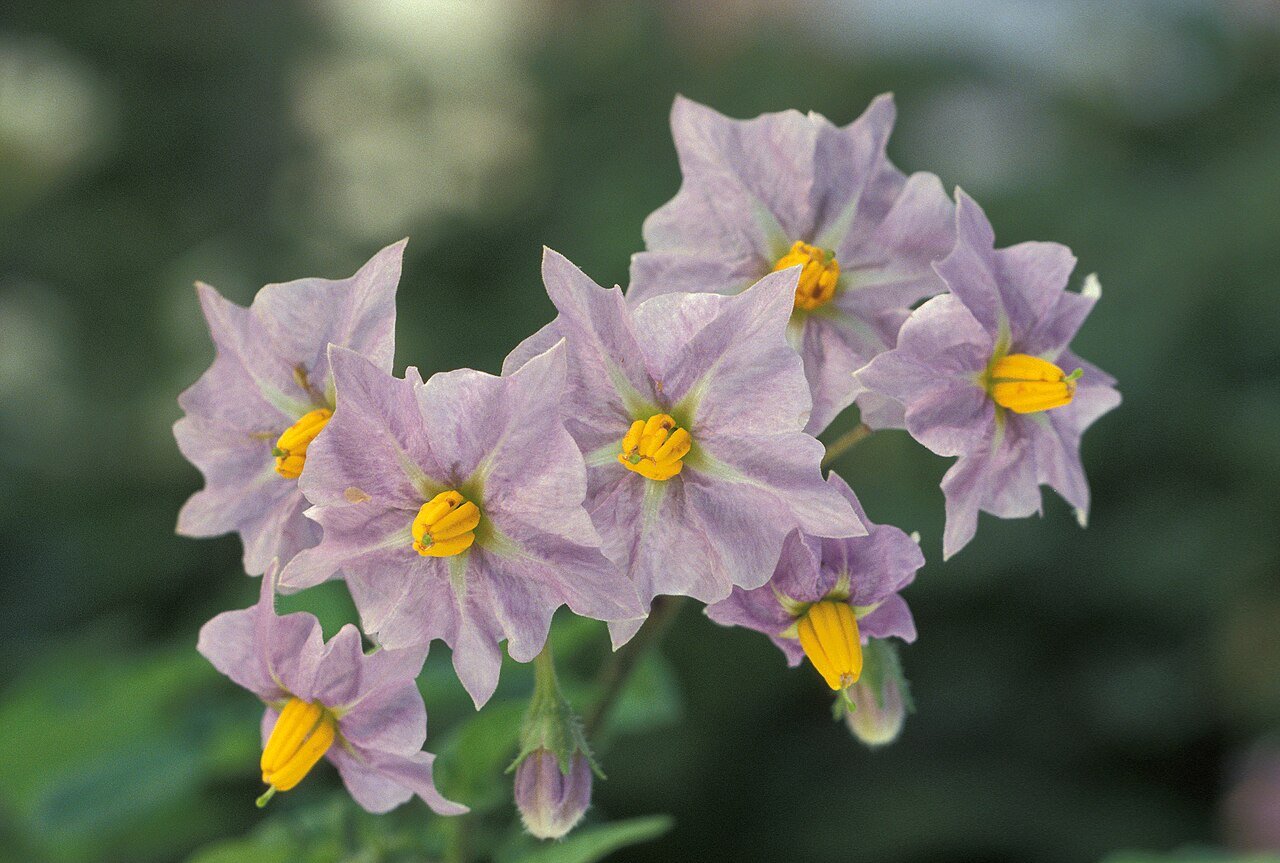
Featured photo: Wann Majaw / Wikimedia Commons, CC0 1.0. Resized for web display.


