Quick answer: Good strawberry companions are compact plants kept along the edges of the berry bed, rather than packed between crowns. Chives, spring onions and low insectary flowers can fit nearby, but strawberries need sun, steady moisture, airflow, mulch under ripening fruit and space to manage runners. A dedicated bed is usually more productive than a thick mixture of competing perennials.
Strawberries occupy a special position among garden fruits: they have shallow roots, a crown at soil level, delicate flowers, runners that create new plants, and fruit susceptible to rot on wet soil. A companion that is harmless beside a young strawberry transplant may become a nuisance once daughter plants fill the bed. Plan for that future density from day one.
First choose the type of strawberry you grow
June-bearing strawberries produce their main crop in a concentrated period and usually send out many runners. Day-neutral strawberries flower over a longer season and are often managed in more contained rows or containers. Everbearing types have their own crop pattern. Your companion choices depend on whether you will renew a large mat of runners or maintain individual fruiting plants.
University of Minnesota Extension reports that June-bearing plants can produce many daughter plants and recommends careful spacing, regular runner management and open air circulation to reduce disease. Treat those practices as the foundation of any mixed berry design.
The companion chart: what fits and what competes
| Neighbor | Useful reason | Placement | Risk |
|---|---|---|---|
| Chives | Compact perennial herb and flowers | Separate clump at a bed end | Dividing the clump can disturb strawberry roots |
| Scallions | Quick onion-family leaf harvest | Accessible strip outside crowns | Bulb lifting should not pull strawberry runners |
| Sweet alyssum | Small blooms accessible to beneficial insects | Sunny bed perimeter or pot | May become shaded by a dense strawberry mat |
| Calendula | Seasonal flowering diversity | Separate outer row | Fallen seed can create unwanted volunteers |
| Leaf lettuce | Short early harvest in a neighboring row | Outside the mature berry mat | Crowding and reduced light |
| Borage | Flowers that insects visit | Nearby, well outside strawberry crowns | Large growth and self-seeding |
| Mint | Edible leaves if contained | Separate pot only | Aggressive roots can take over the berry patch |
Chives and strawberries: compatibility without magical pest control
A chive clump is relatively compact and can be useful at the edge of a berry patch for culinary harvest. When chives flower, they provide another blooming resource for insects. But you should not rely on the smell of chives to protect every strawberry from aphids, slugs or fungal disease; those problems require their own management.

Place chives at the end of the bed where they receive enough light, and do not repeatedly dig around strawberry crowns to divide the clump. For a narrow patch, putting chives in a pot just outside the bed may be the neatest option. See GardenVoila’s chives companion guide for growing and cutting these perennial herbs.
Flower borders that support insects but preserve fruit quality
Strawberry flowers need pollination to develop evenly, and visiting bees are important. A nearby strip of regionally suitable flowers can offer resources outside the strawberry blooming period. Sweet alyssum and calendula are common examples, but the best flowers depend on the climate and whether they bloom at the right times.
Do not plant large flowers directly between strawberry crowns. Leaves and ripening berries need light and air movement. Crowded foliage dries slowly after rain and can encourage fruit rot. The Minnesota Extension strawberry guide specifically connects full sun, narrow rows, mulch and airflow to lower disease risk. That evidence is stronger than claims that a special companion will make berries sweeter.
Can lettuce, spinach or radishes share the strawberry bed?
Some quick greens can be grown in a separate strip while a new strawberry planting is still open. However, young berry plants are poor competitors with weeds and dense vegetables. If greens remain during fruiting and runner growth, they may occupy the very space new strawberry plants need.
Use early greens in a separate row or nearby container so harvesting lettuce does not dislodge strawberry crowns. The pairing is most valuable as a temporary use of space, not a permanent living underplanting. With an established June-bearing matted row, prioritize renovation, mulching and keeping the row accessible.
Why tomatoes, peppers, potatoes and strawberries need thoughtful separation
Strawberries have different growth habits from annual solanaceous vegetables. Some plant diseases can persist in soil and affect more than one crop. Verticillium wilt is one example that should influence rotation decisions where it has occurred. Do not place a new strawberry bed into a known disease hotspot simply because a chart labels tomatoes as “friends.”
Separate the permanent berry area from annual beds that need yearly tilling, staking, digging or soil amendments. Tomatoes can shade strawberries; harvesting potatoes can disturb their roots. A path between beds makes disease observation and routine harvesting easier. For context, see our tomato companion guide and potato guide.
Are borage and marigolds really strawberry super-companions?
Borage flowers can attract visiting insects, but mature borage is substantial and can self-seed. It belongs on an outer border, not in the middle of a tightly planted strawberry row. The popular claim that borage invariably improves strawberry flavor or yields has not been established as a universal horticultural result.
Marigolds can add flowers, and specific marigold cultivars have been studied for managing some nematodes when used in specific dense planting systems. That does not mean a few marigolds between strawberry crowns prevent slugs, gray mold and every other problem. Identify the actual pest, then choose controls that address its biology.
How mulch, water and runner control affect companions
Strawberries have shallow roots, and the crown must remain at an appropriate soil level. A straw mulch helps keep berries off damp ground, reducing soil splash and fruit rot risk. Make sure the mulch does not smother crowns. Drip or soaker irrigation can help keep leaves and fruit drier than frequent overhead watering.
In a June-bearing matted row, new daughter plants may spread quickly; remove runners that invade paths or companion plantings. Following harvest, thin and renovate where recommended. For day-neutral plants, maintenance differs, with fewer runners and a longer harvest season. In both systems, the best neighbor is one you can move or trim without pulling strawberry roots.
A workable strawberry bed and container layout
June-bearing row: Reserve the central row for strawberries, with enough room for new runners. Keep paths open on both sides and grow optional alyssum at a sunny end outside the row. Put perennial chives in a separate clump beyond the runner zone.
Watch the growing technique: This video compares strawberry varieties, containers, irrigation and runner care—important before choosing neighboring plants for a berry patch.
Video: The Secret to Huge Strawberry Harvests in Containers, Epic Gardening.
Day-neutral raised bed: Set individual strawberry crowns according to the growing system and local spacing recommendations, then keep their crowns visible. Use containers for herbs if the bed begins to fill. Don’t force flowering companions into spaces the strawberry canopy will need.
Patio containers: A berry container and a small chive or flower pot can sit beside one another without sharing soil. This lets you manage watering separately and move flowers if they become shaded. See GardenVoila’s plant spacing tool and watering calculator for planning.
Free printable: the Year-Round Garden & Preserving Planner
Planting dates for 24 crops, monthly tasks, blanching times, canning safety numbers and a winter storage chart in one 8-page PDF. Enter your email to download it instantly and get our seasonal garden newsletter.
No spam. Unsubscribe any time. We never sell your email.
Frequently asked questions
What’s a good companion plant for strawberries?
Compact chives or flowers at the outer edge are practical options, but the strawberry crown and runner area should stay open.
Are onions good companions for strawberries?
They can occupy adjacent rows if onion harvesting will not disturb shallow strawberry roots. An onion is not a guaranteed pest repellent.
Can strawberries grow under blueberry bushes?
Both crops have shallow roots and different soil requirements. Separate beds usually make pH, light and runner management easier; see the blueberry companion guide.
Should you plant mint with strawberries?
Not into the same small bed: mint can invade with spreading roots. Keep it in a separate container.
Sources
- University of Minnesota Extension: Growing strawberries
- University of Minnesota Extension: Companion planting evidence
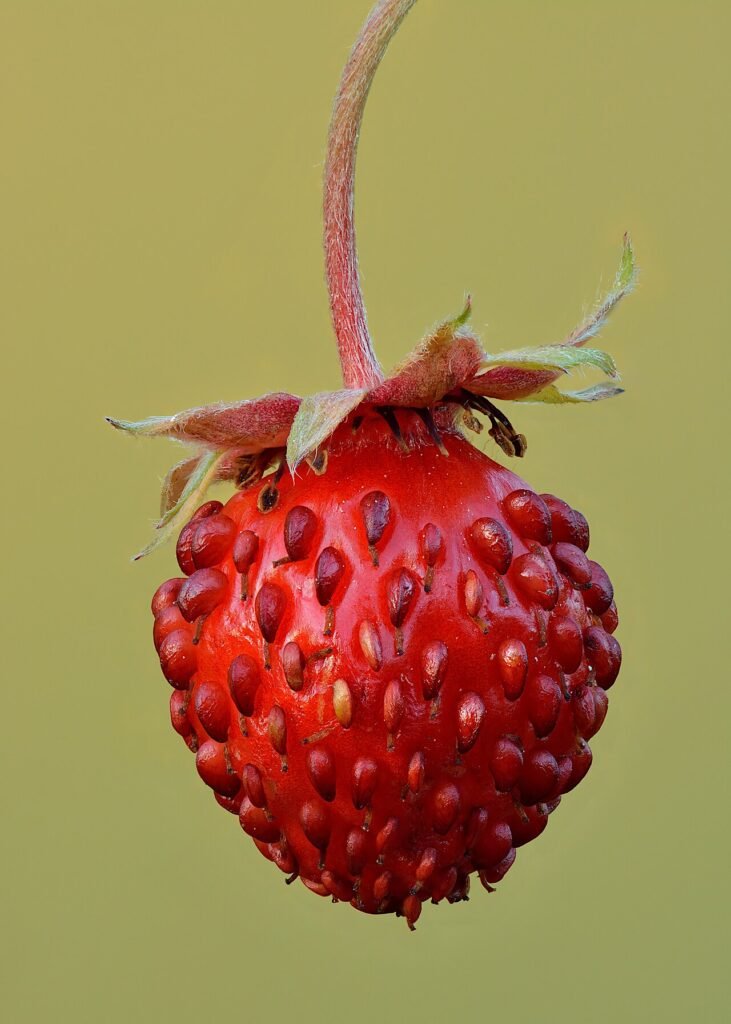
Featured photo (wild strawberry, Fragaria vesca): Ivar Leidus · Wikimedia Commons · CC BY-SA 4.0. Resized for web.


