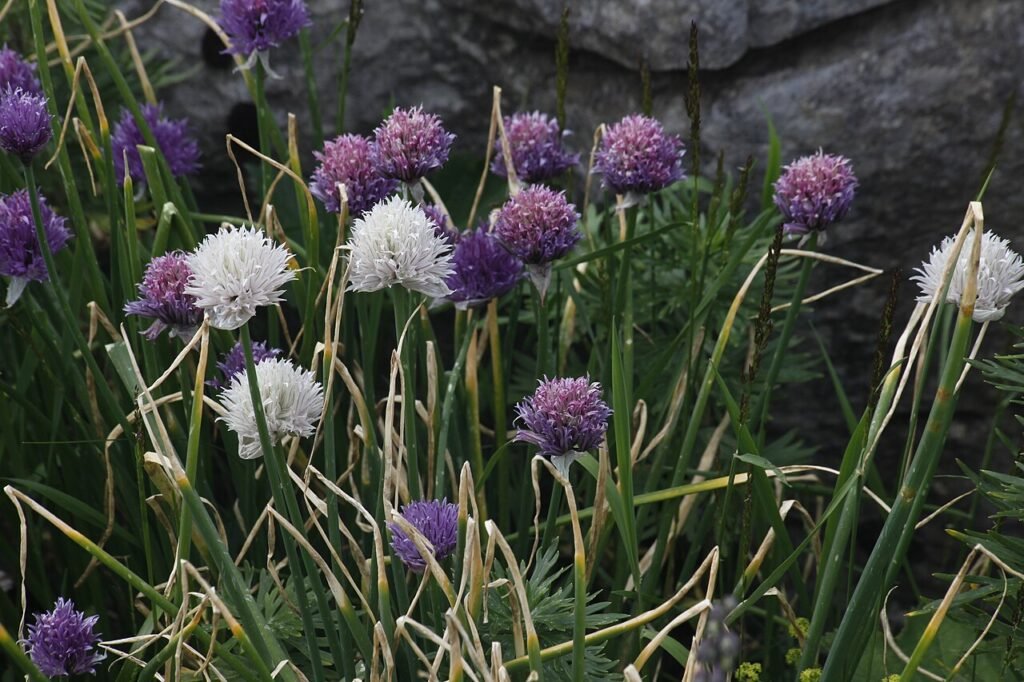
Chives are one of the easiest and most dependable herbs. They form neat, grassy clumps with a mild onion flavor, come back every spring, and produce pretty edible purple flowers that bees love. A single clump gives snips for months. Garlic chives, with flat leaves and white flowers, are grown the same way. This page covers planting, care and harvest.
Chives at a glance
| Type | Herb |
|---|---|
| Season | Perennial |
| Sun | Full sun to part shade |
| Plant spacing | 6 in |
| Row spacing | 12 in |
| Per square foot | 4 |
| Seed depth | ¼ in |
| Days to maturity | 75–85 from seed |
| How to start | Start indoors 6–8 weeks before last frost, or plant divisions in spring |
| Water | 1 in per week |
These are the same numbers our plant spacing, square foot and harvest date calculators use. See every crop in the plant database.
When to plant chives
Start chive seeds indoors 6 to 8 weeks before your last spring frost, or sow directly outdoors in early spring. You can also plant divisions or potted plants in spring or early fall. Chives are hardy perennials in most of the US, roughly zones 3 to 9, and are among the first herbs to come up in spring.
Find your last frost with the frost dates by ZIP code tool.
How to plant chives
- Choose sun or part shade. Full sun is best; chives tolerate some shade.
- Use average, well-drained soil. Mix in some compost.
- Sow shallow. Sow seeds 1/4 inch deep in small clusters. Seeds can take 1 to 2 weeks to sprout.
- Plant clumps. Set divisions or potted plants at the spacing in the table above. Chives grow well in pots, window boxes and along bed edges. The square foot gardening calculator shows how many fit.
Caring for chives
Keep the soil evenly moist, about an inch of water a week. Chives tolerate short dry spells but grow best with steady water. The garden watering calculator turns this into gallons.
A little compost in spring is enough feeding. Cut off the flower heads after they fade, before seeds form, or chives will self-seed across the garden. Every 3 to 4 years, divide crowded clumps in spring: dig them up, split them into smaller clumps of several bulbs and replant. In fall, you can pot up a small clump to grow on a sunny windowsill over winter.
Companion plants
| Grow nearby | Carrots, tomatoes, roses, strawberries, cabbage-family crops, apple trees |
|---|---|
| Keep apart | Peas and beans (onion-family plants are said to slow them) |
Chives are said to help deter aphids and carrot rust fly, and their flowers bring bees for pollination. They make a tidy edging for vegetable and flower beds. Check other pairings with the companion plant finder.
Common problems
| Problem | What you see | What to do |
|---|---|---|
| Self-seeding | Seedlings come up all over the bed | Cut off flower heads after they fade, before seeds form. |
| Thin, weak leaves | Clump looks sparse and leaves are thin | The clump is overcrowded. Divide it every 3 to 4 years. |
| Onion thrips | Silvery streaks on leaves | Rinse plants with water and keep them watered. See the pest identifier. |
| Yellow, flopping leaves | Leaves yellow and fall over | Usually too much or too little water, or the plant needs dividing. Check with the yellow leaf identifier. |
| Rust | Orange spots on leaves | Cut the clump to the ground and let it regrow; give more airflow. |
Not sure what you are looking at? The plant problem identifier ranks likely causes from the symptoms you see.
When and how to harvest
Start harvesting when leaves are about 6 inches tall. Cut leaves to about 2 inches above the soil with scissors, taking a handful from the outside of the clump. Snipping just the tips leaves untidy brown ends. Harvest regularly; the clump regrows quickly. In the first year, harvest lightly so plants establish.
The purple flowers are edible, with a mild onion flavor; pull the florets apart and scatter them on salads. Chives are best fresh, but they freeze well chopped. Fresh leaves keep a few days in the fridge in a damp towel.
Plan your chives
- Plant spacing calculator: how many plants fit your bed
- Planting calendar: sowing and transplant dates for your frost dates
- Frost dates by ZIP code: your last spring and first fall frost
- Harvest date calculator: when your crop will be ready
Frequently asked questions
How far apart should I plant chives?
Space chives 6 inches apart in rows 12 inches apart. In a square foot garden, plant 4 per square foot.
How deep do I plant chive seeds?
Sow seeds ¼ inch deep.
How long do chives take to grow?
Most varieties are ready 75–85 days from seed. Check the seed packet, because early and late varieties differ.
How much water do chives need?
About 1 inch of water a week, from rain and watering combined. Keep the soil evenly moist; chives tolerate short dry spells.
Do chives come back every year?
Yes. Chives are hardy perennials in most of the US and regrow every spring, often among the first plants up.
Can you eat chive flowers?
Yes. Chive flowers are edible with a mild onion flavor. Pull the florets apart and add them to salads.