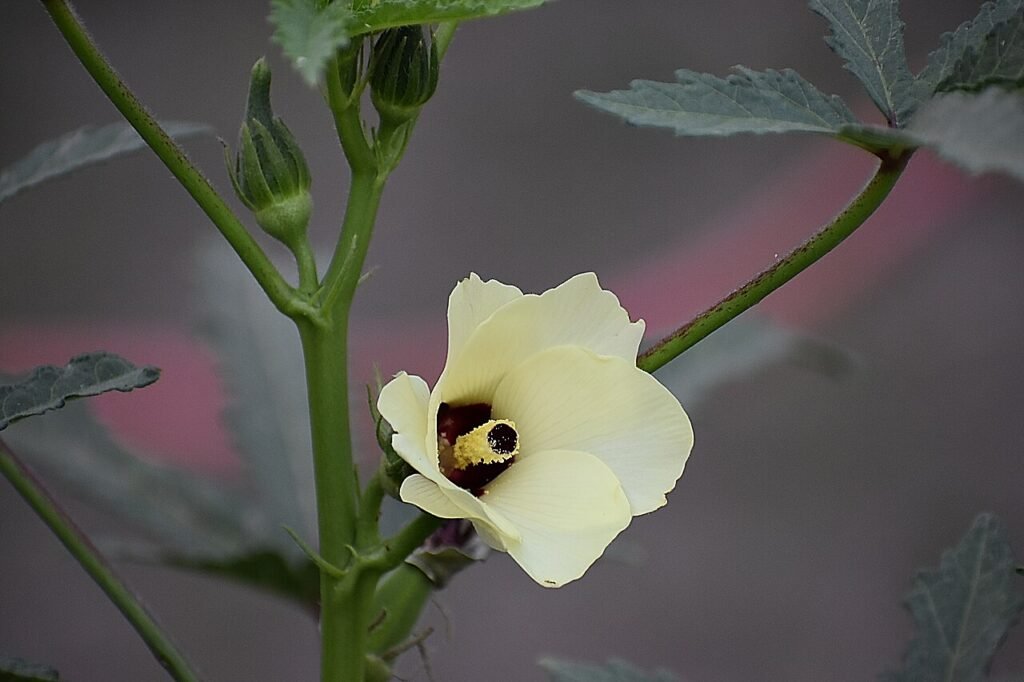
Okra thrives in the heat that wears out most other vegetables. It is a tall, warm-season plant with hibiscus-like flowers and a long harvest of tender pods from midsummer until frost. It needs warm soil to get going and very regular picking once it starts. This page covers when to sow, how to space it, how to care for it and how to keep pods tender.
Okra at a glance
| Type | Vegetable |
|---|---|
| Season | Warm-season |
| Sun | Full sun |
| Plant spacing | 12 in |
| Row spacing | 36 in |
| Per square foot | 1 |
| Seed depth | ¾ in |
| Days to maturity | 50–65 from seed |
| How to start | Direct sow 2–4 weeks after last frost |
| Water | 1 in per week |
These are the same numbers our plant spacing, square foot and harvest date calculators use. See every crop in the plant database.
When to plant okra
Okra needs heat. Sow seeds directly outdoors 2 to 4 weeks after your last spring frost, once the soil has warmed to at least 65 to 70°F; seed in cold soil rots. In short-season areas, start seeds indoors in individual pots 3 to 4 weeks before planting out, because okra resents root disturbance.
Check your last frost with the frost dates by ZIP code tool. In long, hot summers, a second sowing in midsummer can give fall pods.
How to plant okra
- Pick the hottest, sunniest spot. Okra needs at least 6 to 8 hours of sun and does best where summers are long and hot.
- Soak seeds first. Soak seeds in water overnight to soften the hard seed coat and speed germination.
- Sow and thin. Sow seeds about 3/4 inch deep, a few inches apart, then thin to the spacing in the table above.
- Remember the height. Most varieties grow 4 to 6 feet tall, so plant on the north side of the bed where they will not shade shorter crops. The plant spacing calculator fits them to your bed.
Caring for okra
Water about an inch a week, especially while plants are young and during flowering. Established okra tolerates dry spells better than most vegetables, but steady water gives more and better pods. Mulch once the soil is warm. The garden watering calculator turns this into gallons.
Okra needs only moderate feeding: compost at planting and a light side-dressing when the first pods form. Too much nitrogen gives tall plants with few pods. Wear gloves and long sleeves when working with plants, because the leaves and stems have tiny spines that irritate skin.
Companion plants
| Grow nearby | Peppers, eggplant, cucumbers, melons, sweet potatoes, basil |
|---|---|
| Keep apart | Low, sun-loving crops planted where okra will shade them |
Okra likes the same heat as peppers, eggplant and melons. Its tall stems can give light afternoon shade to lettuce or other greens in hot climates. Check other pairings with the companion plant finder.
Common problems
| Problem | What you see | What to do |
|---|---|---|
| Poor germination | Few seedlings come up, or seed rots | Soil was too cold. Wait until it reaches 65 to 70°F and soak seeds overnight before sowing. |
| Tough, woody pods | Pods are stringy and too hard to cut | Pods were left too long. Pick at 2 to 4 inches every 1 to 2 days. |
| Aphids | Clusters of small insects on new growth and under leaves | Spray off with water, and encourage ladybugs. See the pest identifier. |
| Stink bugs | Curved, twisted or spotted pods | Hand-pick bugs in the morning and keep weeds down around plants. |
| Root-knot nematodes | Stunted, yellowing plants with knotty swellings on the roots | Rotate okra to a new spot and add plenty of compost. Check yellowing with the yellow leaf identifier. |
Not sure what you are looking at? The plant problem identifier ranks likely causes from the symptoms you see.
When and how to harvest
Okra pods grow very fast. Pick them when they are 2 to 4 inches long, usually just a few days after the flower fades, and check plants every day or two at the height of summer. Bigger pods quickly turn tough and woody, and pods left on the plant slow new production.
Cut pods with pruners or a knife just above the cap, and wear gloves. Store fresh pods dry in the fridge and use within a few days. Keep picking until frost. Use the harvest date calculator to see when your first pods should be ready.
Plan your okra
- Plant spacing calculator: how many plants fit your bed
- Planting calendar: sowing and transplant dates for your frost dates
- Frost dates by ZIP code: your last spring and first fall frost
- Harvest date calculator: when your crop will be ready
Frequently asked questions
How far apart should I plant okra?
Space okra 12 inches apart in rows 36 inches apart. In a square foot garden, plant 1 per square foot.
How deep do I plant okra seeds?
Sow seeds ¾ inch deep. Soak the seeds in water overnight before sowing to speed germination.
How long does okra take to grow?
Most varieties are ready 50–65 days from seed. Check the seed packet, because early and late varieties differ.
How much water does okra need?
About 1 inch of water a week, from rain and watering combined. Established plants handle dry spells, but steady watering gives more pods.
How big should okra be when you pick it?
Pick pods at 2 to 4 inches long, usually every 1 to 2 days in summer. Larger pods become tough and woody.
Should I soak okra seeds before planting?
Yes. Soaking seeds overnight softens the hard seed coat and helps them germinate faster and more evenly.