Permaculture is one of the most talked-about ideas in home gardening, and one of the most misunderstood. It is not a particular type of plant, a single technique, or a promise of a garden that looks after itself. It is a way of designing a garden, or a whole property, so that its parts work together: water, soil, plants, animals, buildings and the people who use them.
This guide explains what permaculture is, its core ethics and principles, how permaculture zones work, and the practical techniques, such as sheet mulching, hugelkultur, plant guilds and water harvesting, that you can use in an ordinary backyard. It also covers where enthusiasm sometimes gets ahead of the evidence, so you can take the best ideas and skip the hype.
What is permaculture?
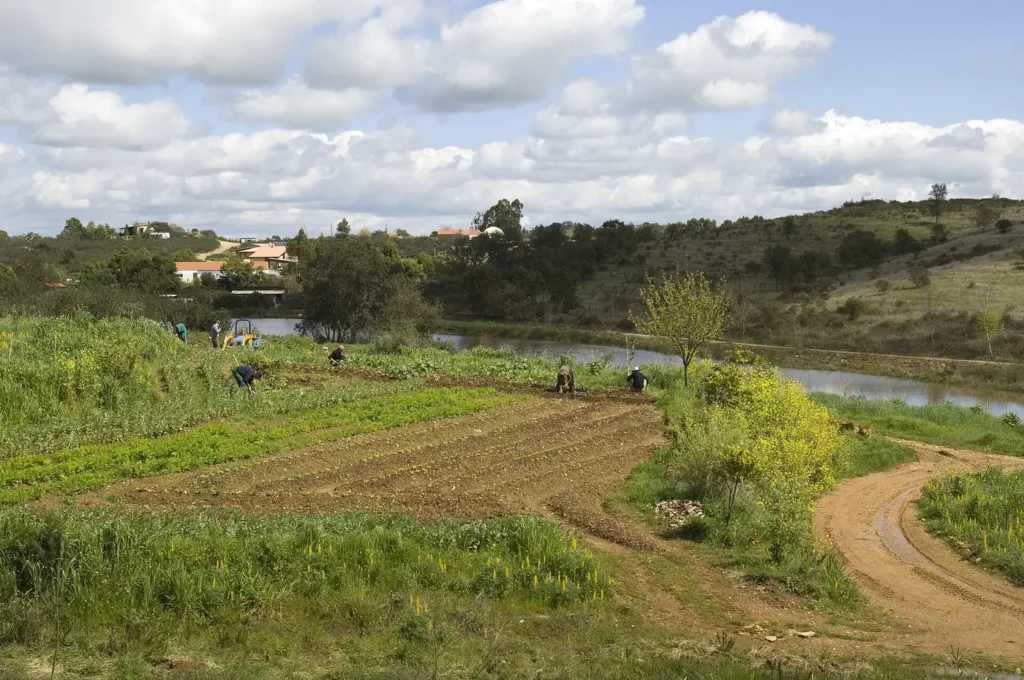
The word combines “permanent” and “agriculture” (and, for some, “culture”). It was developed in Australia in the 1970s by Bill Mollison and David Holmgren, drawing on much older traditional farming and land-care practices. Oregon State University Extension’s introduction for Master Gardeners, Permaculture Basics for Home Gardeners (PDF), describes it as a way of creating efficient, productive landscapes that sustain themselves into the future by regenerating biodiversity and fertility.
In practice, a permaculture garden tends to:
- Mimic natural ecosystems, with layers of trees, shrubs, perennials and ground covers rather than bare rows.
- Favor perennial plants that produce year after year alongside annual vegetables.
- Build soil with mulch, compost and minimal digging.
- Catch and use water on site instead of letting it run off.
- Recycle waste such as kitchen scraps and leaves back into the garden.
- Place things thoughtfully, so that what you use most is closest to hand.
The three ethics
| Ethic | Meaning | In a home garden |
|---|---|---|
| Earth care | Look after soil, water and living systems | Mulch, compost, avoid pesticides, plant for pollinators |
| People care | Meet human needs in healthy ways | Grow food you eat; design a garden you enjoy using |
| Fair share | Share surplus and limit consumption | Give away extra produce, swap seeds, reuse materials |
The 12 design principles, applied to a backyard
David Holmgren summarized permaculture design in twelve principles. They are guidelines for thinking, not rules, and the best way to understand them is through everyday examples:
| Principle | Backyard example |
|---|---|
| 1. Observe and interact | Watch sun, shade, wind and water for a season before building |
| 2. Catch and store energy | Rain barrels, rain gardens, a sunny south-facing wall |
| 3. Obtain a yield | Make sure the garden actually produces food or other benefits |
| 4. Apply self-regulation and accept feedback | Notice what fails and change it next year |
| 5. Use and value renewable resources | Leaves for mulch, rainwater, homemade compost |
| 6. Produce no waste | Compost kitchen scraps and garden trimmings |
| 7. Design from patterns to details | Plan the overall layout before choosing individual plants |
| 8. Integrate rather than segregate | Mix flowers, herbs and vegetables so they support each other |
| 9. Use small and slow solutions | Start with one bed and expand as you learn |
| 10. Use and value diversity | Grow many kinds of plants rather than a monoculture |
| 11. Use edges and value the marginal | Plant productive borders along paths and fences |
| 12. Creatively use and respond to change | Adapt as trees grow, seasons shift and your needs change |
Permaculture zones
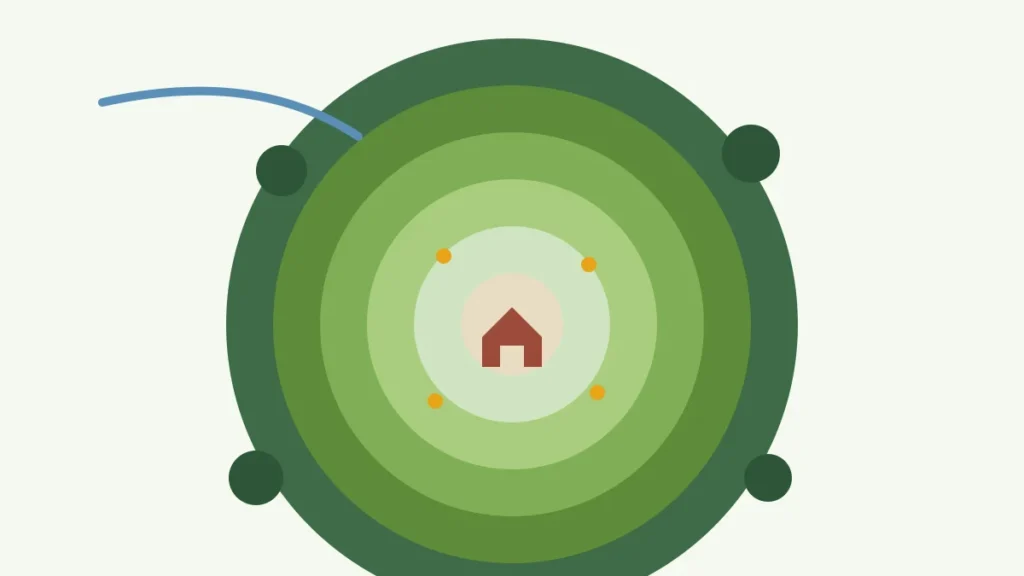
Zones organize a property by how often you visit each area. Things you use daily go closest to the house; things that need little attention go furthest away. Oregon State University’s open textbook chapter on permaculture zones explains the system in detail.
| Zone | Where | What goes there |
|---|---|---|
| 0 | The house | Indoor herbs, seed starting, kitchen compost collection |
| 1 | Right outside the door | Herbs, salad greens, tomatoes: plants you pick daily |
| 2 | A little further out | Main vegetable beds, berries, compost bins, small fruit trees |
| 3 | Further still | Larger crops, orchards, field plantings |
| 4 | Semi-wild | Woodlots, foraging, low-maintenance plantings |
| 5 | Wild | Left natural, for observation and wildlife |
Most suburban gardens only have zones 0 to 2, and that is fine. The key idea is simple: put your herb and salad garden where you walk past it every day. You will use it far more, and look after it better. Our guide to starting an herb garden covers a classic zone 1 planting.
Practical permaculture techniques
Sheet mulching (no-dig beds)
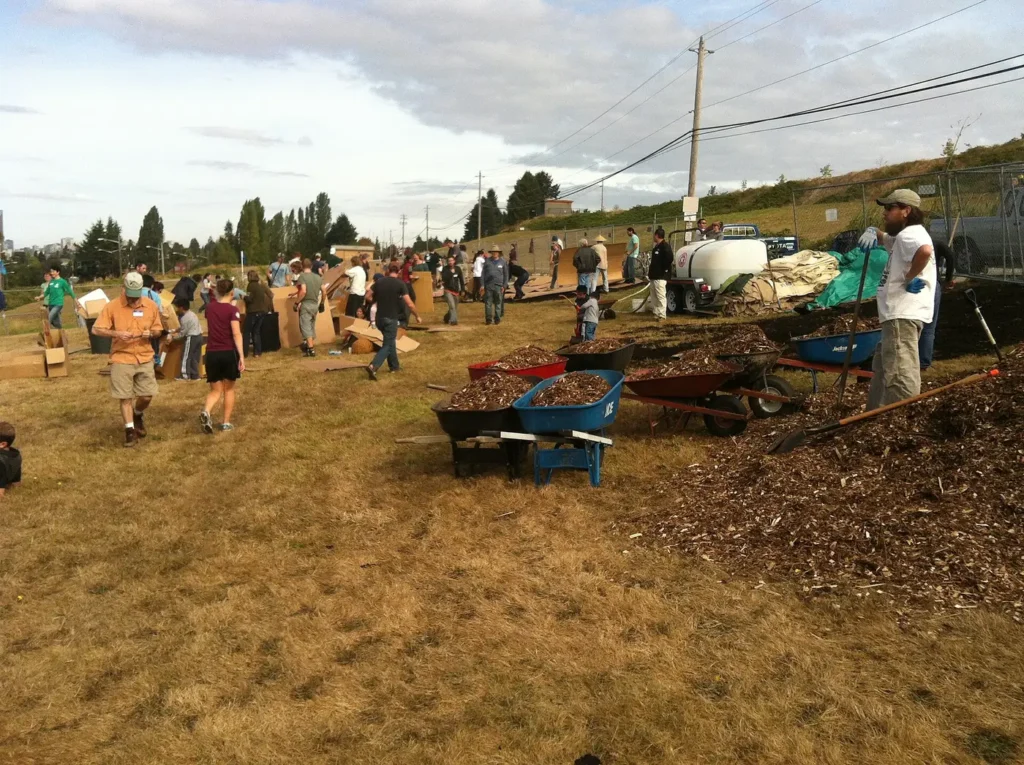
Sheet mulching builds a new bed on top of lawn or weeds without digging. It smothers existing growth and builds soil at the same time.
- Cut or mow existing grass and weeds short.
- Water the area well.
- Lay plain cardboard over the whole area, overlapping the edges by several inches so no light gets through. Remove tape and glossy labels.
- Soak the cardboard.
- Add layers of compost, shredded leaves, grass clippings and other organic matter, several inches deep in total.
- Top with compost and mulch, and plant into pockets of compost.
Starting in fall gives the layers time to break down before spring. The compost calculator and mulch calculator work out how much material you need.
Hugelkultur
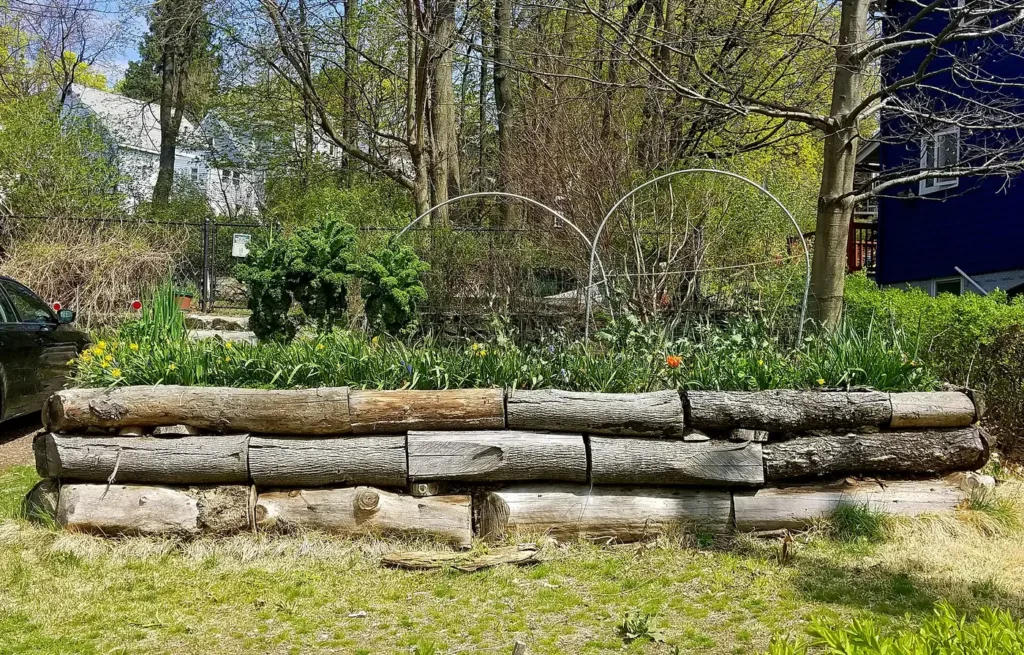
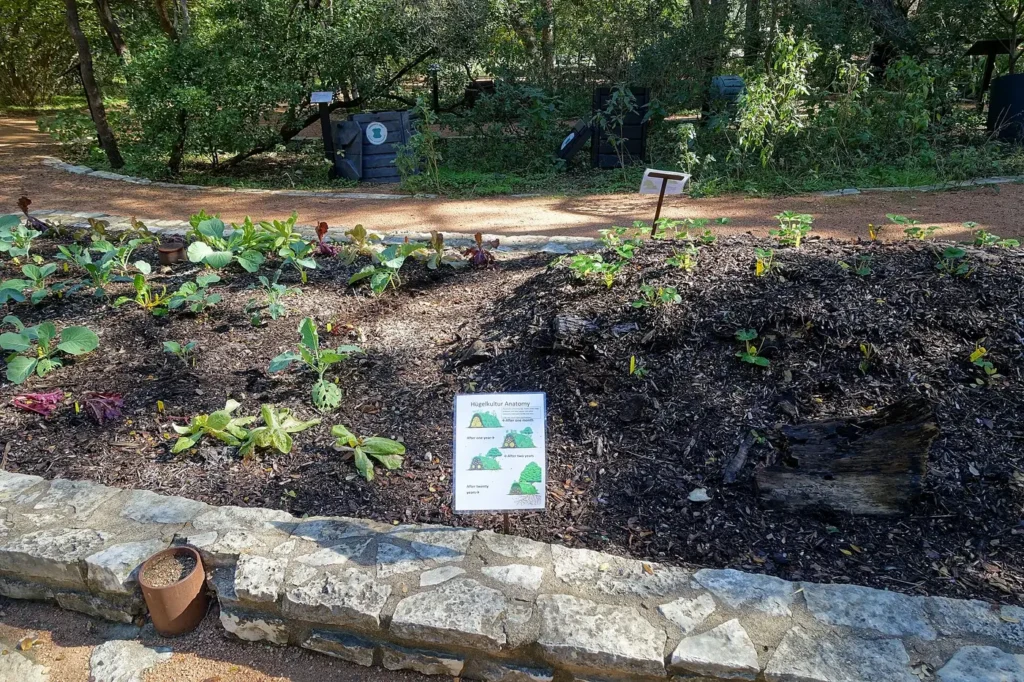
Hugelkultur (German for “mound culture”) is a raised bed built over a core of logs and branches, covered with smaller woody material, leaves, compost and soil. As the wood slowly rots, it acts like a sponge and adds organic matter.
- Pros: uses up woody waste, reduces the soil needed to fill a tall bed, and can hold extra moisture once established.
- Cons: mounds settle significantly as wood breaks down; fresh wood can tie up nitrogen in the first year or two, so add plenty of compost on top; and steep mounds can dry out on top.
- Use the right wood: avoid black walnut, which releases compounds that harm many plants, and avoid treated or painted wood. Very rot-resistant woods break down slowly.
The same idea works inside a tall raised bed: fill the bottom third with logs and branches to cut soil costs. Our guide to how much soil a raised bed needs explains the soil savings.
Plant guilds
A guild is a group of plants grown together around a central plant, usually a fruit tree, with each plant chosen for a role: attracting pollinators, deterring pests, covering the ground, adding organic matter, or providing food. A typical fruit tree guild might include spring bulbs around the drip line, chives and other alliums, nectar-rich flowers, and a low ground cover.
Guilds are an appealing idea, but much of the evidence for specific guild combinations is anecdotal. Treat them as good planting design, mixing diverse, useful plants, rather than as guaranteed pest control. Our guide to companion planting that actually works separates the well-supported pairings from the folklore, and the companion plant finder suggests partners for each crop.
Catching and storing water
Permaculture designs try to slow water down, spread it out and let it soak in. In a home garden that usually means:
- Rain barrels to store roof water for dry spells. See our guide to rainwater harvesting and the rain barrel calculator.
- Rain gardens that soak runoff into the ground; our guide to making a rain garden covers sizing and plants.
- Mulch everywhere, which is the simplest way to keep water in the soil.
- Swales, shallow ditches dug along the contour of a slope to catch runoff. They suit larger, sloping properties and need careful design so water is not directed toward buildings or neighbors.
Perennial food plants
Perennials are planted once and harvested for years, which is why they are central to permaculture:
| Type | Examples |
|---|---|
| Perennial vegetables | Asparagus, rhubarb, sorrel, perennial onions |
| Perennial herbs | Chives, thyme, oregano, sage, mint, rosemary in mild climates |
| Berries | Strawberries, raspberries, blackberries, blueberries, currants |
| Fruit and nut trees | Apples, pears, plums, cherries, figs and hazelnuts, depending on climate |
Check which perennials suit your winters with the growing zone finder, and browse perennial crops in the plant database.
Food forests
A food forest is the most ambitious permaculture planting: a layered, woodland-like garden of fruit and nut trees, berry shrubs, perennial herbs, ground covers and climbing plants. Even a small backyard can hold a mini food forest built around one or two dwarf fruit trees. Food forests take years to mature and still need pruning, mulching and harvesting, but they become more productive and lower-maintenance over time.
Composting and closing loops
Producing no waste is a core principle. Kitchen scraps, garden trimmings and fallen leaves become compost that feeds the soil. Our beginner’s guide to composting covers how to start, and our article on coffee grounds in the garden explains one popular free ingredient.
How to start a permaculture garden: a 6-step plan
- Observe for a season. Note where sun falls, where water collects, where wind blows, and how you move around the yard. The sunlight requirement finder helps you match plants to light.
- Map the site and sketch your zones. The garden layout generator and our guide to planning a garden layout help with the first draft.
- Start with zone 1: a sheet-mulched bed of herbs and salad greens near the kitchen door.
- Set up compost and, if you can, a rain barrel.
- Add perennials gradually: herbs, berries, then a fruit tree with a simple guild.
- Review each year and expand what works.
Where permaculture claims get ahead of the evidence
Permaculture is full of good ideas, but some popular claims deserve caution. Oregon State Extension’s training material for Master Gardeners openly discusses some of the controversial ideas in permaculture.
- “A permaculture garden needs no work.” Established perennial plantings need less digging and weeding, but every garden needs planting, pruning, mulching and harvesting.
- “Guilds eliminate pests.” Diverse plantings support beneficial insects, but specific combinations rarely guarantee pest control.
- “Hugelkultur never needs watering.” Buried wood holds some moisture once it has rotted, but new mounds often dry out, especially on top.
- “Any plant will grow if the design is right.” Climate, sun and soil still decide what thrives.
The practical takeaway: use permaculture as a design mindset, and test individual techniques in your own garden.
Permaculture in a small space
- Stack layers: a dwarf fruit tree, berry bushes below, herbs and strawberries as ground cover.
- Grow vertically on fences and trellises.
- Use containers for zone 1 herbs on a balcony.
- Compost in a worm bin if you have no room for a pile.
- Collect rainwater from even a small roof or shed.
Our guide to small garden ideas has more ways to make a tiny space productive.
Permaculture vs. a traditional vegetable garden
| Traditional vegetable garden | Permaculture garden | |
|---|---|---|
| Plants | Mostly annual vegetables | Annuals plus perennials, fruit and flowers |
| Soil | Often dug or tilled each year | Built with mulch and compost; minimal digging |
| Layout | Rows or beds | Zones and layered plantings |
| Water | Supplied by hose or sprinkler | Caught and stored on site where possible |
| Inputs | Bought fertilizer and amendments | Recycled on site through compost |
| Effort | Similar every year | Higher at setup, lower once established |
You do not have to choose one or the other. Many gardeners keep annual vegetable beds and add permaculture ideas around them.
Sources and further reading
These university Extension and government resources informed this guide and are useful for going deeper. Recommendations can vary by region, so your local Cooperative Extension office is always a good next step.
- Composting at Home, U.S. Environmental Protection Agency
- Soak Up the Rain, U.S. Environmental Protection Agency
- Gardening with Companion Plants, Washington State University Extension
Frequently asked questions
What is a permaculture garden?
A garden designed so its parts work together like a natural ecosystem: layered plantings, perennials, soil built with mulch and compost, water caught on site, and frequently used plants placed closest to the house.
What are the three ethics of permaculture?
Earth care, people care and fair share: look after the land, meet human needs in healthy ways, and share surplus.
What are permaculture zones?
A way of organizing a property from zone 0, the house, outward to zone 5, wild land, placing things you use most often closest to home.
How do I start a permaculture garden?
Observe your site for a season, map your zones, start with a sheet-mulched herb and salad bed near the kitchen, set up compost, and add perennials gradually.
Is hugelkultur worth it?
It can be a good use of woody waste and reduces soil needed for tall beds, but mounds settle, may tie up nitrogen at first, and still need watering while young.
Can I practice permaculture in a small yard?
Yes. Even a patio can apply the principles: herbs by the door, containers, vertical growing, a worm bin and a rain barrel.
Is permaculture the same as organic gardening?
Not exactly. Organic gardening focuses on avoiding synthetic inputs; permaculture is a design approach for the whole site. Most permaculture gardens are also managed organically.
Do I need a lot of land for permaculture?
No. The ideas scale down to a suburban yard, a patio or even a balcony.