You do not need a big yard to grow a lot of food or a beautiful garden. A patio, balcony, side yard, narrow strip along a fence or even a few sunny windowsills can produce salads, herbs, tomatoes, peppers, beans and flowers all season, if you plan the space well. In fact, small gardens are often more productive per square foot than large ones, because every inch gets attention.
This guide collects practical small garden ideas for vegetables, herbs and flowers: growing up instead of out, containers that actually work, compact varieties, planting techniques that squeeze more out of every square foot, and ways to make a tiny space look bigger and more inviting.
Start with the light
In a small space, sunlight is usually the deciding factor. Watch your space through a full day in late spring or summer and count the hours of direct sun.
| Direct sun | What grows well |
|---|---|
| 6 hours or more | Tomatoes, peppers, eggplant, beans, cucumbers, squash, most herbs, sunflowers, zinnias |
| 4 to 6 hours | Beets, carrots, radishes, peas, chard, kale, parsley, chives |
| About 3 hours | Lettuce, spinach, arugula, mint, shade flowers such as impatiens and begonias |
The sunlight requirement finder matches plants to the light you have. If your space is mostly shady, our guide to shade garden plants covers the best options.
Idea 1: Grow up, not out
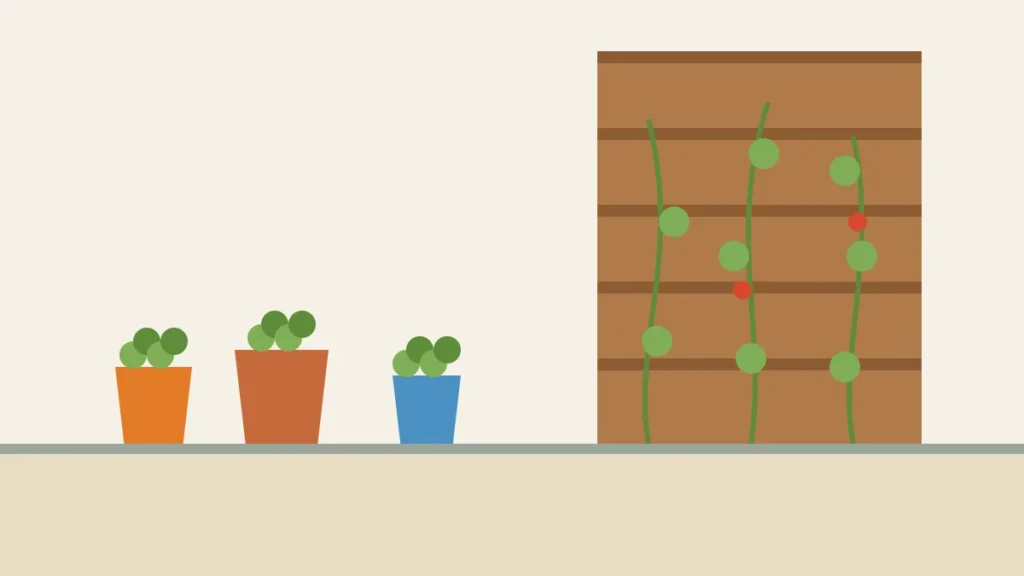
Vertical growing is the single most effective way to get more from a small space. Climbing and trailing crops take up very little ground when trained upward.
- Trellises and netting on walls and fences for pole beans, peas, cucumbers and small squash.
- Obelisks and teepees in containers for beans, sweet peas and climbing nasturtiums.
- Cages and stakes for tomatoes, which grow tall rather than wide.
- Wall planters and pocket planters for herbs, strawberries and lettuce.
- Hanging baskets for trailing tomatoes, strawberries and herbs.
- Tiered shelves or stepped planters to stack containers in a sunny corner.
Support heavy fruit such as melons with slings, and make sure trellises are anchored firmly, especially on windy balconies.
Idea 2: Use containers that are big enough
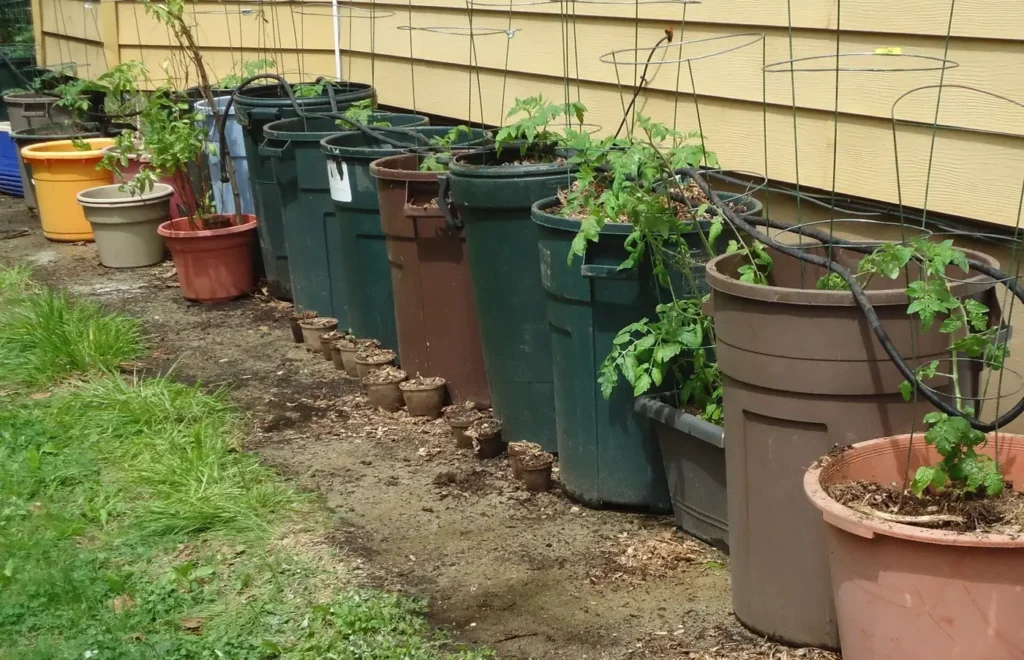
Containers turn any paved surface into growing space. The most common mistake is choosing pots that are too small: they dry out within hours in summer and limit root growth. Penn State Extension’s guide to container vegetable gardening success covers the four essentials: container, soil, light and watering.
| Crop | Minimum container | Plants per container |
|---|---|---|
| Tomato (full size) | About 15 to 20 gallons | 1 |
| Patio or dwarf tomato | About 5 gallons | 1 |
| Pepper or eggplant | About 5 gallons | 1 |
| Bush beans | About 3 to 5 gallons | Several |
| Lettuce and salad greens | Wide, shallow pot, 6 to 8 in deep | Several, harvested leaf by leaf |
| Herbs | 1 to 2 gallons each | 1 |
| Strawberries | Hanging basket or wide pot | Several |
Always use pots with drainage holes and a quality potting mix, not garden soil. Our full guide to container vegetable gardening goes into detail, and the container garden planner recommends sizes for each crop.
Idea 3: Choose compact varieties
Plant breeders have developed many varieties specifically for small spaces. Look for words like “patio”, “dwarf”, “bush”, “compact” or “container” in seed catalogs.
| Crop | Small-space choice |
|---|---|
| Tomatoes | Determinate patio and dwarf types; cherry tomatoes in baskets |
| Cucumbers | Bush varieties, or vining types trained up a trellis |
| Squash | Bush zucchini varieties |
| Beans | Bush beans, or pole beans on a trellis for more yield per square foot |
| Peppers | Compact snacking and chili peppers |
| Fruit trees | Dwarf or columnar trees in large containers |
| Blueberries | Compact varieties in pots of acidic potting mix |
The plant finder filters crops by the space they need.
Idea 4: Use square foot gardening
Instead of rows with paths between them, square foot gardening divides a bed into one-foot squares and plants each square intensively: 1 tomato, 4 lettuces, 9 bush beans or 16 carrots per square. A single 4-by-4-foot bed holds 16 squares, which is enough for a surprising variety of crops. Our comparison of square foot and row gardening explains the method, and the square foot gardening calculator tells you exactly how many plants fit.
Idea 5: Plant in succession
In a small garden, an empty square is wasted space. As soon as one crop finishes, plant another. Sow small batches of lettuce, radishes and herbs every two to three weeks, follow spring peas with summer beans, and replace summer crops with fall greens. Our planting calendar shows what to sow when.
Idea 6: Interplant fast and slow crops
Fast crops such as radishes, lettuce and green onions can grow in the gaps around slow crops such as tomatoes, peppers and broccoli, and be harvested before the bigger plants need the space. Herbs and flowers tucked between vegetables add color and attract pollinators. The companion plant finder suggests good neighbors.
Idea 7: Narrow beds along fences and walls
A bed just 18 to 24 inches wide along a fence, wall or driveway can be surprisingly productive, and the fence doubles as a trellis. South-facing walls are especially valuable, because they reflect heat and light. See our guide to raised garden bed ideas for narrow and wall-bed designs.
Idea 8: Window boxes and railing planters
Window boxes and planters that hang over balcony railings make use of space that would otherwise be empty. Herbs, lettuce, strawberries, trailing nasturtiums and compact flowers all suit them. Make sure railing planters are securely fixed and check any building rules before hanging them on the outside of a balcony.
Idea 9: Make it a mini potager
A small space can still be beautiful as well as productive. A single bed divided into four squares, or four matching containers around a central pot, gives a tiny garden the charm of a French kitchen garden. Our guide to potager gardens covers the design ideas.
Idea 10: Grow herbs by the door
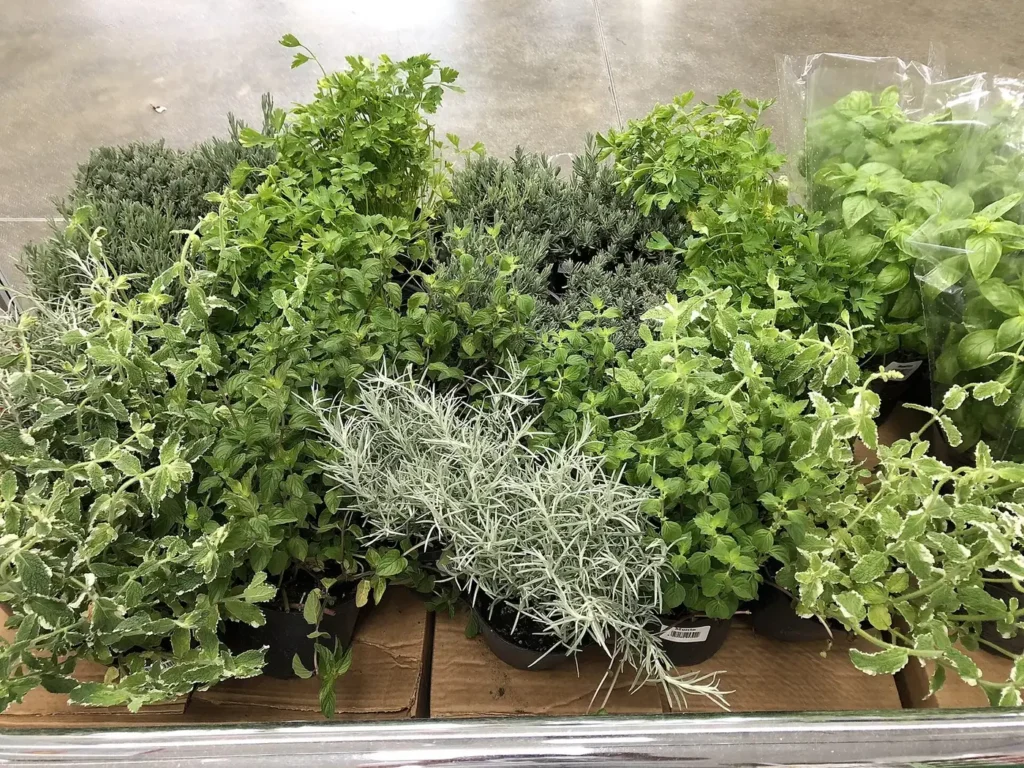
Herbs give the most value for the least space: a few pots of basil, parsley, chives, thyme and mint by the kitchen door will replace dozens of store packets. Our guide to starting an herb garden covers indoor and outdoor growing.
Making a small garden look bigger
- Repeat a few plants and colors rather than many different ones, which looks calmer and more spacious.
- Use light-colored containers and surfaces to brighten shady corners.
- Add height with trellises and tall plants at the back, drawing the eye upward.
- Keep paths and seating clear, so the space feels usable rather than crowded.
- Group containers in odd numbers and varying heights.
- Add a focal point, such as one large pot or a small fruit tree, rather than many small items.
Watering a small garden
Small containers dry out quickly, especially on hot, windy balconies, and may need water every day in summer. To make it easier:
- Choose the largest pots that fit: more soil holds more water.
- Use self-watering containers with a built-in reservoir.
- Mulch the surface of pots with compost or bark.
- Group pots together to shade each other’s sides.
- Set up a small drip system on a timer; the drip irrigation calculator sizes one.
- Check before watering: push a finger into the mix, and water when the top inch is dry.
Our guide on how often to water covers the basics, and the overwatering checker helps if plants look unhappy.
Balcony and rooftop considerations
- Weight: wet soil is heavy. Large containers can weigh a great deal when watered, so check your balcony’s load limits with your landlord or building manager, and place the heaviest pots near walls and supports.
- Wind: balconies can be windy; use sturdy pots, stake tall plants, and choose compact varieties.
- Drainage: use saucers so water does not drip onto neighbors below.
- Rules: many buildings and HOAs have rules about planters on railings and roofs.
Sample small garden plans
| Space | What to grow |
|---|---|
| Sunny balcony (6+ hours) | 1 patio tomato, 1 pepper, a trough of salad greens, bush beans in a 5-gallon pot, 4 herb pots, a hanging strawberry basket |
| Shady balcony (3 to 4 hours) | Lettuce, spinach, arugula, parsley, chives, mint and impatiens |
| 4 × 4 ft raised bed | 1 tomato, 4 lettuces, 9 bush beans, 16 carrots, 1 pepper, 4 chard, basil, marigolds, and radishes in the gaps |
| Narrow side yard | A 2-ft-wide bed along the fence with cucumbers and pole beans on a trellis, and herbs at the front |
Plan your own square by square in the raised bed planner.
Common small garden mistakes
- Containers that are too small, which dry out and stunt plants.
- Planting full-size varieties that outgrow the space.
- Overcrowding, which reduces airflow and yields.
- Ignoring the sun and planting tomatoes in shade.
- Forgetting weight limits on balconies and roofs.
- Leaving gaps unplanted after harvest.
The most productive crops for small spaces
If space is tight, favor crops that give a lot of harvest for the room they take, and that you would otherwise buy often:
| Crop | Why it earns its space |
|---|---|
| Salad greens | Pick leaves for weeks from one sowing |
| Herbs | Expensive to buy; productive for months |
| Cherry tomatoes | Heavy crops from one plant; grow upward |
| Pole beans | Lots of pods from a narrow strip of trellis |
| Swiss chard and kale | Harvested leaf by leaf for months |
| Radishes and green onions | Ready in weeks; fit between other crops |
| Strawberries | Thrive in hanging baskets and pockets |
Crops such as corn, pumpkins and full-size winter squash take a lot of room for their harvest, so they are best left for larger gardens.
Small garden ideas for renters
- Containers and fabric grow bags move with you when you do.
- Freestanding trellises in large pots avoid drilling into walls.
- Self-watering planters cope with busy schedules and weekends away.
- Elevated planter tables fit on patios without disturbing the ground.
- Ask first before digging beds or fixing planters to railings.
A year in a small garden
| Season | What to grow |
|---|---|
| Early spring | Lettuce, spinach, radishes, peas on a trellis, pansies |
| Late spring | Plant tomatoes, peppers, basil and bush beans after the last frost |
| Summer | Harvest daily; sow more beans and lettuce in gaps; water often |
| Late summer | Sow fall greens, radishes and carrots as summer crops finish |
| Fall and winter | Harvest greens; plant garlic in a pot; grow herbs on a sunny windowsill |
The frost date tool helps you time each season.
Feeding plants in containers and small beds
Plants in small spaces have limited soil to draw nutrients from, and frequent watering washes nutrients out of containers. A few simple habits keep them productive:
- Start with a quality potting mix that includes some slow-release fertilizer, or mix one in at planting.
- Feed hungry crops regularly during the season. Tomatoes, peppers and cucumbers in pots usually benefit from a liquid fertilizer every week or two once they start flowering; follow the label.
- Top-dress beds with compost each spring and between crops. The compost calculator works out how much.
- Refresh container mix every year or two, since old mix compacts and loses structure.
- Watch the leaves: pale or yellowing leaves often signal hungry plants, though overwatering can look similar. The yellow leaf identifier helps tell the difference.
Sources and further reading
These university Extension and government resources informed this guide and are useful for going deeper. Recommendations can vary by region, so your local Cooperative Extension office is always a good next step.
- Growing Herbs Indoors, NC State Extension
- Growing Herbs on the Windowsill, University of Illinois Extension
- Raised Bed Gardening, Oregon State University Extension
Frequently asked questions
How can I grow vegetables in a small space?
Grow vertically on trellises, use large containers with good potting mix, choose compact varieties, plant intensively with square foot gardening, and replant gaps as soon as crops are harvested.
What vegetables grow best in small gardens?
Salad greens, herbs, cherry and patio tomatoes, peppers, bush beans, radishes, chard and strawberries are among the most productive for the space they take.
How big should containers be for vegetables?
About 5 gallons for a pepper or patio tomato, 15 to 20 gallons for a full-size tomato, and wide, shallow pots for salad greens.
Can I grow a vegetable garden on a balcony?
Yes, if it gets at least a few hours of direct sun. Check weight limits, use sturdy pots, and choose compact varieties suited to wind.
How do I make a small garden look bigger?
Repeat a few plants and colors, add height with trellises, use light-colored containers, group pots, and keep paths and seating clear.
How often should I water container plants?
Check daily in summer and water when the top inch of mix is dry. Small pots in hot, windy spots may need water every day.
What is the easiest thing to grow in a small garden?
Herbs and salad greens are the easiest and most productive: they grow quickly in pots and can be harvested again and again.
Can I grow tomatoes in a small space?
Yes. Choose patio or cherry varieties, grow them in containers of at least 5 gallons, and stake or cage them so they grow upward.