A good trellis is one of the most useful things you can add to a vegetable garden. Growing climbing crops up instead of letting them sprawl saves space, keeps fruit clean and off the ground, improves airflow so leaves dry faster and stay healthier, and puts the harvest at eye level where it is easy to see and pick. A well-built trellis can also be one of the most attractive features in the garden.
This guide covers garden trellis ideas for every budget and space, which crops to grow on them, how strong each type needs to be, and how to build and install trellises so they stand up to a full season of heavy vines, wind and rain.
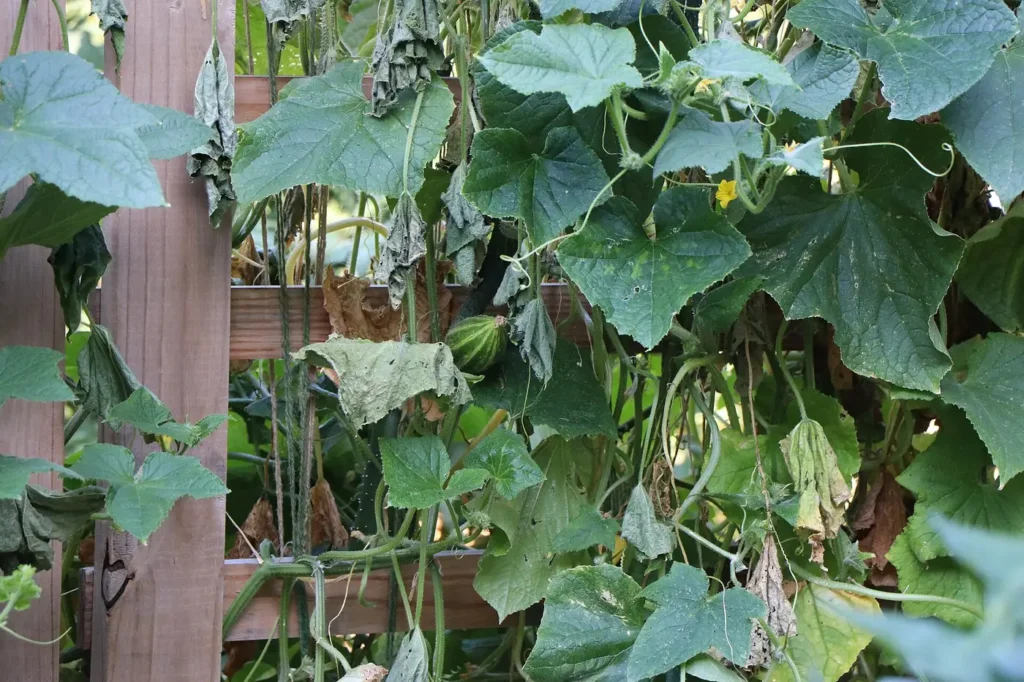
Why grow on a trellis?
University of Wisconsin–Madison Extension’s guide to trellising, staking and caging lists vine-type crops such as tomatoes, melons and cucumbers among the most popular in home gardens, and explains that supporting them helps you maximize yield and care for plants more easily. The main benefits:
- More food in less space. A trellis lets climbing crops use vertical space instead of covering the ground.
- Healthier plants. Leaves held up off the soil dry faster after rain or watering, which reduces many leaf diseases.
- Cleaner, better fruit. Cucumbers grow straighter, and fruit stays off damp soil where it can rot or be eaten by slugs.
- Easier harvesting. Fruit hangs where you can see it, and you can pick standing up.
- A more attractive garden. Arches, obelisks and teepees add height and structure.
Which crops grow on a trellis?
| Crop | How it climbs | Support needed | Notes |
|---|---|---|---|
| Pole beans | Twines around supports | Light | Strings, poles, teepees and netting all work |
| Peas | Tendrils | Light | Fine netting or twiggy branches; 3 to 6 ft depending on variety |
| Cucumbers | Tendrils | Medium | Netting, wire panels or A-frames |
| Indeterminate tomatoes | Do not climb on their own | Heavy | Must be tied or woven to stakes, strings or panels |
| Small melons | Tendrils | Heavy | Support each fruit with a sling |
| Small winter squash and gourds | Tendrils | Heavy | Sturdy arches or livestock panels |
| Malabar spinach | Twines | Light to medium | Heat-loving climbing green |
| Climbing nasturtiums and sweet peas | Tendrils or twining | Light | Edible flowers and color |
Nebraska Extension’s guide to vertical gardening points out that plants can become remarkably heavy as fruit develops, especially melons and tomatoes, while beans and peas need the lightest support. It also recommends checking plant tags: choose pole beans rather than bush beans, and indeterminate (vining) tomatoes for trellises, since determinate bush tomatoes are better held up with cages.
Browse climbing crops and their spacing in the plant database, and check how many plants fit along a trellis with the plant spacing calculator.
Trellis ideas
1. String or twine trellis
The simplest and cheapest trellis: a horizontal top support, such as a pipe, board or wire stretched between two posts, with vertical strings dropped down to each plant. Wisconsin Extension describes this method of dropping vertical twines from the upper support down to each plant and tying them at the base. It is excellent for pole beans and for tomatoes trained to a single stem, which are wrapped around the string as they grow.
2. Netting trellis
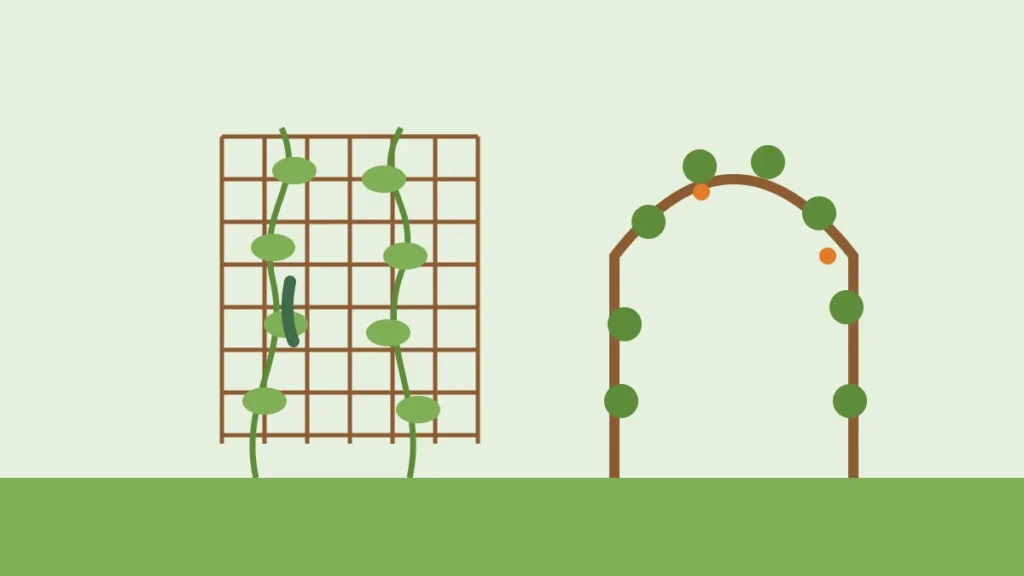
Nylon or polypropylene trellis netting stretched between two posts is inexpensive and quick to put up. Peas and cucumbers grab it with their tendrils. Wisconsin Extension suggests nylon mesh or hog wire with a 4-inch square grid, which is large enough to reach through when harvesting. Pull netting taut, because slack netting sags under heavy vines.
3. Livestock (cattle) panel trellis
Welded wire livestock panels, usually 16 feet long and about 4 to 5 feet tall, are some of the strongest and most versatile trellises. Stand one upright against T-posts for a sturdy wall of cucumbers or tomatoes, or bend it into an arch.
4. Arched trellis between raised beds
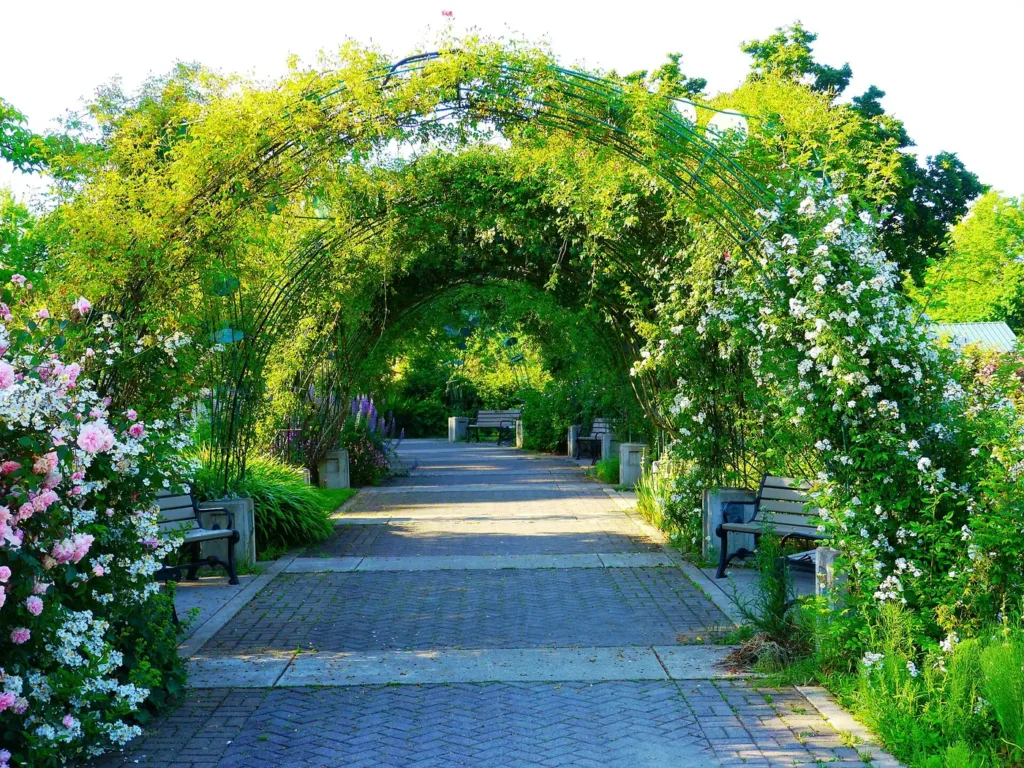
Bend a livestock panel into an arch between two raised beds and secure the ends to the inside of each bed or to posts. Pole beans, cucumbers, small squash and gourds grow up and over it, creating a shaded tunnel. Fruit hangs down inside, where it is easy to spot. Nebraska Extension notes that an arch or arbor can support cucumbers or gourds, and suggests growing shade-tolerant crops such as lettuce in the shade beneath.
5. A-frame trellis
Two panels of wood and wire or netting leaned together at the top form an A-frame. It stands on its own, is easy to move between beds, and gives two growing faces. Cucumbers love it, and you can grow lettuce or spinach in the shade underneath during summer.
6. Bean teepee
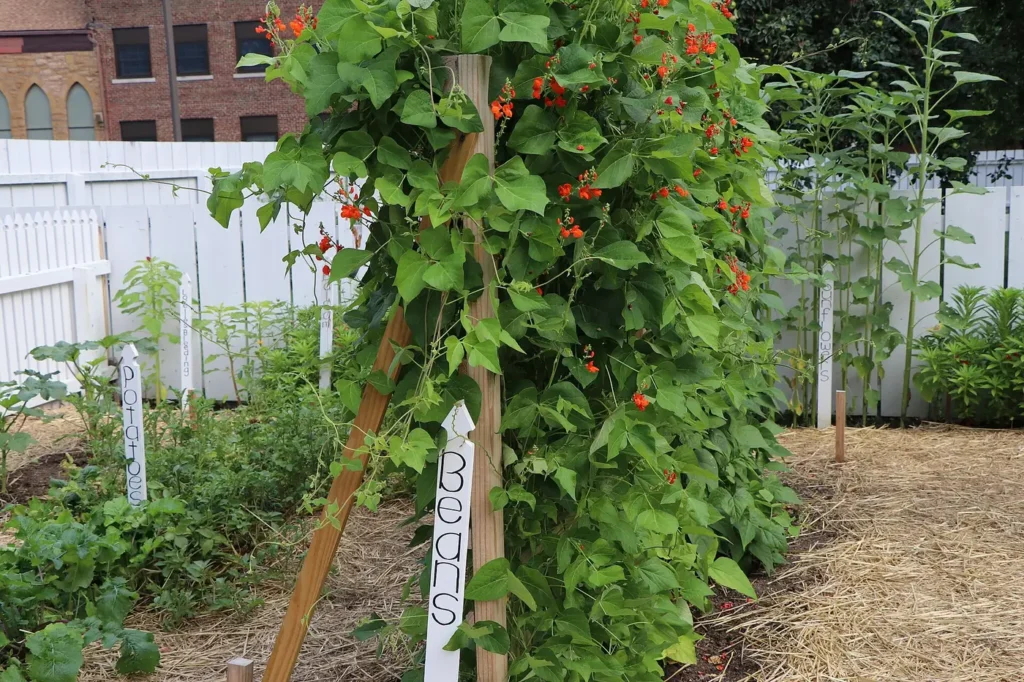
Tie six to eight bamboo canes or straight branches together at the top and spread the bottoms into a circle. Plant a pole bean at the base of each pole. Virginia Tech Extension’s publication on vertical gardening using trellises, stakes and cages notes that stakes arranged in a tripod make a visually interesting structure for climbing crops such as pole beans. Leave one gap without a pole and a teepee becomes a hideout for children.
7. Obelisks
Tall, tapered, four-sided towers of wood or metal suit containers and formal gardens such as potagers. Grow sweet peas, climbing nasturtiums, cherry tomatoes or pole beans on them. Our guide to potager gardens shows how they fit into a decorative kitchen garden.
8. Fence and wall trellises
An existing fence is a ready-made trellis. Attach netting, wire or a lattice panel and train peas, beans and cucumbers up it. A sunny, south-facing wall also stores heat, which helps warm-season crops ripen. Leave a small gap between the trellis and a house wall for airflow.
9. Ladder trellis
An old wooden ladder, or a simple ladder-shaped frame of wood, makes a charming, rustic support for peas, beans and climbing flowers.
10. Branch and twig supports
Twiggy branches from pruning, pushed firmly into the soil, have supported peas for centuries. They are free, biodegradable and blend naturally into the garden. Virginia Tech Extension also notes that pole beans can even use sweet corn as a living trellis, the idea behind the traditional Three Sisters planting.
11. Tomato trellis systems
For tall, indeterminate tomatoes, alternatives to cages include:
- Single stakes, with the plant pruned to one or two main stems and tied every foot or so.
- The Florida weave: stakes between every one or two plants, with twine woven back and forth along the row and tightened as the plants grow.
- Livestock panels, with stems tied to the wire.
- Overhead strings from a top bar, with each plant wound around its own string.
Wisconsin Extension suggests cages about 2 feet across for tomatoes, squash and melons. Our guide to common tomato problems explains why keeping tomato leaves off the ground helps prevent disease.
12. Vertical pallet and wall planters
For patios and balconies, wall-mounted pocket planters and vertical frames hold herbs, strawberries and lettuce. They do not support heavy climbers, but they add growing space where there is no ground at all. See our small garden ideas for more.
Choosing the right trellis
| Trellis type | Strength | Cost | Best for |
|---|---|---|---|
| String or twine | Light to medium | Very low | Pole beans, single-stem tomatoes |
| Netting | Light to medium | Low | Peas, cucumbers |
| Bamboo teepee | Light | Low | Pole beans, sweet peas |
| Branches and twigs | Light | Free | Peas |
| A-frame | Medium | Low to medium | Cucumbers, beans |
| Livestock panel | Heavy | Medium | Tomatoes, squash, melons, cucumbers |
| Panel arch | Heavy | Medium | Squash, gourds, beans, cucumbers |
| Wood or metal obelisk | Medium | Medium to high | Containers and decorative gardens |
How to install a trellis that lasts
- Put it in before you plant, or at planting time, so you do not disturb roots later.
- Place it on the north side of the bed so it does not shade shorter crops. In a north-south row, orient it so both sides get sun.
- Anchor posts deeply. Wisconsin Extension recommends setting sturdy support posts about 2 feet into the ground, about 12 to 20 feet apart. Metal T-posts are quick to drive in; wooden posts can be set in holes and backfilled firmly.
- Brace the ends of long trellises, since a row of mature tomatoes or squash catches a lot of wind.
- Keep netting taut and tie panels securely to their posts with wire or heavy-duty ties.
- Plan for the full height: pole beans and tall peas can reach 6 to 8 feet or more, and indeterminate tomatoes can grow even taller in long seasons.
In raised beds, screw post brackets or short lengths of pipe to the inside walls and slot trellis posts into them. Our guide to building a raised garden bed covers adding a trellis to a bed, and 25 raised garden bed ideas includes arched designs.
Training plants onto a trellis
- Beans find supports on their own; guide the first tendrils toward the string or pole.
- Peas and cucumbers grab netting with tendrils, but may need a little guidance early on.
- Tomatoes do not climb. Tie stems loosely to the support with soft twine or cloth strips every 8 to 12 inches as they grow, or weave them through the panel.
- Melons and squash climb with tendrils, but heavy fruit needs a sling of netting, old T-shirts or pantyhose tied to the trellis.
- Check weekly and tuck in wandering shoots.
Watering and feeding trellised crops
Trellised plants produce a lot of fruit in a small footprint, so they need steady water and nutrients. A drip line along the base of the trellis delivers water directly to the roots and keeps leaves dry. The drip irrigation calculator sizes a system, and our guide on how often to water covers how much they need. Mulch the soil beneath the trellis to hold moisture; the mulch calculator works out how much.
Trellis ideas by space
| Space | Trellis ideas |
|---|---|
| Balcony or patio | Obelisks in large pots, wall-mounted netting, railing trellises |
| Small raised bed | A netting panel along the north edge; a bamboo teepee |
| Several raised beds | Arched panels between beds; A-frames |
| Long rows | T-posts with livestock panels or netting; Florida weave for tomatoes |
| Fence line | Netting or wire attached directly to the fence |
Plan where each trellis goes with the garden layout generator or the raised bed planner, and see our vegetable garden ideas for more ways to grow up.
End-of-season care
- Remove spent vines before they dry and tangle, and compost healthy material. Discard diseased vines rather than composting them.
- Take down netting and string, which degrade in sunlight; reuse netting if it is still sound.
- Store panels and stakes under cover to extend their life.
- Rotate crops: grow climbing crops of a different family on each trellis next year.
Common trellis mistakes
- Too weak: flimsy supports collapse under mature tomatoes, squash or melons.
- Too short: vines reach the top by midsummer and flop over.
- Installed too late, damaging roots.
- Shading other crops by placing tall trellises on the south side.
- Grid too small to reach through when harvesting.
- Forgetting slings for heavy fruit.
Frequently asked questions
What vegetables grow best on a trellis?
Pole beans, peas, cucumbers, indeterminate tomatoes, small melons, small winter squash and gourds all grow well on trellises.
What is the cheapest garden trellis?
Strings dropped from a top support, bamboo teepees, and twiggy branches pushed into the soil are the cheapest options. Branches are free.
How tall should a trellis be?
About 5 to 6 feet suits most cucumbers and peas. Pole beans and tall tomatoes benefit from 6 to 8 feet.
Which way should a trellis face?
Place trellises on the north side of a bed so they do not shade shorter crops, or run them north to south so both sides get sun.
Can I grow squash on a trellis?
Yes, if you choose small-fruited varieties and a strong support such as a livestock panel arch. Support each fruit with a sling.
Do tomatoes climb a trellis on their own?
No. Tomatoes do not have tendrils, so tie the stems to the support or weave them through it as they grow.
How far apart should trellis posts be?
Wisconsin Extension suggests setting posts about 2 feet deep and 12 to 20 feet apart, with bracing at the ends for heavy crops.