Roses have a reputation for being fussy, but modern shrub roses have changed the picture completely. With the right variety, the right spot and a few simple habits, a rose garden can bloom from late spring until frost with far less spraying and pruning than gardeners once thought necessary. Whether you want a single rose bush by the door, a border of shrub roses or a classic rose garden with arches and beds, the basics are the same.
This guide covers the main types of roses, how to choose disease-resistant varieties, where and how to plant, watering and feeding, pruning, the most common rose diseases and pests, winter protection, and how to design a rose garden.
Types of roses
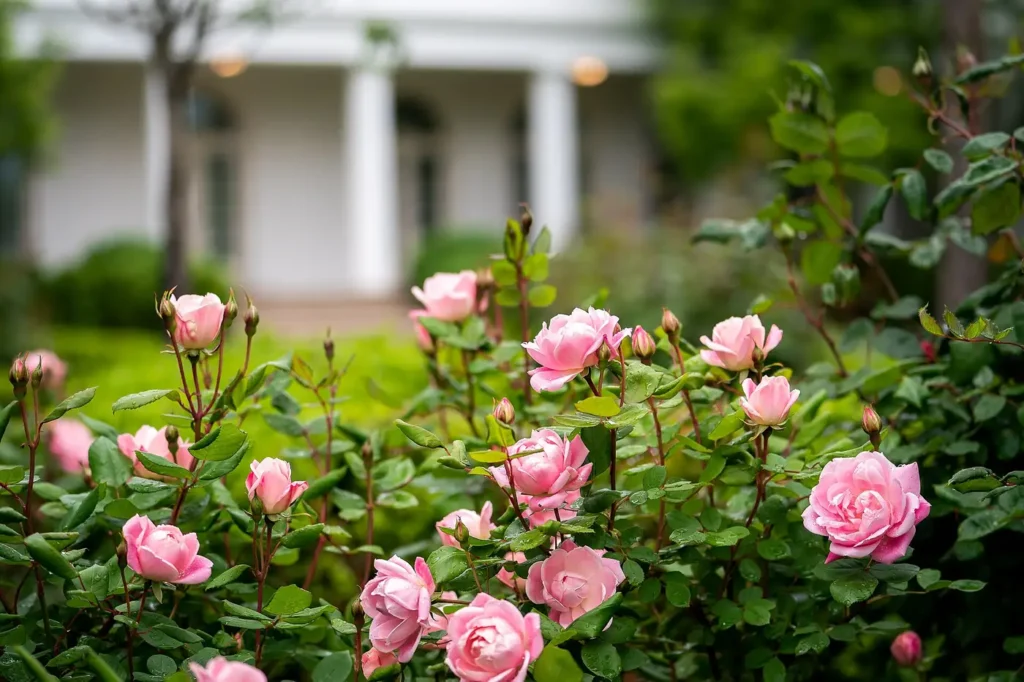
University of Maryland Extension’s guide to growing roses and managing their problems notes that, aside from wild roses and heirlooms in existence before 1867, home gardeners usually choose from modern groups: hybrid teas and grandifloras, floribundas, shrub roses and miniatures, among others.
| Type | Habit | Flowers | Ease of care |
|---|---|---|---|
| Shrub roses (including landscape roses) | Bushy, 3 to 6 ft | Clusters, repeat blooming | Easiest; often bred for disease resistance |
| Floribunda | Compact, 2 to 4 ft | Clusters, repeat blooming | Moderate |
| Hybrid tea | Upright, 3 to 6 ft | Large, single blooms on long stems; classic cut flowers | More demanding; often disease-prone |
| Grandiflora | Tall, 4 to 6 ft or more | Hybrid tea-style blooms in clusters | Moderate to demanding |
| Climbers and ramblers | Long canes, 8 to 20 ft | Varies; some bloom once, some repeat | Moderate; need support |
| Miniature and patio roses | Small, 1 to 2 ft | Small blooms | Moderate; good in containers |
| Old garden roses (heirloom) | Varies | Often very fragrant; many bloom once | Many are tough and long-lived |
| Species (wild) roses | Varies | Simple single flowers, often followed by hips | Generally very tough |
Choose disease-resistant roses
This is the most important decision you will make. University of Maryland Extension calls selecting disease-resistant varieties very important, and notes that most landscape roses grown in Maryland are now highly black spot-resistant Knock Out cultivars. NC State Extension’s profile of Knock Out roses describes them as hybrid roses bred for a long bloom season and particular resistance to black spot, growing 3 to 4 feet tall and wide and needing less pruning than most roses.
Disease resistance is not immunity, though. Maryland Extension reports that roses resistant to black spot are often susceptible to Cercospora leaf spot, which can defoliate them in warm, rainy summers, and there have been reports of resistant roses getting black spot, possibly from new strains of the fungus. Clemson Extension’s guide to rose diseases similarly notes that fungicide sprays may still be needed even on resistant varieties in disease-prone climates.
Ask locally. Disease pressure varies a lot by region. Local rose societies, public rose gardens and your Cooperative Extension office can tell you which varieties stay healthy where you live.
Where to plant roses
- Full sun: at least six hours of direct sun, ideally morning sun, which dries dew from leaves quickly. Clemson Extension notes that planting roses in full sun helps reduce black spot.
- Good air circulation: do not crowd roses against walls or other shrubs.
- Well-drained soil: roses dislike waterlogged roots. Maryland Extension recommends amending the planting site with organic matter before planting.
- Away from tree roots, which compete for water and nutrients.
A soil test from your Cooperative Extension office shows whether your soil needs lime or nutrients; most roses grow well in slightly acidic soil. Our guide to garden lime explains pH, and the sunlight requirement finder helps you check your light.
How to plant roses
Bare-root roses
Bare-root roses are sold dormant, without soil, in late winter and early spring, and are planted while still dormant.
- Soak the roots in a bucket of water for several hours before planting.
- Dig a wide hole, roughly twice the width of the roots, and loosen the soil at the bottom.
- Make a mound of soil in the center and spread the roots over it.
- Set the bud union, the knobby graft point on grafted roses, at the depth recommended for your climate: often at soil level in mild regions and slightly below in cold regions. Own-root roses have no graft.
- Backfill, water thoroughly to settle the soil, and mulch.
Container roses
Potted roses can be planted from spring to early fall. Dig a hole as deep as the pot and twice as wide, set the plant at the same depth it grew in the container, backfill, and water deeply.
Spacing
| Rose type | Typical spacing |
|---|---|
| Miniatures | 1 to 2 ft |
| Floribundas and hybrid teas | 2 to 3 ft |
| Shrub roses such as Knock Out | 3 to 4 ft |
| Large shrub and climbing roses | 5 to 8 ft |
Check the mature width on the plant tag and space for good airflow, which reduces disease. The plant spacing calculator works out how many fit in a bed.
Watering, feeding and mulching
- Water deeply about once a week, aiming for roughly an inch of water including rain, and more in hot, dry weather. Water at the base of the plant in the morning and avoid wetting the leaves, which encourages leaf diseases. A soaker hose or drip line is ideal; see our comparison of drip irrigation and soaker hoses.
- Feed in spring as new growth begins, and again during the season for repeat-blooming roses, following product labels. Stop feeding about six to eight weeks before your first fall frost, so new growth can harden before winter.
- Mulch 2 to 3 inches deep with shredded bark, compost or leaves, keeping it a few inches away from the canes. The mulch calculator works out how much you need.
How to prune roses
Pruning keeps roses healthy, shapely and blooming. The main pruning for most repeat-blooming roses happens in late winter or early spring, as buds begin to swell.
- Use sharp, clean bypass pruners and wear sturdy gloves.
- Remove the three Ds: dead, damaged and diseased canes, cutting back to healthy, green wood.
- Remove crossing and inward-growing canes to open up the center for airflow.
- Cut about a quarter inch above an outward-facing bud, at a slight angle.
- Shape the plant: hybrid teas are traditionally cut back harder; shrub roses such as Knock Out need only light shaping to manage size.
- Clean up fallen leaves and prunings, which can carry disease.
| Rose type | When to prune |
|---|---|
| Repeat-blooming shrubs, hybrid teas, floribundas | Late winter or early spring, as buds swell |
| Once-blooming climbers, ramblers and many old garden roses | Right after flowering, since they bloom on the previous year’s wood |
| All roses | Remove dead, damaged or diseased canes any time |
Deadheading
Removing faded flowers encourages many repeat-blooming roses to flower again. Cut back to the first strong leaf with five leaflets. Stop deadheading in late summer if you want roses to form decorative hips for winter.
Watch: How to Prune Roses
This short video from Mississippi State University Extension shows rose pruning in practice:
Common rose diseases
| Disease | Symptoms | Management |
|---|---|---|
| Black spot | Dark leaf spots with feathery edges; leaves yellow and drop | Resistant varieties, full sun, dry leaves, remove fallen leaves; fungicides where needed |
| Cercospora leaf spot | Small spots that can be confused with black spot; common on black spot-resistant roses | Same as black spot |
| Powdery mildew | White, powdery coating on leaves and buds | Good airflow, resistant varieties |
| Downy mildew | Purplish blotches that look similar to black spot, in cool, humid weather | Improve airflow; remove affected leaves |
| Rose rosette disease | Clusters of distorted, reddish shoots (witches’ brooms), excessive thorns | No cure: remove and destroy infected plants, including roots |
University of Maryland Extension describes black spot symptoms as dark lesions with feathery margins and notes that downy mildew symptoms look very similar. Clemson Extension’s guide to growing roses also covers rose rosette, an untreatable disease spread by tiny mites; wild multiflora rose is a common source, so remove it near your garden where possible.
Prevention habits
- Plant resistant varieties in full sun with good spacing.
- Water the soil, not the leaves.
- Remove fallen and infected leaves promptly, and clean up thoroughly in fall.
- Mulch to stop spores splashing from soil onto leaves.
- Disinfect pruners between plants when cutting out disease.
Common rose pests
| Pest | Damage | First step |
|---|---|---|
| Aphids | Clusters on new shoots and buds; sticky leaves | Blast off with water; let ladybugs and lacewings work |
| Rose sawfly larvae (rose slugs) | Leaves skeletonized or turned to lace | Hand-pick; hose off |
| Japanese beetles | Chewed flowers and leaves in summer | Hand-pick into soapy water in the morning |
| Spider mites | Fine speckling and webbing, worse in hot, dry weather | Spray leaf undersides with water |
| Deer | Buds and shoots eaten | Fencing; see our guide to keeping animals out |
Use the pest identifier to confirm the culprit, and see our guide to keeping deer and rabbits out of your garden.
Winter protection
Rose hardiness varies widely. Many shrub, species and old garden roses are very cold-hardy, while hybrid teas are more tender. Check your zone with the USDA Plant Hardiness Zone Map or our growing zone finder, and choose roses rated for it. In cold regions:
- Stop feeding in late summer.
- Water well in fall before the ground freezes.
- After the ground freezes, mound soil, compost or mulch 8 to 12 inches high over the base of tender roses to protect the graft and lower canes.
- Secure climbing canes against winter winds.
- Remove the mound gradually in spring as new growth begins.
Designing a rose garden
Rose beds and borders
Group roses in beds of three or more of the same variety for impact, or mix them into a perennial border. Low companion plants such as catmint, lavender, salvia and alliums hide the bare lower canes of roses and add contrasting shapes and colors.
Climbing roses on arches and fences
Climbers need sturdy support and regular tying. Train canes more horizontally to encourage more flowering side shoots. Our guide to garden trellis ideas covers arches and supports.

Rose hedges
Tough shrub roses planted in a row make a colorful, informal hedge. Knock Out roses, for example, are often used as hedges, specimens, accents or barriers.
Roses in containers
Miniature, patio and compact shrub roses grow well in large containers of at least 15 to 20 gallons, with excellent drainage. They need more frequent watering and feeding than roses in the ground. See our guide to container gardening for potting mix and watering tips.
Roses with other flowers
Roses pair beautifully with cottage garden perennials and cut flowers. Our guides to growing a cut flower garden and planting a pollinator garden suggest good companions; single-flowered roses are especially popular with bees.
A year of rose care
| Season | Tasks |
|---|---|
| Late winter | Plant bare-root roses; prune repeat bloomers as buds swell |
| Spring | Feed as growth begins; mulch; watch for aphids |
| Early summer | Deadhead; prune once-blooming climbers after flowering; watch for black spot |
| Midsummer | Water deeply; hand-pick Japanese beetles; feed repeat bloomers |
| Late summer | Stop feeding; stop deadheading if you want hips |
| Fall | Clean up fallen leaves; water before the ground freezes; protect tender roses |
Common rose mistakes
- Choosing disease-prone varieties for a humid climate.
- Planting in shade, which reduces flowering and encourages disease.
- Overhead watering in the evening.
- Crowding plants, which reduces airflow.
- Pruning once-blooming roses in spring, removing that year’s flowers.
- Leaving infected leaves on the ground over winter.
Frequently asked questions
What are the easiest roses to grow?
Disease-resistant shrub roses, such as Knock Out roses, are the easiest. They bloom for a long season and need less pruning and spraying than hybrid teas.
How much sun do roses need?
At least six hours of direct sun a day, ideally including morning sun, which dries leaves and helps prevent disease.
When should I prune roses?
Prune repeat-blooming roses in late winter or early spring as buds swell. Prune once-blooming climbers and old garden roses right after they flower.
How do I get rid of black spot on roses?
Remove infected leaves, keep foliage dry, improve airflow and clean up fallen leaves. For lasting control, grow resistant varieties; fungicides may be needed in humid climates.
How often should I water roses?
Deeply about once a week, roughly an inch of water including rain, and more in hot, dry weather. Water at the base, not over the leaves.
What is rose rosette disease?
An incurable disease spread by tiny mites that causes clusters of distorted, reddish shoots. Remove and destroy infected plants, including the roots.
Can roses grow in pots?
Yes. Miniature, patio and compact shrub roses grow well in large containers with good drainage, but need more frequent watering and feeding.