
Quick answer: An apple tree guild is a deliberately arranged collection of plants around an apple tree. A productive design puts tree health first: keep the trunk clear, mulch a substantial weed-free root zone, and position pollinator flowers and optional herbs outside the most competitive area. A guild is not a proven shortcut to bigger apple harvests. Its practical value is a garden layout that supports insects, limits maintenance conflicts and allows pruning, watering and fruit collection.
Many apple-guild illustrations show a tree with rings of comfrey, daffodils, chives, clover and other plants drawn tightly around the trunk. Those diagrams make an attractive poster, but the horticulture is less simple. Young fruit trees lose growth when grass or other living plants compete for moisture and nutrients. Apples also need sunlight and access to the canopy for pruning, thinning, pest monitoring and harvest. A useful guild must reconcile the creative “forest garden” idea with those ordinary orchard requirements.
What is an apple tree guild?
In permaculture terminology, a guild is a group of plants chosen to perform complementary functions around a main crop. In an apple planting, the apple is the primary woody fruit crop. Other plants might provide blossoms for insects, edible leaves, ornamental interest, cut flowers, or habitat near the tree. The key distinction is between a functional reason to include a plant and an untested claim that any particular herb magically deters apple pests.
Guilds can be useful design frameworks, but scientific evidence is stronger for some underlying practices than for the whole concept. Weed suppression through mulch, suitable pollination partners and compatible varieties have established value. Claims that a ring of daffodils repels deer or that comfrey automatically feeds apple roots have much more limited direct evidence.
Begin with the apple tree’s root zone, not a companion list
Apple roots extend widely into surrounding soil. The most damaging companion may be ordinary turf grass growing straight to the trunk. Utah State University Extension reviews fruit-tree research showing that grass competition can delay fruiting and reduce growth. It describes managing a vegetation-free zone around the trunk, often about two to three feet in radius, rather than filling every available patch with other plants.
University of Maryland Extension recommends mulch around trees to reduce weeds and competition, while keeping the material away from bark. Mulch should lie like a broad doughnut, not a mound against the trunk. Tree size, rootstock, irrigation and soil climate may justify a wider maintained area as a young tree grows.
Do not dig an ornamental planting hole right next to a new apple trunk. The goal during establishment is reliable root expansion and balanced water, not visual fullness.
Apple tree guild plant layers and functions
| Plant layer | Candidate | Potential function | Best placement |
|---|---|---|---|
| Primary fruit tree | Climate-adapted apple cultivar on suitable rootstock | Fruit and structural canopy | Sunny site with managed root zone |
| Pollination partner | Compatible apple or crabapple cultivar | Viable pollen during overlapping bloom | Within appropriate pollinator range |
| Insectary flowers | Native perennial or annual flower mix | Floral resources before and after apple bloom | Separate border outside mulched area |
| Edible herb edge | Chives, thyme or a suitable local herb | Herb harvest and optional flowers | Sunny path edge, not against trunk |
| Early bulbs | Species appropriate to region | Seasonal ornamental display | Existing garden edge where digging is minimal |
| Soil cover | Shredded wood chips or suitable organic mulch | Conserves moisture and limits weeds | Core root zone, kept off bark |
This is a planning framework, not a claim that every plant in the table has been tested together in a field trial. Choose only layers that fit the available space and climate; a compact dwarf apple in a small yard may need nothing more than mulch and a separate flower border.
Pollinator plants and flowering companions
Apples depend on insects to transfer compatible pollen between blossoms. A diverse, pesticide-conscious landscape can support pollinator populations, but flowers in a border are not substitutes for a compatible pollen-producing apple cultivar. Oklahoma State University Extension explains why apple varieties should have overlapping flowering periods, and notes that some apple cultivars cannot supply viable pollen even when their own fruit sets successfully.
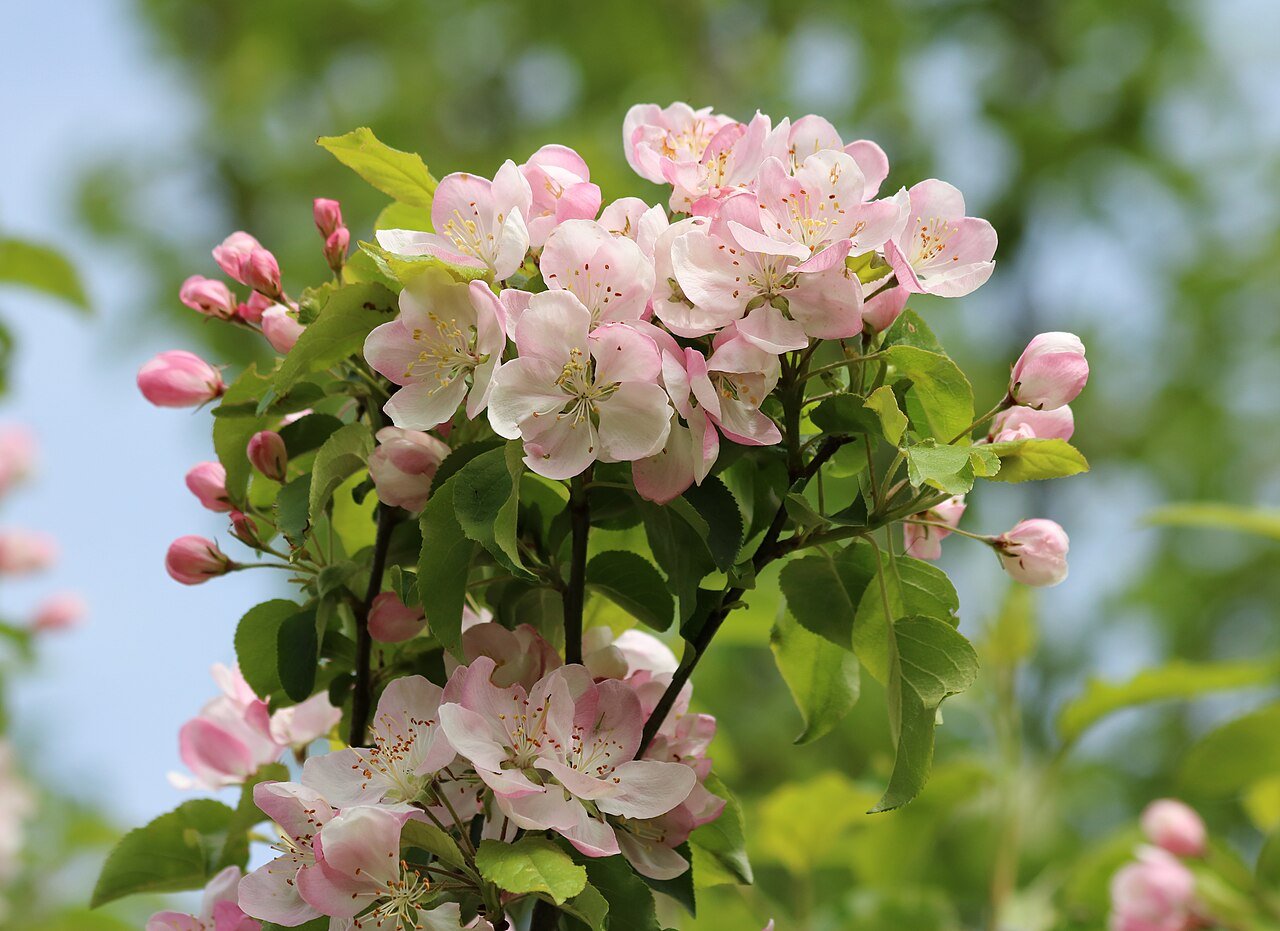
Choose flowering plants that supply resources before and after the relatively brief apple bloom. Locally adapted perennials and a modest annual border may help more than a single herb that blooms for only a few days. Let grass and flowers outside the mulch zone grow only as much as you can maintain without interfering with harvest access or rodents.
If you have space for a second tree, learn about self-pollinating apples and cross-pollination. In some neighborhoods, another compatible apple or crabapple already exists nearby. Check local bloom timing and cultivar compatibility rather than planting a second tree without a plan.
Chives, thyme and herbs: include them for a real reason
Chives and other compact herbs can provide culinary harvests at the sunny edge of an apple planting. When allowed to flower, they also add another type of bloom to the landscape. Their leaves may be fragrant, but there is no general proof that planting chives around an apple trunk protects the tree from codling moth, apple scab or every leaf-chewing insect.
Thyme can occupy a dry, sunny edge where its drainage needs are met. Basil can be grown in a nearby seasonal vegetable bed. Choose the herbs for how they actually behave, not because a guild graphic lists them as obligatory. Avoid vigorously spreading herbs that require repeated digging close to the apple’s roots.
Comfrey: popular guild plant, but use caution
Comfrey appears frequently in permaculture guild diagrams. It forms a substantial perennial clump and produces leafy biomass. Its deep roots and persistent growth can make removal difficult once established. Some gardeners cut comfrey and use leaves as mulch, but calling it an automatic fertilizer pump that boosts apple yield is not justified without site-specific evidence.
If you decide to grow comfrey, use a suitable non-seeding cultivar if advised locally, keep it well outside the young apple’s maintained root area, and control its spread. Comfrey is not appropriate as an edible leafy herb for human consumption because of potentially harmful pyrrolizidine alkaloids. It is an optional biomass plant, not a required guild member.
Daffodils, garlic and bulbs around apples
Spring bulbs can provide seasonal color. They are easier to manage along the outer ring of a mature planting than directly against a tree trunk where future cultivation could damage roots. Avoid claims that daffodils guarantee deer control; deer browse depends on many factors, and deer may damage the apple tree itself regardless of nearby bulbs.
Be aware that daffodil bulbs and other ornamental bulbs can be toxic if eaten. Keep them away from vegetable-harvest areas where they could be mistaken for onions or garlic, especially around children or animals. Label ornamental plantings clearly.
Should you plant clover or a living groundcover under apples?
Clover is sometimes described as a “nitrogen feeder” that helps an apple tree. Like other legumes, clover can associate with nitrogen-fixing organisms, but living clover also takes up water and nutrients. It does not directly and instantly transfer all fixed nitrogen to a nearby apple tree. A dense living carpet in the core root zone can compete with young roots.
For a young tree, the evidence favors a weed-free, mulched area. In a larger orchard, managed alleyways or cover crops between widely spaced rows are a different system. If using clover in paths, keep it outside the tree’s immediate area and maintain it according to regional orchard-floor guidance.
Simple guild layouts for three kinds of apple tree
A newly planted dwarf apple
Keep a broad ring of mulch around the trunk, leaving exposed space at the bark. Use the planting plan to preserve access for stakes, graft-union inspections and watering. Place companion flowers in a separate bed beyond the mulched circle. This is the best beginner guild because the apple can establish with relatively little competition.
A mature backyard apple
Maintain the trunk and major root area, preserve access for ladder or picking tools, and choose a flower border along a path at the canopy edge. If the understory is deeply shaded, do not force sun-loving herbs into it. Avoid tall shrubs that block air circulation or make pruning unsafe.
Multiple trees in a small orchard
Provide access between canopies. Distinguish the maintained strip beneath trees from separate alleyways that may support managed low vegetation. Use a row of native flowers along the outer orchard border instead of densely mixing roots beneath every trunk. This lets you control watering and inspect for disease without stepping through tangled plants.
Use GardenVoila’s garden layout planner to sketch paths and distances, but consult cultivar/rootstock guidance for final tree spacing. Our dwarf apple tree guide explains why rootstock choice changes the space required.
Apple tree maintenance still comes first
Pruning, thinning, watering, cultivar choice and disease monitoring have far more direct influence on harvest quality than untested companion interactions. Plan access to every side of the canopy. Apple pruning timing, apple scab management and cedar-apple rust identification remain important even in a richly planted guild.
See it in practice: A functioning apple guild should leave enough room to prune the tree. This University of Minnesota Extension lesson demonstrates why open, accessible branches matter.
Video: UMN Extension Apple Pruning Tips Part One by UMN Extension – Yard and Garden.
Monitor the mulch for rodents and avoid mulch piled against stems. Identify any fruit pests rather than assuming a flowering herb will deter them. Remove diseased fruit and debris according to local recommendations. A guild should make those tasks easier, not harder.
Free printable: the Year-Round Garden & Preserving Planner
Planting dates for 24 crops, monthly tasks, blanching times, canning safety numbers and a winter storage chart in one 8-page PDF. Enter your email to download it instantly and get our seasonal garden newsletter.
No spam. Unsubscribe any time. We never sell your email.
Frequently asked questions
What plants grow under an apple tree?
For a young apple, prioritize mulch and keep other plants outside its core root area. Mature plantings may accommodate carefully managed flowers or low vegetation at the edges, depending on shade and competition.
What is the best apple tree companion for fruit?
A compatible, pollen-producing apple or crabapple with overlapping blooms is more important to fruit set than aromatic herbs or ornamental guild rings.
Can I grow comfrey around apple trees?
It can be grown in a separate area, but it is vigorous and persistent. It is not essential, and claims of automatic yield improvement are unproven.
Are chives good for apple trees?
They are useful culinary herbs and provide flowers, but do not rely on them as a primary control for apple pests or diseases.
Should I remove grass around apple trees?
Yes, maintaining a vegetation-free area around young fruit trees reduces competition. Research-based Extension guidance supports mulching over bare turf close to the trunk.
The bottom line
Start an apple tree guild with a healthy tree, compatible pollination and a weed-free mulch zone. Add optional flowers and herbs at the perimeter where they contribute something tangible. Do not turn the guild into a crowded ring of “magic” pest-control plants that undermines root establishment.
Research and further reading
- Utah State University: Managing vegetation around fruit trees
- University of Maryland Extension: Mulching trees and shrubs
- Oklahoma State University: Growing apples in the home garden
- North Carolina Department of Agriculture: Pollinator protection in apples
Featured photo: Acabashi / Wikimedia Commons, CC BY-SA 4.0. Resized for web display.


