
Quick answer: Practical Brussels sprouts companions include sweet alyssum, dill allowed to flower, cilantro in flower, provided their light, roots and harvest schedules fit. Do not use aromatic leaves or nearby flowers as guaranteed pest repellents.
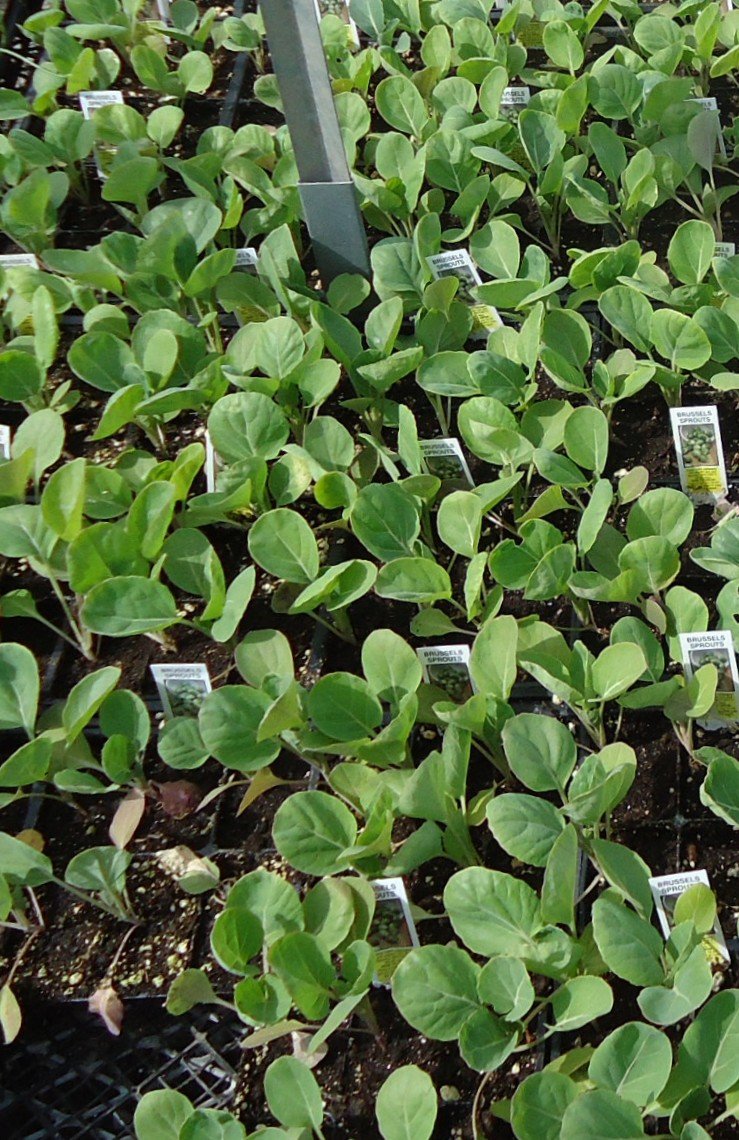
Brussels sprouts (Brassica oleracea Gemmifera Group) form tall stems with buds at leaf axils over a long season. Their mature leaves spread far beyond the small seedling footprint. A successful companion should not interfere with access to inspect the undersides of leaves or hide caterpillars in the developing sprouts.
Companion decisions should match the crop
Look beyond a single friends-and-enemies list. Ask whether the second plant provides a harvest, flowering resources or efficient seasonal timing. Then check the main crop’s adult dimensions, access routes and likely disease risks. University of Minnesota Extension’s evidence review distinguishes plant-spacing advantages from exaggerated folklore.
Best companion plants at a glance
| Neighbor | Reason to consider it |
|---|---|
| Sweet alyssum | A sunlit strip outside the sprout row can produce small blossoms used by various beneficial insects. It should not disappear beneath mature brassica leaves. |
| Dill allowed to flower | The umbels provide resources to some parasitoids and other insects; maintain separate plant space and do not assume dill prevents every cabbageworm. |
| Cilantro in flower | Cilantro may bolt quickly during warm weather; that flowering can provide insect resources even when leaf harvest ends. Position it along a clear border. |
| Lettuce and spinach | Quick greens can use space before sprouts form a broad canopy. Harvest them early rather than leaving both root systems crowded. |
| Scallions | Narrow onion-family plants can occupy a separate sunny strip; any alleged chemical repellent benefit is uncertain, so grow them mainly for a useful second harvest. |
Sweet alyssum: an evidence-minded pairing
A sunlit strip outside the sprout row can produce small blossoms used by various beneficial insects. It should not disappear beneath mature brassica leaves.
A functioning relationship is not about putting roots as close together as possible. Leave space for watering, weeding and finding early pests. When a companion loses light or blocks access, remove or relocate it. Seasonal timing often determines success more than botanical family names.
Dill allowed to flower: an evidence-minded pairing
The umbels provide resources to some parasitoids and other insects; maintain separate plant space and do not assume dill prevents every cabbageworm.
A functioning relationship is not about putting roots as close together as possible. Leave space for watering, weeding and finding early pests. When a companion loses light or blocks access, remove or relocate it. Seasonal timing often determines success more than botanical family names.
Cilantro in flower: an evidence-minded pairing
Cilantro may bolt quickly during warm weather; that flowering can provide insect resources even when leaf harvest ends. Position it along a clear border.
A functioning relationship is not about putting roots as close together as possible. Leave space for watering, weeding and finding early pests. When a companion loses light or blocks access, remove or relocate it. Seasonal timing often determines success more than botanical family names.
Lettuce and spinach: an evidence-minded pairing
Quick greens can use space before sprouts form a broad canopy. Harvest them early rather than leaving both root systems crowded.
A functioning relationship is not about putting roots as close together as possible. Leave space for watering, weeding and finding early pests. When a companion loses light or blocks access, remove or relocate it. Seasonal timing often determines success more than botanical family names.
Scallions: an evidence-minded pairing
Narrow onion-family plants can occupy a separate sunny strip; any alleged chemical repellent benefit is uncertain, so grow them mainly for a useful second harvest.
A functioning relationship is not about putting roots as close together as possible. Leave space for watering, weeding and finding early pests. When a companion loses light or blocks access, remove or relocate it. Seasonal timing often determines success more than botanical family names.
Neighbors and situations to avoid
Cabbage-family crops tightly interplanted
Broccoli, kale and cabbage share caterpillars, flea beetles and soilborne diseases. A mass of brassicas can complicate crop rotation.
Tall shade-producing crops
Corn or giant sunflowers can block light required by sprouts, especially in a small raised bed.
Large sprawling squash
Its vines can engulf stems, make leaf scouting difficult, and restrict watering around roots.
A workable layout for Brussels sprouts
In a four-by-eight-foot bed, establish Brussels sprout transplants at the spacing recommended for the cultivar, commonly around 18 inches in the University of Minnesota guide. Reserve a walkway and position alyssum or flowering dill beyond the main bed edge. Grow quick spring lettuce only where you can harvest it well before the sprouts expand.
Use the plant-spacing calculator to estimate how many plants fit and the GardenVoila bed planner to preserve access paths. Always follow cultivar-specific instructions where they differ from a general diagram.
Pests, soil and seasonal care
Cabbageworms, cabbage loopers, diamondback moth larvae, cabbage maggots and aphids remain important problems despite nearby herbs. Inspect leaves regularly and use insect-exclusion row covers when appropriate, placing them before pests lay eggs. Rotate away from recent brassica plantings. A floral strip can support beneficial insects but is not a replacement for physical exclusion.
Check your local Extension recommendations for planting dates and moisture because weather changes the relationship between neighbors. Strong pest pressure requires direct identification; flowers can help build an insect-friendly garden but won’t replace crop protection or sanitation.
Free printable: the Year-Round Garden & Preserving Planner
Planting dates for 24 crops, monthly tasks, blanching times, canning safety numbers and a winter storage chart in one 8-page PDF. Enter your email to download it instantly and get our seasonal garden newsletter.
No spam. Unsubscribe any time. We never sell your email.
Frequently asked questions
Can Brussels sprouts grow near onions?
Yes in a large enough bed, but onion scent is not a guarantee against cabbageworms.
Does dill stop cabbageworms?
No reliable blanket rule supports that. Flowering dill can support beneficial insects, while row covers and scouting directly address pests.
Can cabbage and Brussels sprouts grow together?
They can share conditions but also share pests and diseases; manage them as the same crop family for rotation.
Related GardenVoila growing guides
For the next step, compare this crop-specific guide with this related crop guide and evaluate how the two crops will share available sun, water and maintenance access.
Sources and further reading
- University of Minnesota Extension: Growing Brussels sprouts
- University of Minnesota Extension: Companion planting in home gardens
Featured photo: Photo: AdamRedwine / Wikimedia Commons source · CC BY-SA 4.0 · Resized for web display.


