Quick answer: Flowering dill, Sweet alyssum, Scallions and chives can be compatible neighbors for cabbage when space, season and plant care match. Pairings are choices for crop management, not proven universal pest repellents.
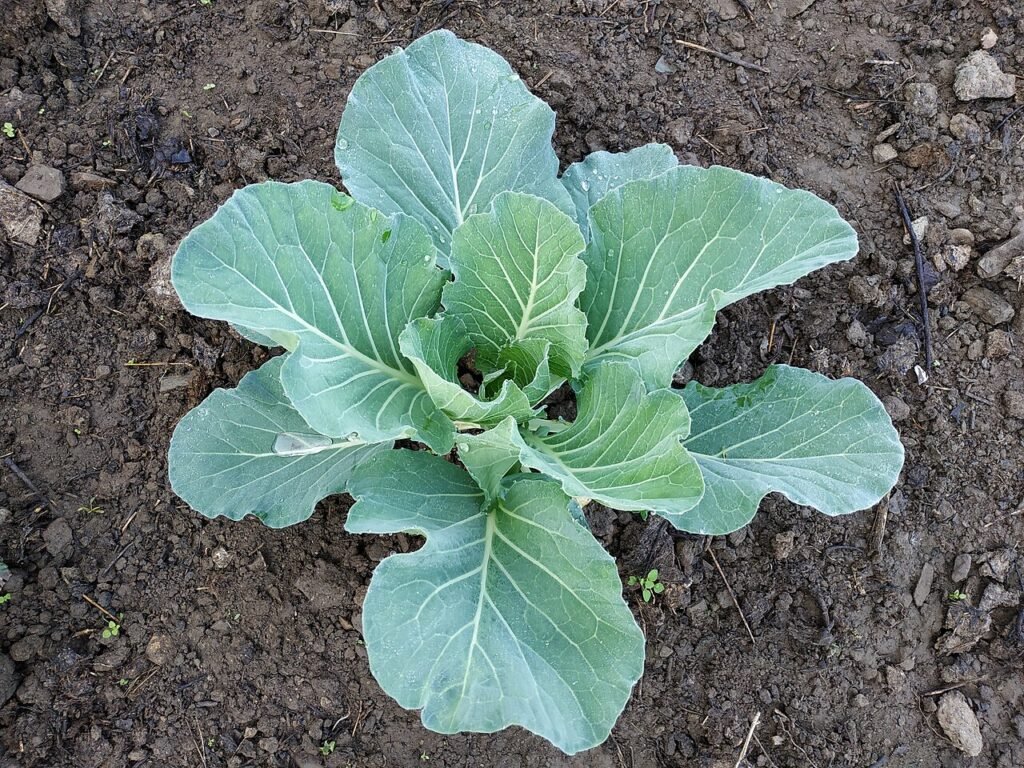
Cabbage (Brassica oleracea Capitata Group) makes a broad leaf rosette that encloses a developing head. Crowded cabbage is harder to inspect for caterpillars, aphids and disease. Companion planting can make space efficient, but selecting an aromatic herb cannot replace protecting young brassicas from imported cabbageworms and other caterpillars.
Start with the main crop’s growing needs
Assess full sun, eventual size, irrigation and harvest access before adding another plant. A crowded planting may seem productive early but become less effective once canopies overlap. University of Minnesota Extension’s companion-planting overview describes research-supported use of space and the limits of traditional friend-and-enemy lists.
Companion plant comparison
| Potential companion | Practical reason and caution |
|---|---|
| Flowering dill | Dill umbels can support some beneficial insects outside the main cabbage row. Let selected plants flower rather than harvesting every shoot for leaves. |
| Sweet alyssum | A low, sunlit flower border can provide floral resources without shading cabbage heads. |
| Scallions and chives | Their slim leaves may fit along a path edge, but the much-repeated claim that their smell guarantees cabbageworm control is not established. |
| Early lettuce | Lettuce can occupy some space before the cabbage canopy closes, if it is harvested promptly. |
| Calendula | A separate flower strip adds seasonal blossoms and keeps inspection access free. |
Flowering dill: how this pairing works
Dill umbels can support some beneficial insects outside the main cabbage row. Let selected plants flower rather than harvesting every shoot for leaves.
Think about the mature plants rather than just the young transplants. Keep paths and watering access open, and treat any pest-repellent claim as unproven until there is evidence for the pest, the crop and the growing conditions involved. A separate border often works better than roots crowded into the same planting pocket.
Sweet alyssum: how this pairing works
A low, sunlit flower border can provide floral resources without shading cabbage heads.
Think about the mature plants rather than just the young transplants. Keep paths and watering access open, and treat any pest-repellent claim as unproven until there is evidence for the pest, the crop and the growing conditions involved. A separate border often works better than roots crowded into the same planting pocket.
Scallions and chives: how this pairing works
Their slim leaves may fit along a path edge, but the much-repeated claim that their smell guarantees cabbageworm control is not established.
Think about the mature plants rather than just the young transplants. Keep paths and watering access open, and treat any pest-repellent claim as unproven until there is evidence for the pest, the crop and the growing conditions involved. A separate border often works better than roots crowded into the same planting pocket.
Early lettuce: how this pairing works
Lettuce can occupy some space before the cabbage canopy closes, if it is harvested promptly.
Think about the mature plants rather than just the young transplants. Keep paths and watering access open, and treat any pest-repellent claim as unproven until there is evidence for the pest, the crop and the growing conditions involved. A separate border often works better than roots crowded into the same planting pocket.
Calendula: how this pairing works
A separate flower strip adds seasonal blossoms and keeps inspection access free.
Think about the mature plants rather than just the young transplants. Keep paths and watering access open, and treat any pest-repellent claim as unproven until there is evidence for the pest, the crop and the growing conditions involved. A separate border often works better than roots crowded into the same planting pocket.

Plants and situations to keep separate
Closely packed broccoli and kale
These share brassica pests and soil-borne diseases, so treat them as one family for rotations.
Large squash vines
The vines may hide cabbage heads, block row covers and create humid pockets.
Crowded tall flower stalks
Airflow and under-leaf scouting are essential where cabbageworms are present.
A practical planting design
Set cabbage plants according to the cultivar’s mature spread and keep a walkway for leaf inspection. Install a row cover or insect net early if cabbage butterflies are a recurring problem. Put dill or alyssum outside the fabric-covered growing zone so companions do not leave gaps that insects enter.
Use the GardenVoila plant spacing calculator and raised-bed planner to test the adult canopy and access paths. Adjust the layout to your cultivar, climate and irrigation system rather than copying a generic diagram.
What the evidence says about pests and harvests
University of Minnesota Extension advises checking both surfaces of cole-crop leaves for caterpillars and recommends properly fitted floating row covers to prevent egg-laying. Remove volunteer mustard-family weeds that host the same pests and rotate brassica beds. Flowering plants are useful ecological additions, not a replacement for exclusion.
Routine observation, suitable varieties, mulch, soil management and direct pest identification provide more predictable results than assuming every scented herb or flower supplies a protective shield. Monitor whether the companion actually improves how the space is used.
Free printable: the Year-Round Garden & Preserving Planner
Planting dates for 24 crops, monthly tasks, blanching times, canning safety numbers and a winter storage chart in one 8-page PDF. Enter your email to download it instantly and get our seasonal garden newsletter.
No spam. Unsubscribe any time. We never sell your email.
Frequently asked questions
Does cabbage grow with onions?
Yes in a sufficiently spaced garden, but onion smell should not be relied on to repel cabbage moths.
Can tomatoes be next to cabbage?
They can be in separate zones, but mature tomato foliage may shade head formation.
What actually keeps cabbageworms away?
Correctly installed exclusion netting and regular scouting offer more direct control than arbitrary companion lists.
Research and additional crop guides
For related information, read our relevant growing guide and our related companion guide.
- University of Minnesota Extension: Caterpillars on cole crops
- University of Minnesota Extension: Companion planting in home gardens
Featured photo: Photo: Nirajan pant / Wikimedia Commons source · CC BY-SA 3.0 · Resized for web display.


